
I love Australia, fondly referred to as OZ . Although they speak English and have a similar history to the US (except they never ditched the King), everything else is different…plants, birds, animals, geology, topography, etc. Craig and I have explored the entire continent, plus Tasmania, over several long visits starting in 1998. But the last time was in 2011, so I was curious to see what has changed. It is an awful air trip, unless one can afford business class. I flew cattle car…on Air Canada to try something new. Sadly, Air Canada may be worse than the big US carriers. (Customer service is non-existent.)
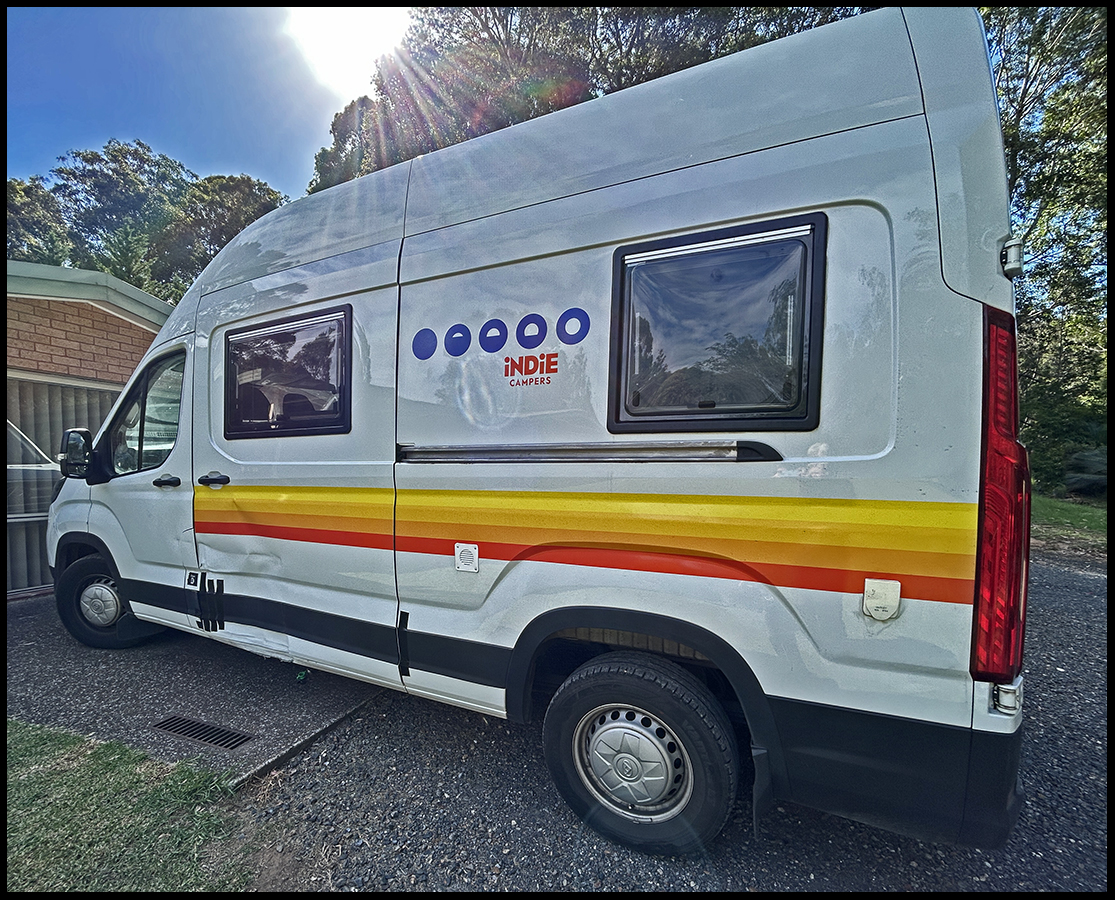
The “compact” model, with air conditioner on top that isn’t visible in this shot. This is the post-disaster shot with dent and taped trim.
In Sydney, after a long and sleepless flight, I arrived by taxi at the Indie Camper agency’s lot where I had reserved a “compact” camper for 58 days. It was was huge. I knew I was in trouble the minute I saw it. I begged to change to a smaller unit, but they said no…and no refunds…and by the way, ”don’t drive under low bridges”.
Not having driven on the left side of the road for a while, I was nervous about driving this giant camper through Sydney, but did manage to arrive at my reserved spot in the Royal National Park without incident. While the park is close to Sydney, it is a wonderful respite from the crowded urban area.
Fortunately, Aussies set aside 58 square miles in 1879 for this first national park (and only the second worldwide, the first being Yellowstone in 1872). I stayed two nights to recover from jet lag before heading south to meet friends.
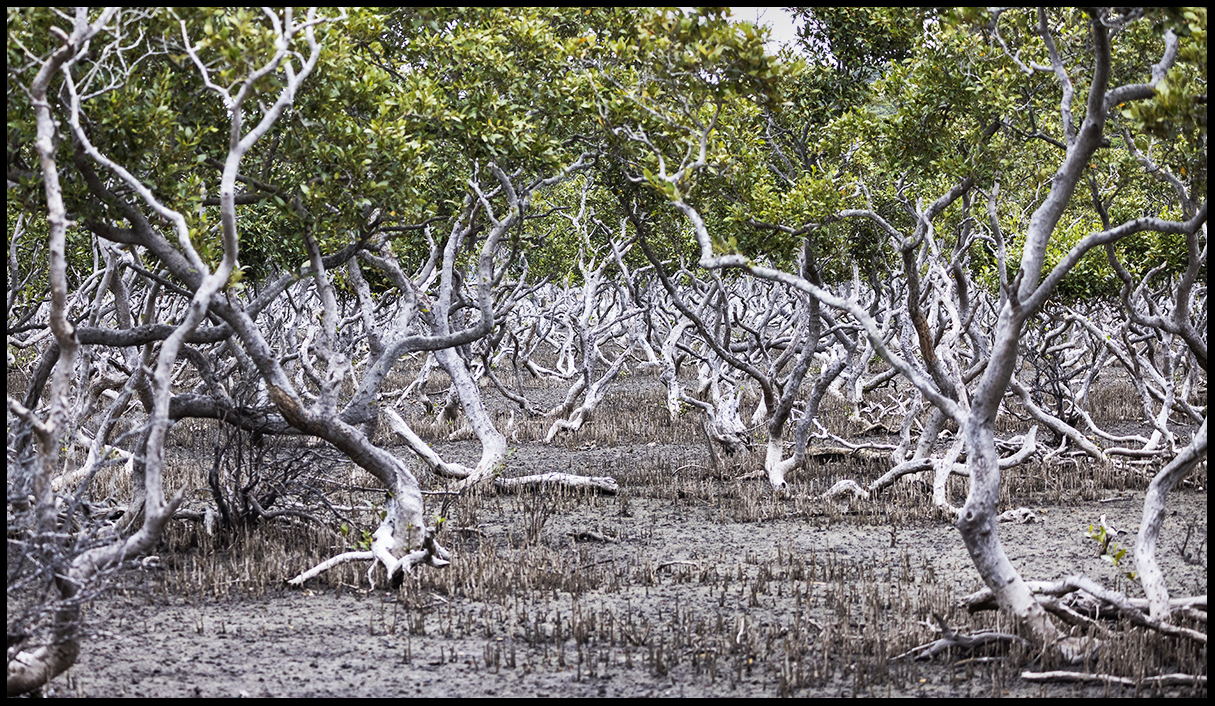
Extensive mudflats with grey mangroves line the shore near the campground.
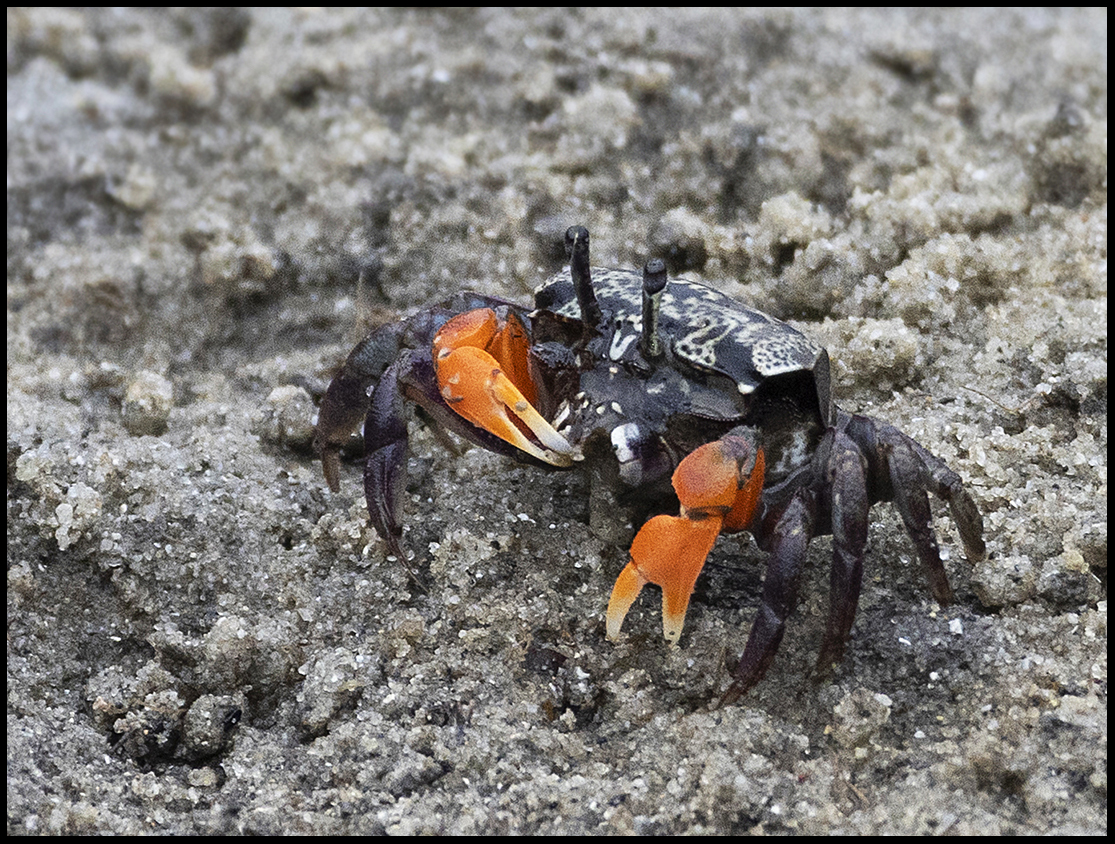
Thousands of Semaphore crabs make their living on mudflats of the east coast. They get their name from waving their colorful claws to signal to other crabs. They breathe both in air and under water. The largest males have purple claws, but I didn’t see any of those.
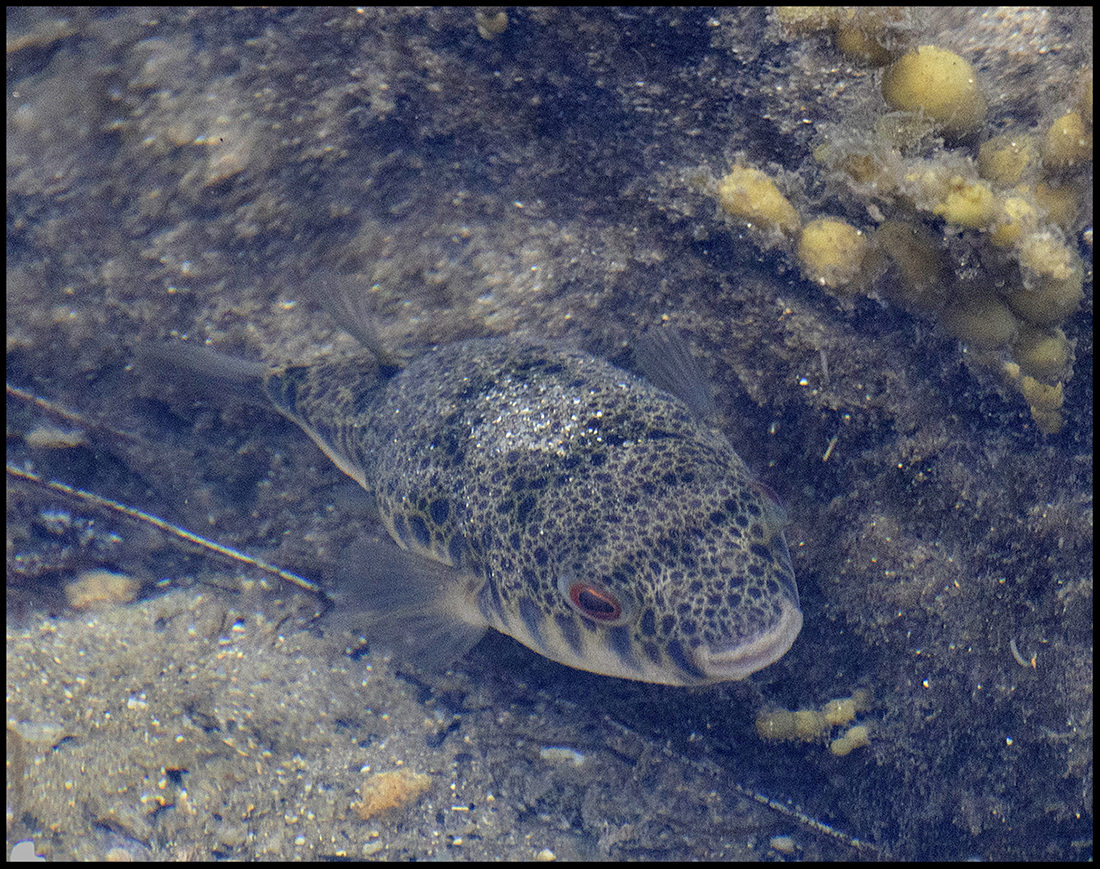
In the estuaries live these fish, which I know from previous experience, bite!
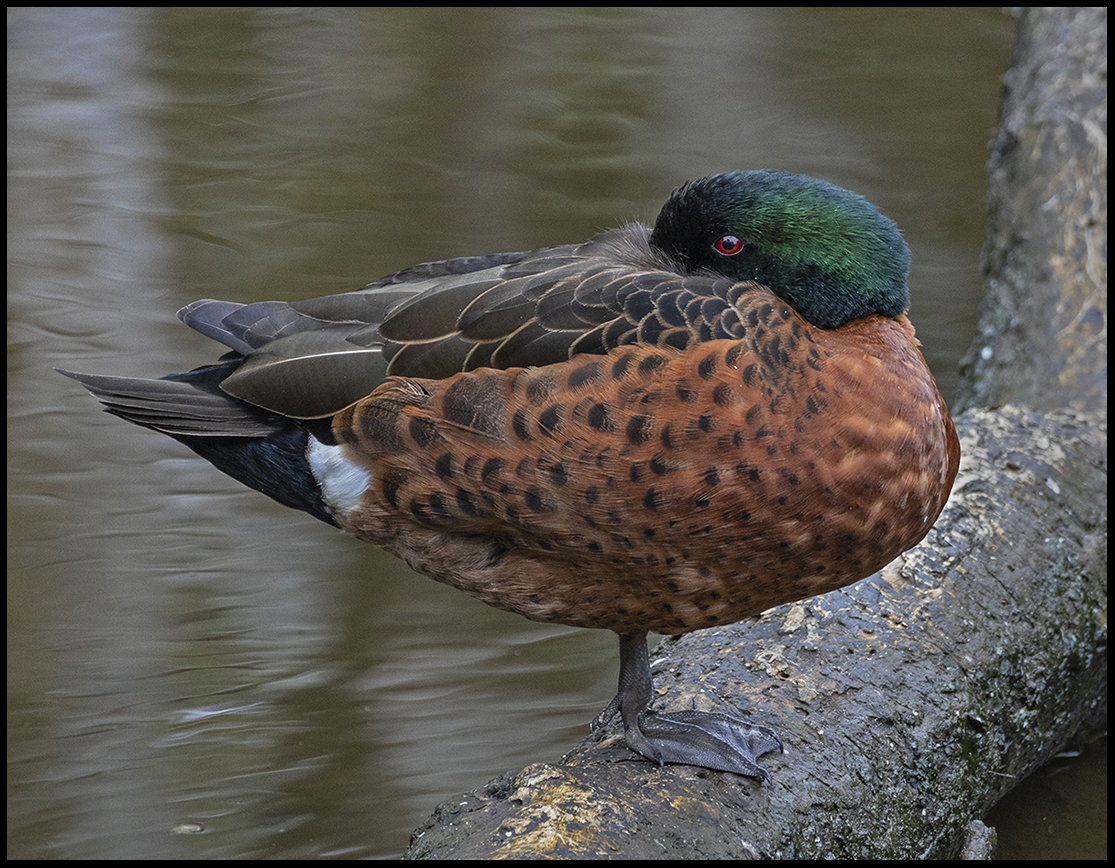
In fresh-water ponds away from the shore I found Chestnut Teal.
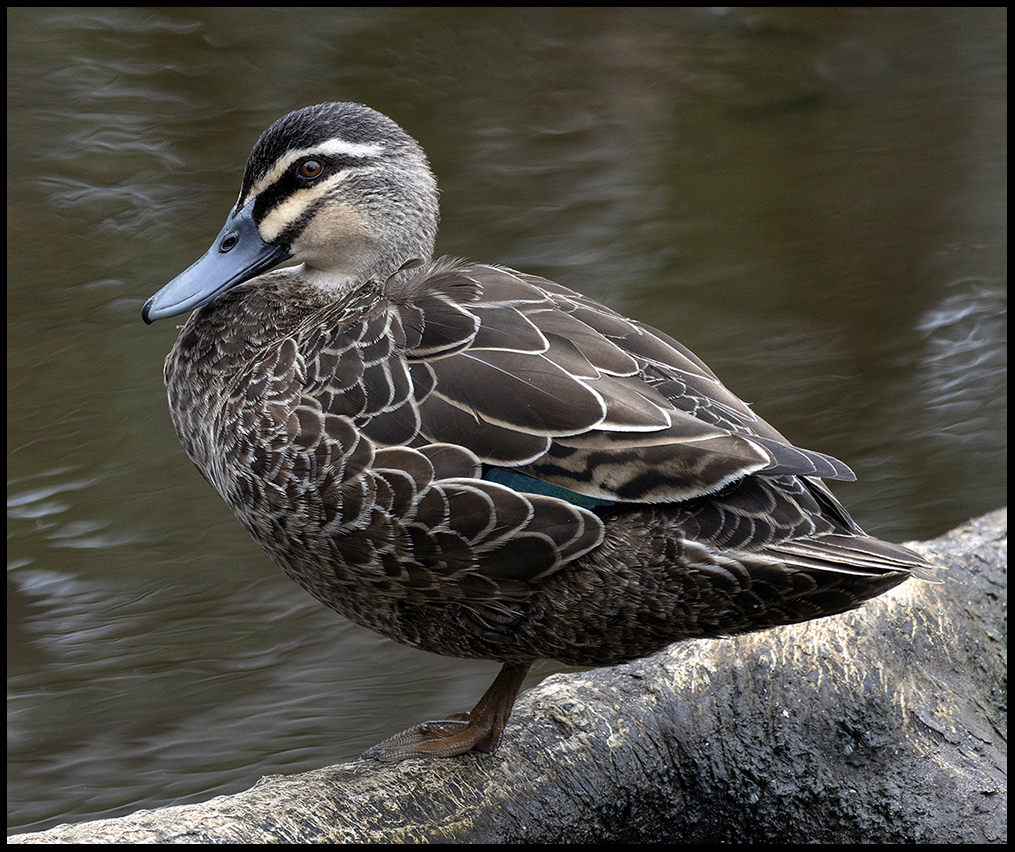
The female chestnut teal is a beauty in her own right.
It was such a treat for me to see some of my favorite birds right outside the camper door after a good night’s sleep.
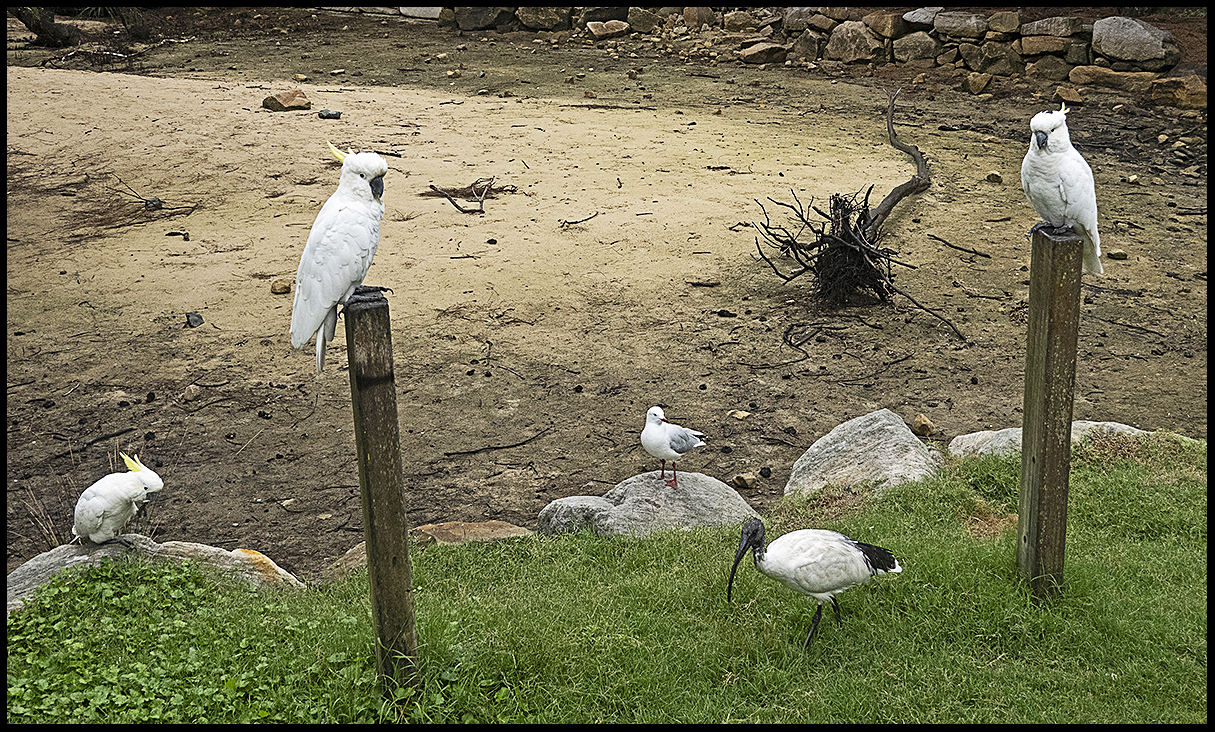
Cockatoos, ibis and a silver gull. Bare sand inlet testifies to the hot, dry summer of 2026.
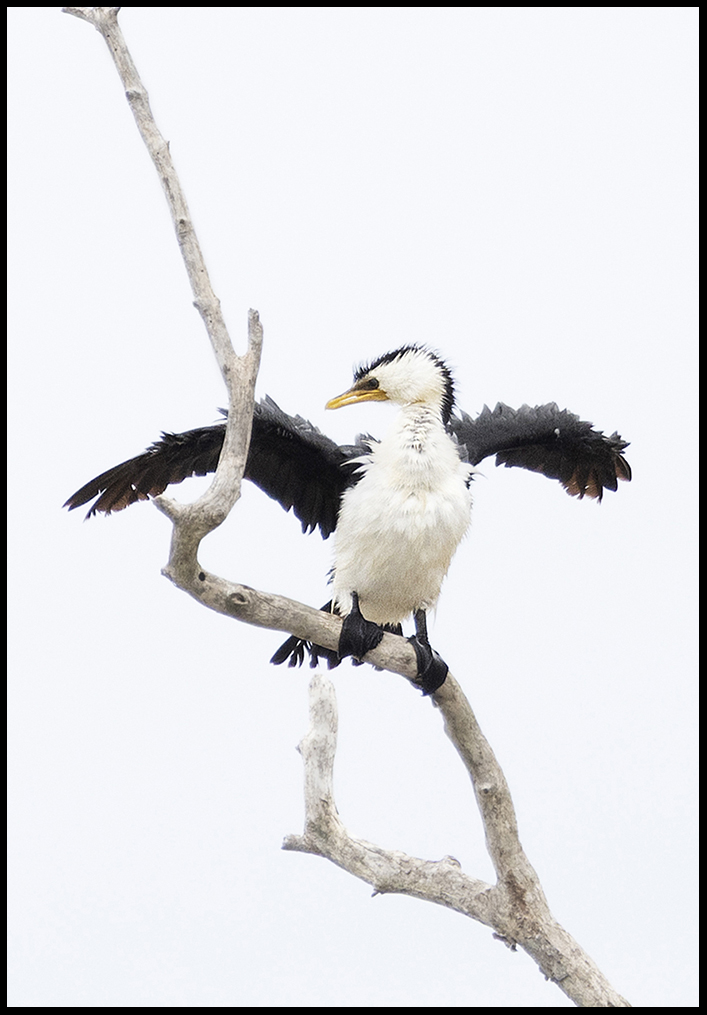
More common birds to follow. Here a Little Pied Cormorant landing.
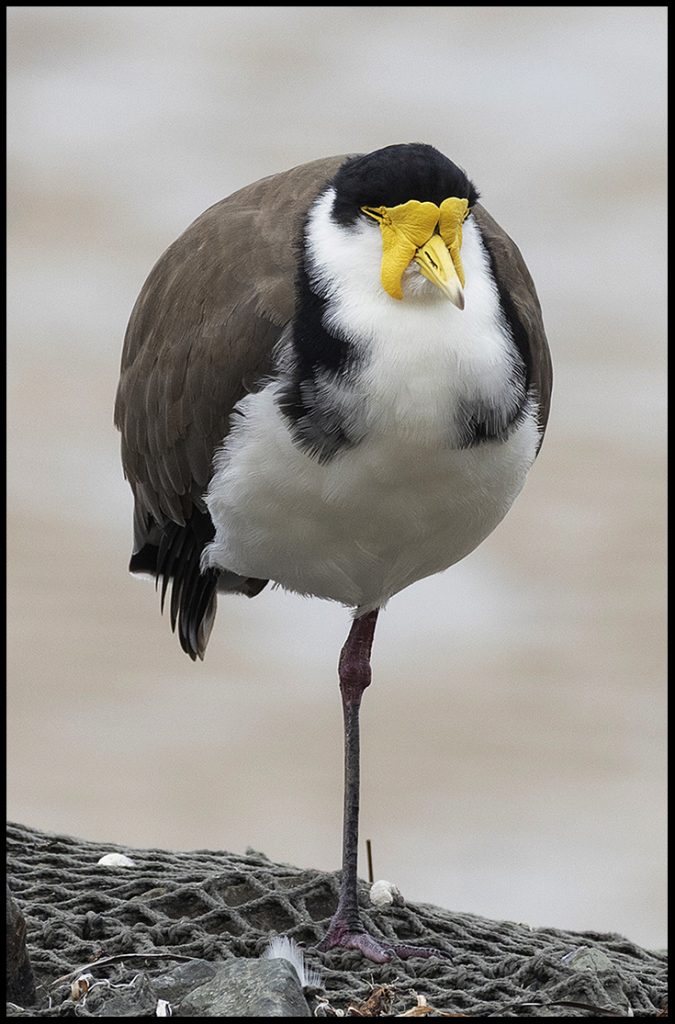
A Masked Lapwing snoozing.
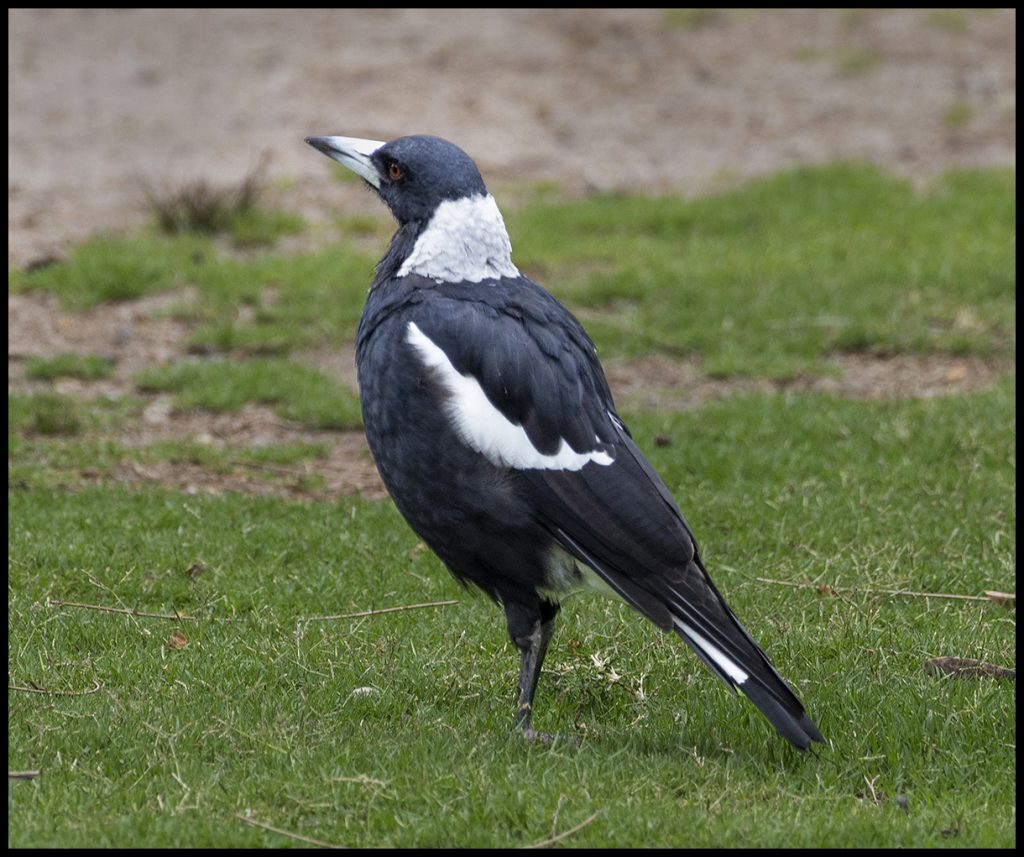
Australian magpie, black-backed variety.
Australian magpies have the most beautiful songs. They sing several notes simultaneously. I had longed to hear them again. Many birds in Australia have songs like no others… magpies, lyrebirds and laughing kookaburras most notably.
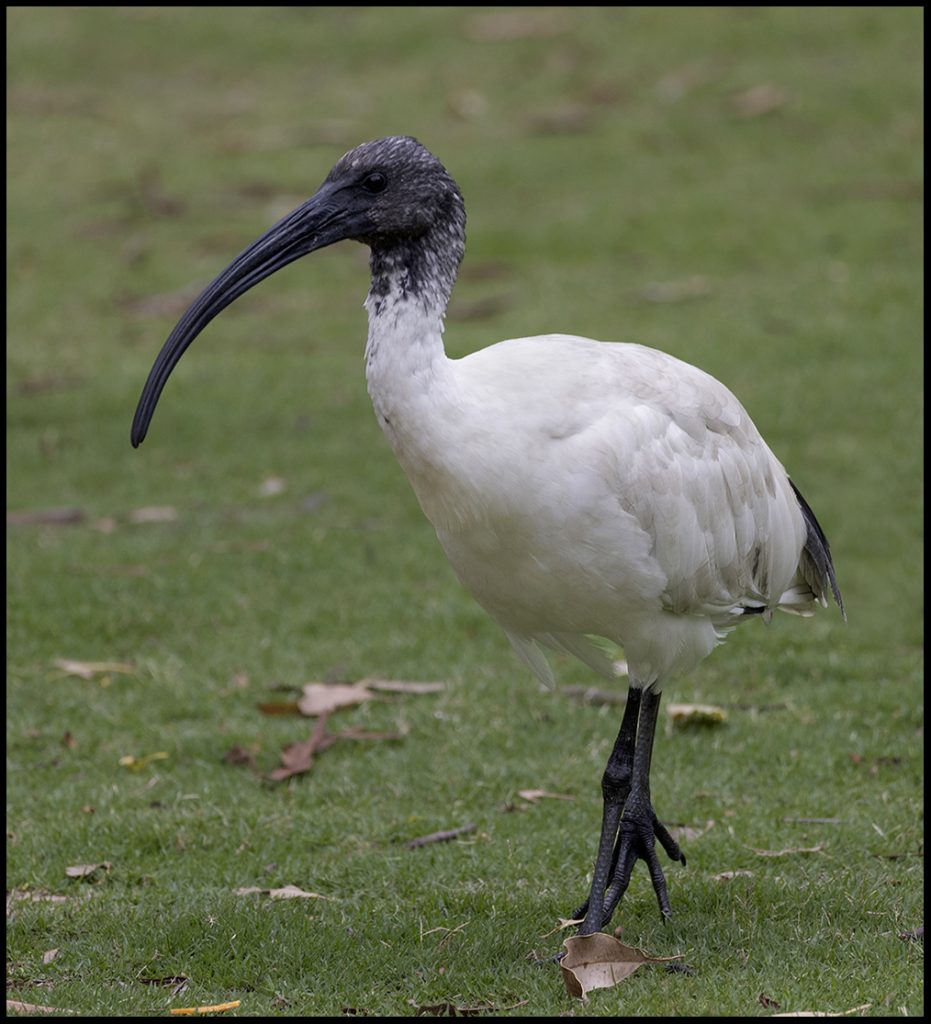
The Australian white ibis, aka sacred ibis, are not lovely songsters.
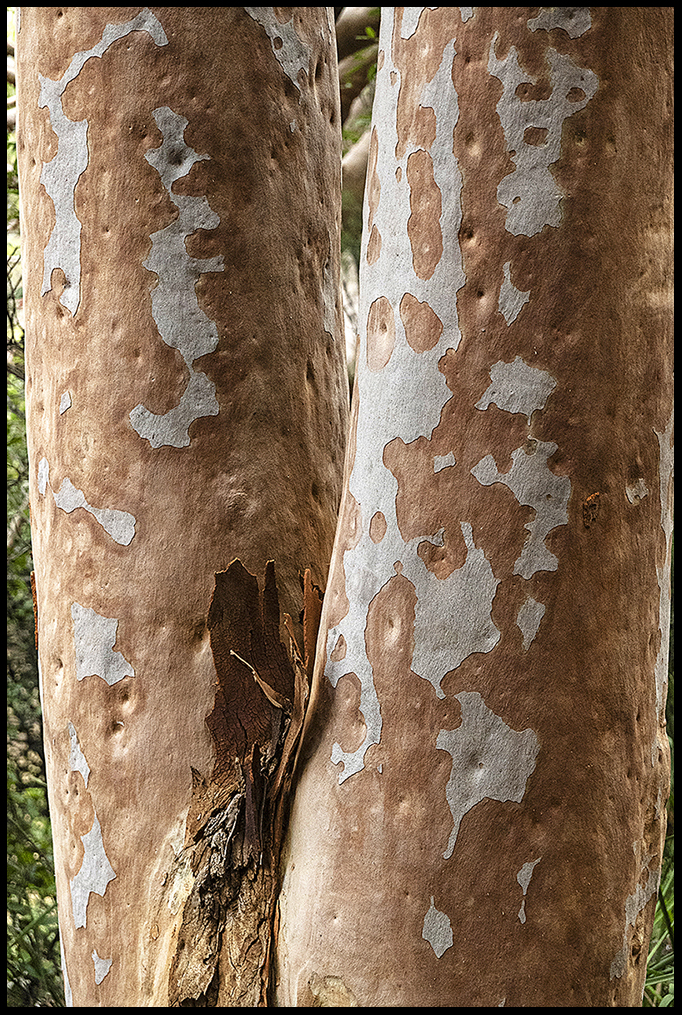
Eucalyptus tree bark. There are about 900 species of eucalyptus, almost all native to Australia
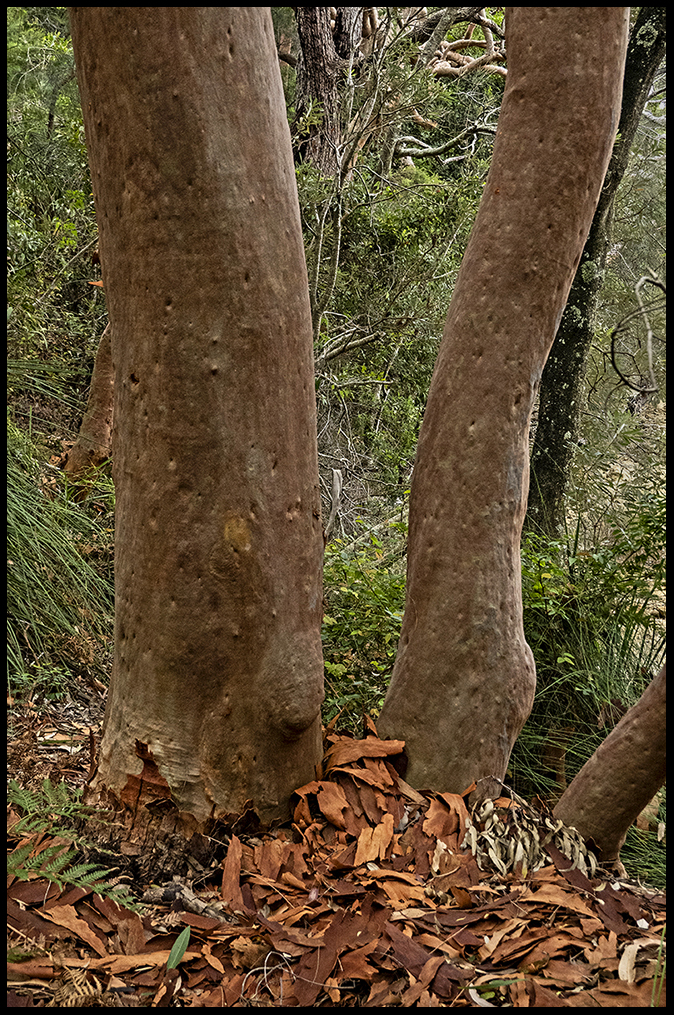
You can see why eucalyptus trees are such fire hazards, the way they shed bark.
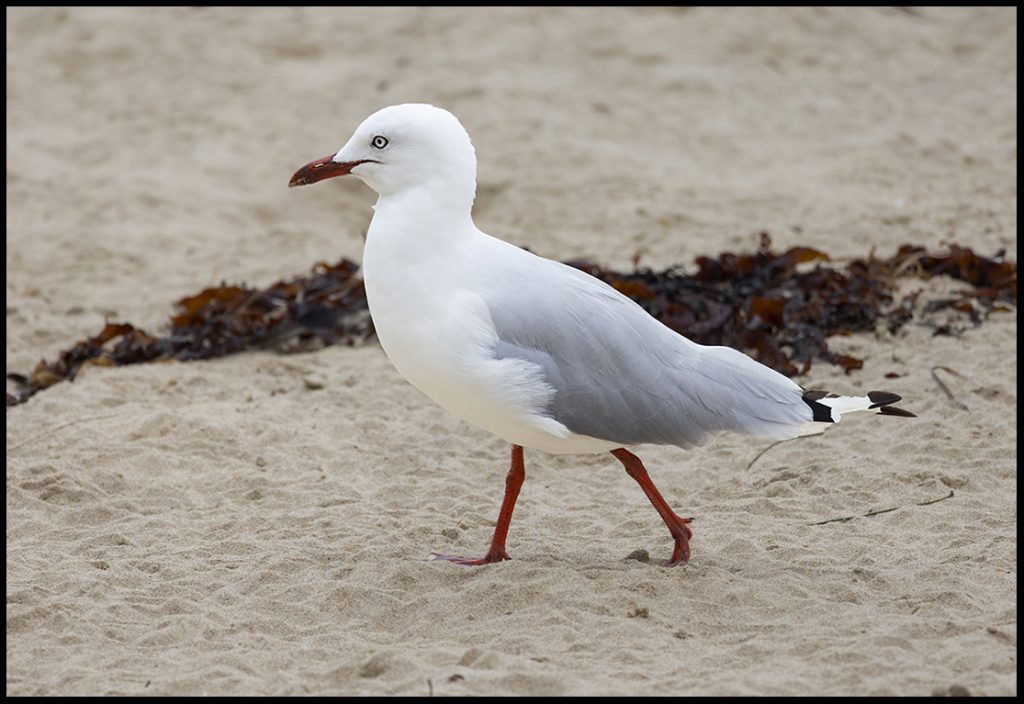
Silver gulls are by far the most common gull I saw.
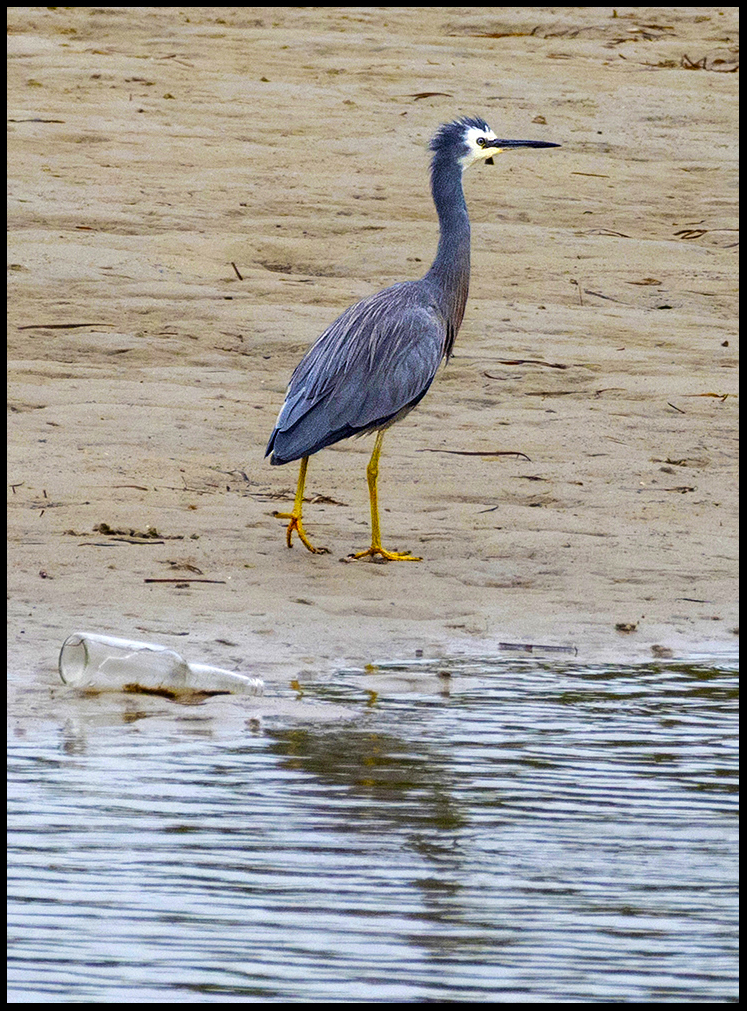
First of many White-faced Herons…
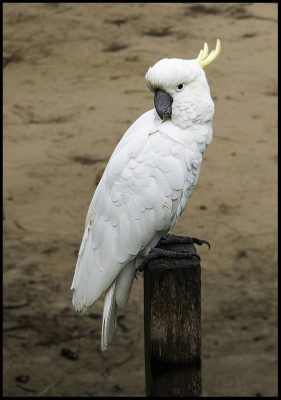
…and the definitely not endangered Yellow-crested Cockatoo.
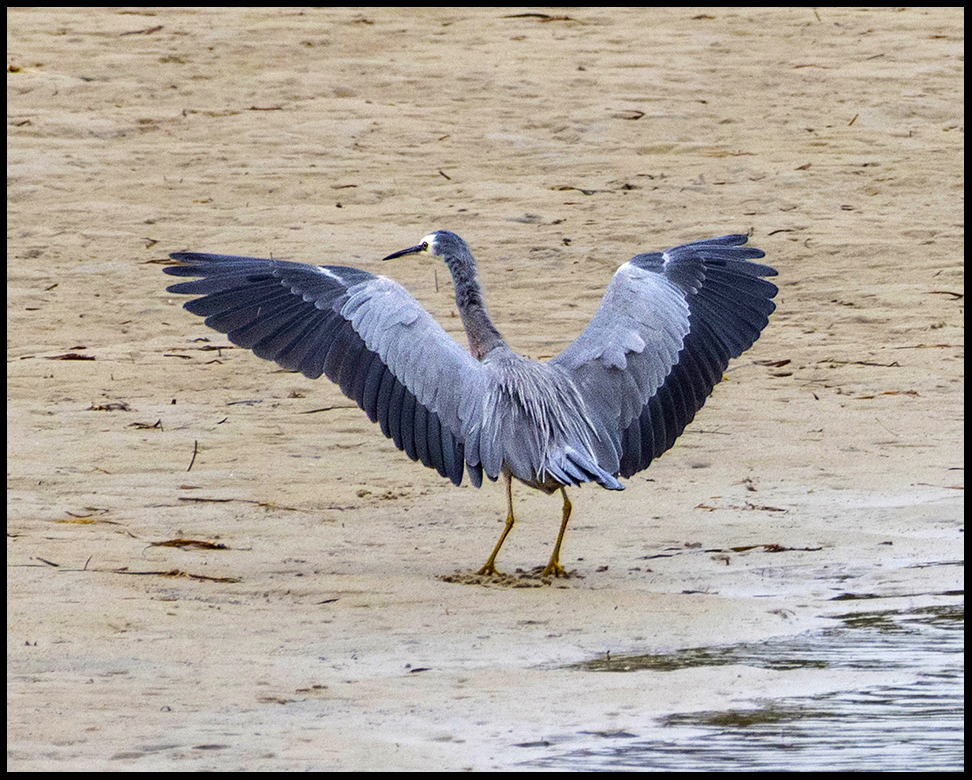
Heron showing its colors
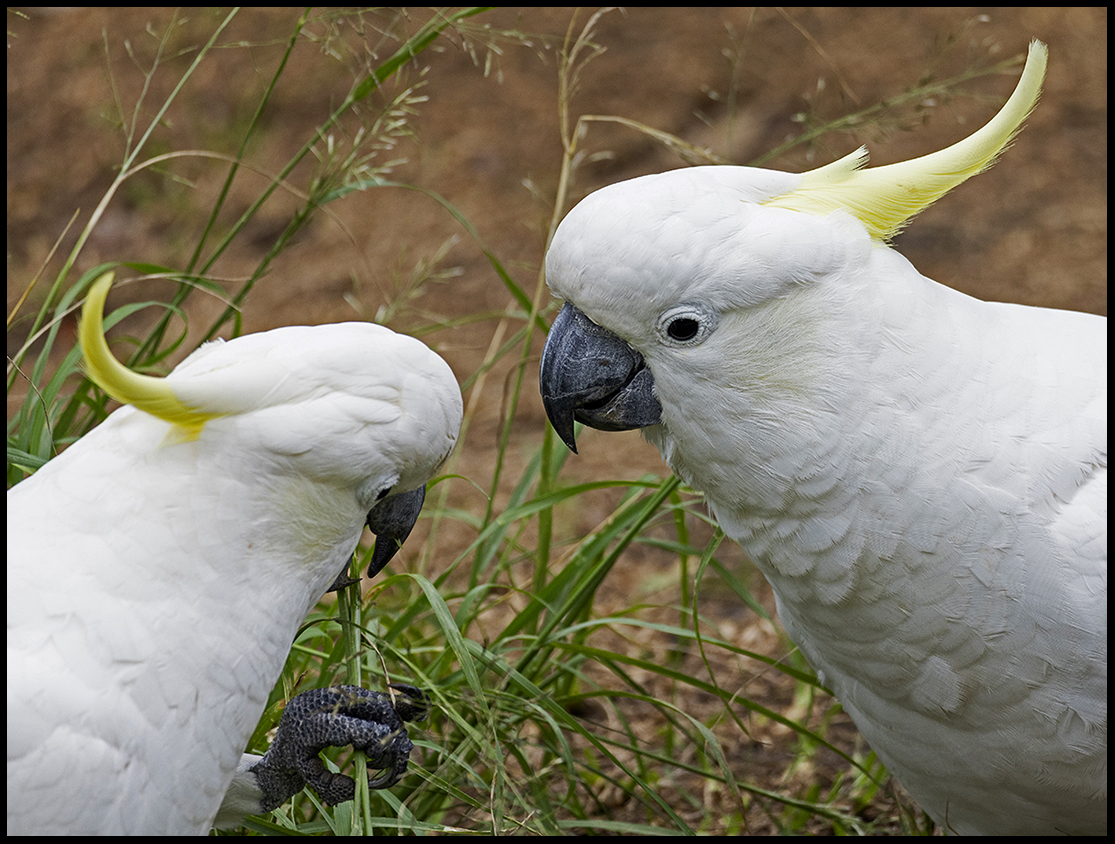
And a charming pair of cockatoos.
Now began my solo adventure in OZ. The reason I chose Indie Campers was because a number of the other well-known RV rental companies didn’t allow their vehicles to go to Kangaroo Island…and I wanted to go there. Indie has a questionable reputation, but the reviews varied dramatically, so I took a chance. Bad decision! Leaving the National Park to meet my friends who were now driving north to meet me, I creased the left side of the van on a low post at a narrow bridge’s end. I couldn’t take the van back as I had to meet my friends, so I continued. Then the gas gauge and speedometer failed (the RPM gauge never worked). I followed the traffic flow on the freeway and met my friends halfway. I emailed Indie and told them what happened, and asked if I could pay the excess insurance and get a smaller vehicle. Not only did they say no to that, but they demanded I drive the van back, pay the excess insurance, AND no refund, and no other vehicle! Followed by a series of threatening emails. Since it is illegal to drive with no speedometer (which one Indie agent inadvertently admitted), I parked it in a large shed and looked for a small RV to rent. Meanwhile, my friends, Beris and Andy, showed me around Narooma, a charming city five hours south of Sydney. This southern stretch of New South Wales is a playground for locals and tourists alike. Ocean to the east…mountains to the west.
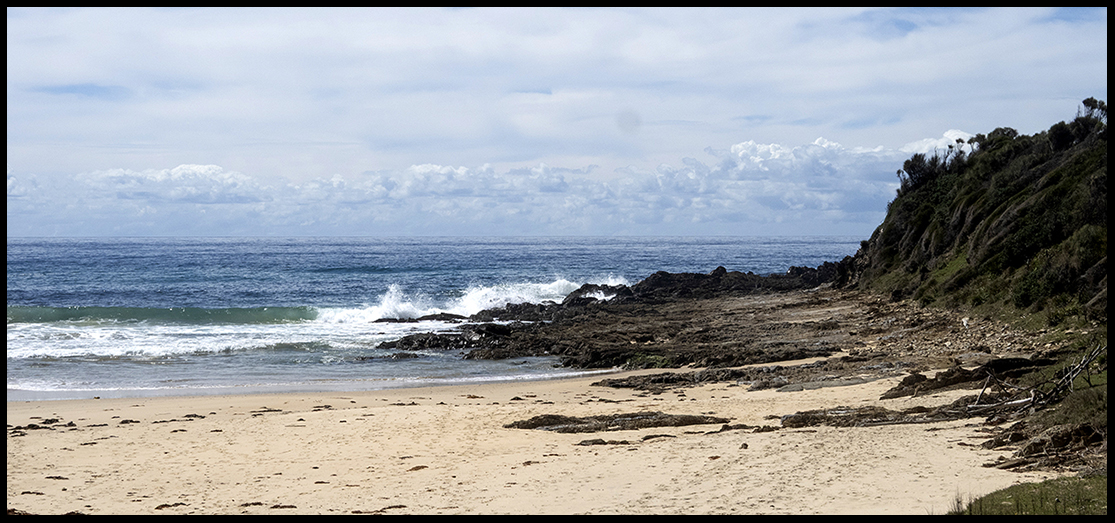
Many miles of shoreline on the SE coast are wild.
Beris, my good friend in Narooma, works for WIRES, a wildlife rescue and rehabilitation operation. She plucks living joeys from the pouches of female kangaroos and wallabies killed on the highways. Then she rehabilitates them until they are old enough to release in safer places.
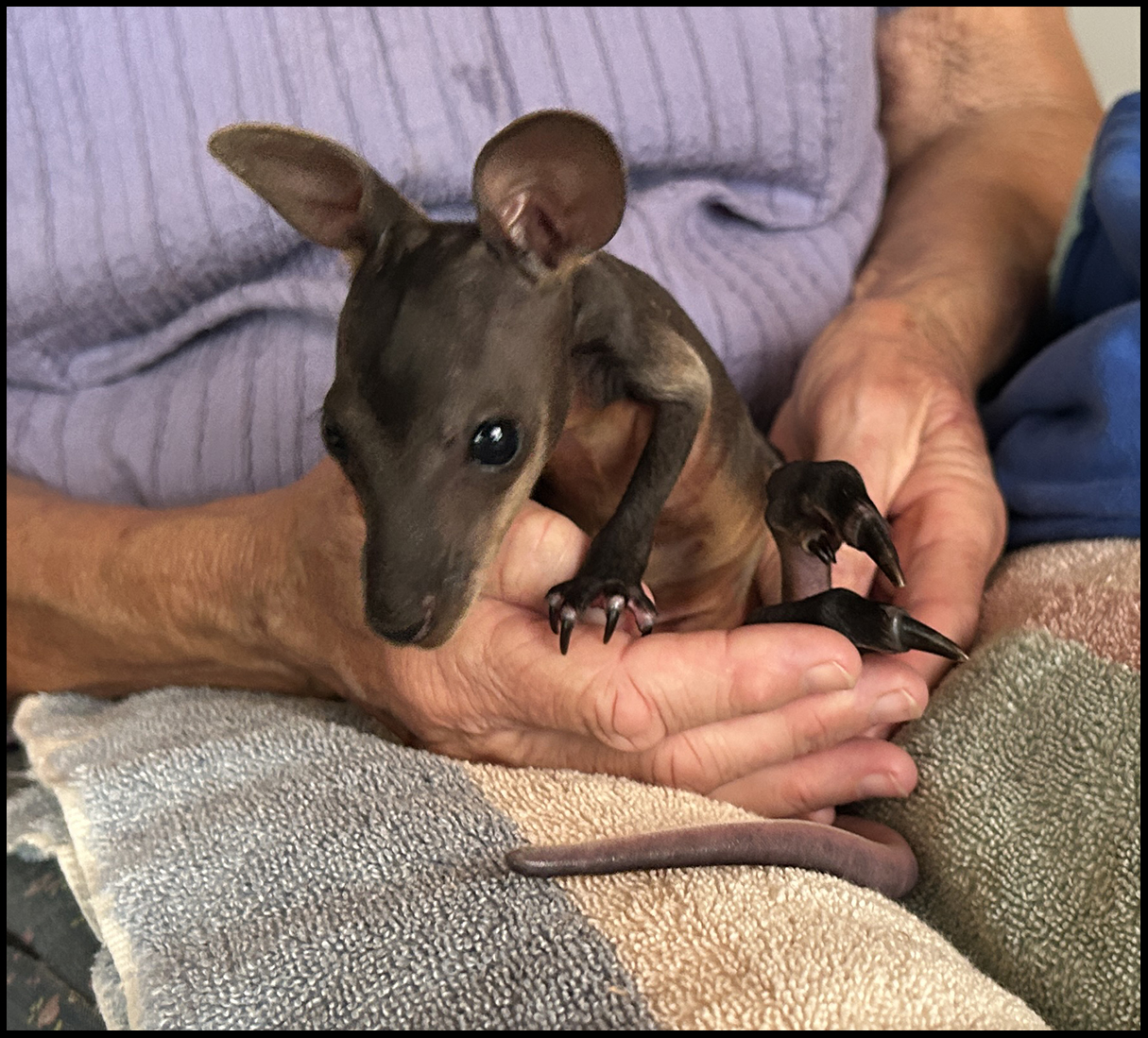
A newly orphaned wallaby barely 7 weeks old.
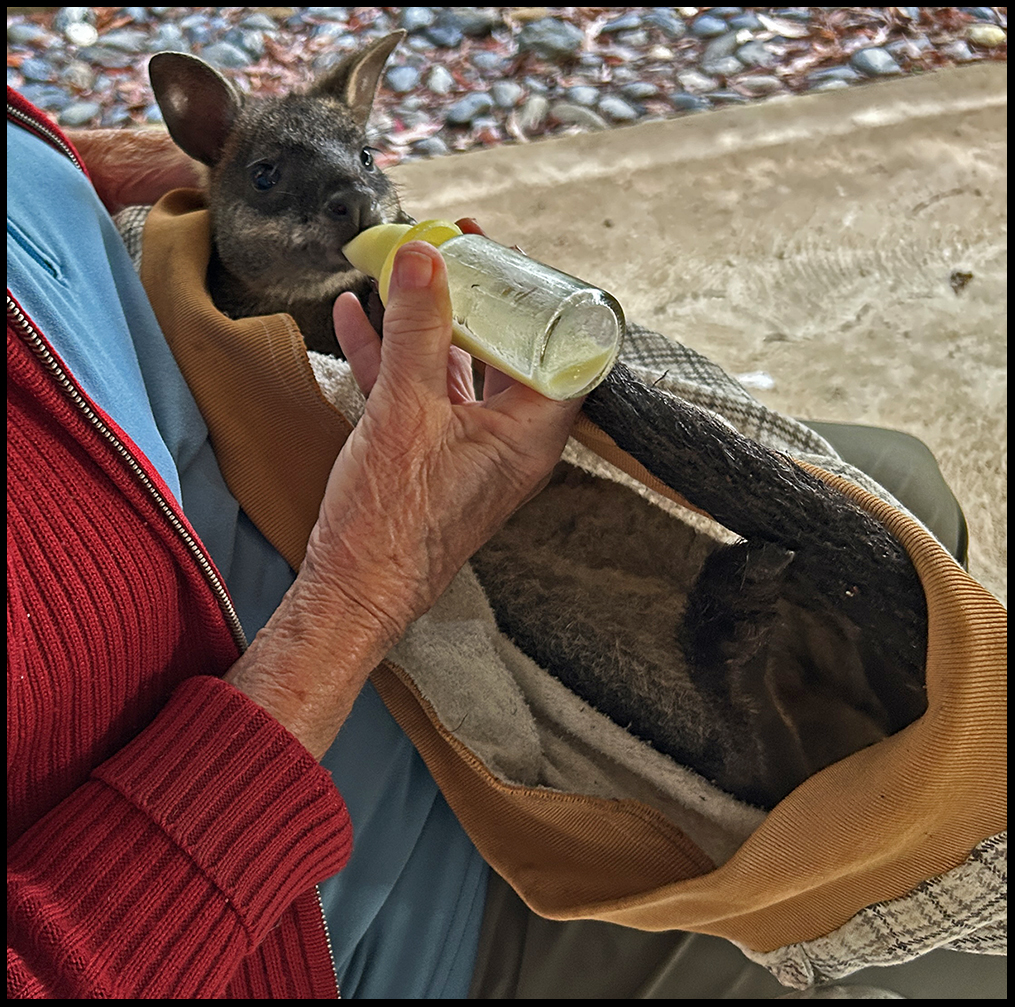
Feeding an older swamp wallaby nearing the size for release.
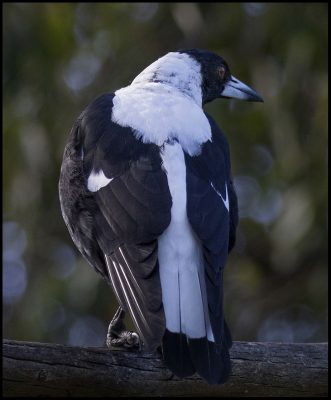
The dad magpie has a bum foot, but it doesn’t seem to slow him down. These are the white-backed variant.
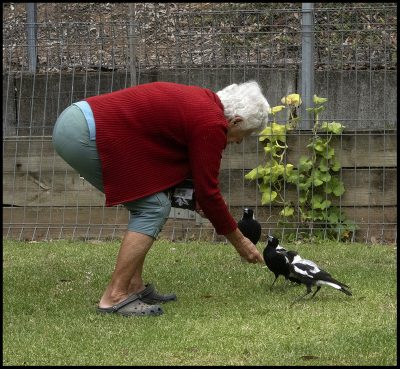
She also has a family of magpies that come to her punctually at 4PM daily for treats.
Every day for 5 days, Beris took me to a different scenic area near Narooma. One day, near Moruya, she showed me a colony of Grey-headed flying foxes. These are large fruit-eating bats only found in forested areas of SE Australia. There are a number of different species of flying foxes in OZ, but these are the largest. They leave their safe roosts at dusk and fly out to find nectar, pollen and fruits to eat. The giant bats serve as vital pollinators and seed dispersers.
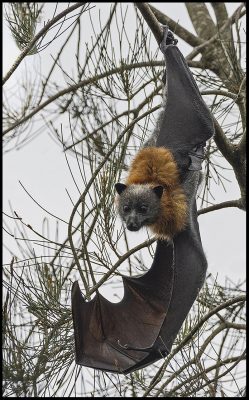
Grey-headed flying fox stretches in its roosting tree.
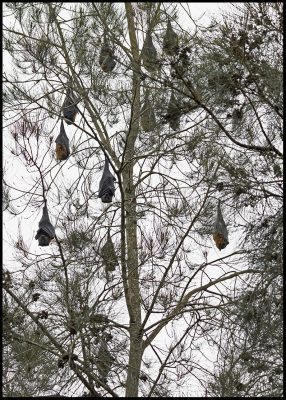
Bats sleeping during the day in the colony.
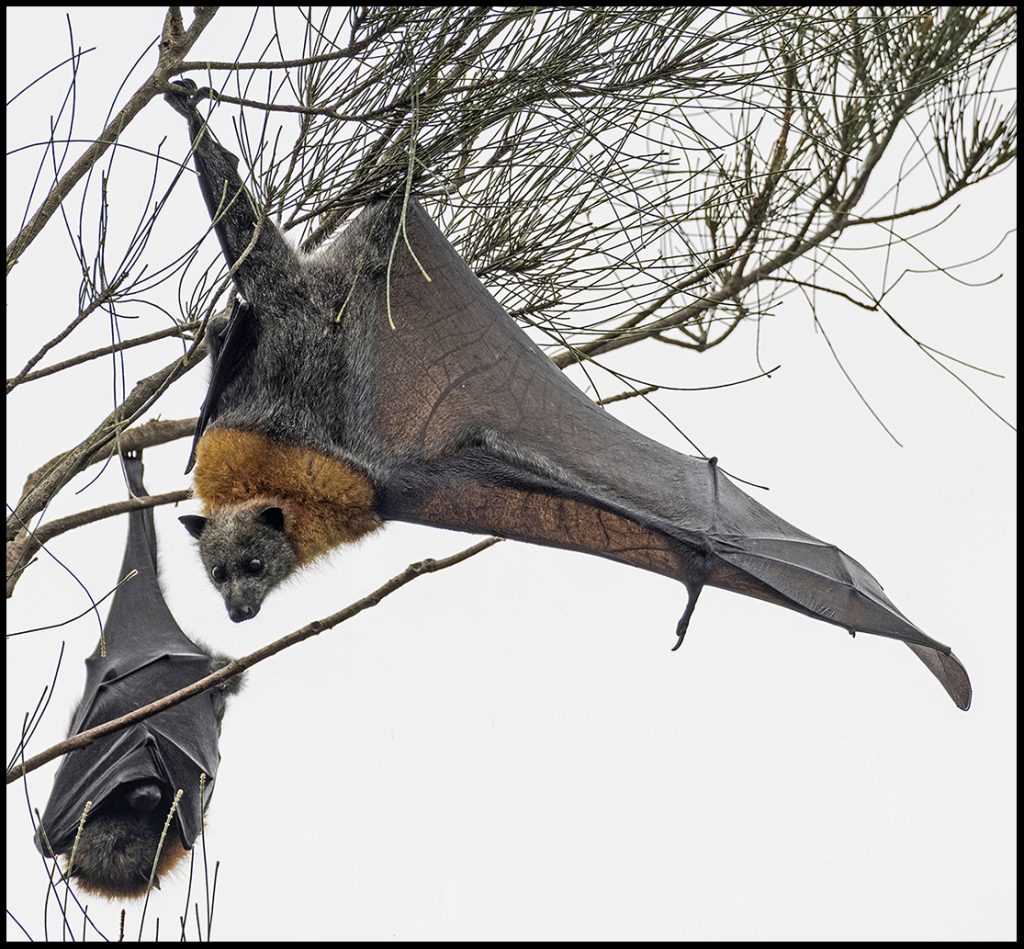
Another stretches before going back to sleep.
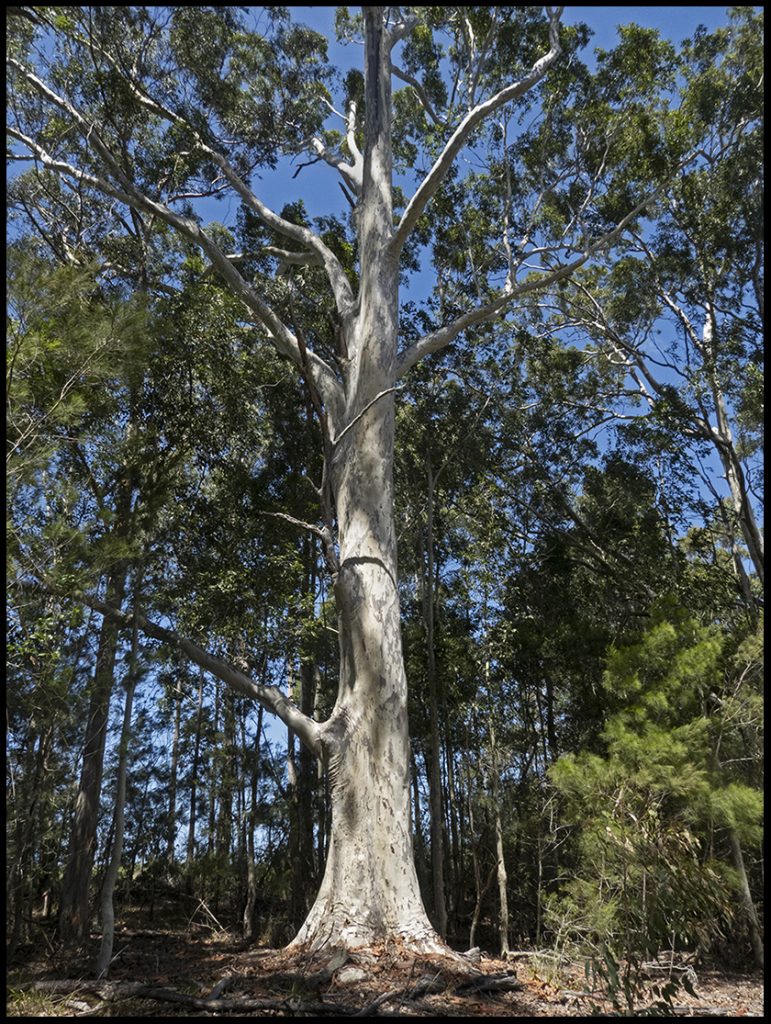
One day we headed off for a ridge walk. A large spotted gum caught my attention.
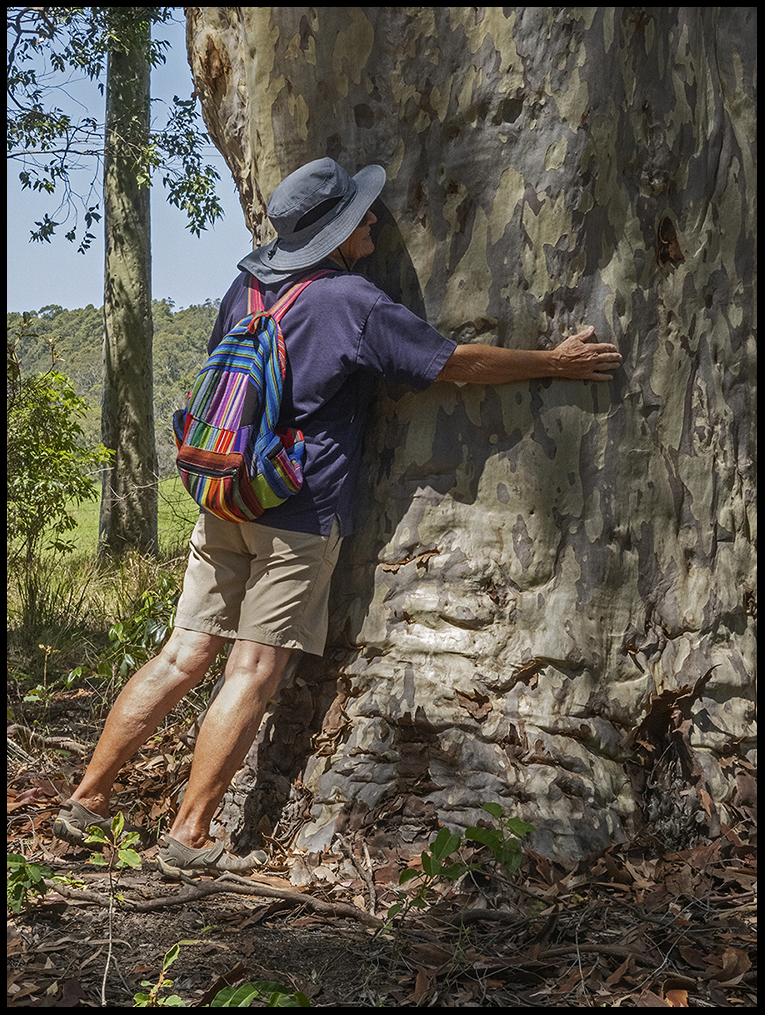
Beris demonstrates just how big it is.
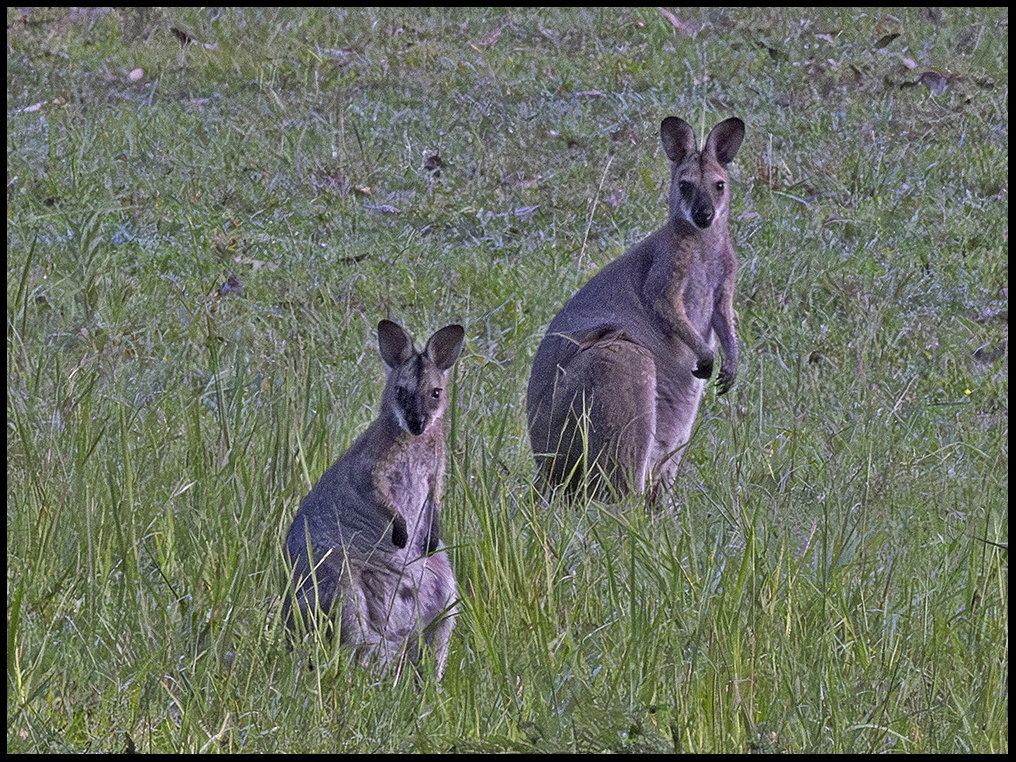
Red-necked wallabies in Beris’s yard
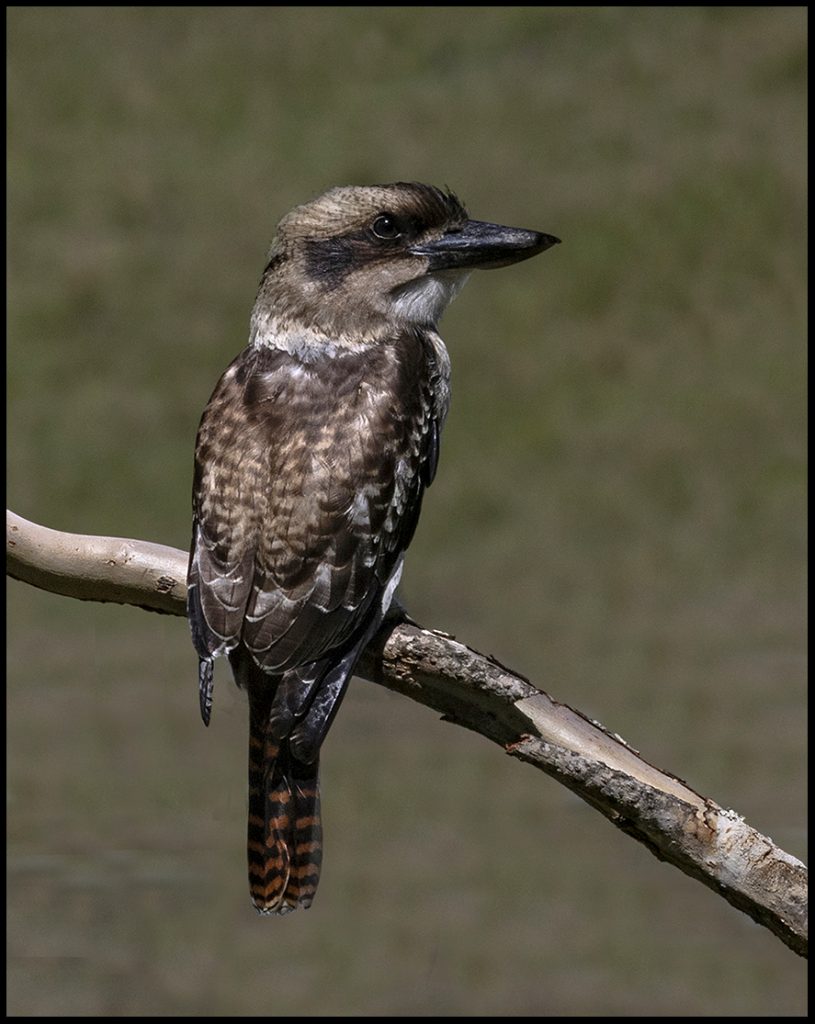
The first laughing kookaburra of this trip
Purple Swamphens skulk around pond edges.
Another day we visited Australia Rock, a natural result of thousands of years of erosion of the ancient chert and shale headland, the result of uplift pressure from the Pacific Plate’s collision with the land.
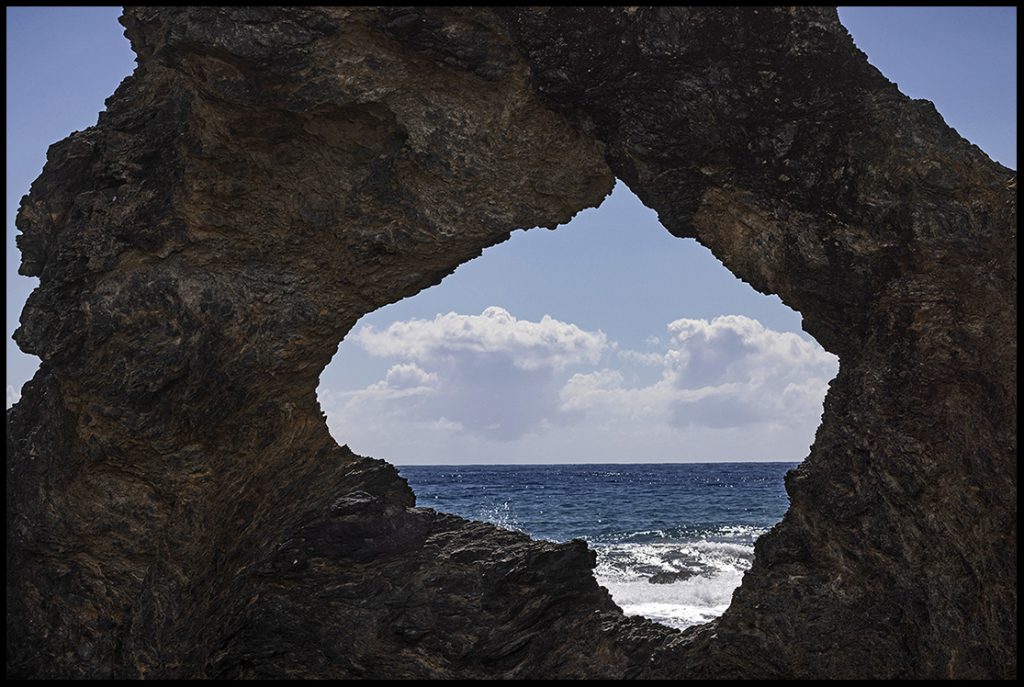
Natural formation that looks like the Australian continent minus Tasmania. I’ve cropped it close because now a road runs in front of it.
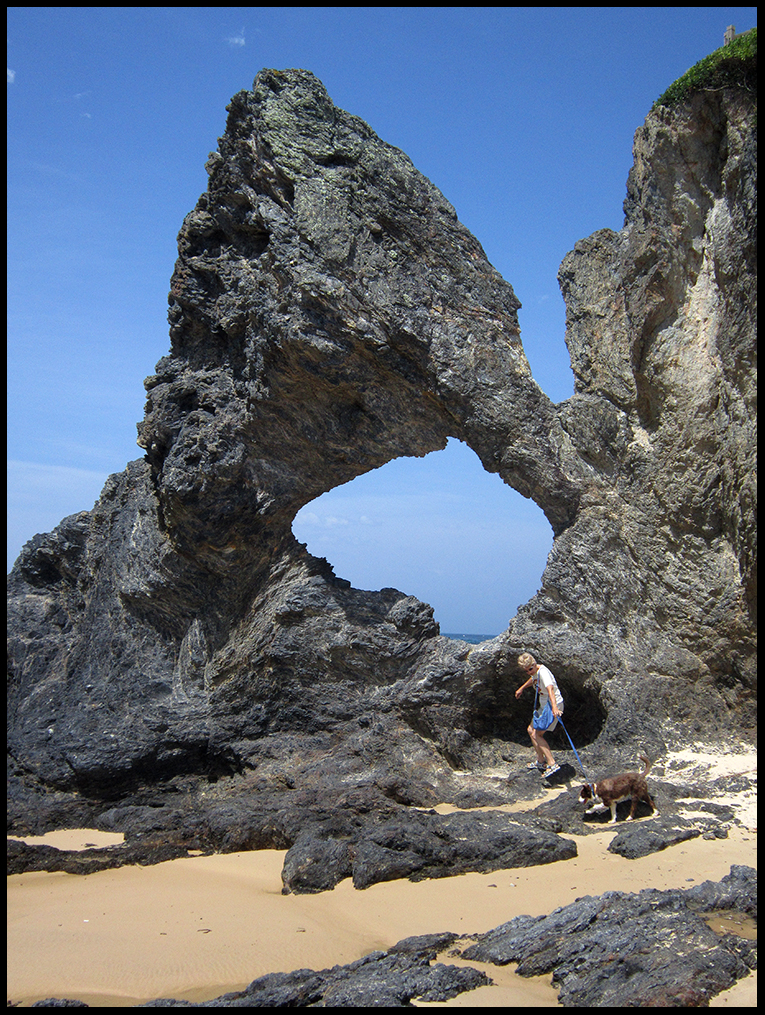
Photo from 2011 showing Beris climbing over sand and rocks to get to Australia rock. No road then.
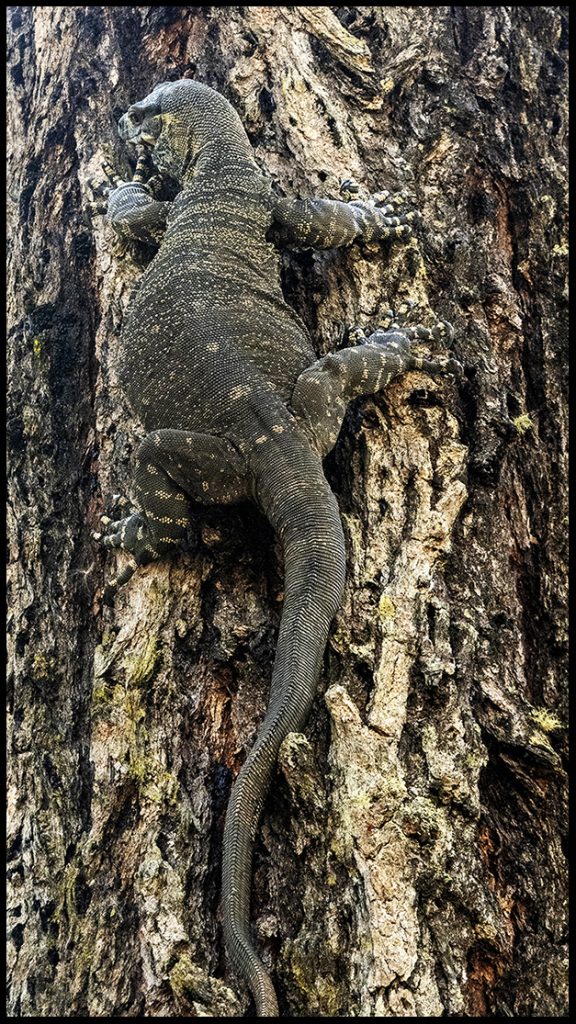
The only goanna I saw the entire trip. They they used to be very common. Goannas served as a food staple for the original OZ inhabitants.
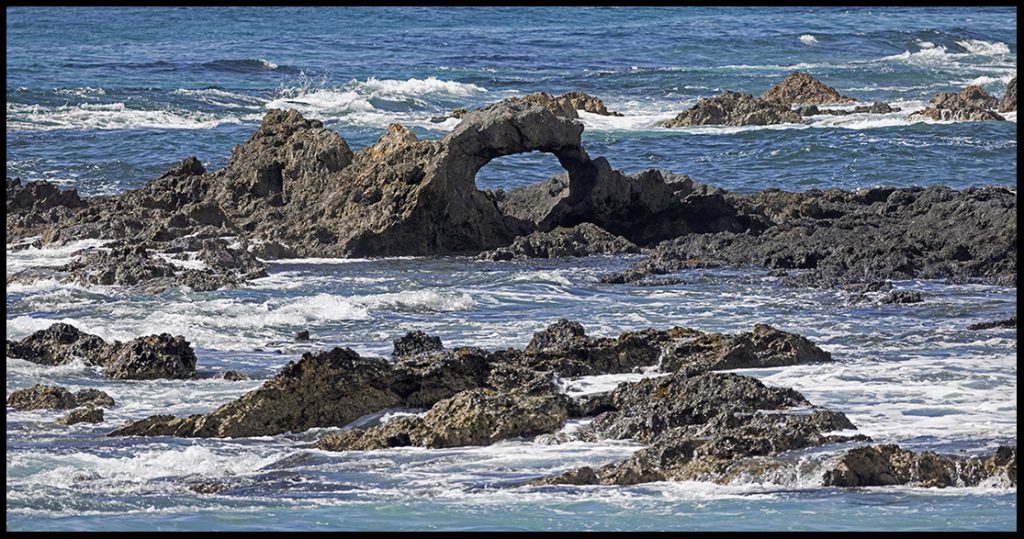
Off-shore, similar rock formation
Nearby New Zealand fur seals, now just called fur seals, lounge on rocks. They needn’t worry about losing their skins here.
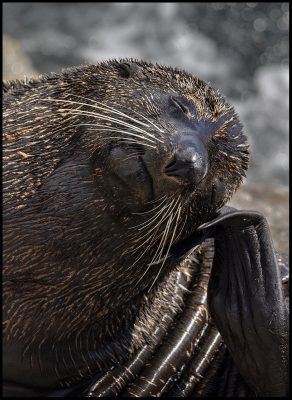
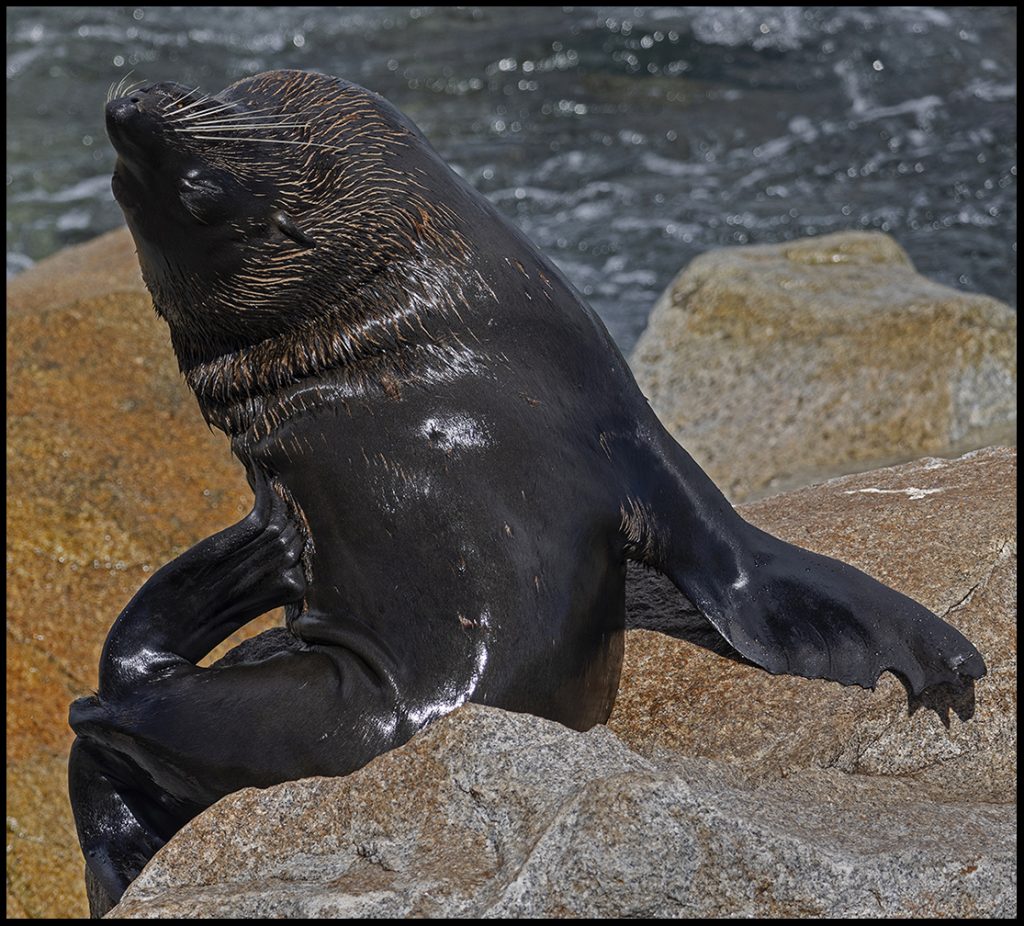
Ahh, how sweet life is.
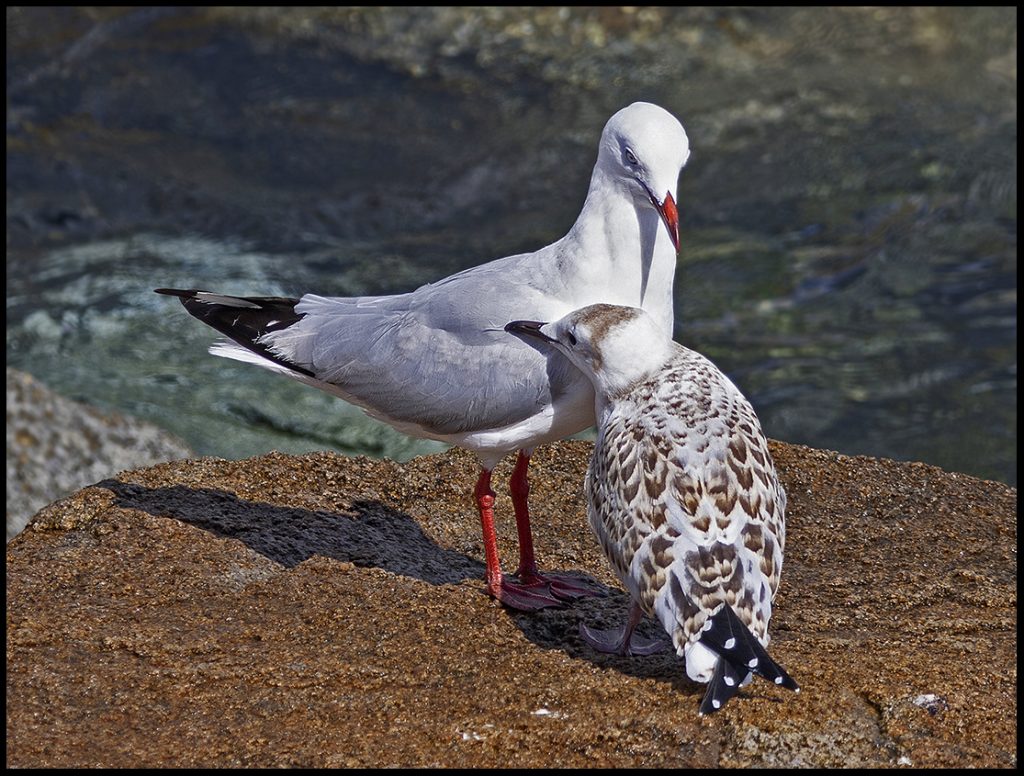
Silver gull parent and young.
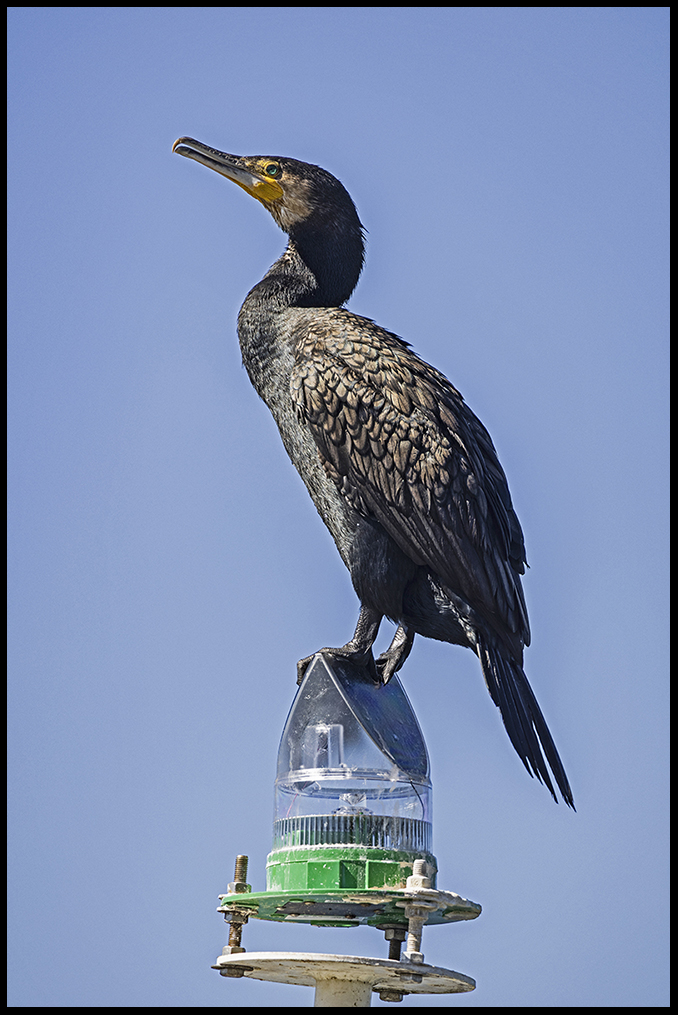
A great cormorant
I wanted to mention a lovely coastal walk in Narooma. There, besides this Great Cormorant, we saw a tiny, golden seahorse twining its tail around some kelp. But the most impressive sight was the number of giant stingrays with wingspans about 6 feet, that swam right up to shore. (Didn’t have my camera, sorry.) Obviously, someone has been enticing them in, probably with food, although today they went away hungry.
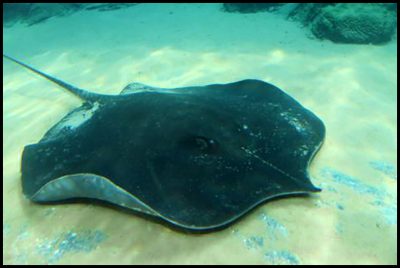
An internet photo of a giant stingray. It probably isn’t the same species, but it gives one an idea of what they look like.
It had been a hot and dry summer, but as autumn approached in the antipodes, rains started in earnest. The northern states got drenched with flooding reaching as far south as Victoria and South Australia. Fortunately, I stuck to the southern coast avoiding the worst of it. I saw lots of clouds, but very little rain.
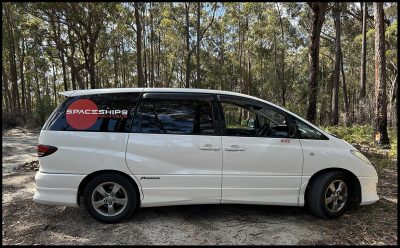
The new, less deluxe camper…more my style and size.
My new RV, a Spaceship, suited me. It’s the perfect size for a single person. Two would have been crowded. It didn’t take long for me to appreciate the petrol-sipping Toyota engine. The US had recently attacked Iran and fuel prices were starting to rise. In just a few weeks gas prices were soaring. Diesel (which the giant camper sucked down) was topping out around $10/gallon, while regular gasoline neared $8. This adventure was getting very expensive. But finally, I had my own wheels and got on the road. First night out I found the free, Logger’s camp. Very funky, but no one was there. It looked like a local ATV weekend playground and dump site.
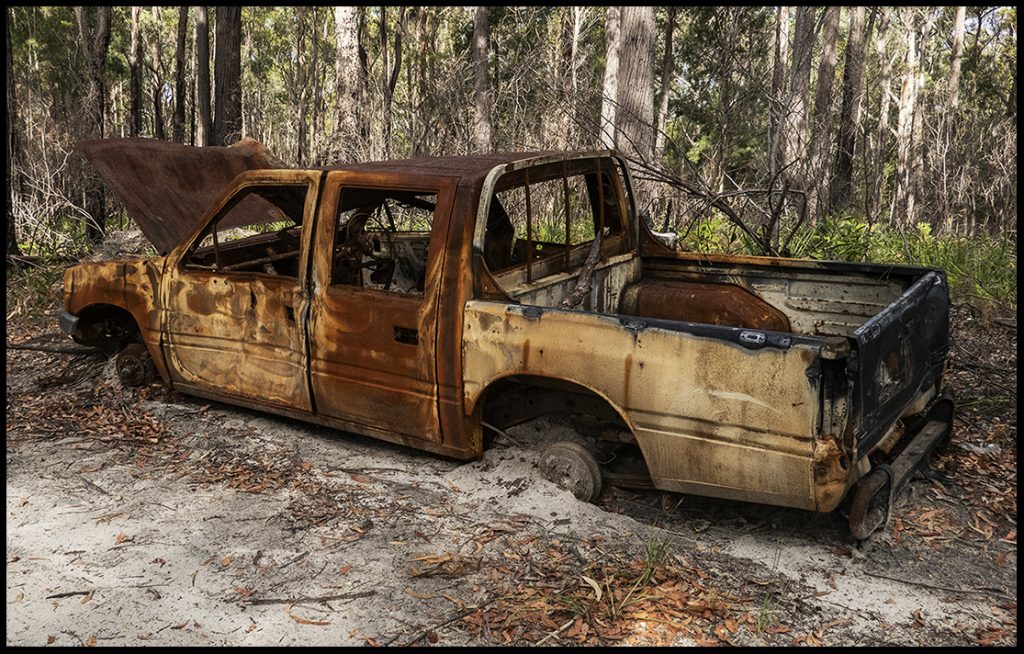
Greetings to Logger’s camp.
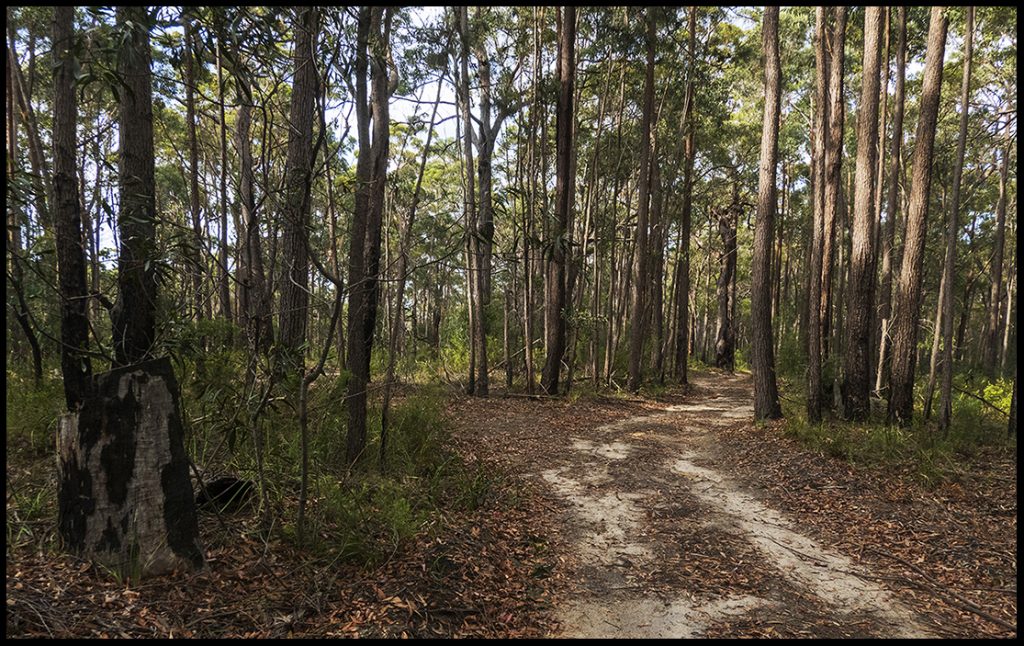
But the trails were lovely. There are signs the area has burned.
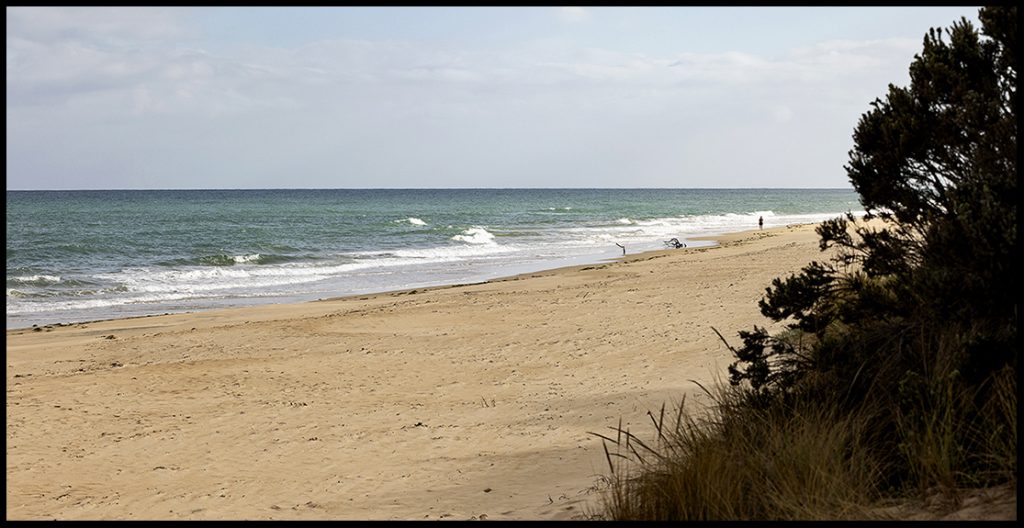
Next night I found another free camp over the dunes at Reeve’s beach in Victoria on the Tasman Sea…a long day’s drive from Logger’s camp. (There are camping apps and books to help folks find free places to camp.) Reeve’s beach stretches for miles. Rain in the morning convinced me to leave sooner rather than later to go meet a new photographer friend in Melbourne.
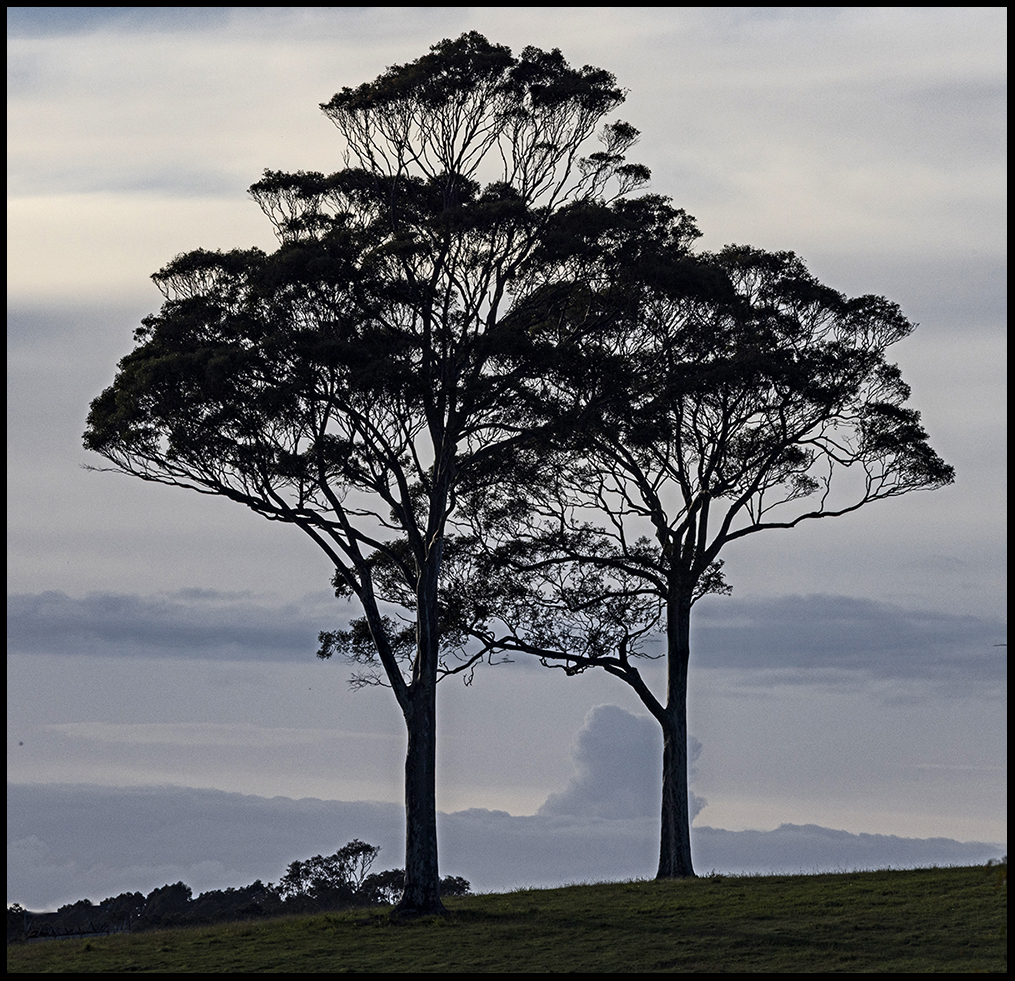
Until the next chapter, I’ll leave with a shot of twin gums on the hillside across from Beris’s house.