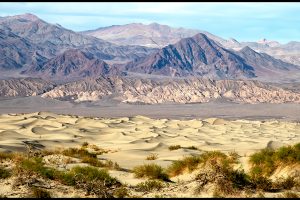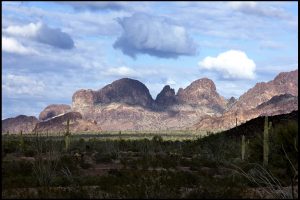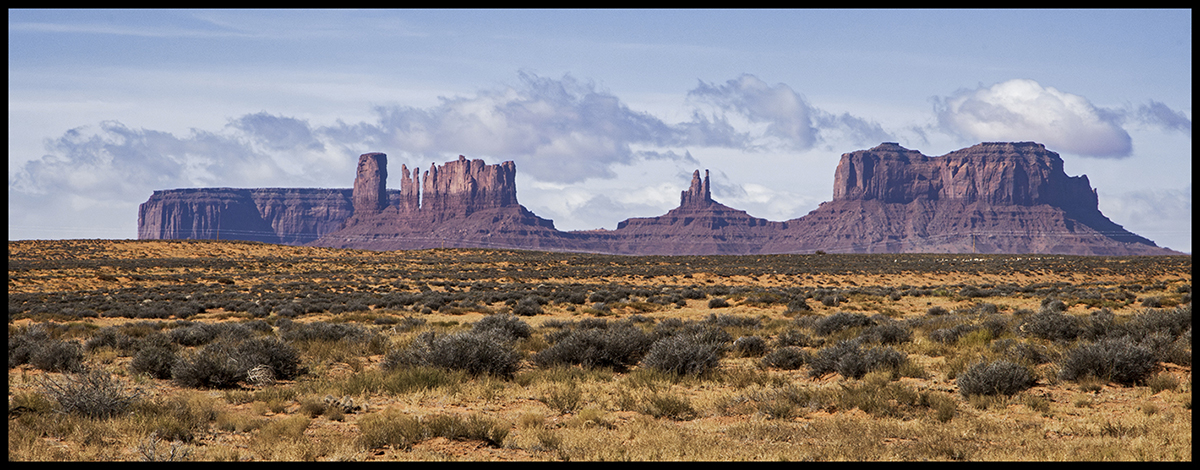
Monument Valley
If you are planning a Southwestern winter get-away camping adventure, I have a few suggestions of places to include. All have practically unlimited dispersed camping options except for Organ Pipe National Monument. We went in mid-March.
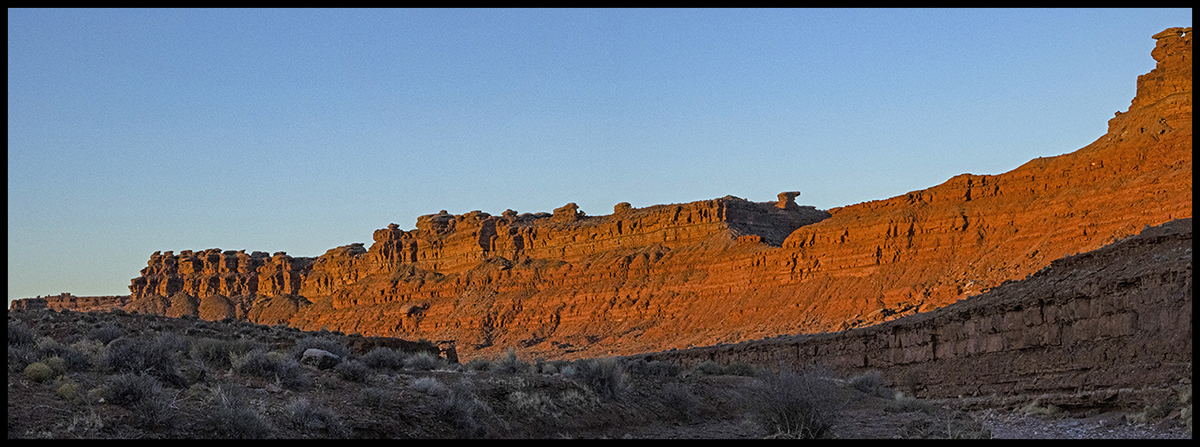
Valley of the Gods in SE corner of Utah
From our Colorado start, we headed west on I70, but soon were forced by impending snow/ice to drive south quickly on Hwy 191. We found a great site in Valley of the Gods in the SE corner of Utah. It was still windy and cold so we didn’t stay to explore as much as we’d have liked.
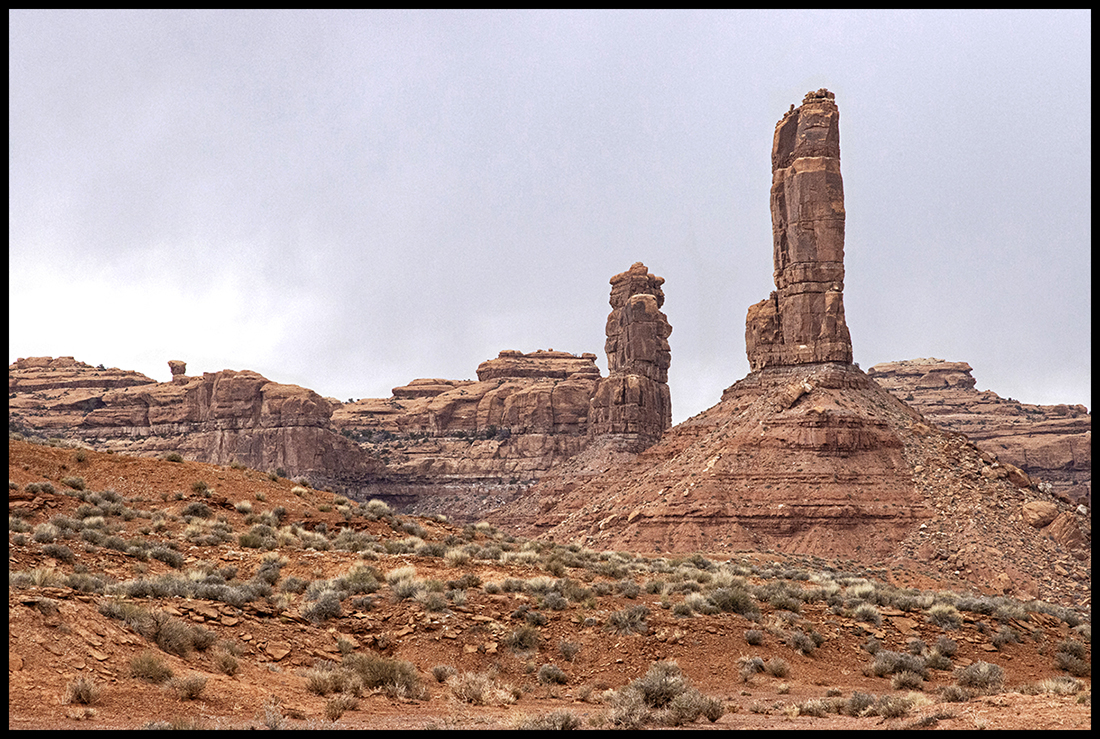
Stormy weather, with wind, shortened the stay.
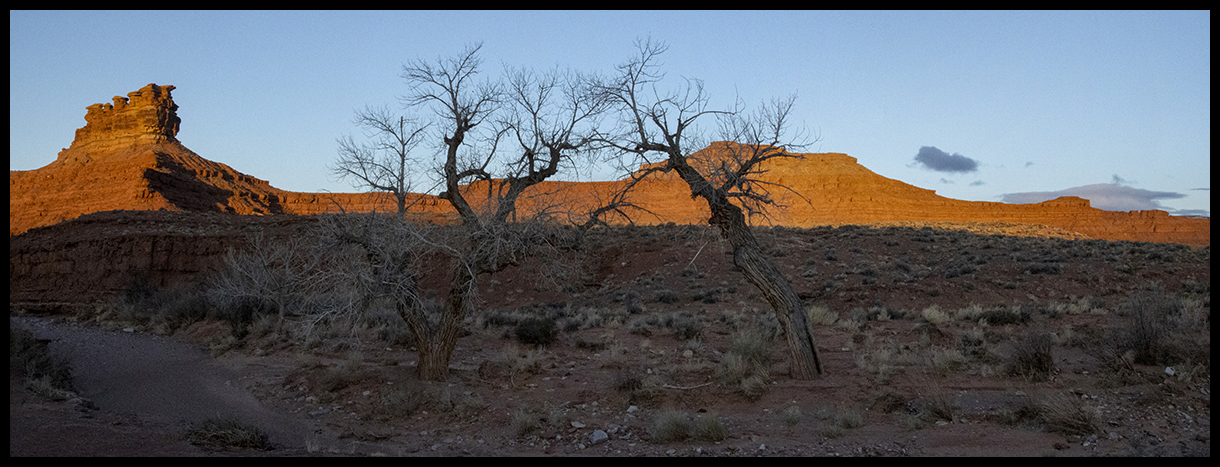
View from our campsite in a protected draw.
We moved on through Utah on Hwy. 89A to the Vermilion cliffs to spend the night not far from the condor release area. This time of year, the condors aren’t here, but worth a stop if you are here during more temperate times of year.
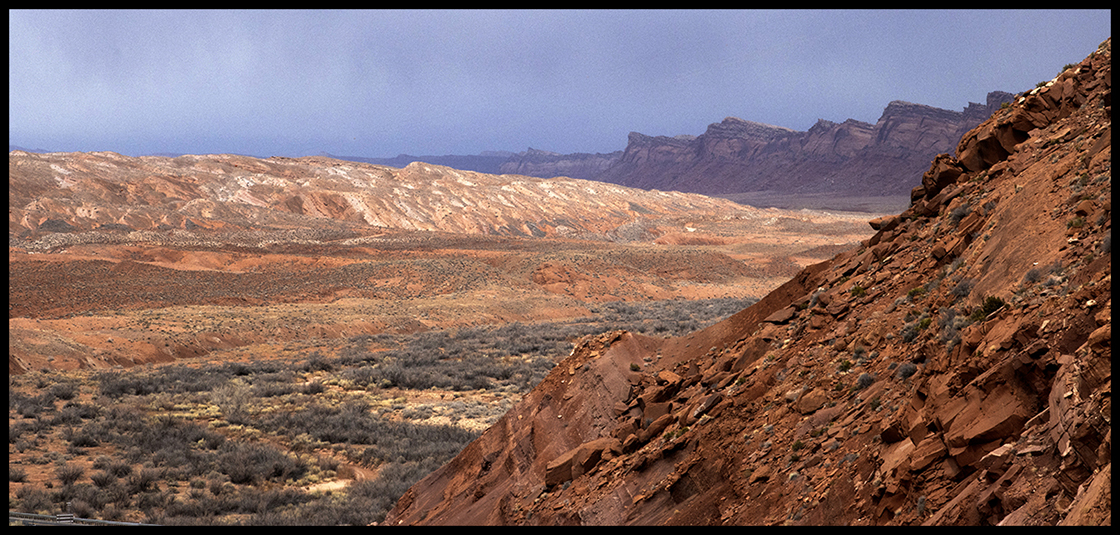
The Vermilion Cliffs National Monument in the background
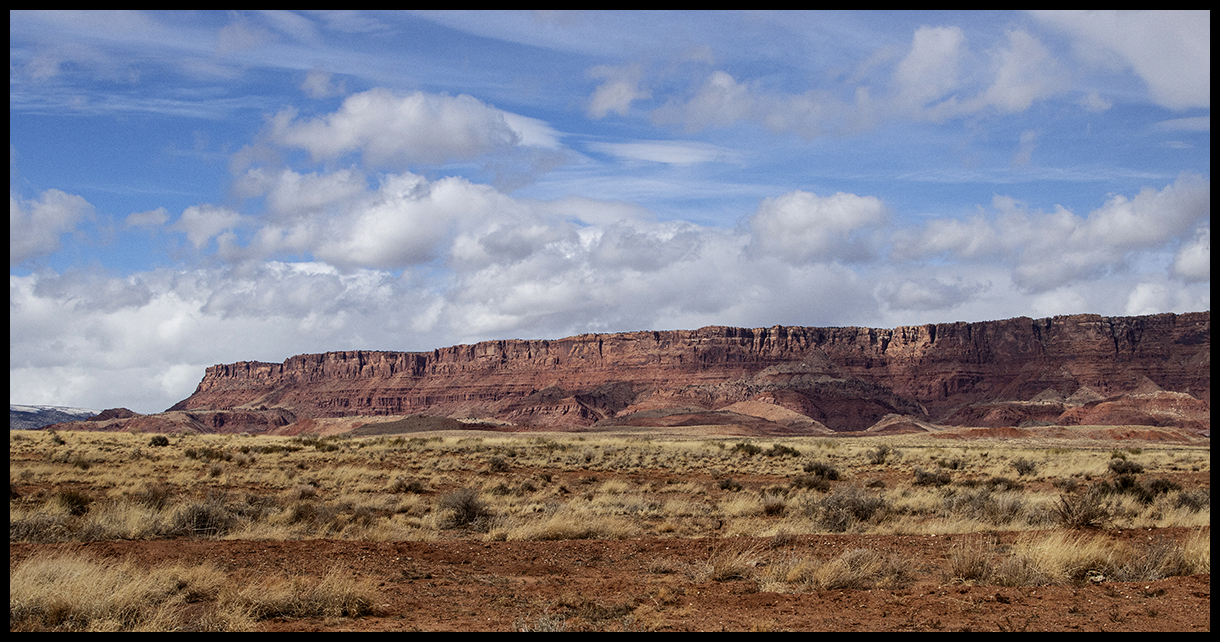
Edge of the Vermilion Cliffs Nat. Monument
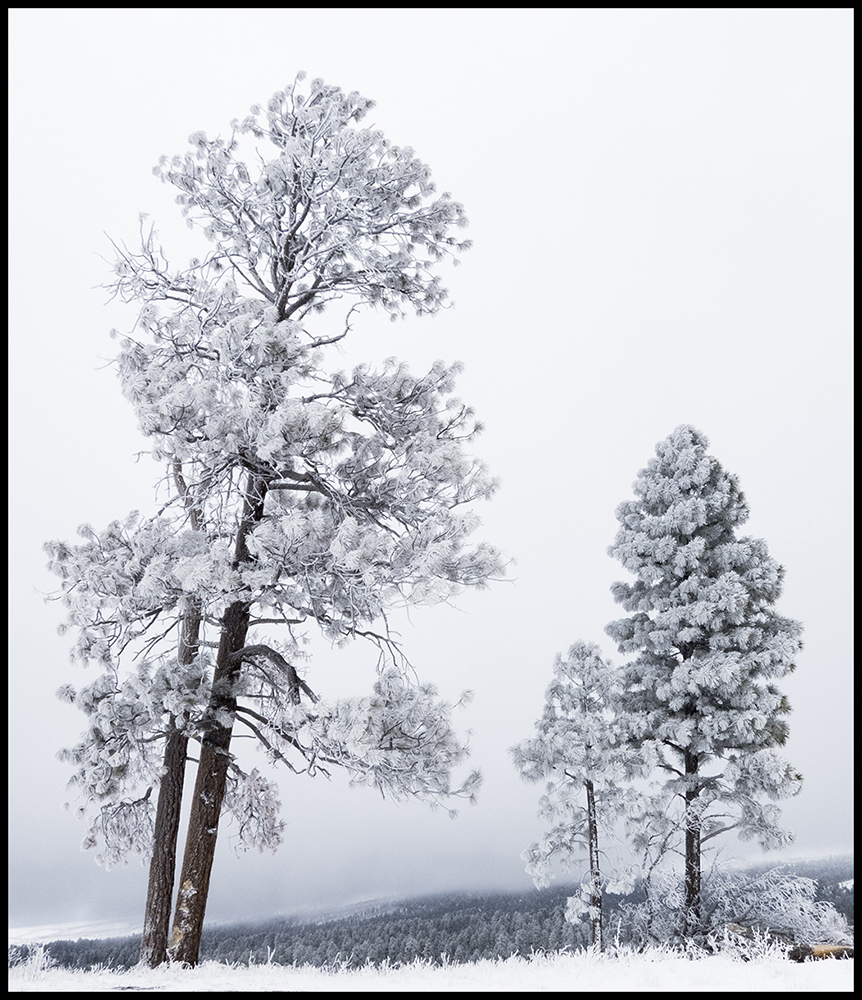
Snowy pass over the Kaibab Plateau
Next day, we drove over the Kaibab plateau. We found it had been freezing and snowing overnight, and were glad we hadn’t pushed on to camp on top. The fresh snow and foggy conditions made the mundane look spectacular.
Stop at Pipe Springs National Monument. It is very small, just a tiny piece of the Kaibab/Paiute Indian Reservation. In fact, so small, we drove right by it by mistake and had our picnic lunch in the Indian town of Moccasin…off limits to non-natives. We were busted by the local authority, but he turned out to be quite friendly, and told us about his life. He is 73 now and well educated. He regaled us with stories of his adventures off the Rez. He had recently returned to live out the rest of his life here.
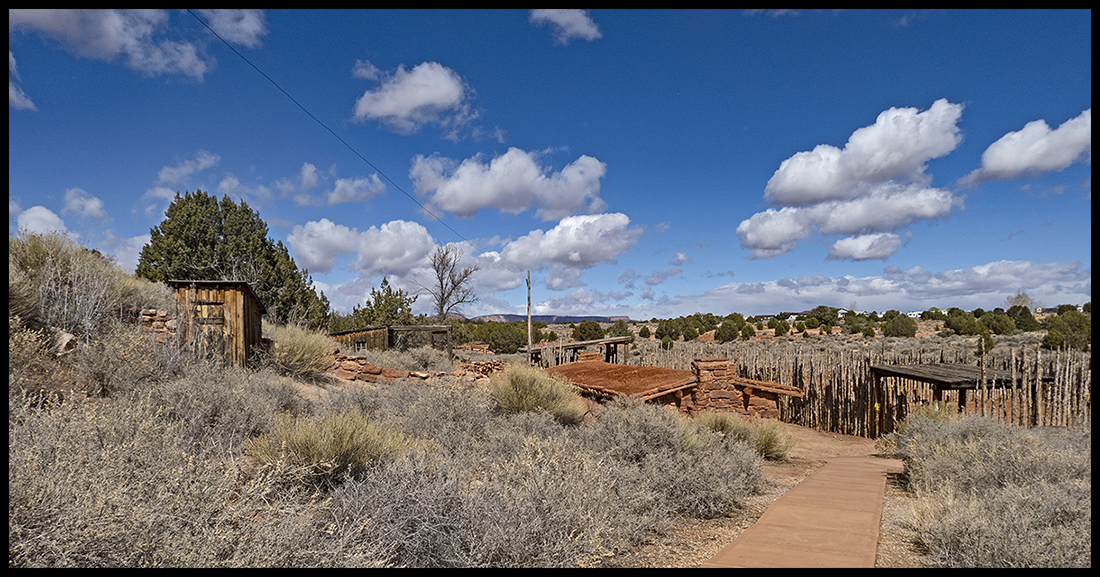
Pipe Springs National Monument
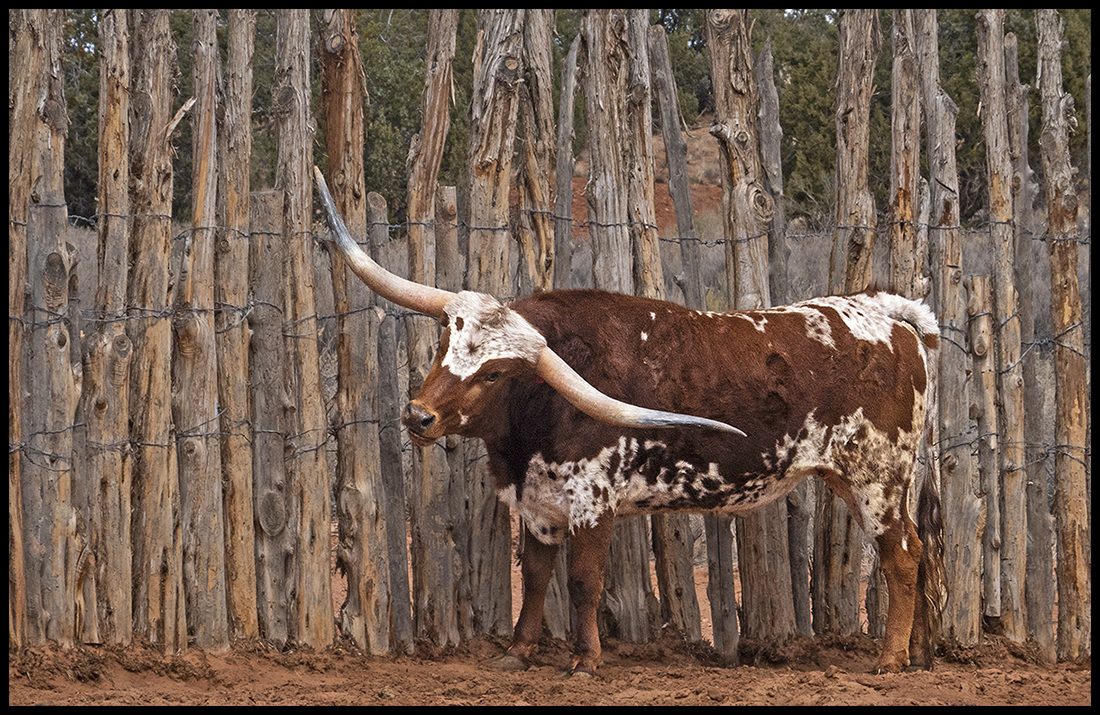
Stockade resident
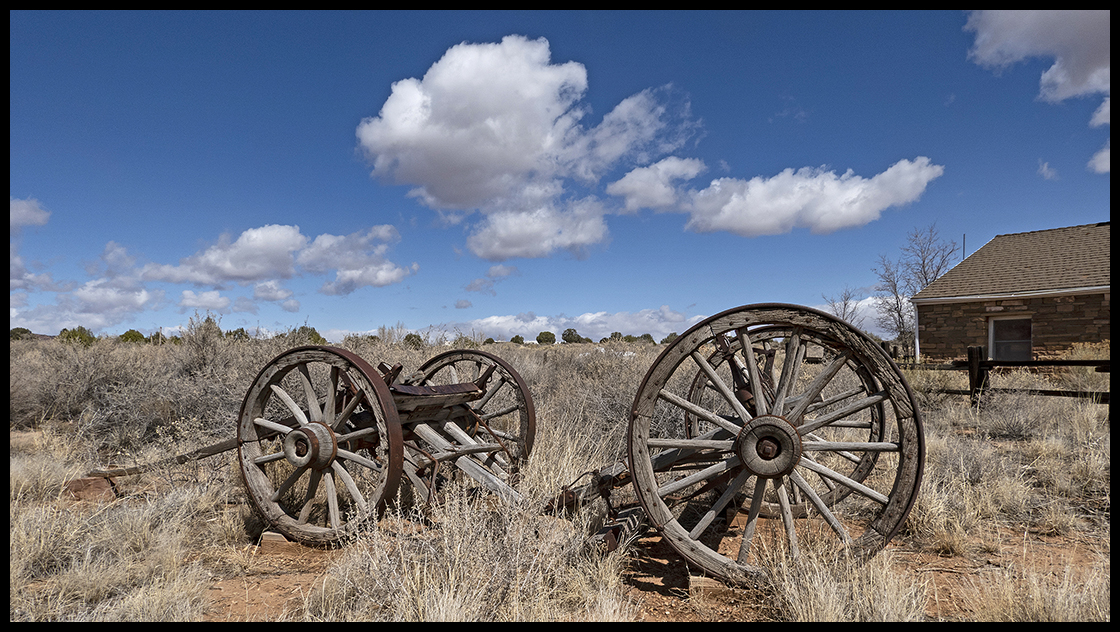
Period pieces are preserved, sort of.
Pipe Springs is a permanent water source in an arid and unforgiving land. It is no wonder that arguments over ownership stretch over millennia. In the 1860’s the native Americans were forced away by the Mormons who took control of the spring. Many natives died. It was 1870 when Brigham Young and Anson Perry Winsor started building the fortified house over the spring. It has high, impenetrable walls and huge wooden doors and became known as Winsor Castle. Several polygamous families lived inside. In 1923 it became a National Monument and in 1933, by order of the Interior Secretary the water was divided evenly between the Nat. Park Service, the local tribe, and the cattlemen.
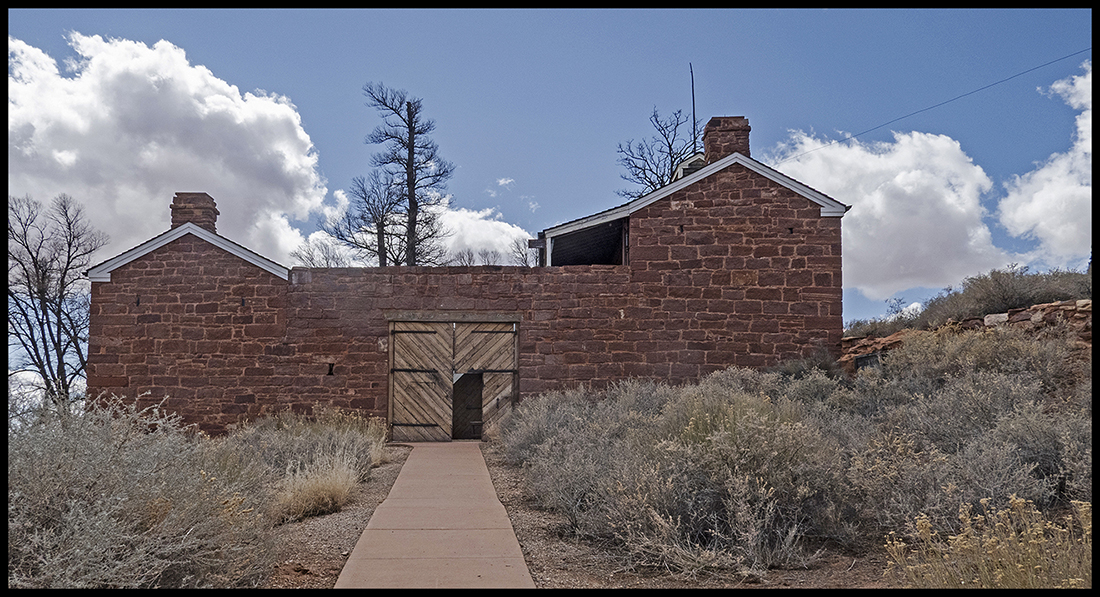
Winsor Castle, the Mormon fortress.

View from the road leaving the monument.
Next, check out the small, but spectacular Nevada State Park, The Valley of Fire. There are 2 official campgrounds in the park by reservation only. Because it is usually booked, many visitors “boondock” on the east and west sides of the park. We chose an area on the east side this trip. It is flat and exposed with lots of campers, so we drove down into a draw to find a secluded spot. A flash flood would have been a problem, but no rain was in the forecast. We stayed there 2 nights and hiked around in the colorful side canyons before touring the park.
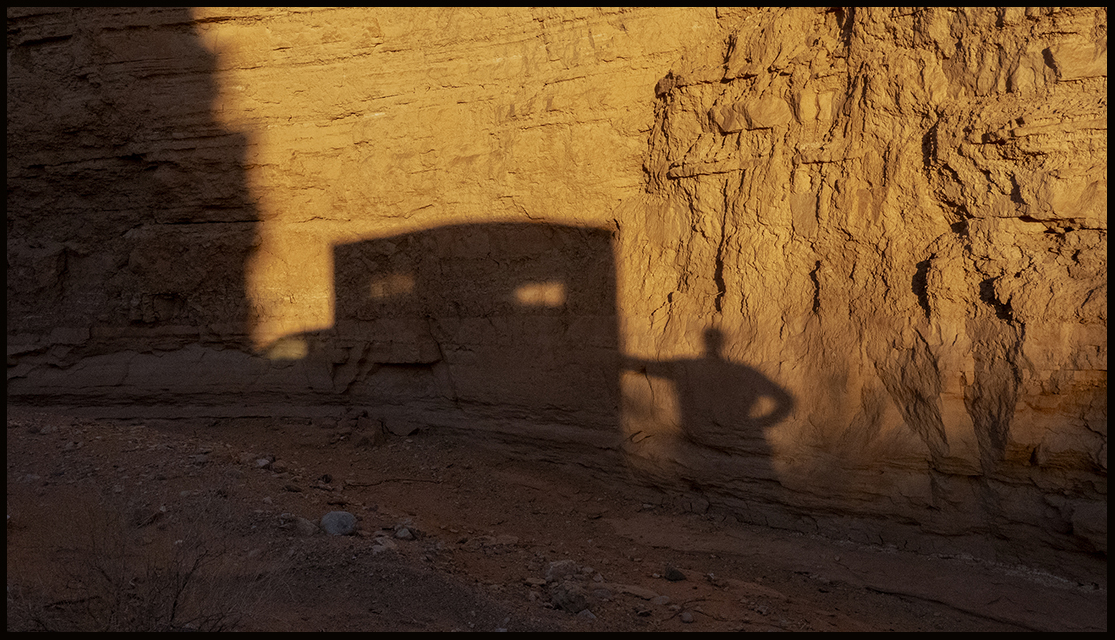
Boondocking in the bottom
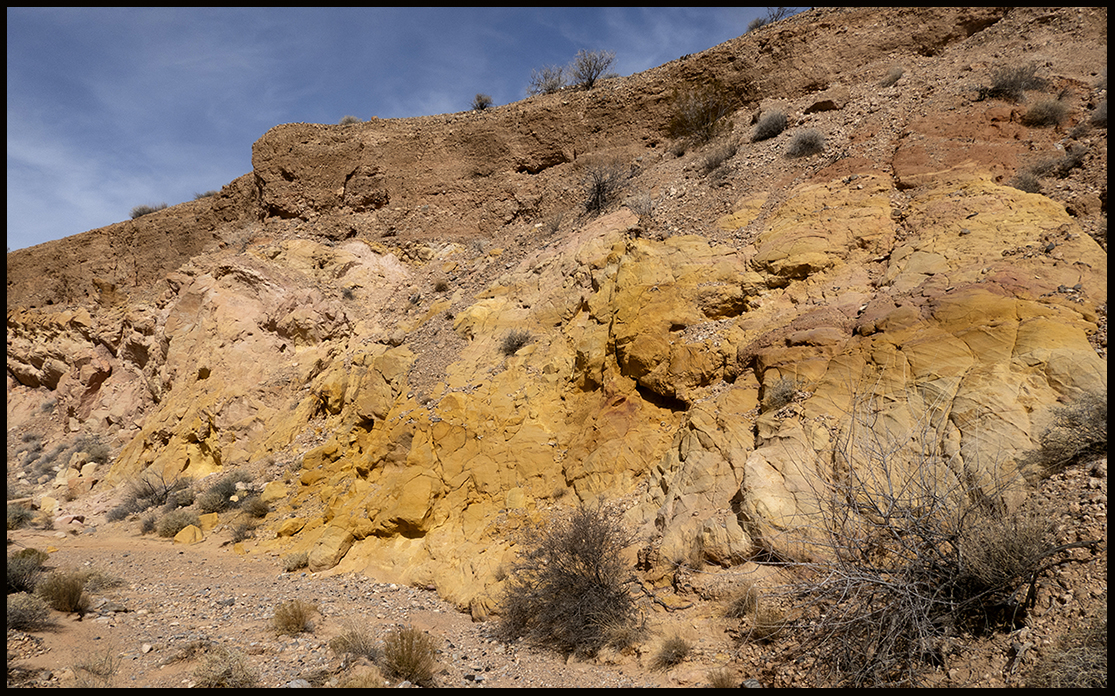
Canyon bottom hike
In the park are many vista pull-offs and trails into the amazing rocks. Desert Bighorn sheep are often visible.

Red rock arch
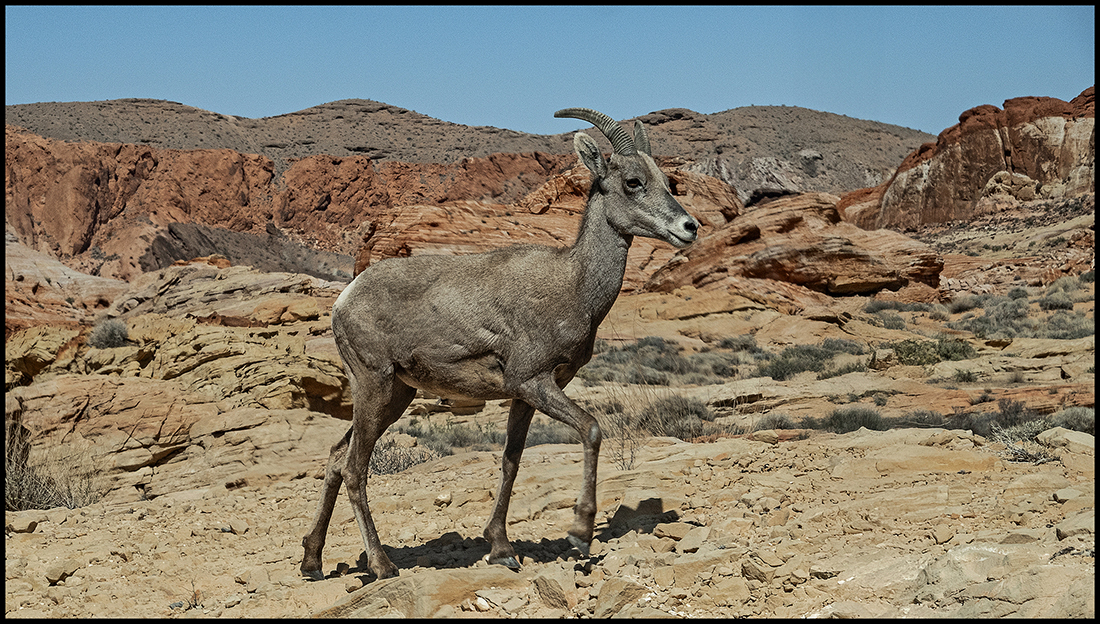
Desert bighorn right next to the road.
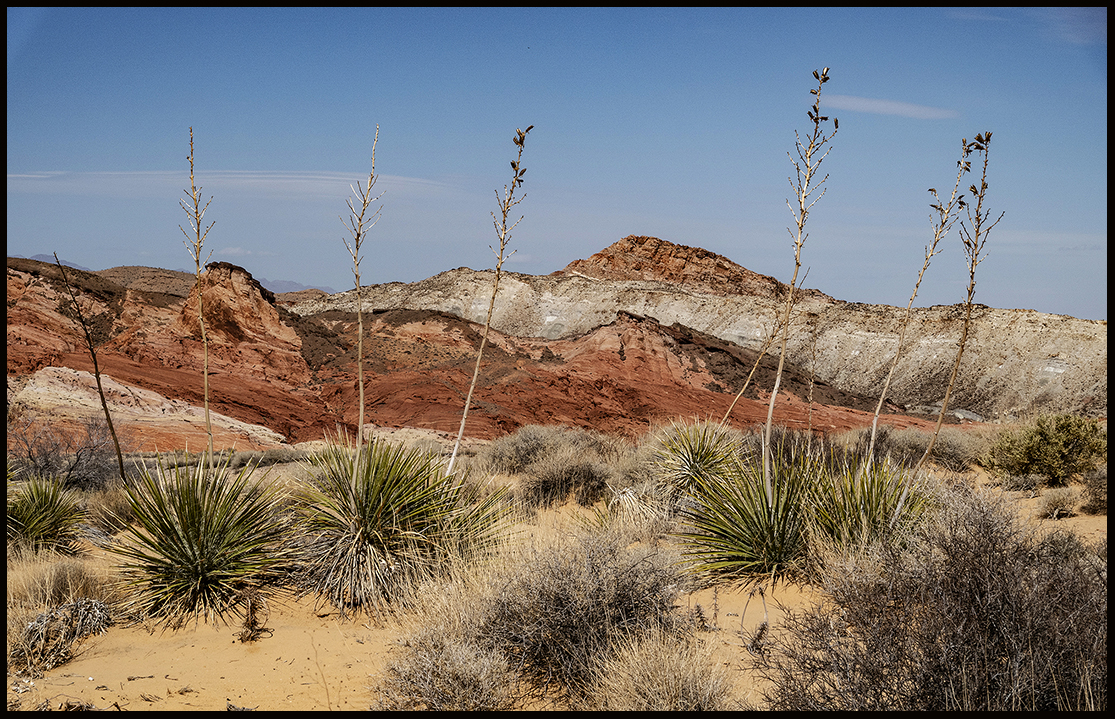
Trail view
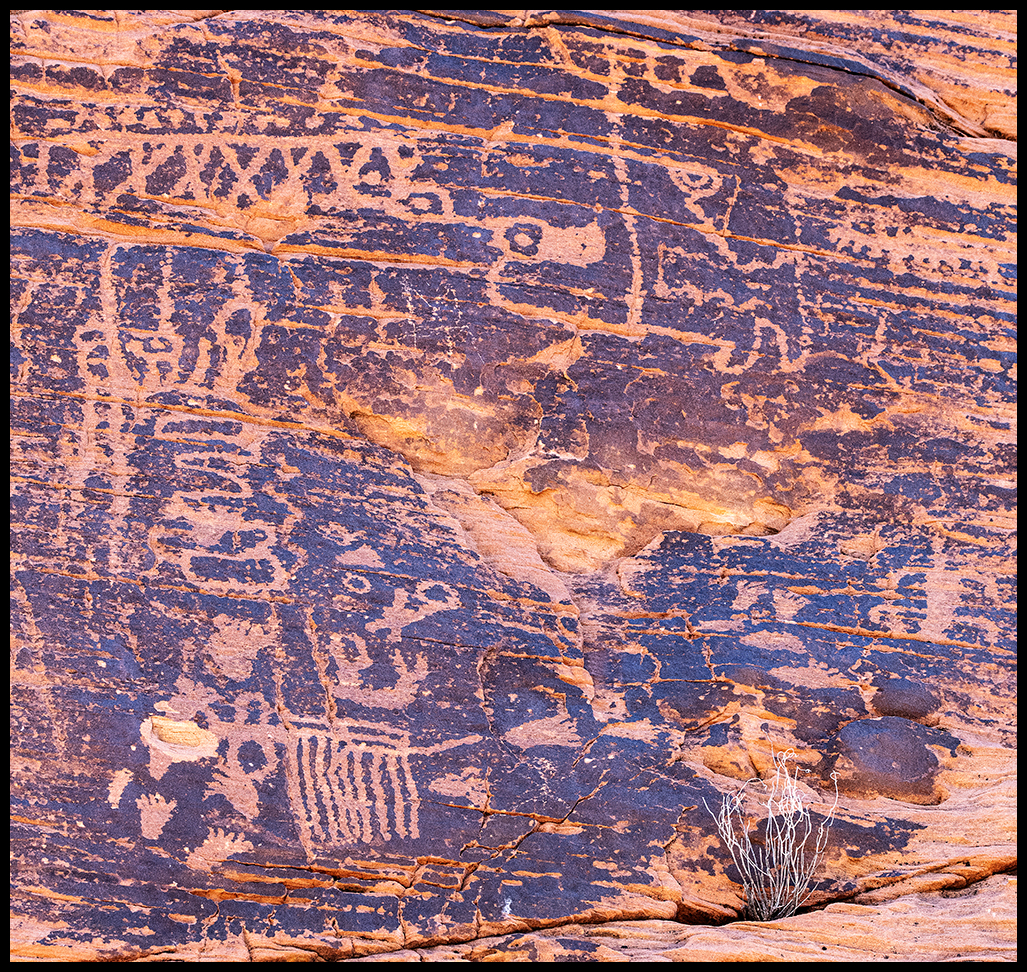
There are petroglyphs along some trails.
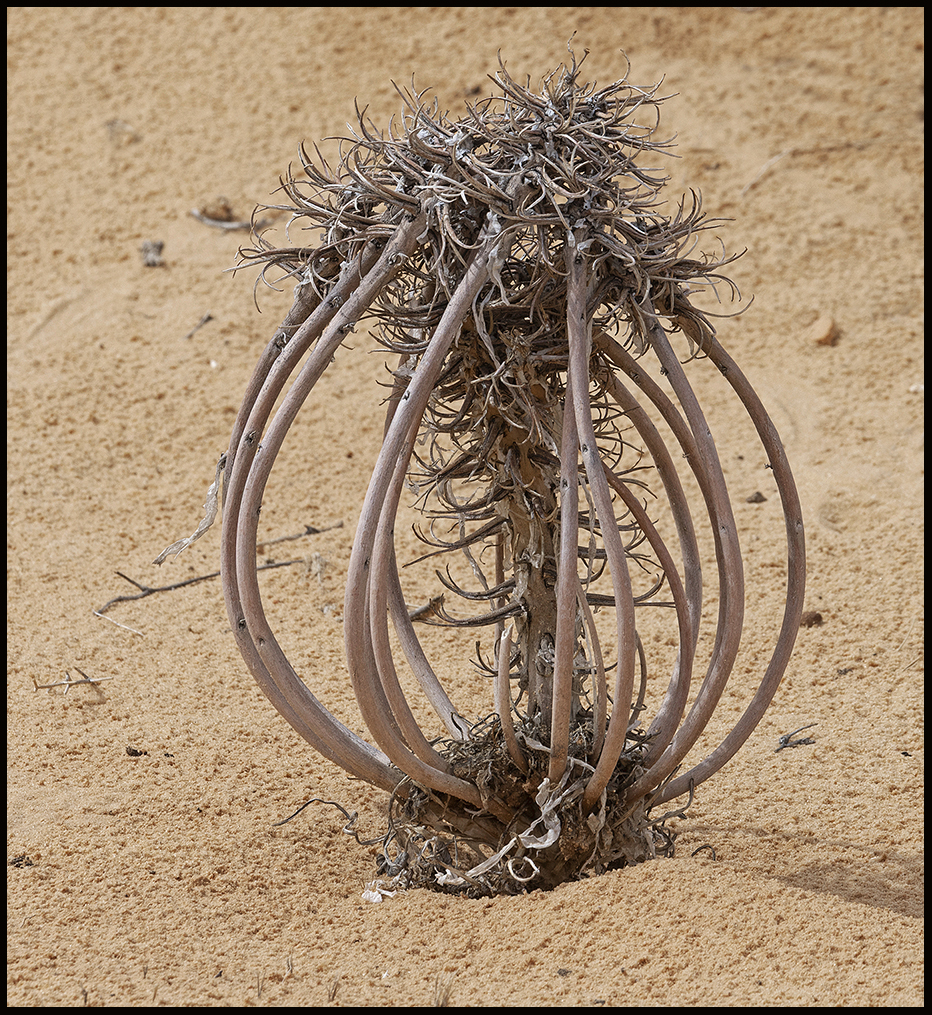
Weird flora…skeleton of a birdcage primrose.
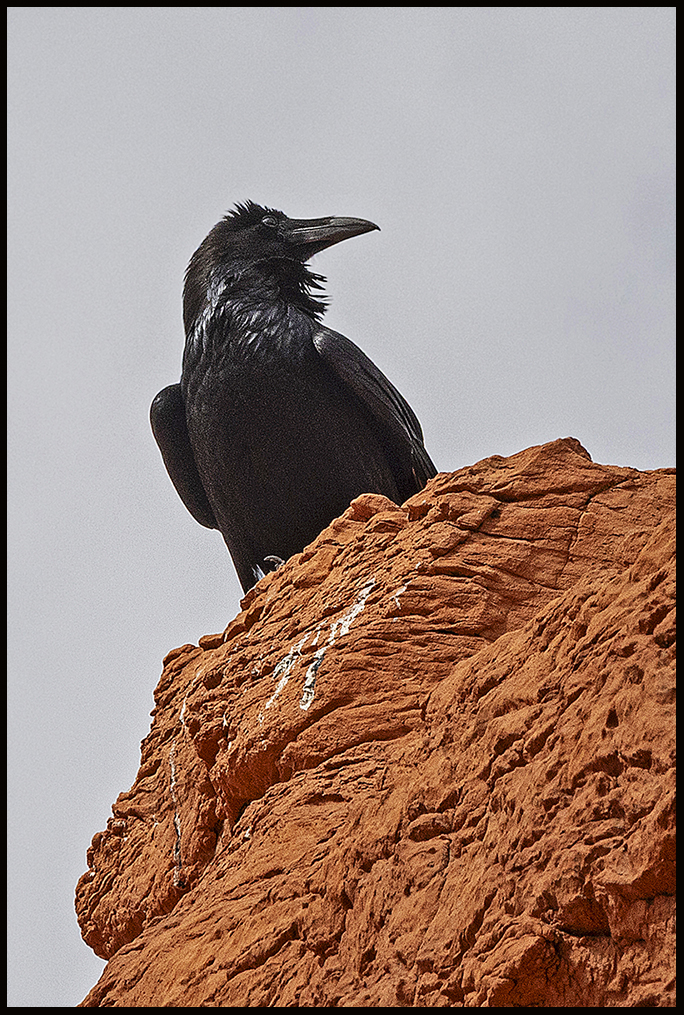
Common ravens, the most abundant desert bird
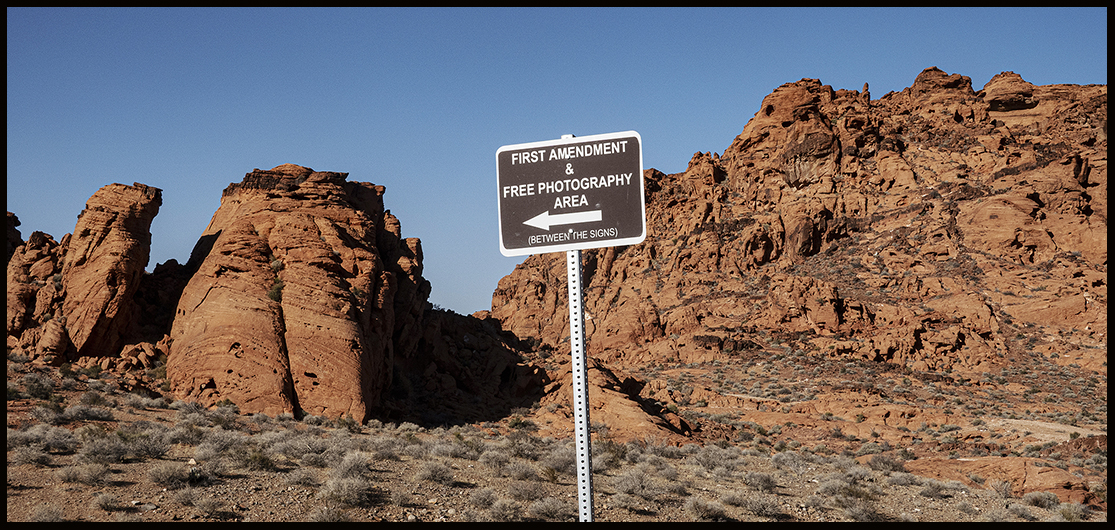
Unusual sign??
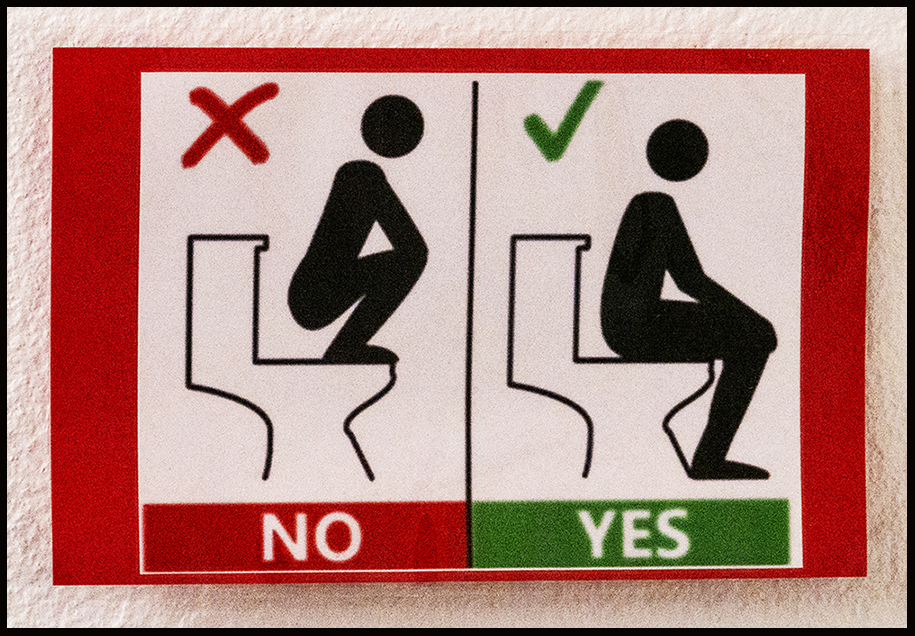
Another unusual sign
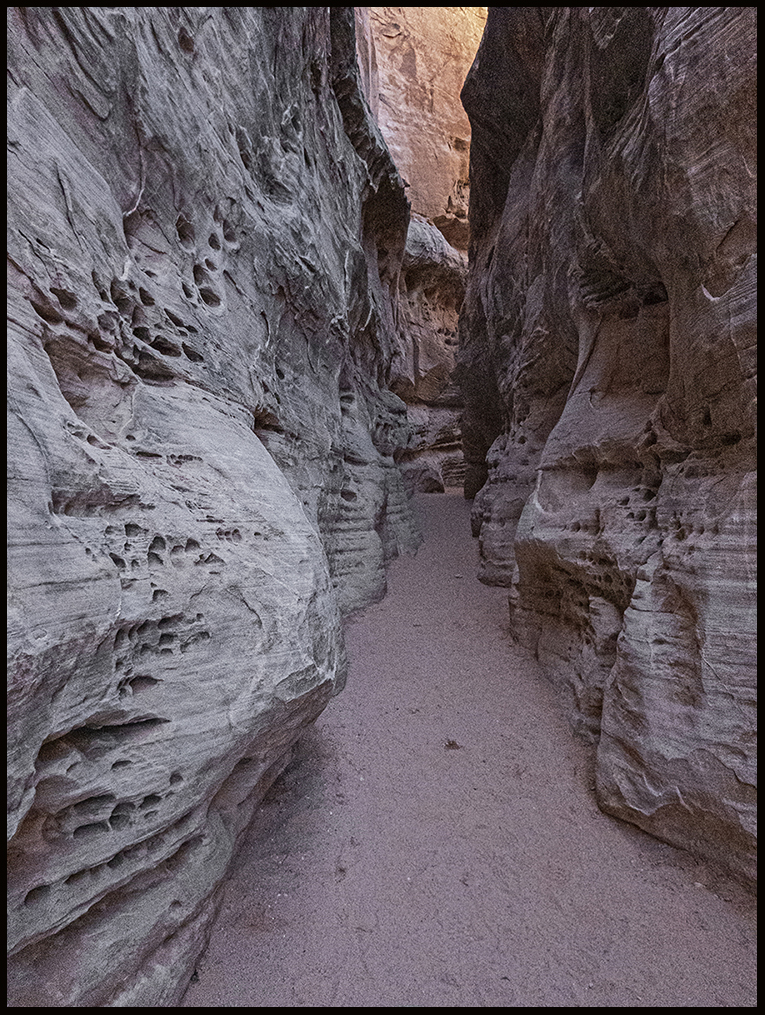
Slot canyons offer cool alternative hikes on hot days.
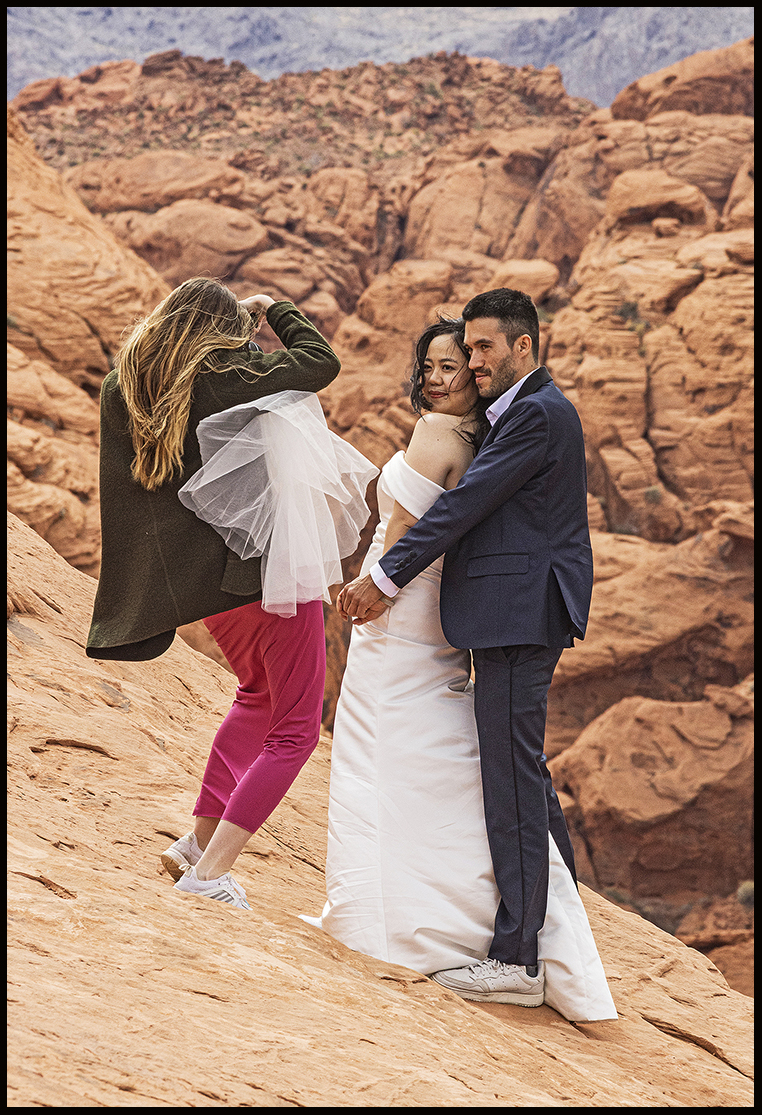
The park provides a lovely backdrop for wedding photographers.
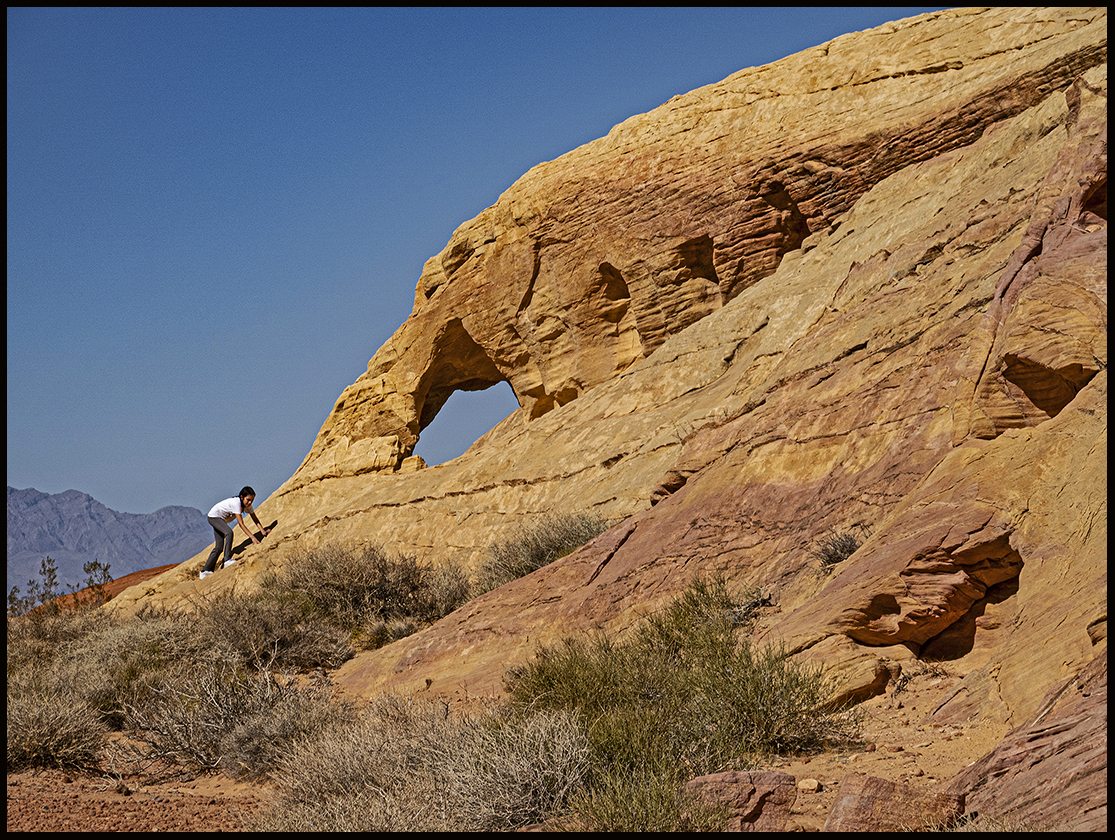
The rocks are irresistible to kids.
Next into the north side of the huge (1.6 million acres) Mojave National Preserve. 2025 was a very dry year. Deserts are used to dry conditions, but the flora and fauna are stressed by such weather. I think 2026 is starting out wetter? Signs of human uses of the area before it became a monument in 1994 are visible… grazing, gold mining, and archeological sites.
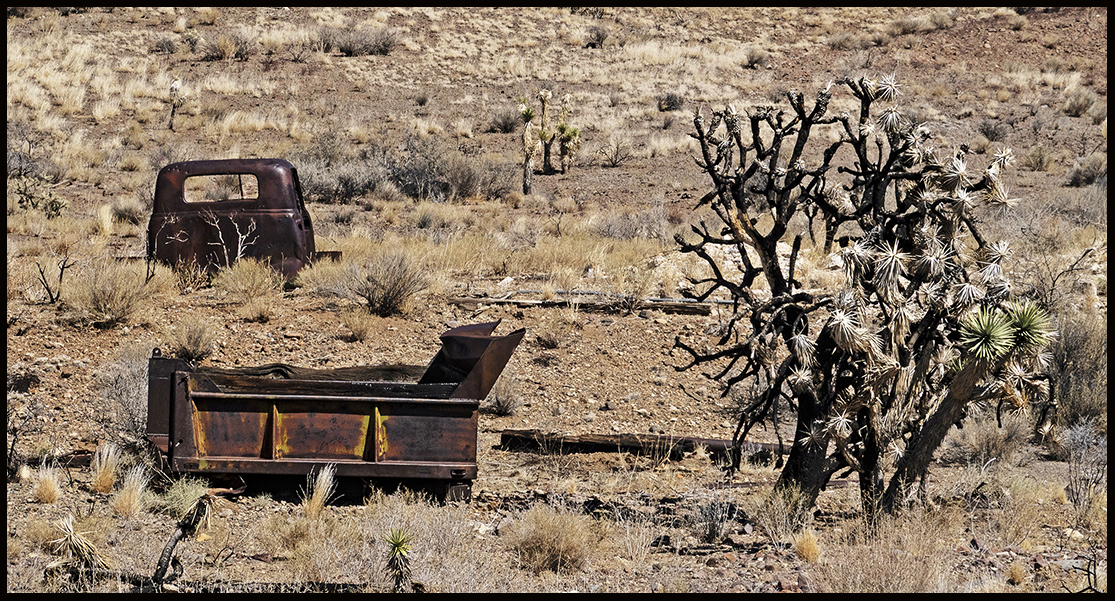
Relics of the not-so-distant past with a dying Joshua tree.
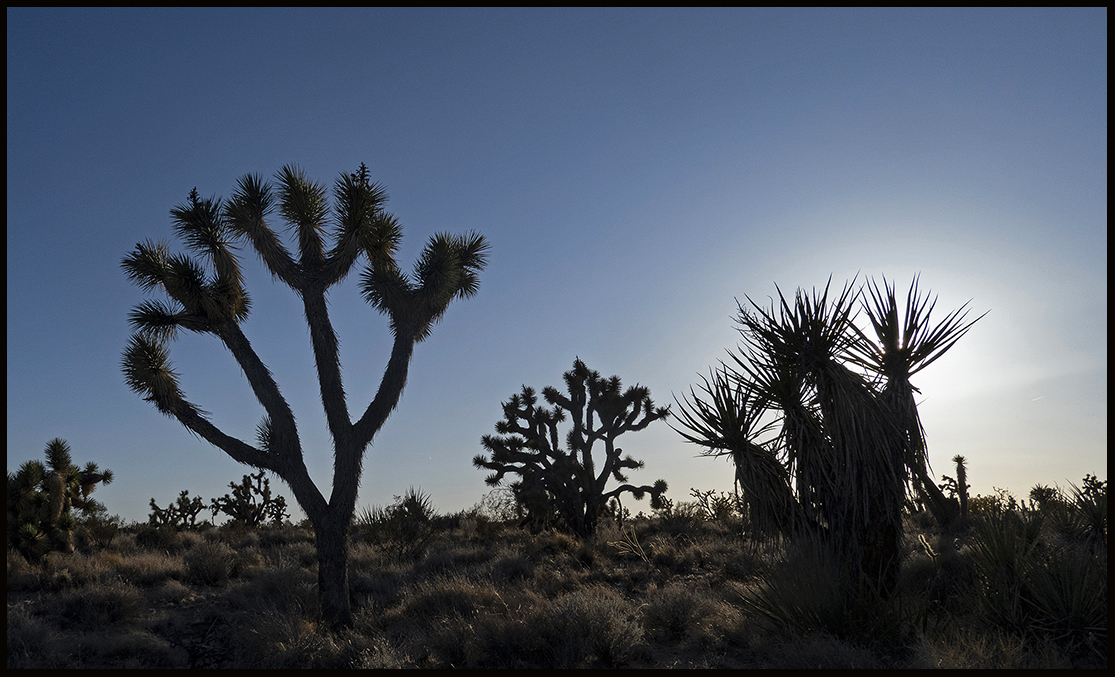
Joshua trees do survive in the northern portion of the monument.
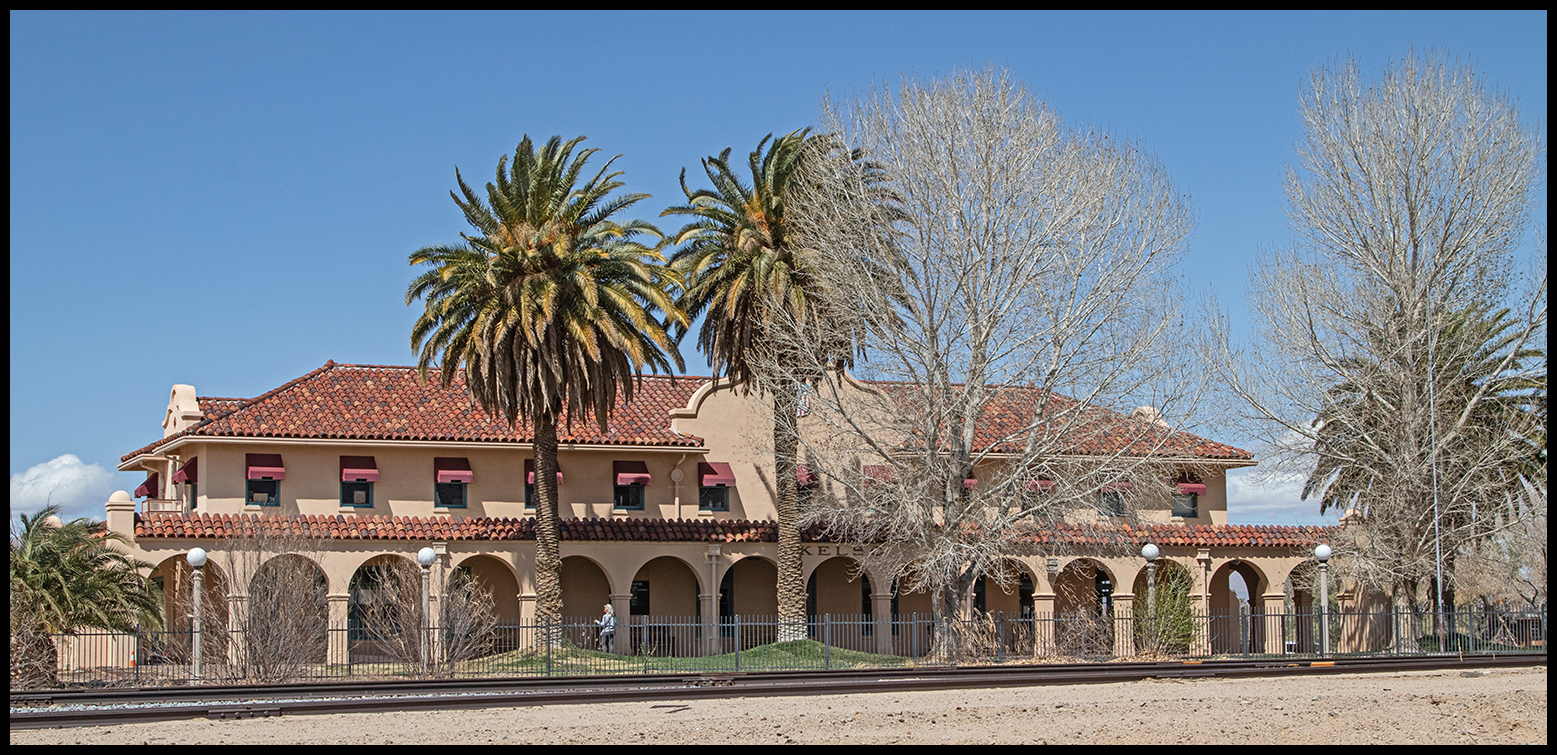
A railroad once ran through the area to carry ore. The depot and museum at Kelso have been under renovation. I hope they are open again. It’s a lovely building and informative museum.
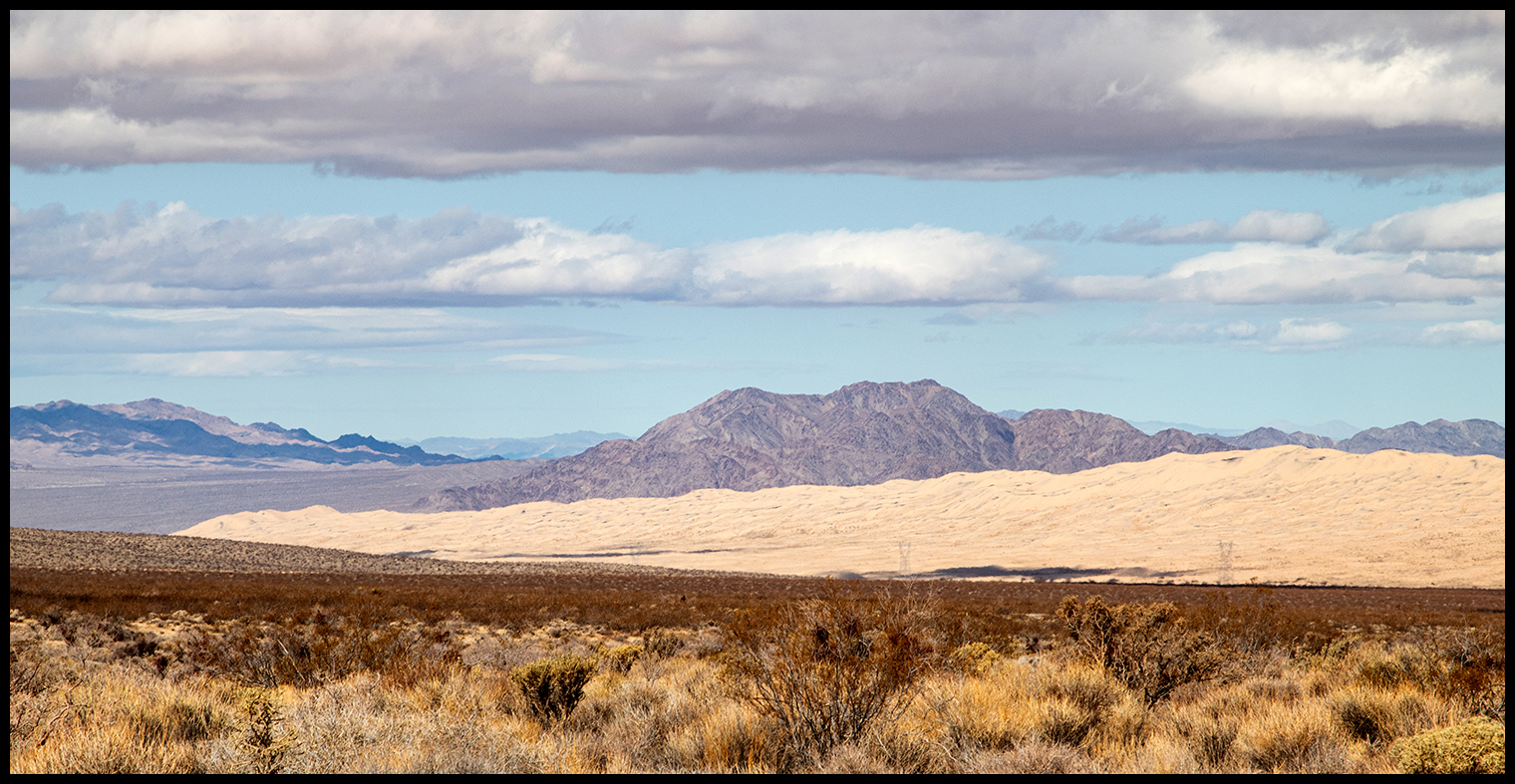
The Kelso dunes are nearby. There is a trail out to them and many people climb to the top. Lizards, quail, and roadrunners scurry about in the scrub.
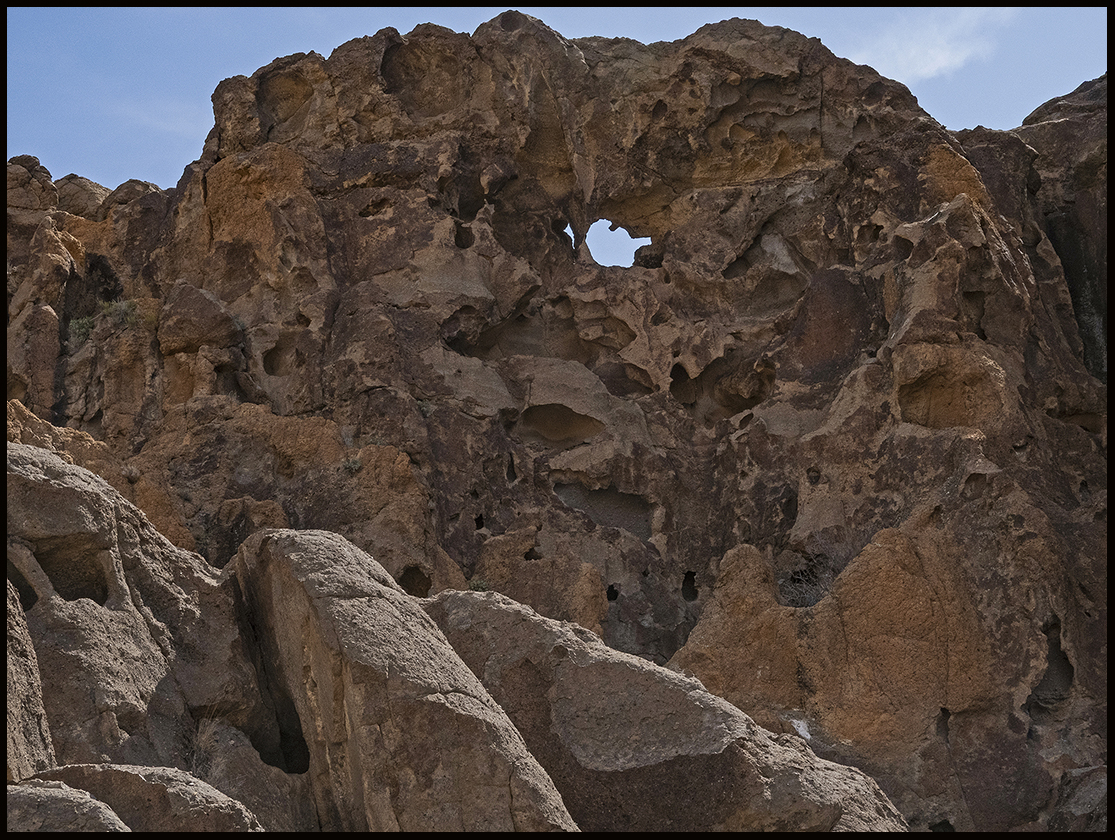
There is a campground near the Hole-in-the-wall area….
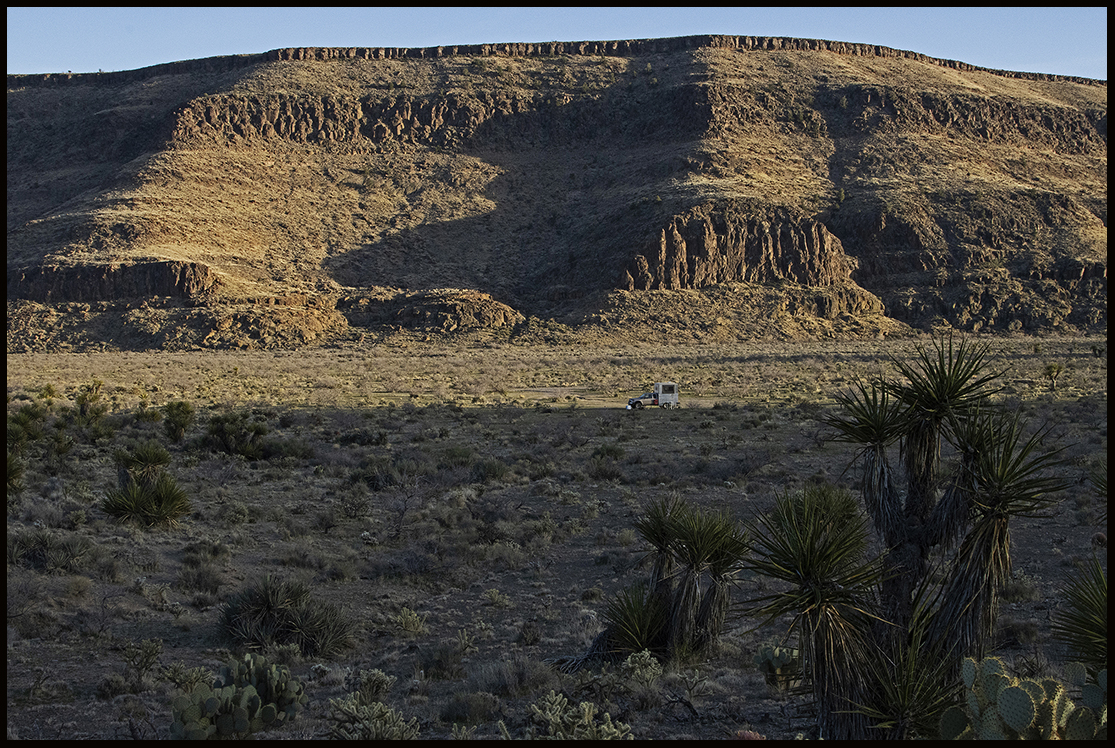
…but we chose to wild-camp nearby. Can you see our little camper?
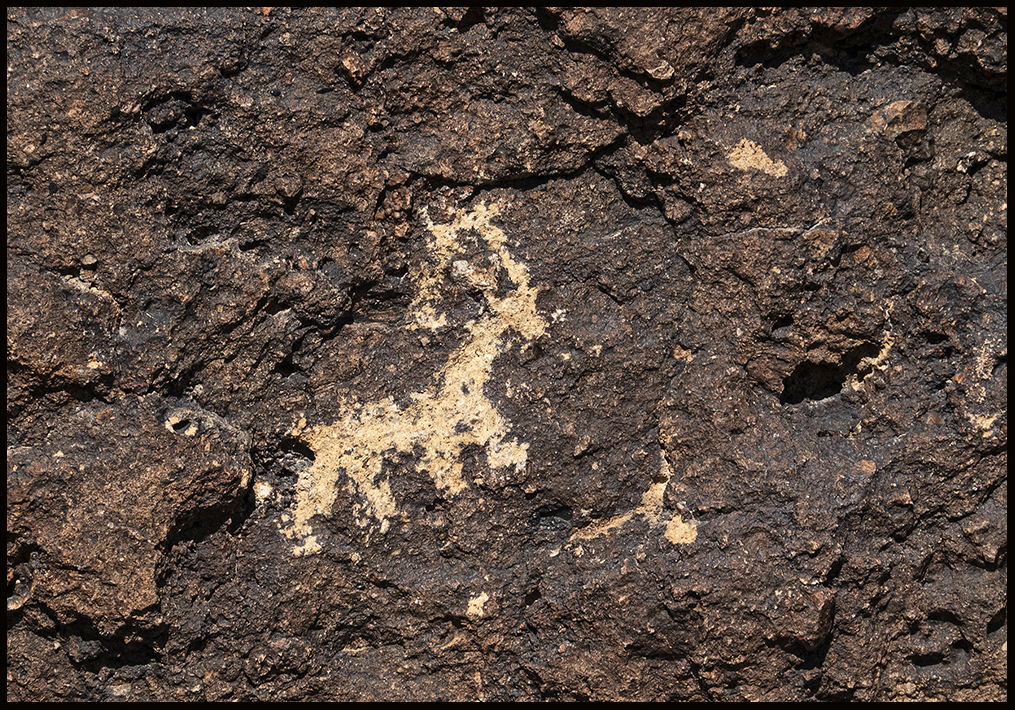
Signs from another era on a rock next to the trail.
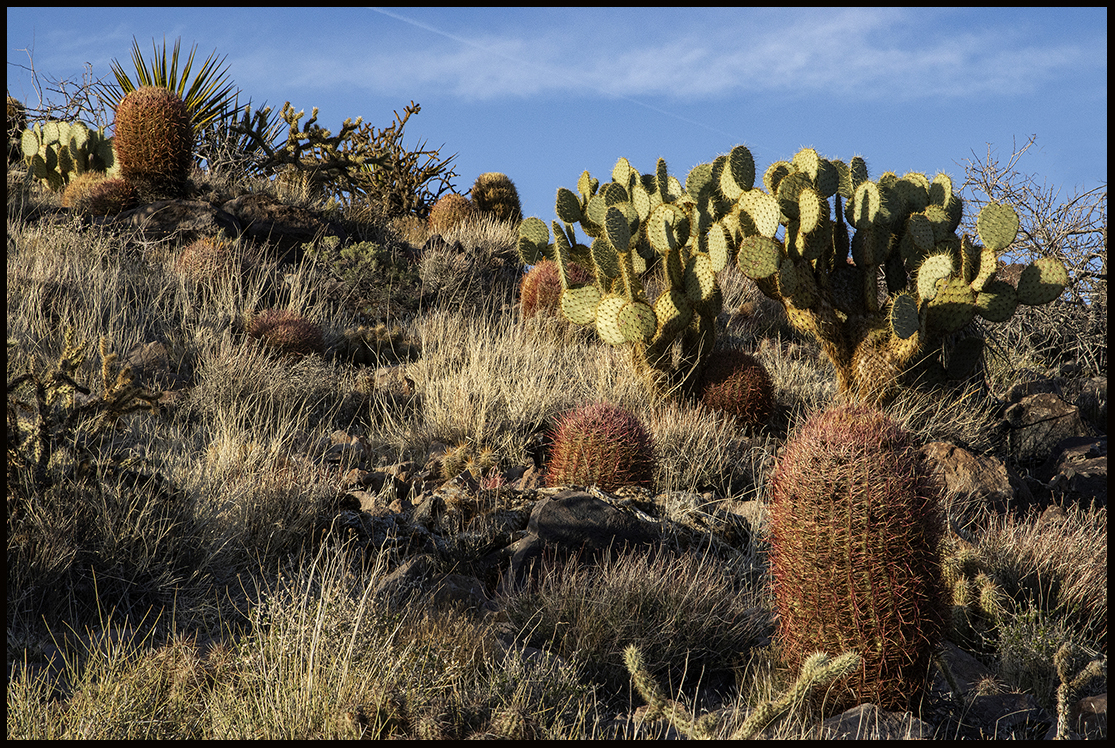
Wonderful cactus survive on the hillside above our campsite.
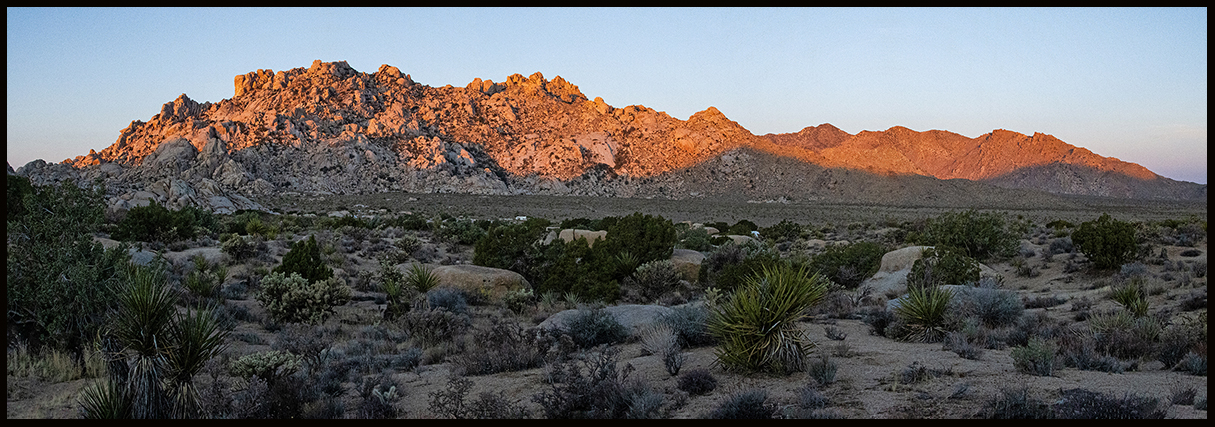
We then moved to the granite mountain section at the southern end of the monument.
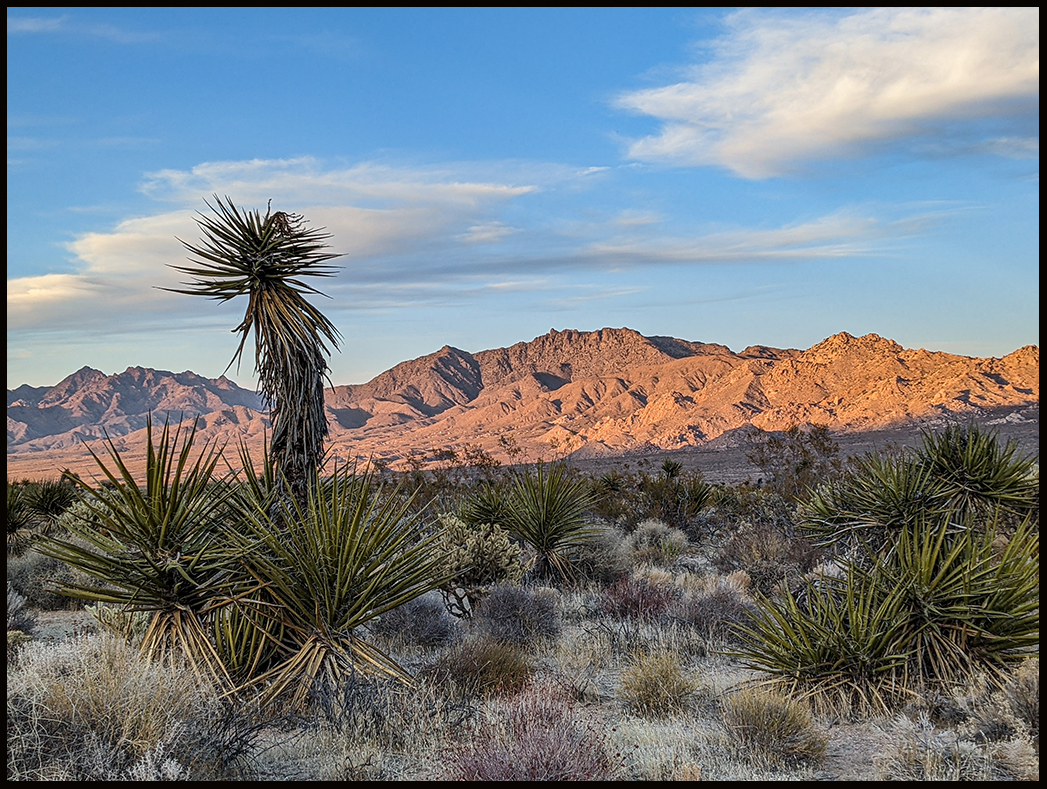
Granite mountains camp view.
Moving on, we head to Arizona and the Kofa Wildlife refuge established in 1939. In the late 1800’s and early 1900’s many gold, silver, and lead mines were operating. The largest was the King of Arizona mine, thus the name of the refuge, KofA. Roads are dirt, and occasionally rough, but passable. Most visitors/campers park near the highway, but there are many miles of refuge to explore. Camping is allowed anywhere in the refuge within 100 feet of designated roads. They say there are desert bighorn and introduced antelope, but we have yet to see any on several visits to the refuge.
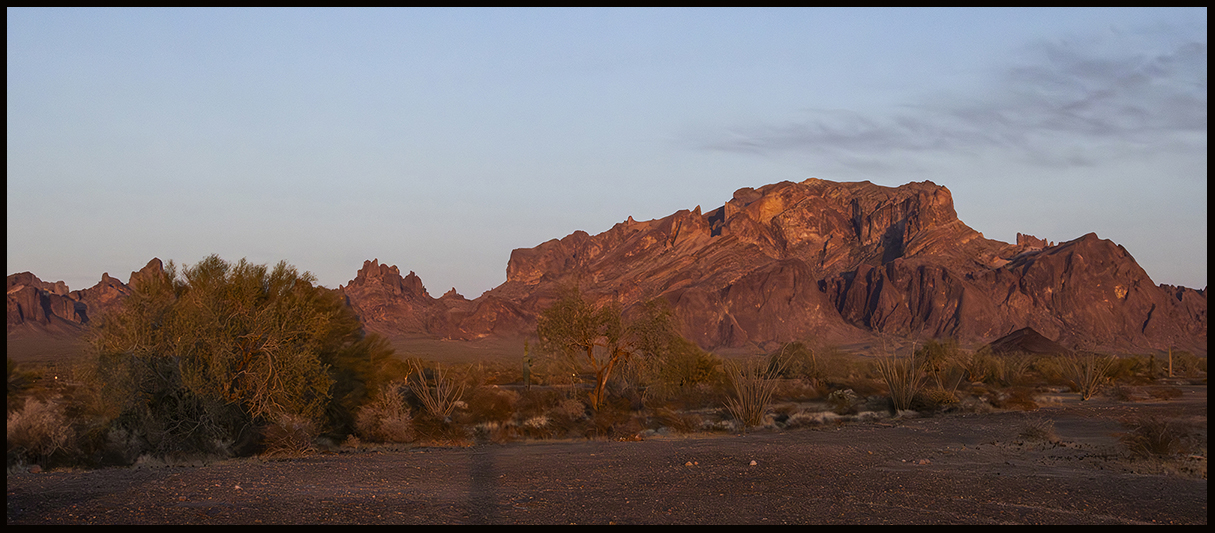
First night, we camped near the Palm Canyon road. In a small, deep slot in the mountains live a remnant population of fan palms from a wetter and cooler era They are hanging on in a drying climate, but the numbers are declining. They’re the only native palms in AZ.
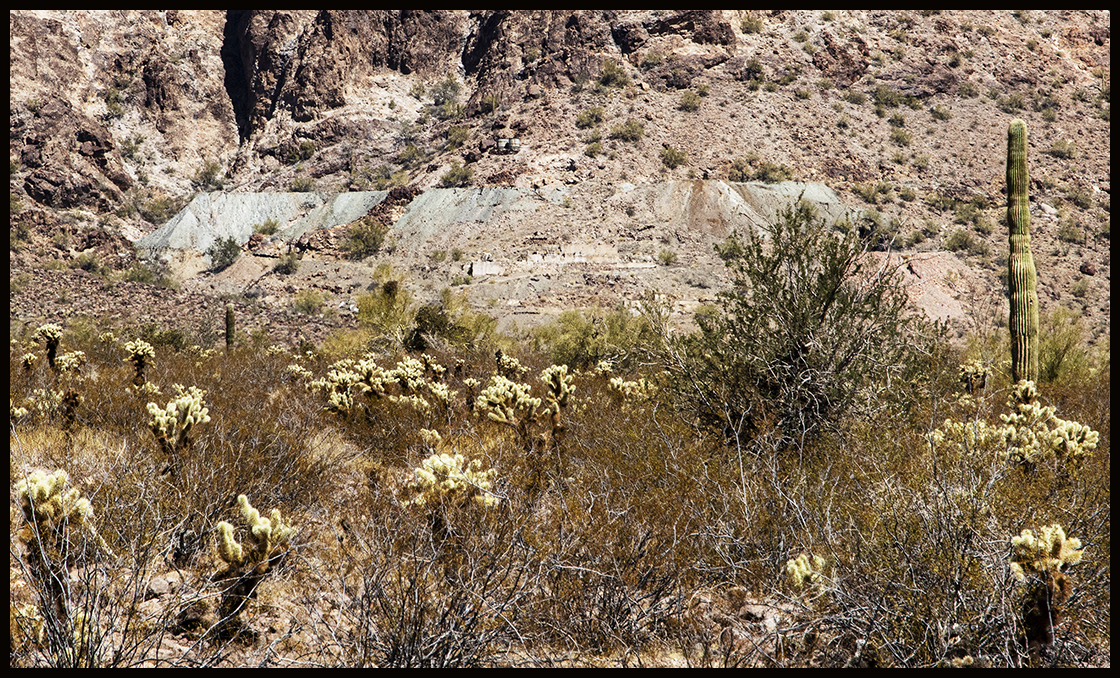
One of the mining sites from previous times. The scars will probably never heal.
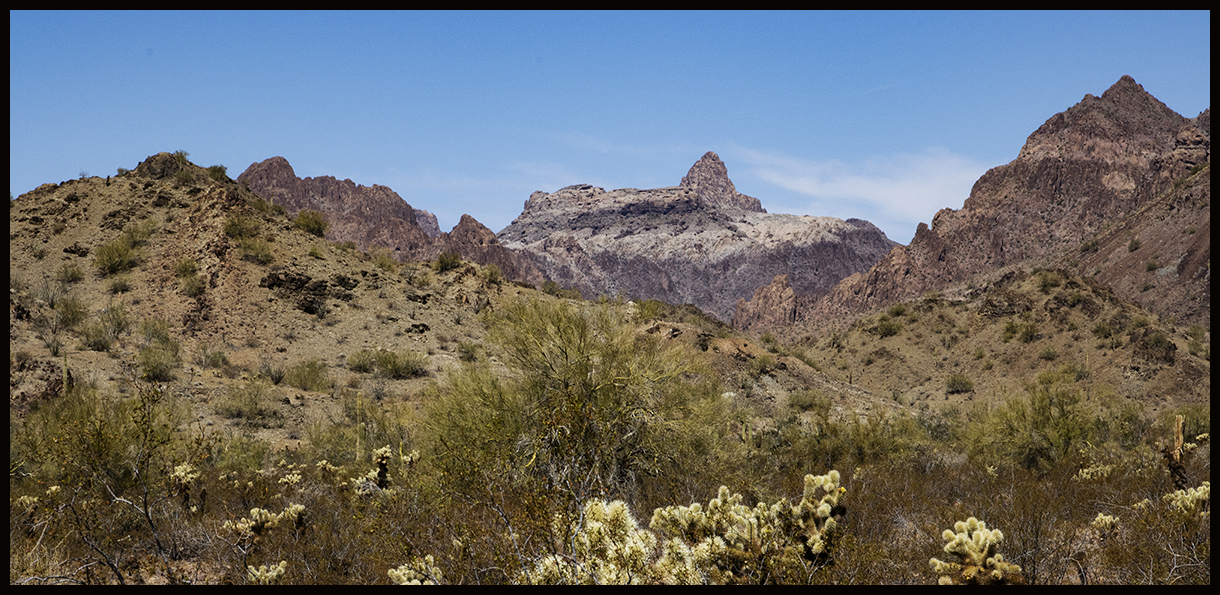
Found a campsite with this view. Not another person in miles.
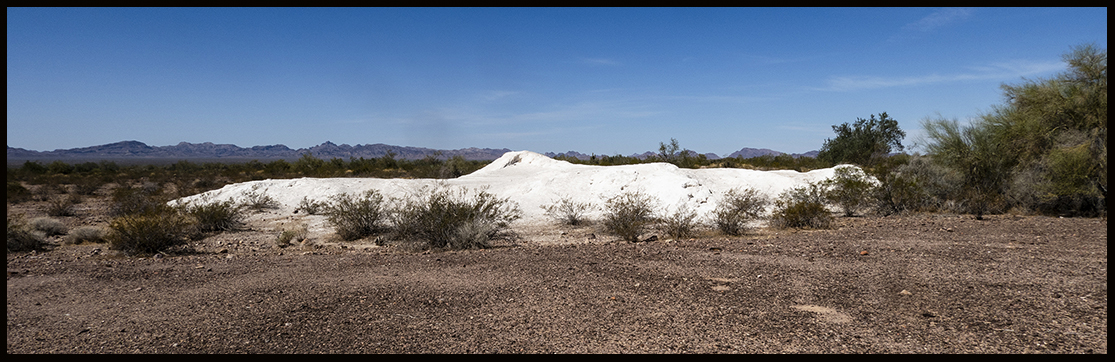
An odd white tailing pile caught my eye.
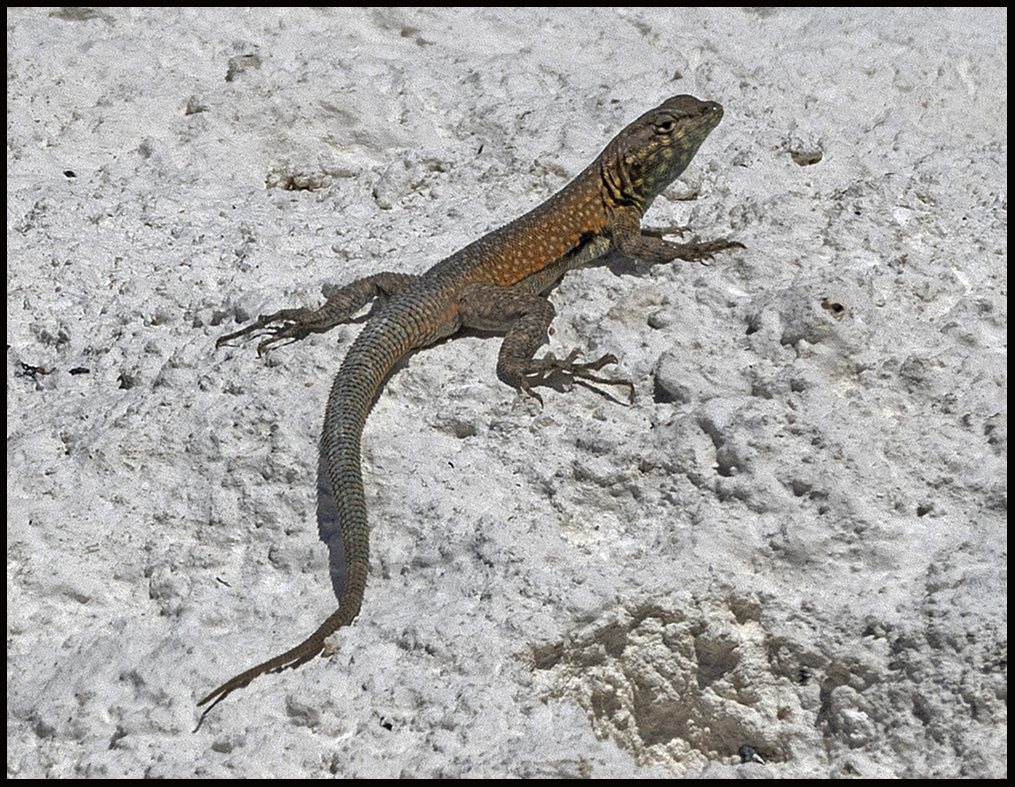
On it were living many of these little lizards. It is probably cool in their holes in the white pile.

One last view of the mountain range before leaving for Organ Pipe Nat. Mon.
Organ Pipe Cactus Nat. Mon. is found on the border with Mexico. Many of the roads in the area are closed to prevent any interaction with migrants or border patrol agents. The park is very diligent about keeping visitors safe. There are 2 campgrounds, a large one in the middle of the park and a small one for tent camping only, on the eastern edge. Back-country camping is allowed with a permit. Make reservations early as the campgrounds fill up. The Monument is the most northerly range of naturally growing organ pipe cacti.
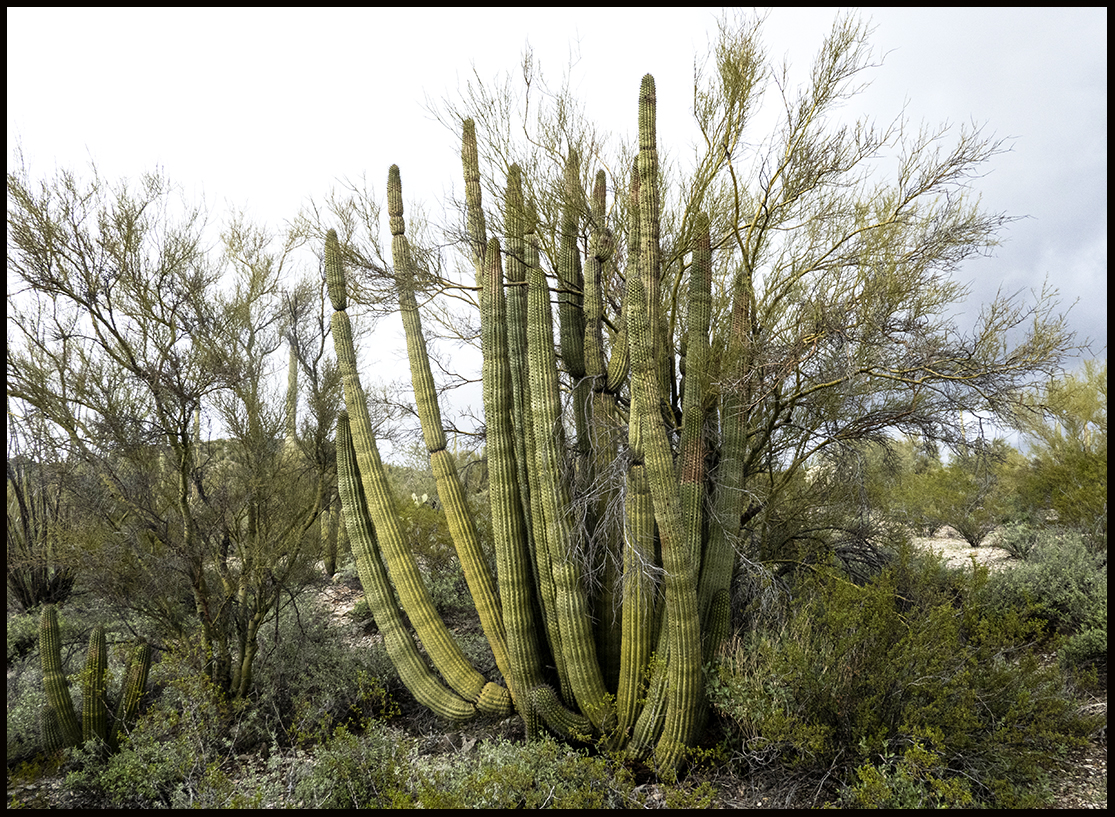
Organ Pipe Cactus with Palo Verde trees
This species can be found on sunny, south-facing, rocky slopes. Sub-freezing temperatures will kill young tissue at the end of the stems. When growth begins again, an indentation marks the stem. Bumpy or wavy pipes are a record of previous freezes. In summer it protects itself from heat and water loss by storing water in its pulpy flesh and photosynthesizing through its stems. There are no leaves.
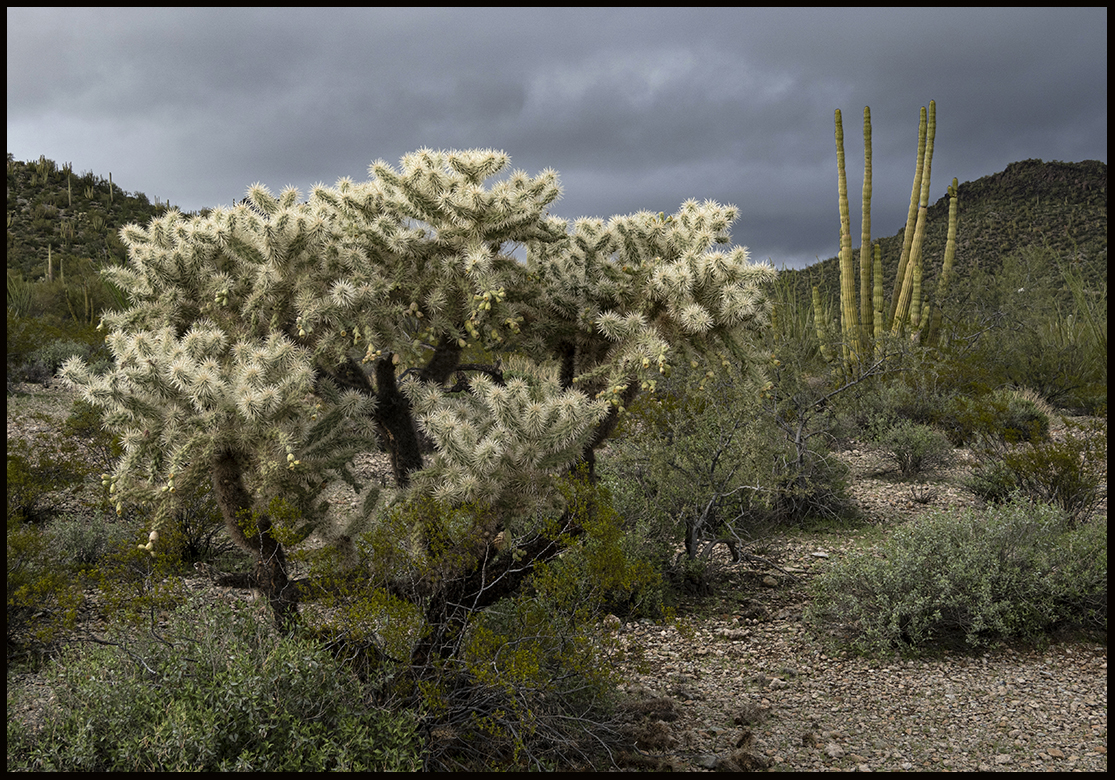
Cholla of several varieties live here too.
Native Americans long used saguaros and organ pipe cacti as construction material and ate the high calorie fruit. Organ Pipes can live to over 150 years. They first flower near the age of 35 in May or June. The monument has noted changes in climate, including less winter moisture, and longer periods of drought. They have tracked temperature in the area for over 100 years. Since 1950, the daily average temperature has increased by 3 degrees Fahrenheit.
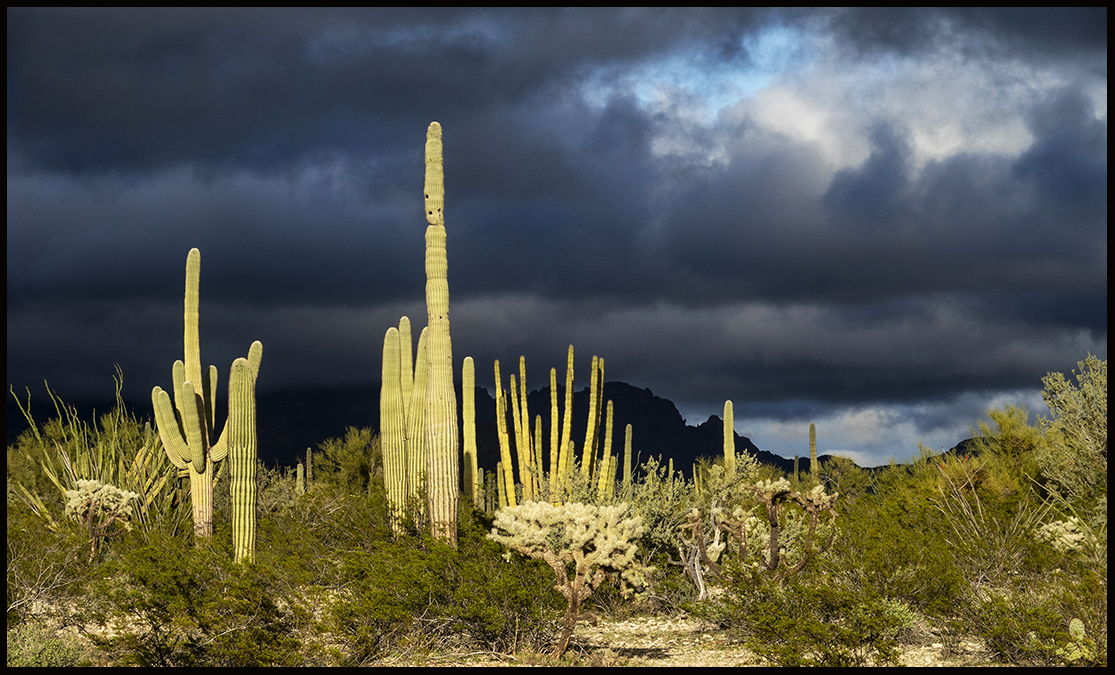
A stormy sky at sundown. Ocatillo, saguaros, cholla, and organ pipes visible.
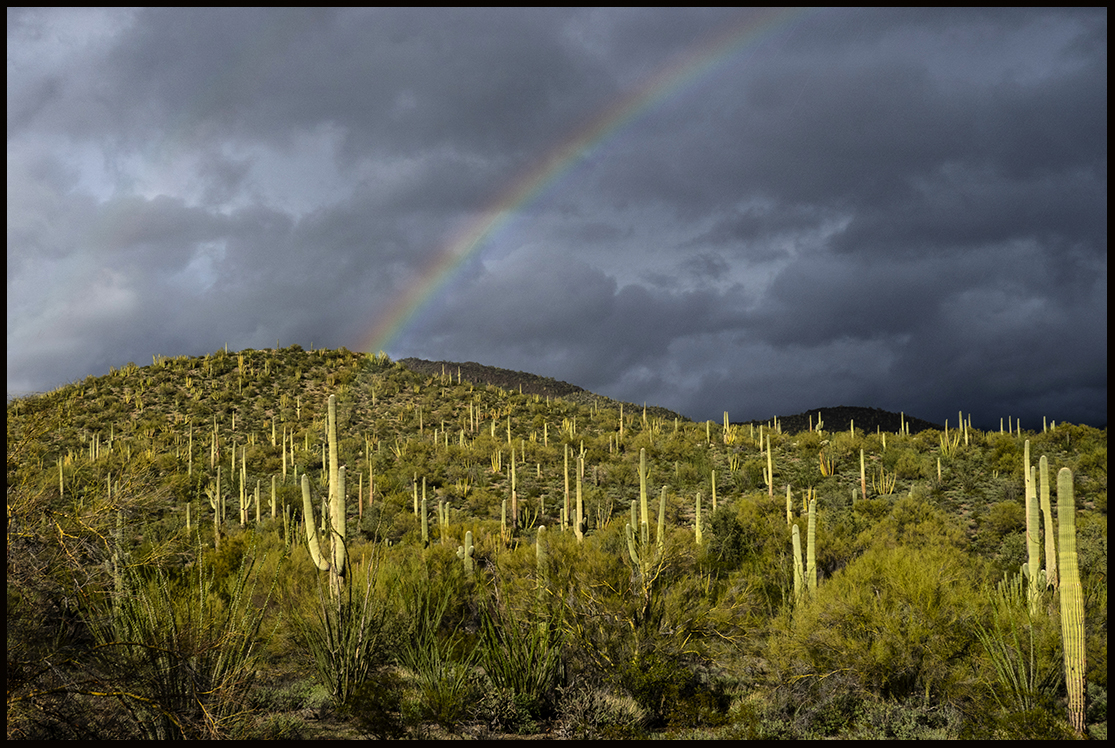
Only one night at the campground was available. The next morning we crossed into Mexico at the nearby border control…but that’s another story for another time. Hasta luego!