
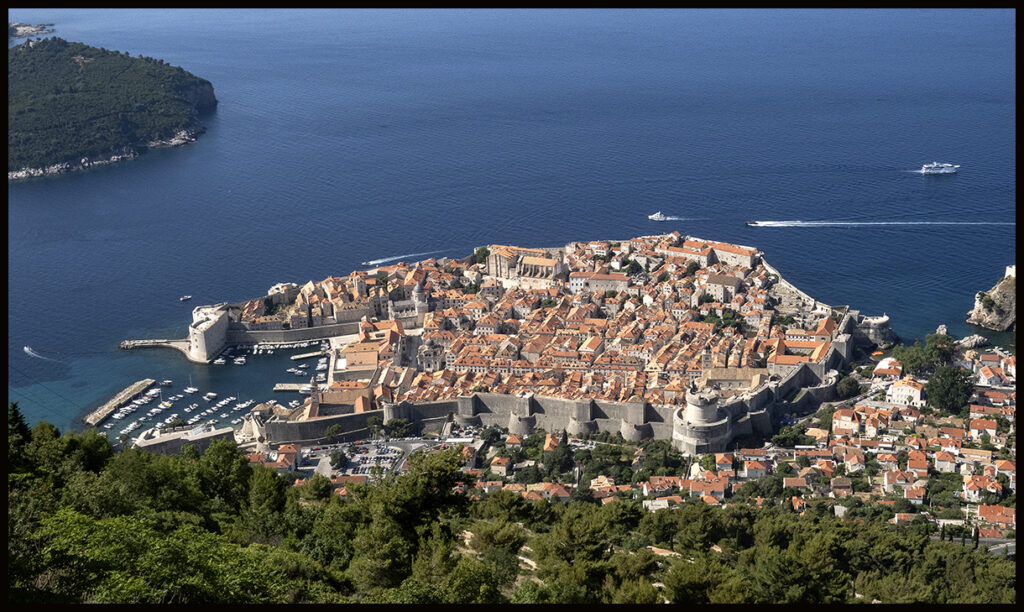
Old Town, Dubrovnik, Croatia viewed from the Imperial Fort
Of course, there is no Yugoslavia today. The red scare and communist president Josip Broz Tito (1892–1980) were big news in the 50’s and 60’s. But what happened to it? Curious, I went online to find some options. I discovered the Overseas Adventure Travel company had a discounted summer tour of several Adriatic countries that used to be included in Yugoslavia…Montenegro, Croatia, Bosnia/Herzegovina, and Slovenia. So we signed up.

Baggage area, Dubrovnik airport
While waiting for our luggage in Dubrovnik, Croatia we began to understand why summers are discounted. It’s HOT! We naively figured that fact would curtail tourism. Ho ho. This part of the world now makes the bulk of its living from tourism. It’s beautiful, historic, and welcoming. World populations are anxious to visit. That’s lucky because some of the other businesses and industry are not flourishing. Many residents move to the EU for more lucrative jobs, leaving villages with diminishing population. Some of the countries, in what was communist Yugoslavia, made the transition to free market economies more successfully than others.
But, for now, let’s visit the ancient city of Dubrovnik. For a country as new as the United States, it’s hard to imagine the history of this area; measured in thousands of years instead of hundreds. In 1979, recognizing its outstanding medieval architecture and fortifications, UNESCO added the Old City of Dubrovnik as a World Heritage site.
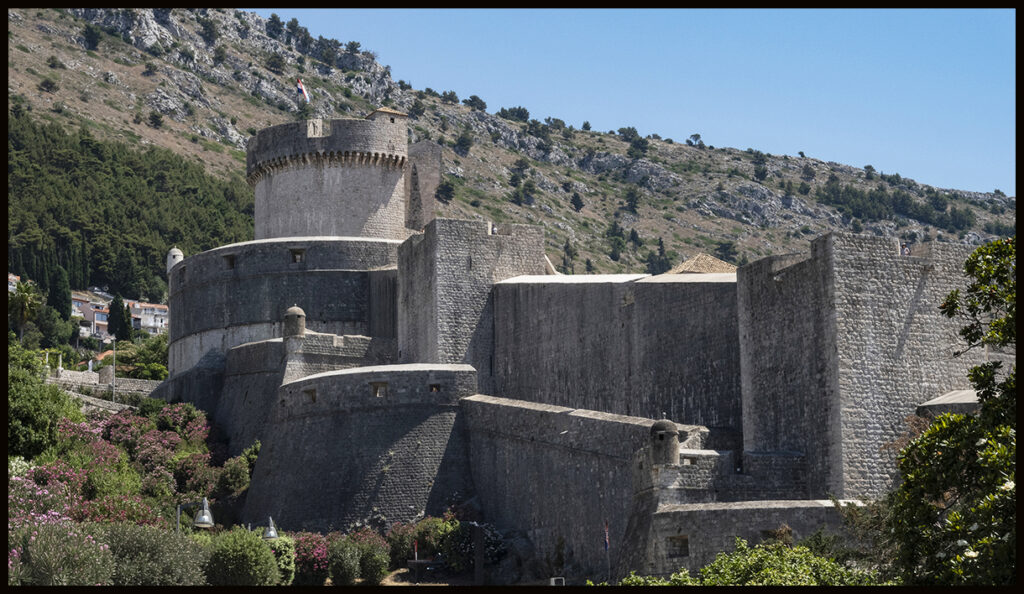
The fortress walls of the Old City.
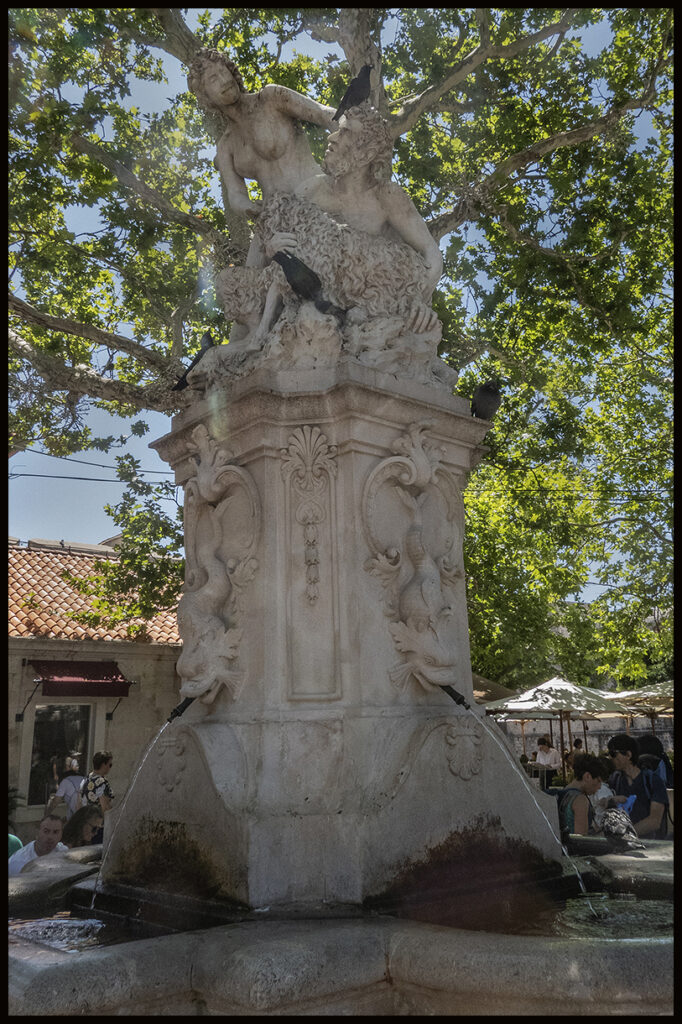
Fountain outside the walls. There are fountains all over the city with drinkable water for thirsty visitors.
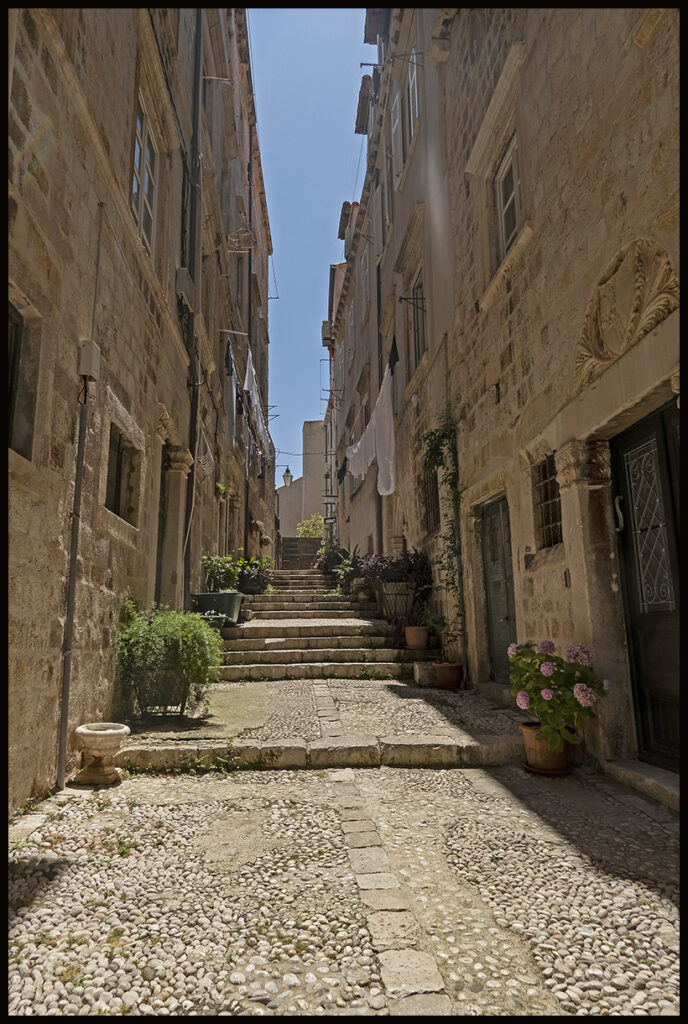
Narrow cobblestone streets
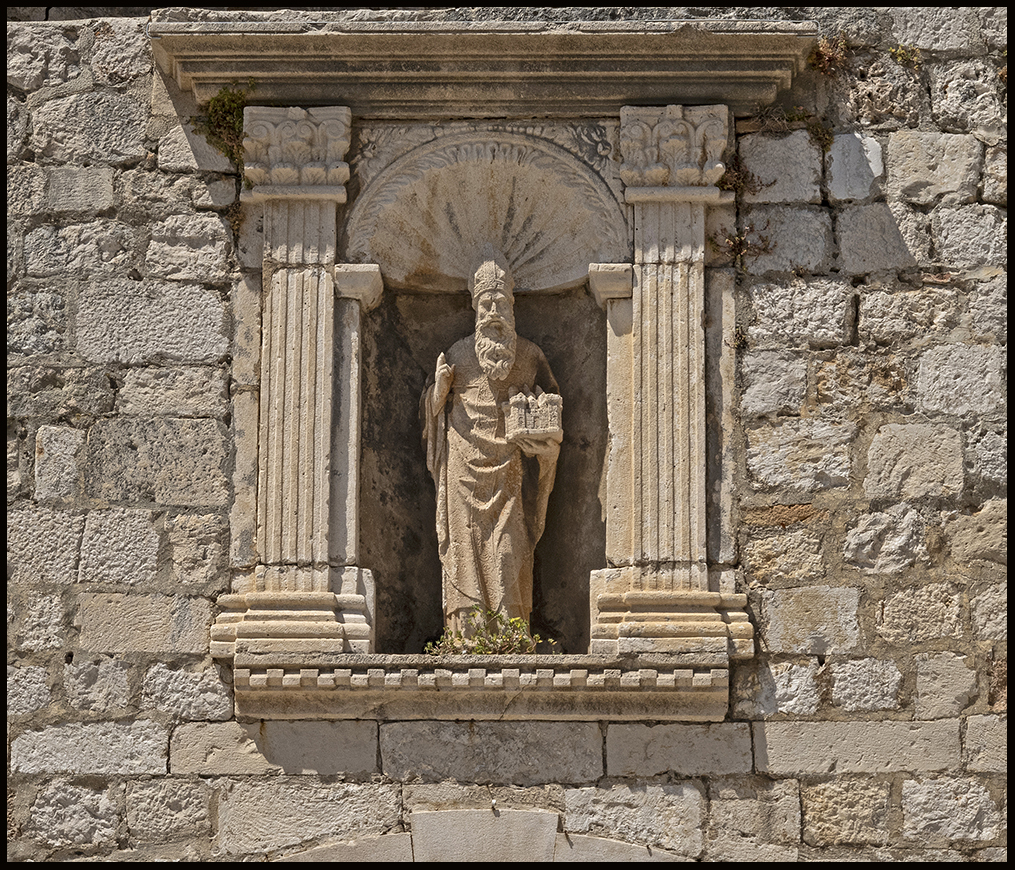
There seem to be endless saints of note.
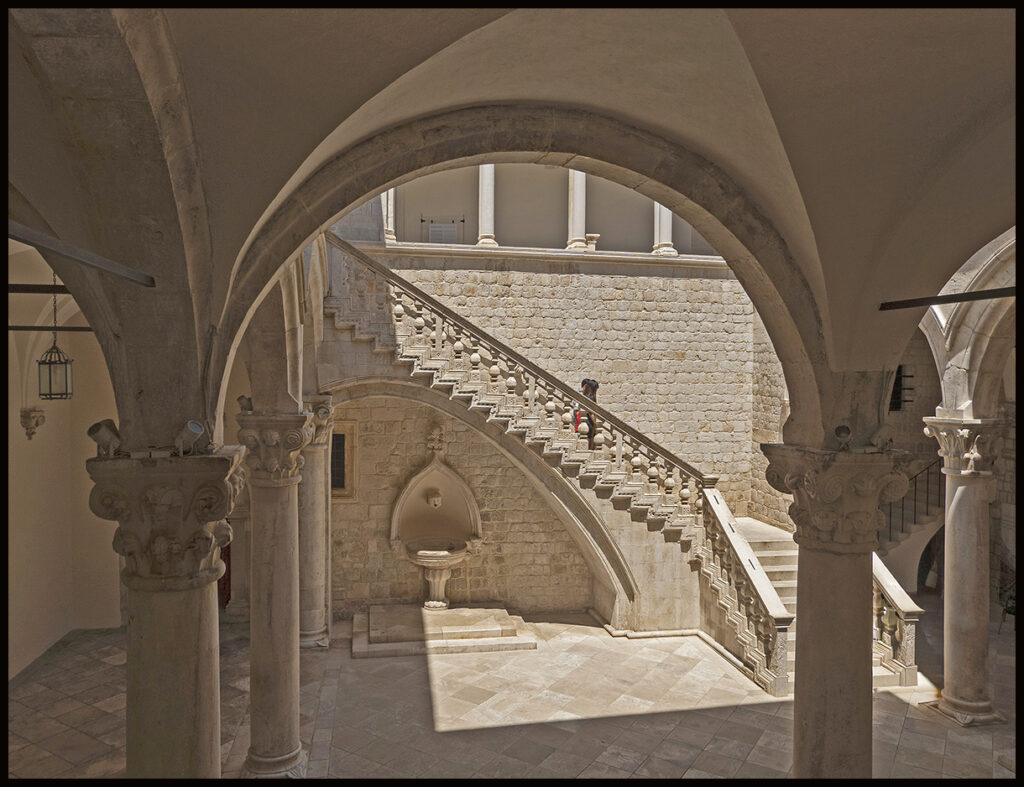
Between the 14th century and 1808 this palace served as home and offices for the Rector, a high official of the surrounding republic. It served as the seat of the Minor Council and the state administration as well as housing an armory, the powder magazine, and a prison. It’s now a museum.
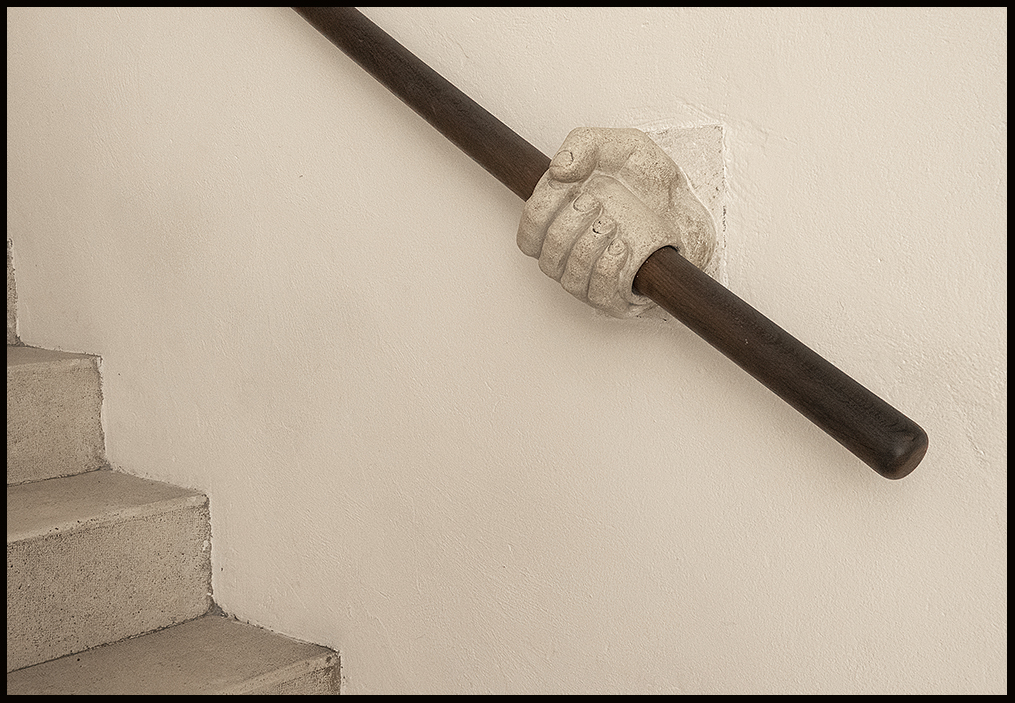
Funny little detail in the Rector’s palace.
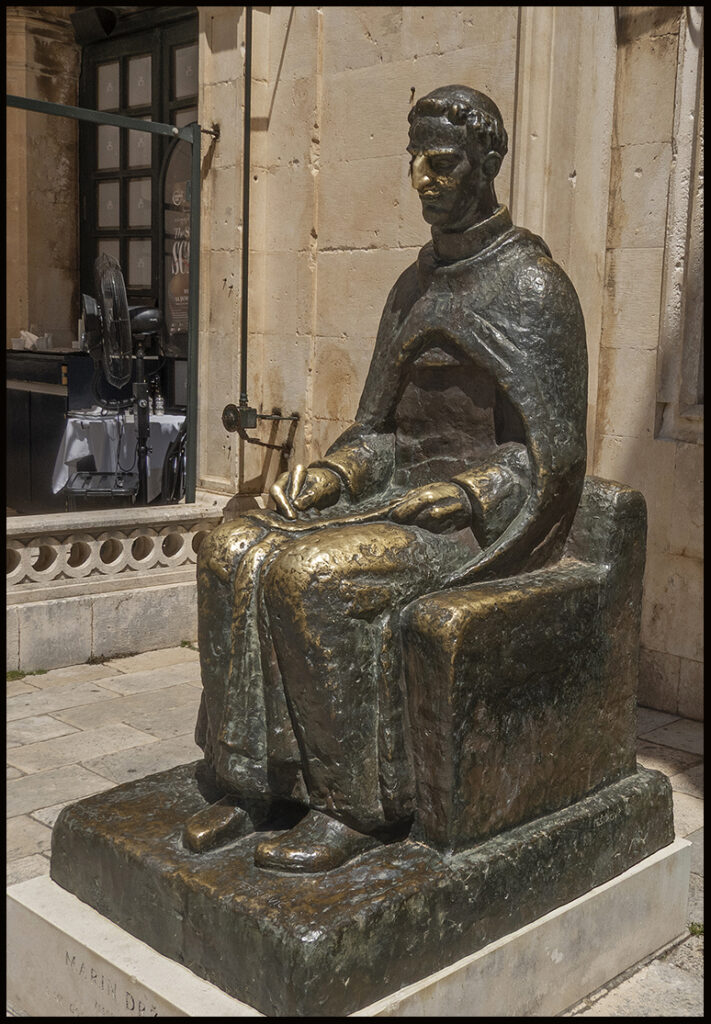
Near the Rector’s palace sits a statue of Renaissance playwright and poet, Marin Držić (1508-1567). Visitors think it brings good luck to sit on its lap or rub its nose.
Archeologists think the city probably dates to the 7th century, populated by refugees from the Roman Empire. Destroyed by fire in the 1200’s it was rebuilt and became a prosperous maritime city, with shipbuilding and a wide-ranging seafaring trade. An earthquake in 1667 nearly destroyed it again. In 1991 Dubrovnik was shelled by the Yugoslav People’s Army and suffered significant damage. After extensive repairs into the 2000’s, it’s now a top tourist destination.
Dubrovnik’s importance in the Mediterranean area as a port and major ship building force cannot be overestimated. I’m including a number of the iterations of ships through the centuries from the Maritime Museum. Bear with me…
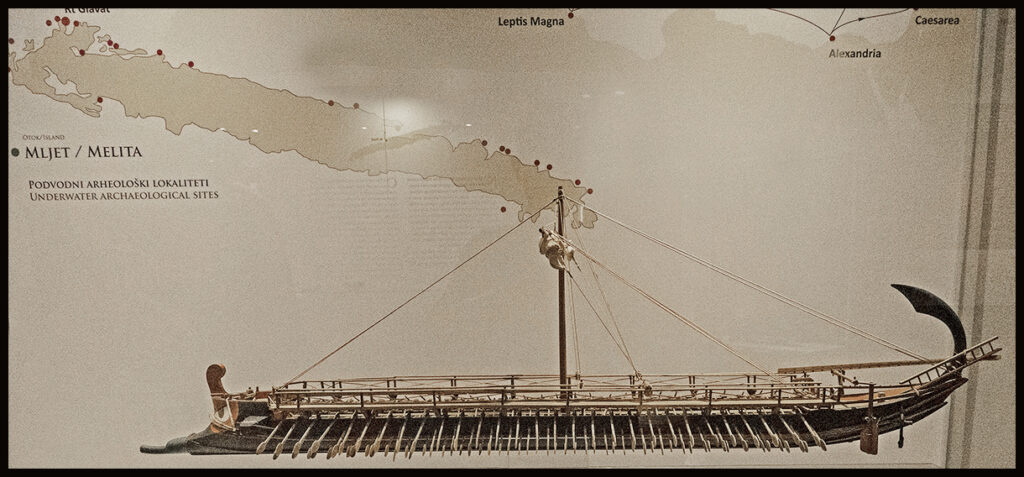
Greek Trireme: warship from the 5th century built for speed and maneuverability. The projection on the bow was for smashing the hull of enemy ships.
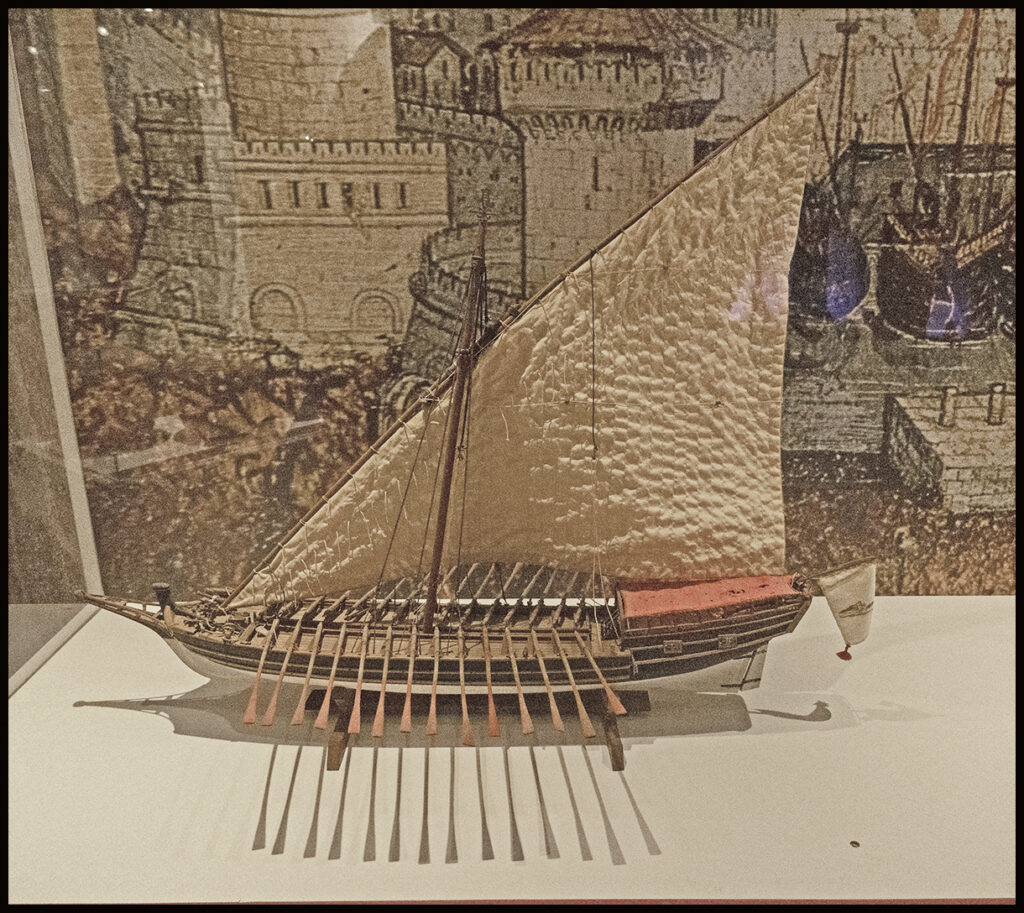
Light Galley: warship used from the 10th to 12th centuries had room for 14 to 24 benches for oarsmen, and a few guns.
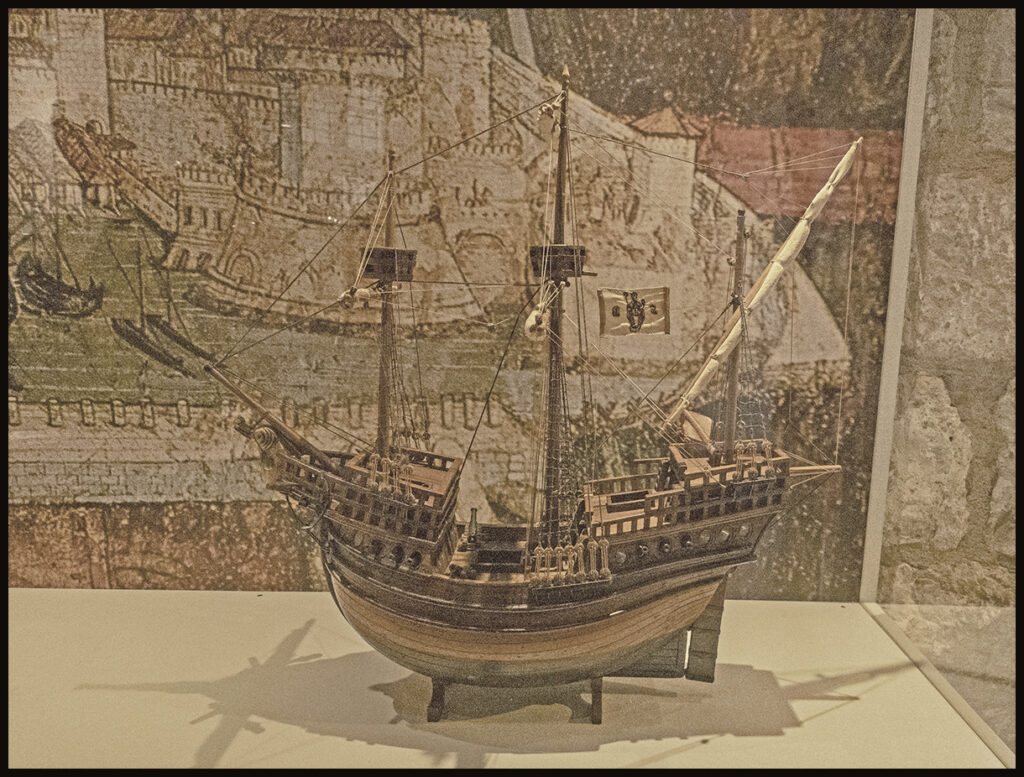
Venetian-style Carrack: Large merchant ships built in Dubrovnik beginning in the 15th century. They sailed the Mediterranean and beyond, remaining in use until the 17th century. These ships were so well built they could last 40 years. By the 1600s these were some of the largest ships in the world able to carry 900 tons.
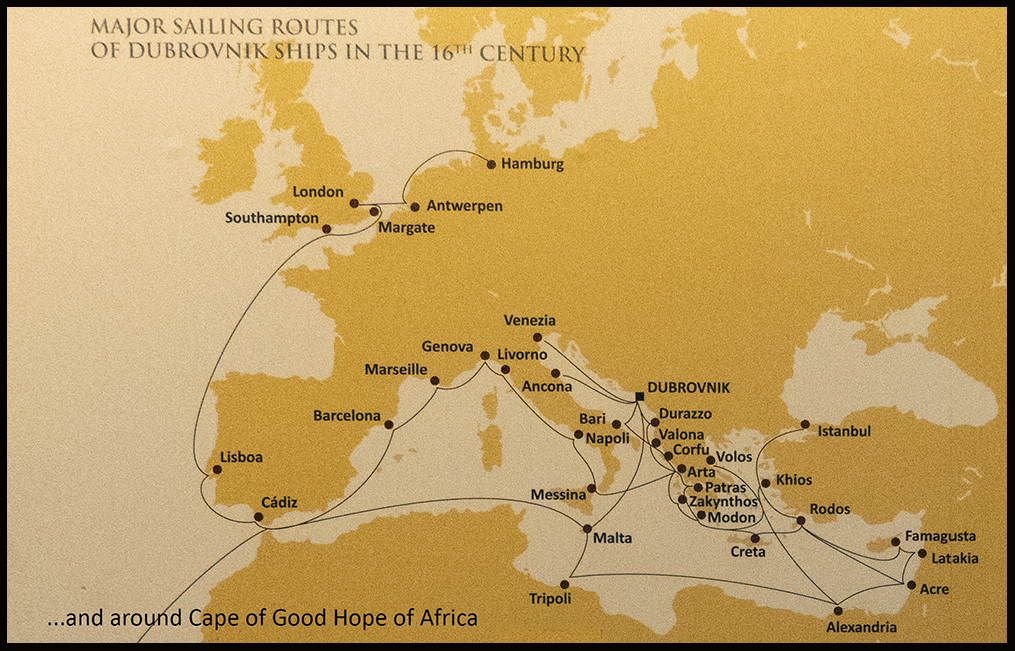
Map showing the extent of the area covered by Dubrovnik ships.
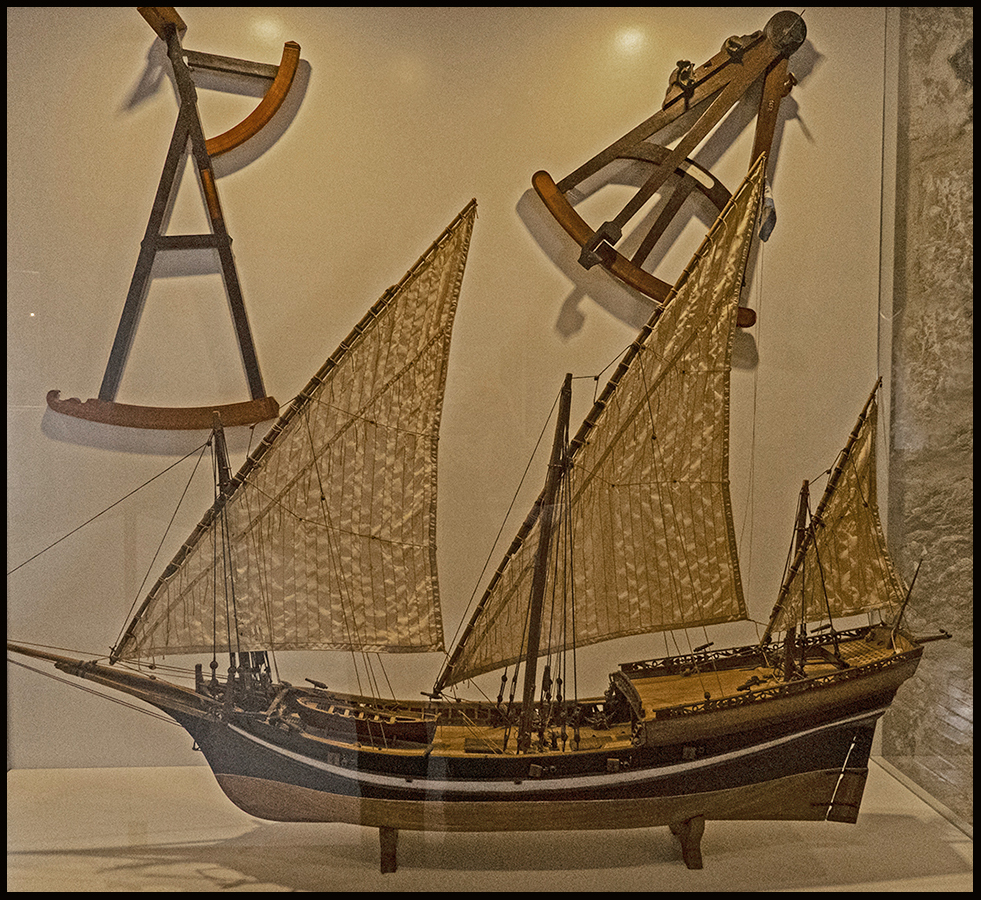
Xebec: Built in Dubrovnik from the 15th to early 18th centuries. These were fast, agile ships used for war, fishing and commerce. Also frequently used by pirates.
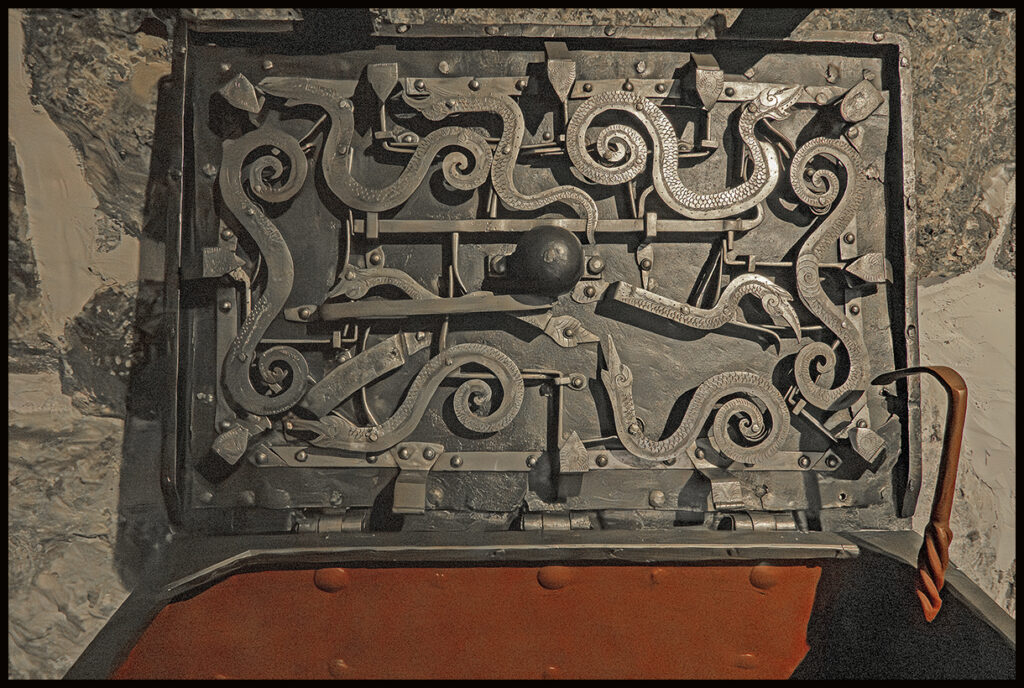
Locking mechanism for chest. Example of early metal smiths skills
During Napoleon’s time, in the early 17th century, Croatia was occupied by the French. Their Imperial Fort from that era overlooks the old town. It’s quite a drive to the fort…or one can take a cable car.
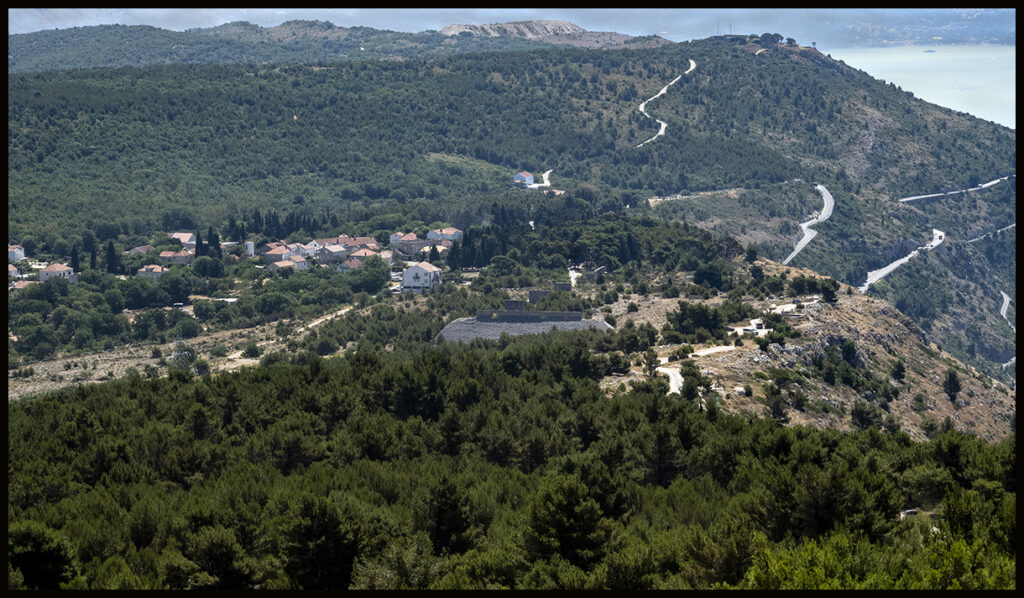
Road to the Imperial fort
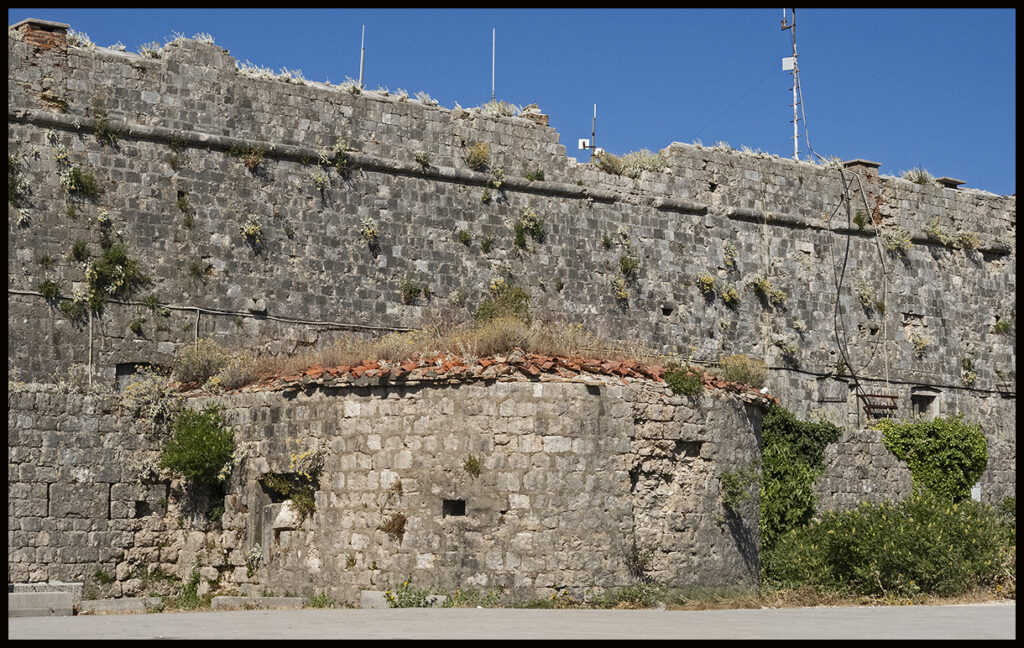
The fort with shell holes now growing plants.
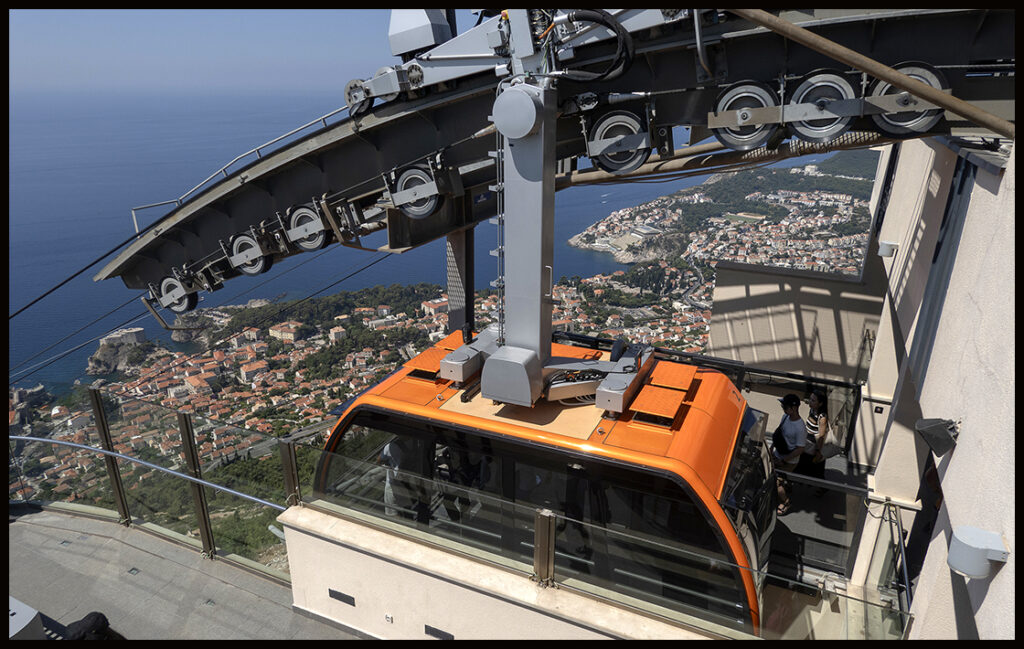
Cable car leaving the fort
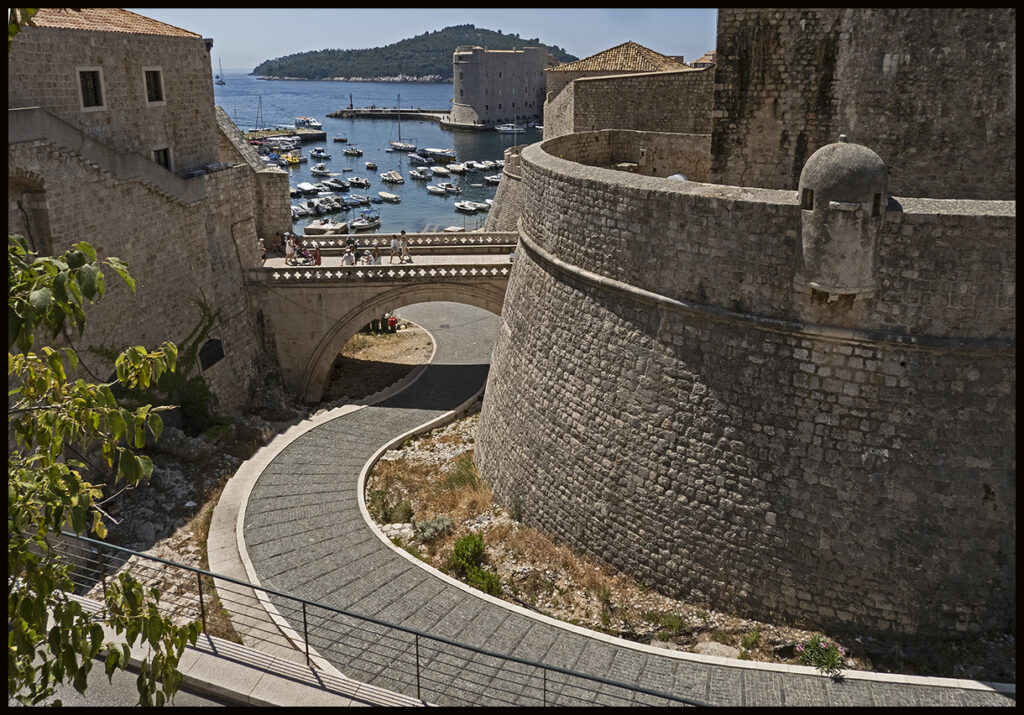
The northern entrance into the walled city near the cable car station.
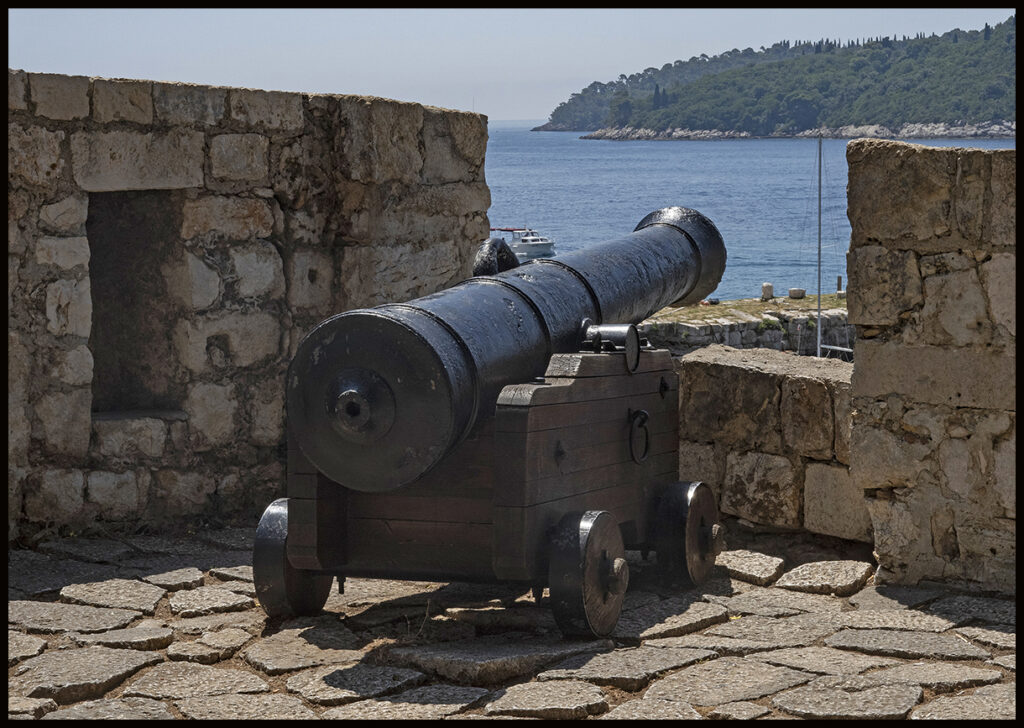
A cannon guarding the Old Town.
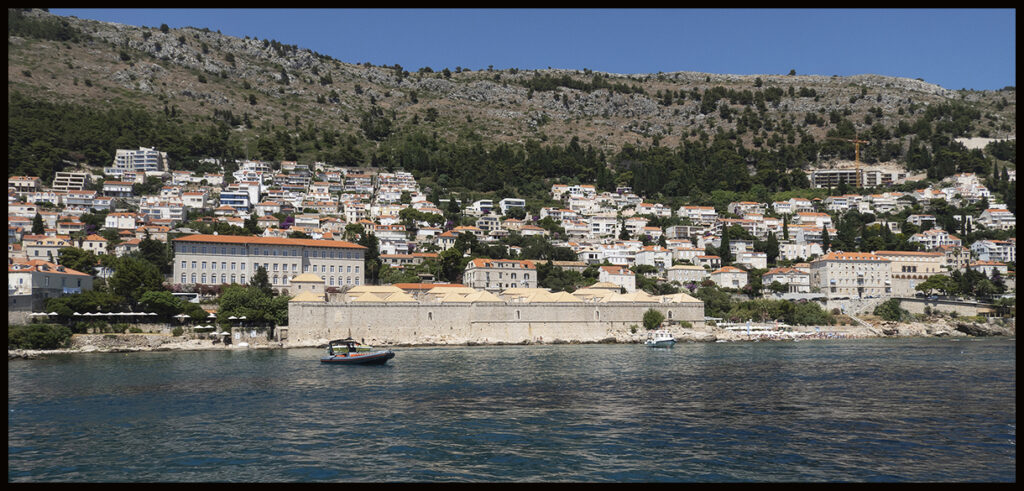
Dubrovnik city across the bay. Notice all the tile roofs.
Dubrovnik became part of the Kingdom of Yugoslavia after WWI. During WWII it was part of the Axis aligned countries, before being reincorporated within the Socialist Republic of Yugoslavia.
One day we took a side trip to the little country of Montenegro to visit another historic walled city, Kotor, also a World Heritage site. Fortified in the Middle Ages, it flourished in the 16th and 17th centuries as a Venetian defensive port. 1000 residents live within the walls now, down from 3000 only a few years ago. People make more money renting on AirBnB than living there themselves.
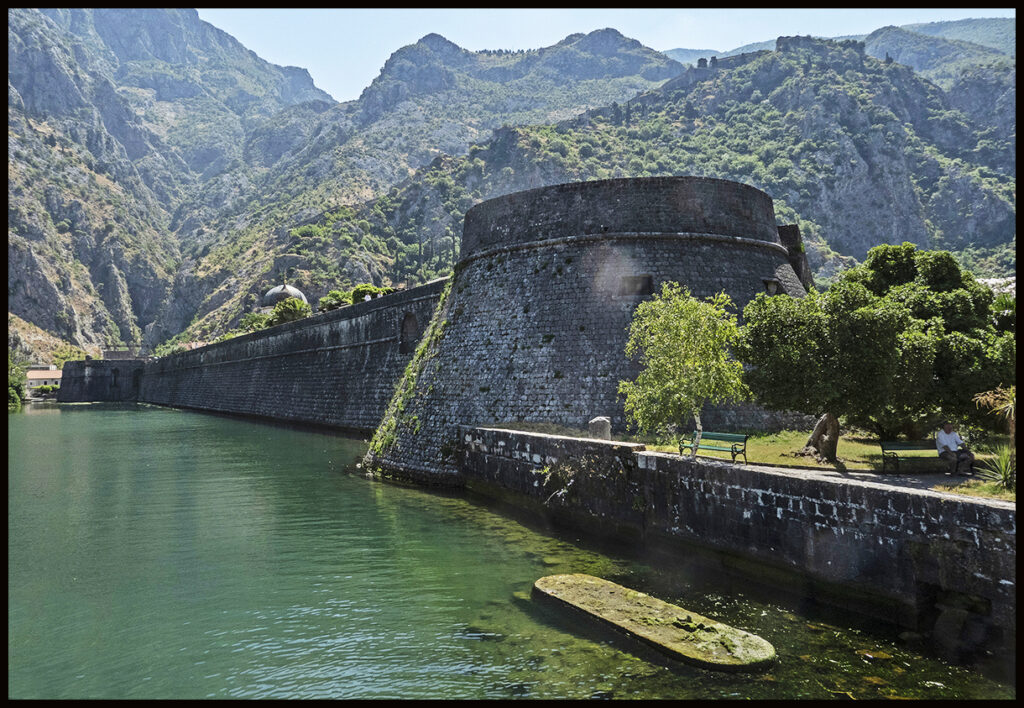
Walls of Kotor
In the center of old town is cathedral square featuring a clock tower and St. Tryphon’s cathedral built in 1166. The cathedral has been damaged and rebuilt several times over the centuries.
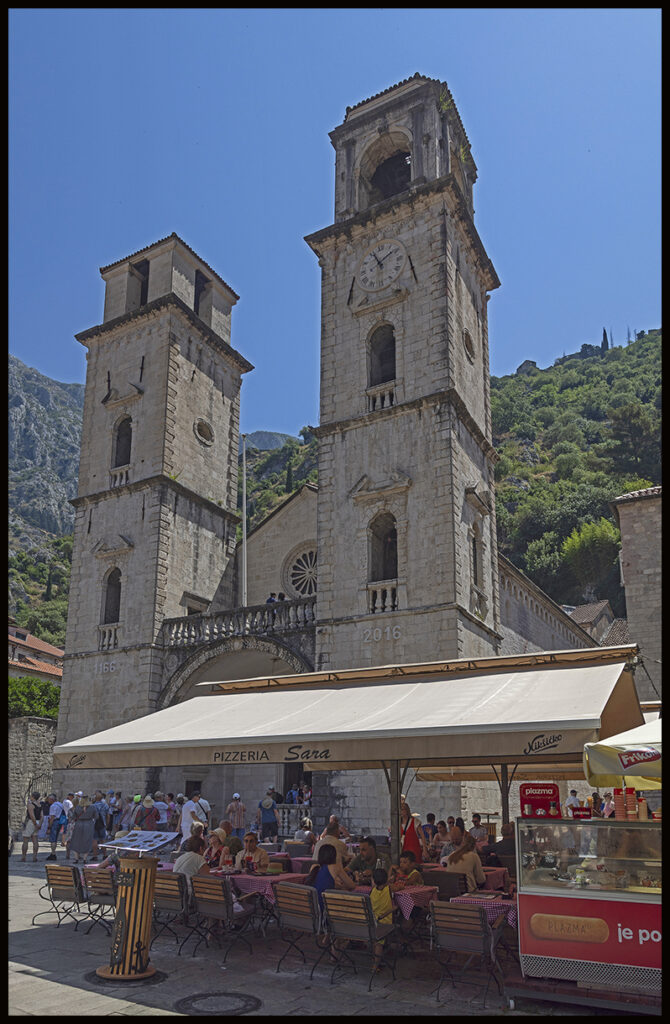
St. Tryphon’s cathedral. Towers show different dates. 1166 and 2016
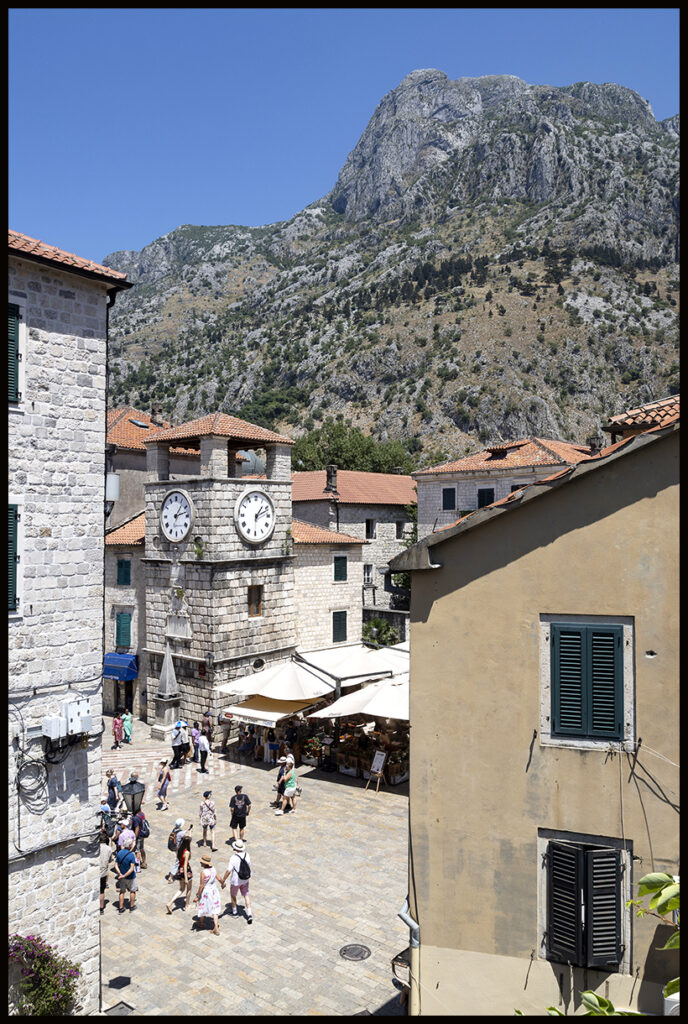
Central square with clock tower.
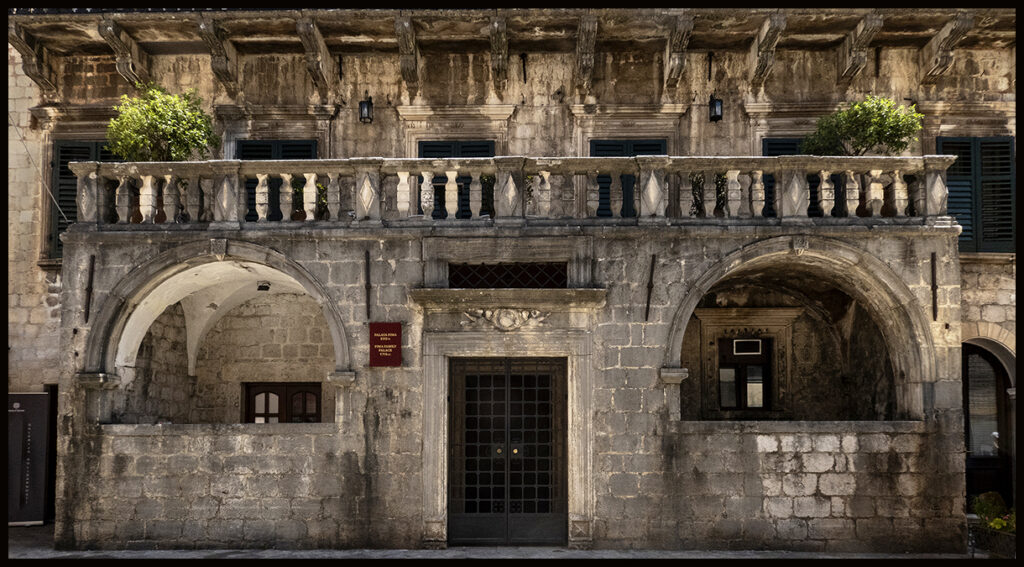
Medieval house for nobility…now a museum.
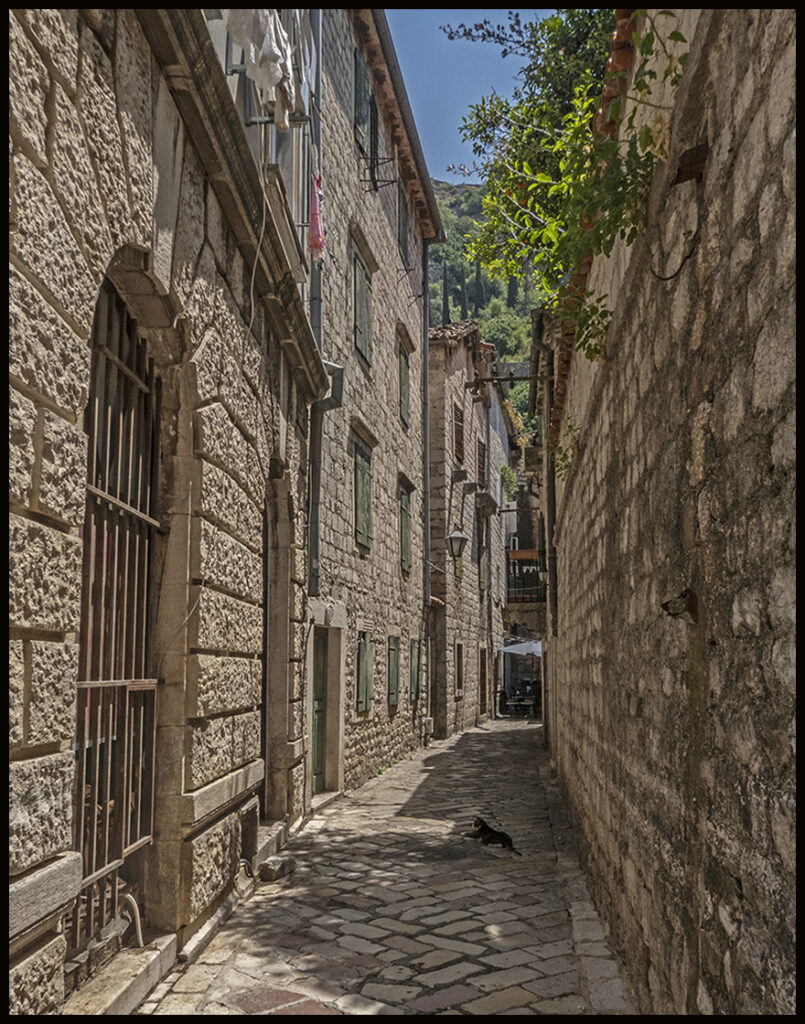
A large population of cats prowl the streets of Kotor. There are specialty cat stores, Cat Square, and a cat museum. Notice the paving stones in Kotor are much friendlier on feet than the cobblestones of other old cities.
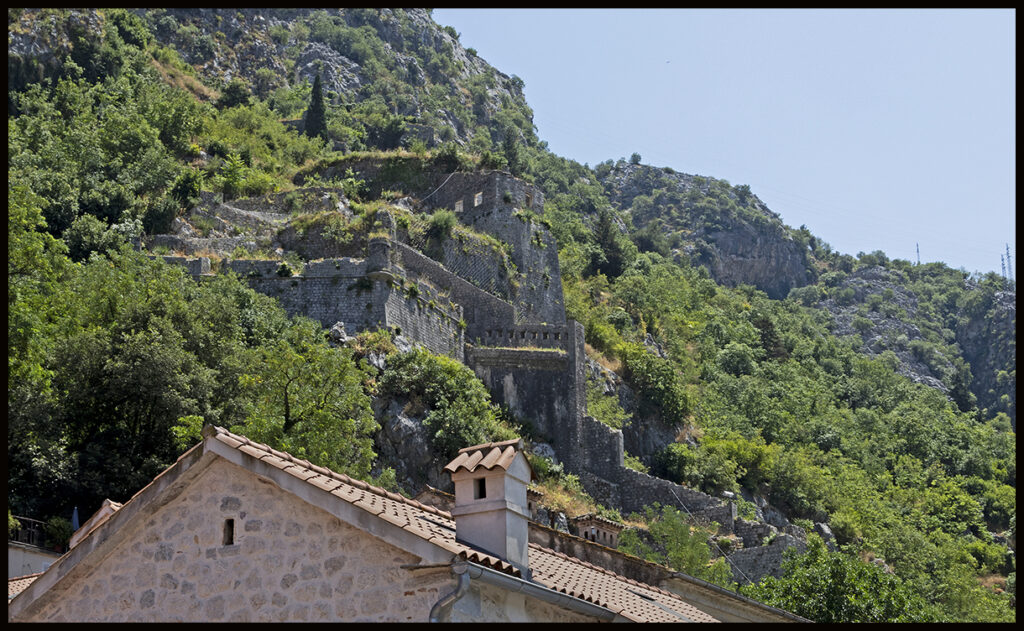
On the limestone hills above the current walled city are the well-preserved remains of fortifications built in the Middle ages.
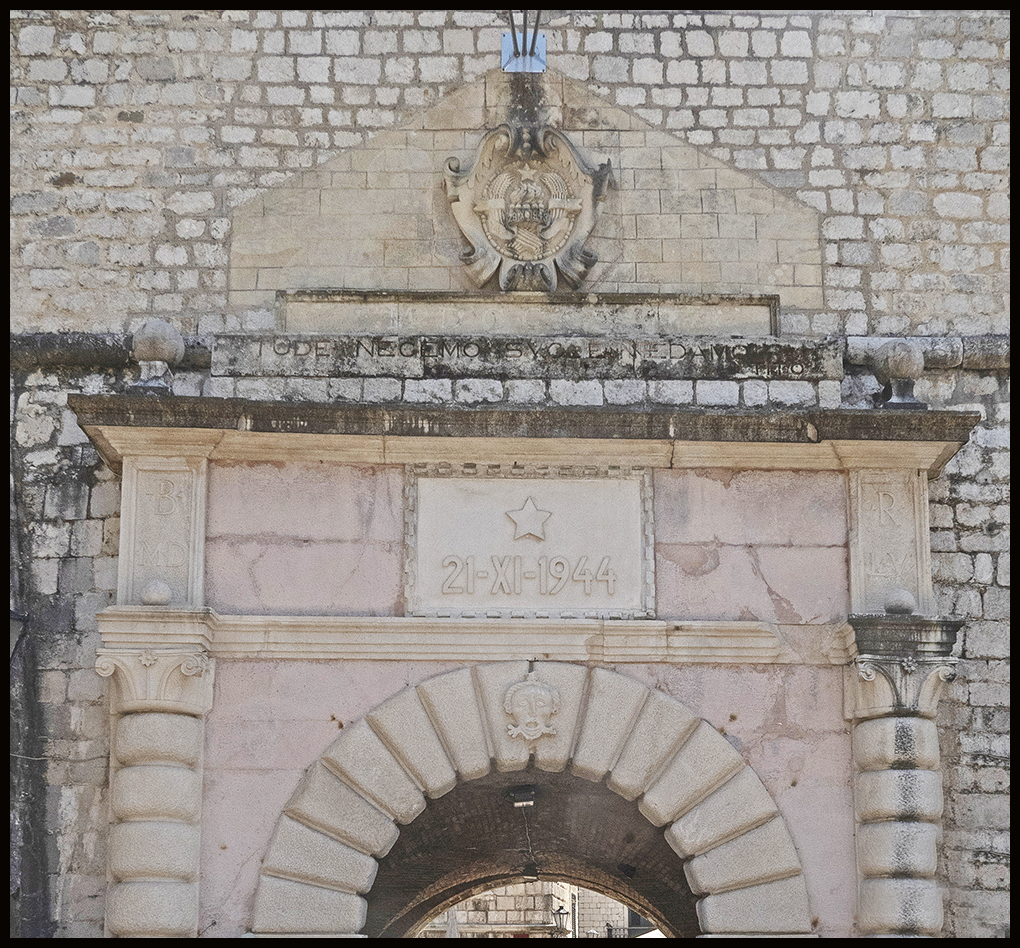
After WWII and the arrival of communism, the entrance gate emblems were replaced. A new message appeared “What belongs to others we don’t want, ours we don’t give.”
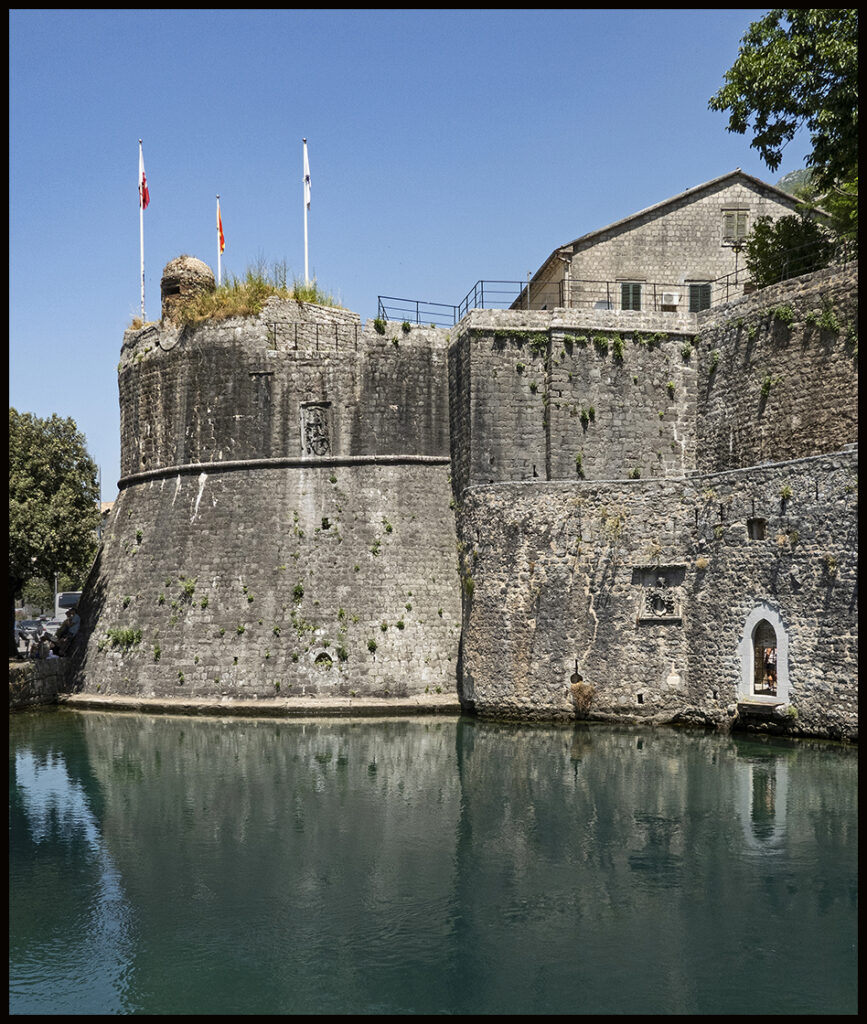
South entrance. A walk along the ramparts offers good views of the town.
The population of Montenegro is under 700,000. The capital city of Podgorica is inland in apparently a spectacular mountainous country. It remained aligned with Serbia after the disintegration of Yugoslavia in the 1990s. When it later gained independence from Serbia, it chose the German deutschmark as its currency. When Germany joined the EU, Montenegro traded in its marks for Euros. Now it uses Euros, even though it’s not part of the EU. Clever move.
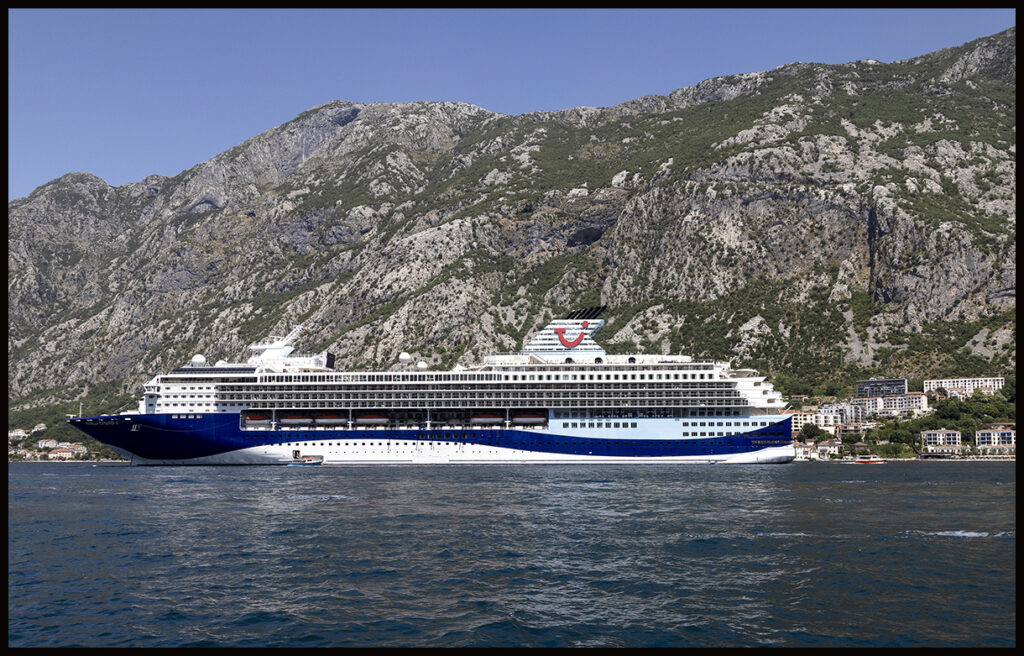
A cruise ship arrives to disgorge its hoards.
Leaving Kotor by boat, we pass the Lady of the Rocks, an artificial island with 17th century Roman Catholic church dedicated to the virgin. According to legend, the islet was made over the centuries by local seamen who honored a 1452 oath after finding a sign of the virgin Mary on a rock near St. George Island. Upon returning from each successful voyage, they threw rocks and sank ships in that sacred spot. The islet gradually emerged from the sea. The custom of throwing rocks into the sea is alive even now. Every year locals take their boats and throw rocks into the sea, increasing the size of the island.
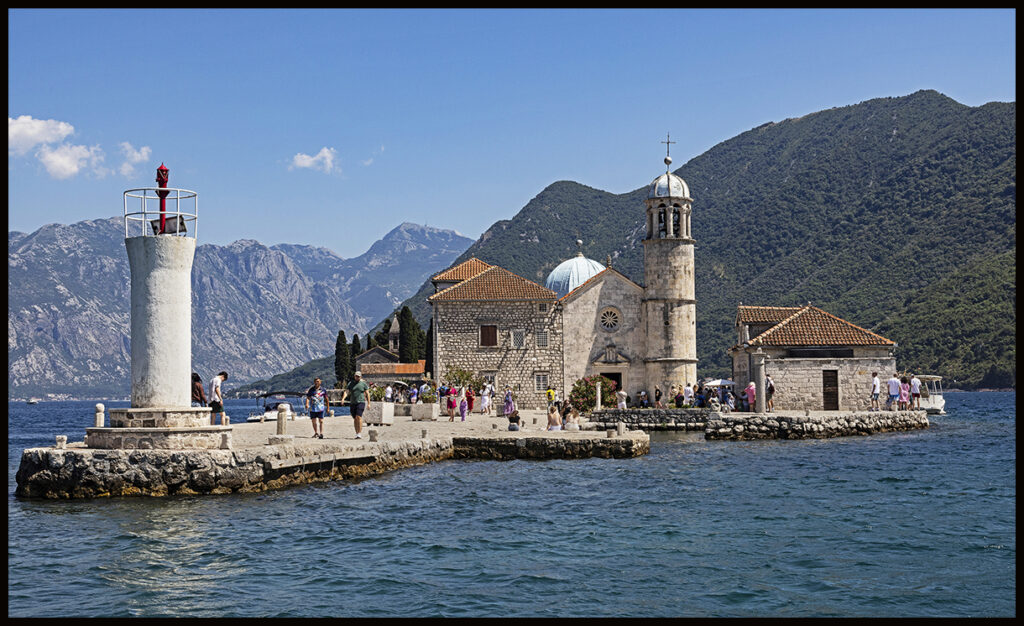
Lady of the Rocks, on an artificial island.
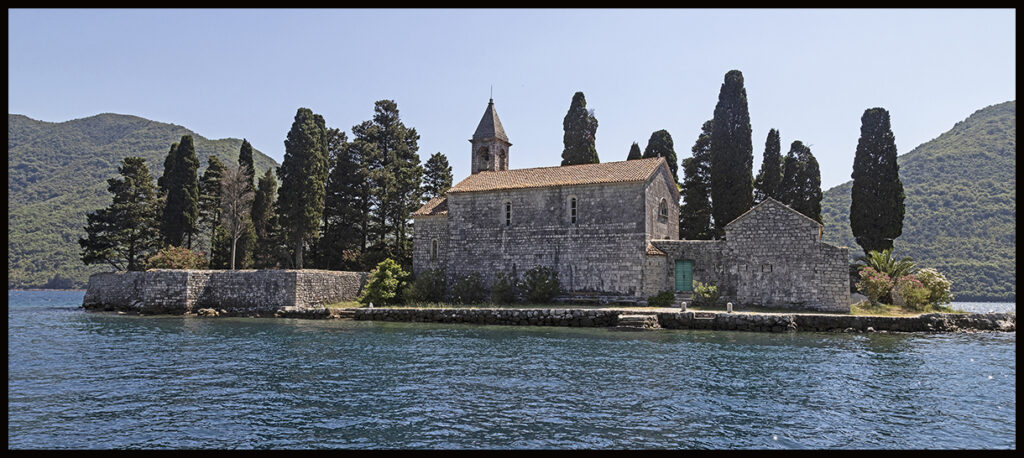
The island next to the Lady of the Rocks is St. George, a natural island with a Benedictine monastery built in 12th century and an old graveyard for nobility of Perast, the coastal city nearby.
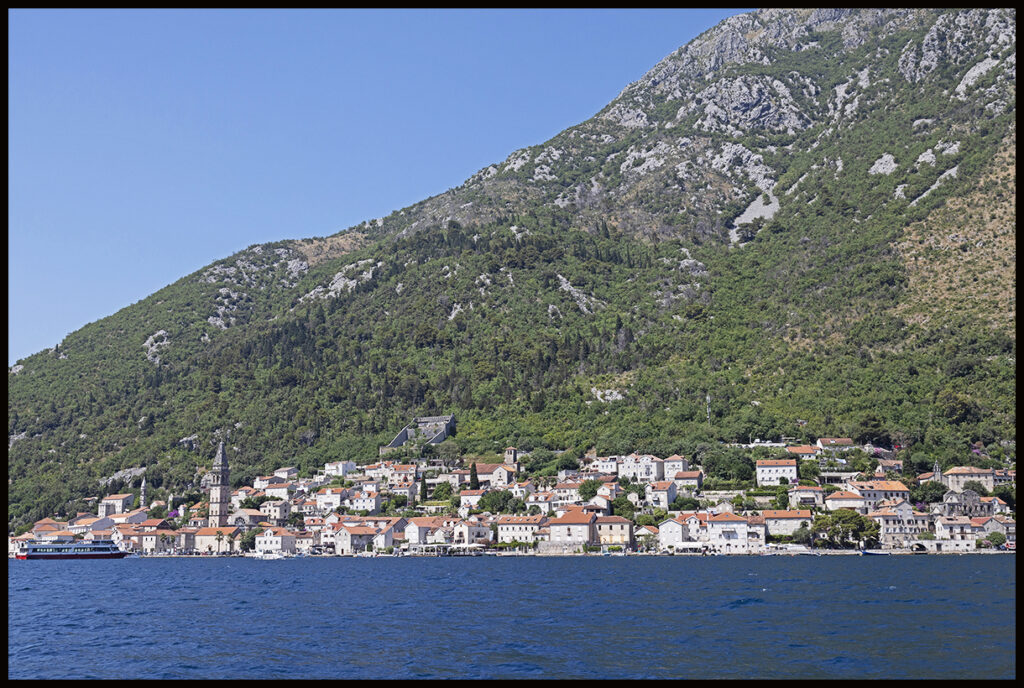
View of Perast with limestone mountains behind. Red tile roofs are the norm.
We took a 10 minute ferry ride to Lokrum Island, a popular day trip from Dubrovnik – First written mention of Lokrum was in 1023 when the Benedictine abbey and monastery were founded. It was occupied until 1798. Austrian archduke Maximilian once had a holiday home on the island mid-1800s. He brought with him families of peacocks whose progeny still roam the island. A monastery and a botanical garden survive from his era. On the island’s highest point (315 feet) stands Fort Royal Castle started by the French in 1806 and completed by the Austrians in 1835.
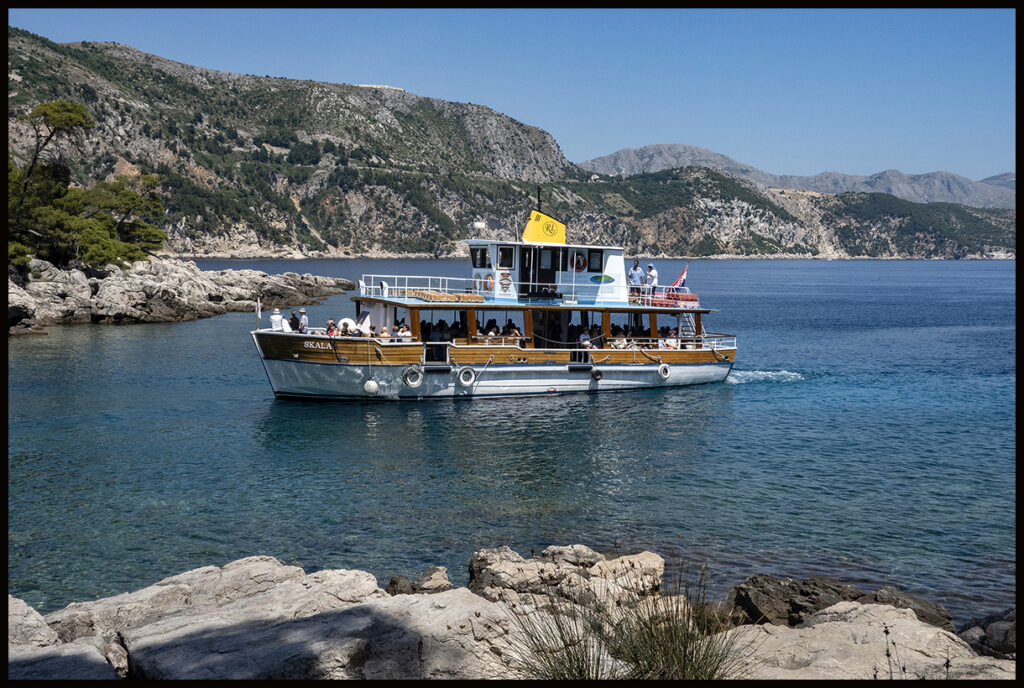
The ferry arriving at the island.
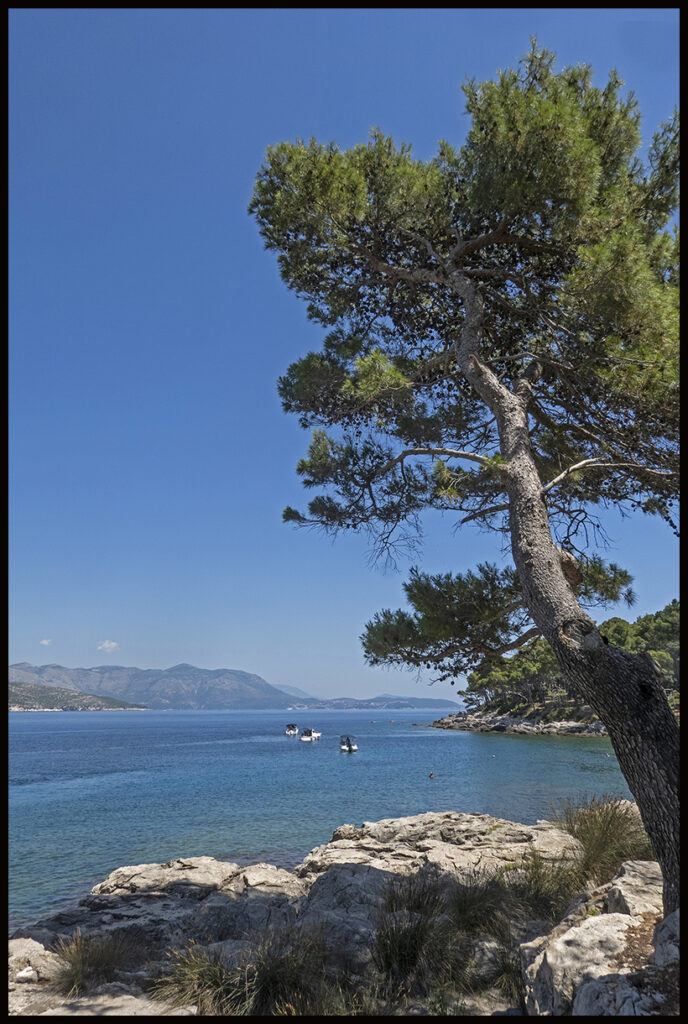
…and a grand vista.
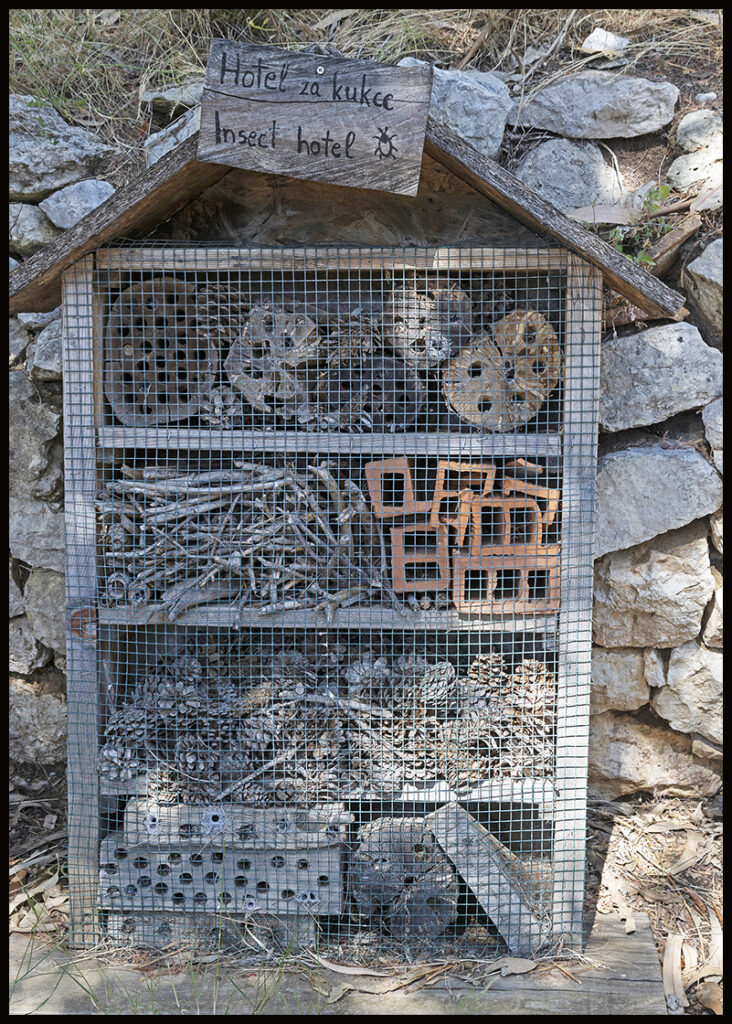
A clever house for insects…
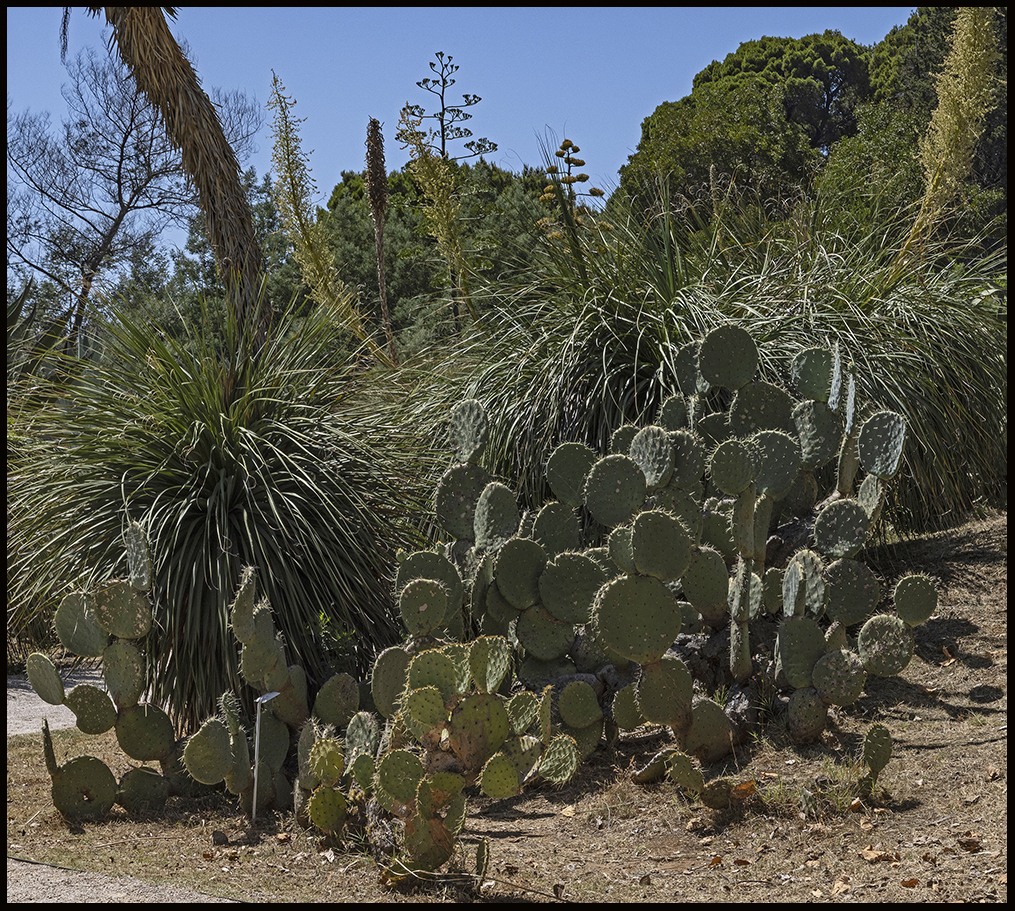
There is an extensive botanical garden on the island.
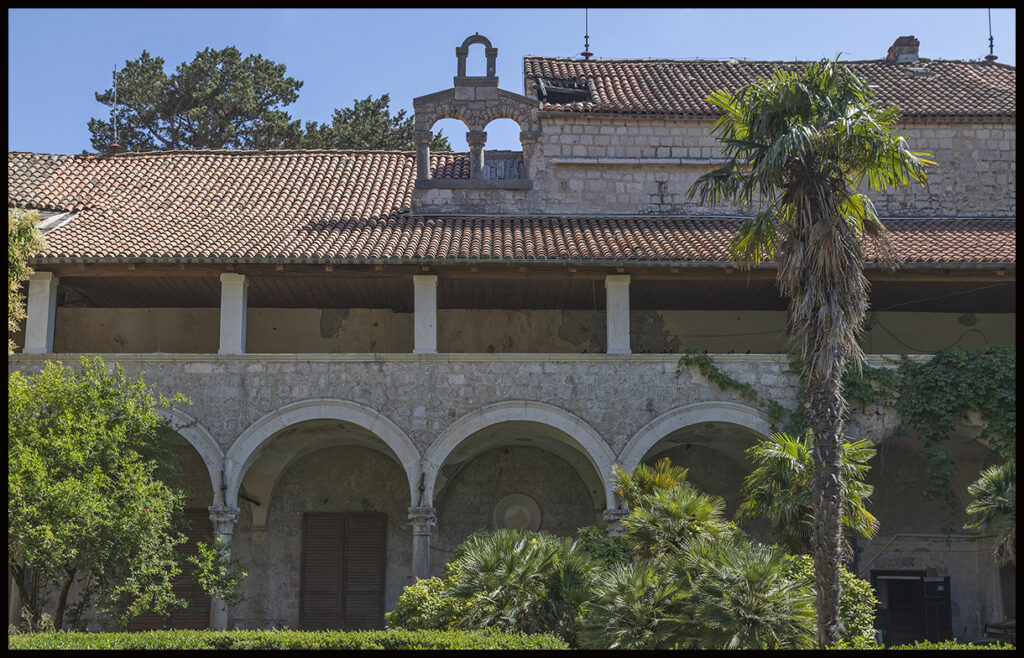
Old barracks building
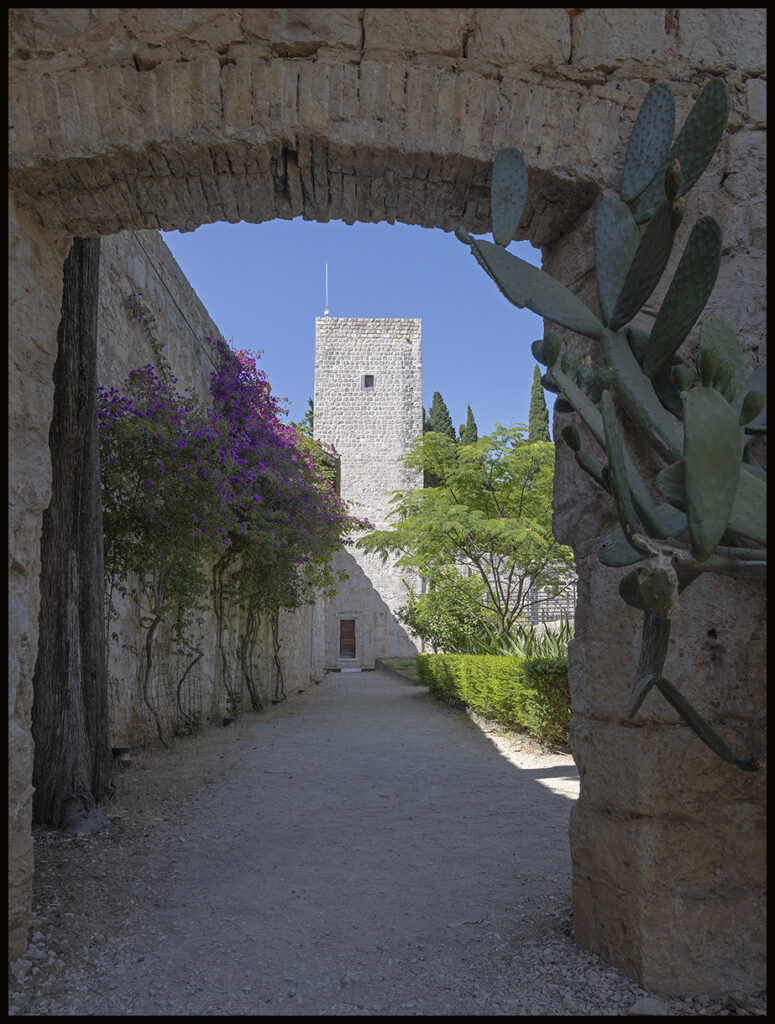
Monastery
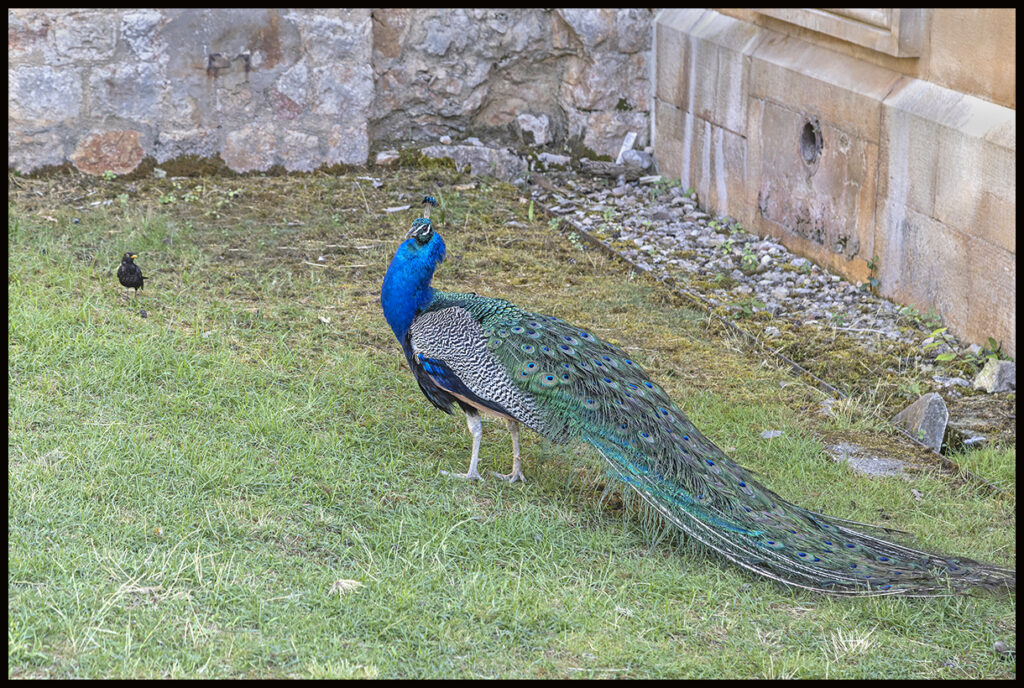
Maximillian’s peacock progeny
Time to say good-bye to our luxury hotel in Dubrovnik and move on to Sarajevo, Bosnia, to learn about the siege of that town in the 1990s.
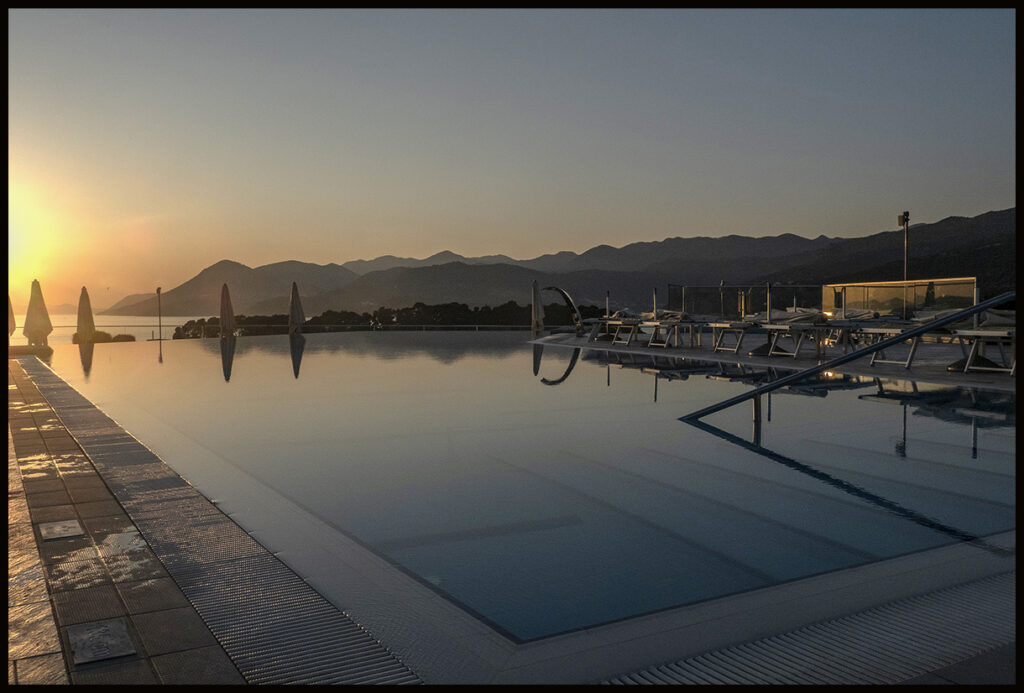
The infinity pool at the hotel. We were not suffering on this tour.
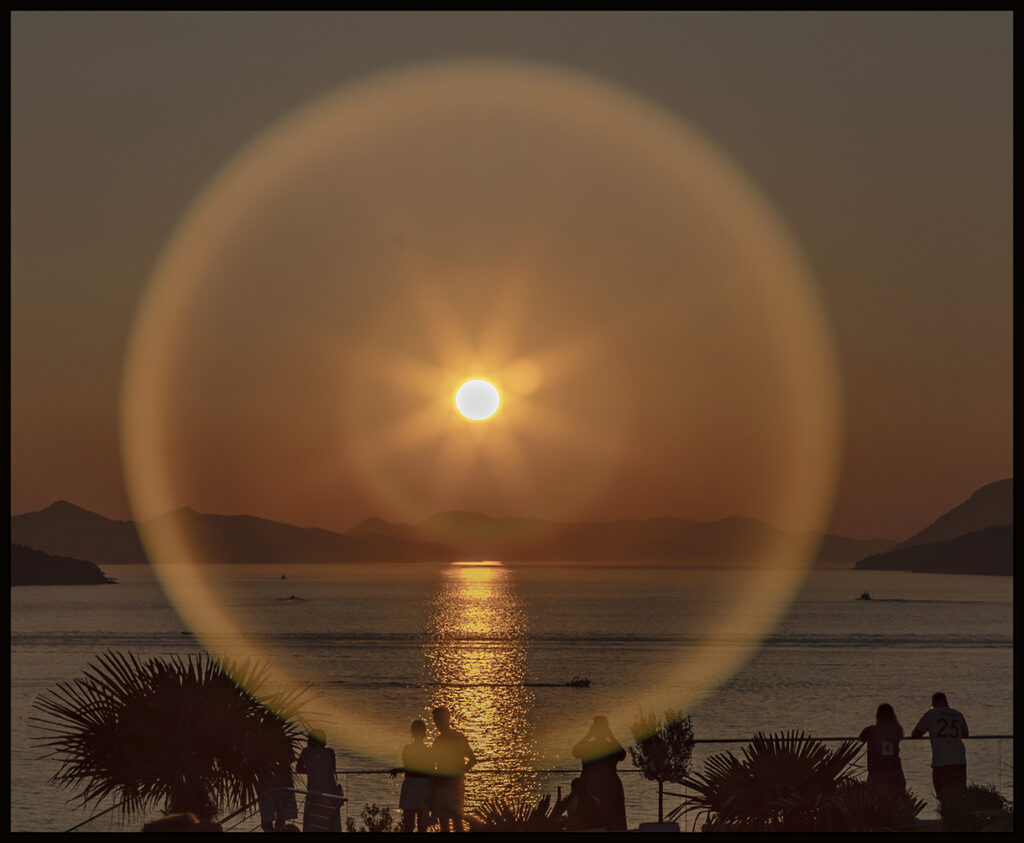
Hotel guests silhouetted at sundown.