
Melbourne is a huge city, Australia’s second largest after Sydney. I stayed a couple of days which only gave me a quick taste of what Melbourne has to offer. From what I gathered, the city is more traditional than Sydney. All big cities in OZ are VERY cosmopolitan now. Australia has taken in immigrants from all over the globe, much to the delight of some and consternation of others.
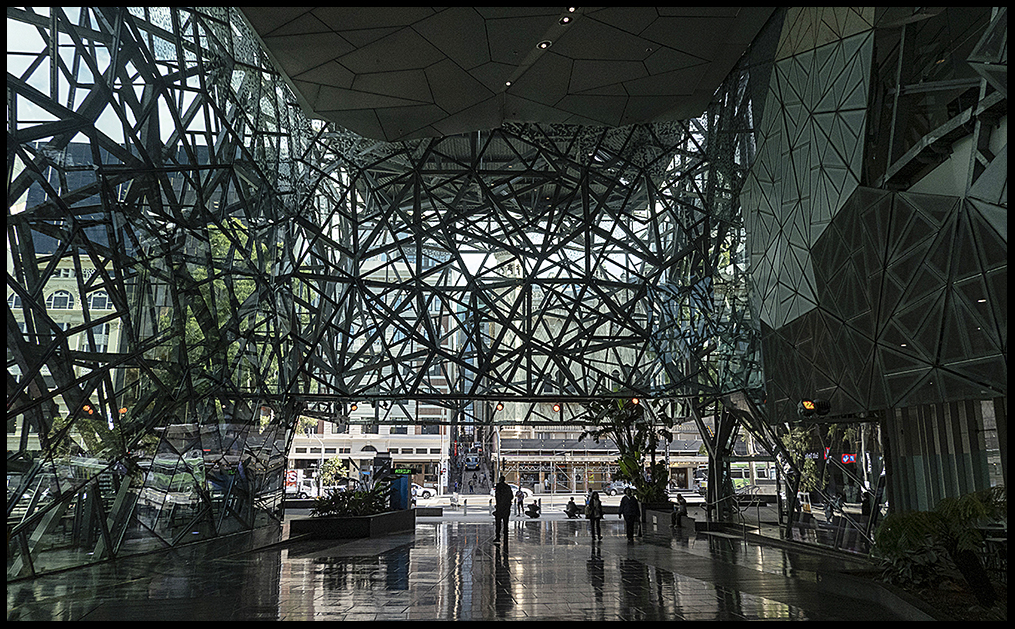
Federation Square, atrium portion. This is a major outdoor venue,opened in 2002, for all sorts of concerts and demonstrations. It’s famous for its fractal architecture.
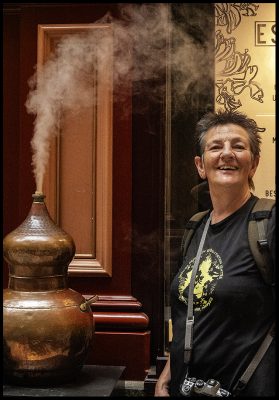
Jen, with camera near a magic shop.
I was camped at Reeve’s Beach, and planning to enjoy the beach for a few days, but it started to rain so I decided to hotfoot it to Melbourne to meet a new photographer friend.
I had only met Jen Fawkes online, but she generously invited me to stay with her and her charming husband, (and cat). Aside from being a big deal in the PSA (Photographic Society of America), she proved to be an excellent cook and guide.
Jen offered to take me on a street photography adventure with her. Our first stop was to meet with some others at the iconic Federation Square atrium.
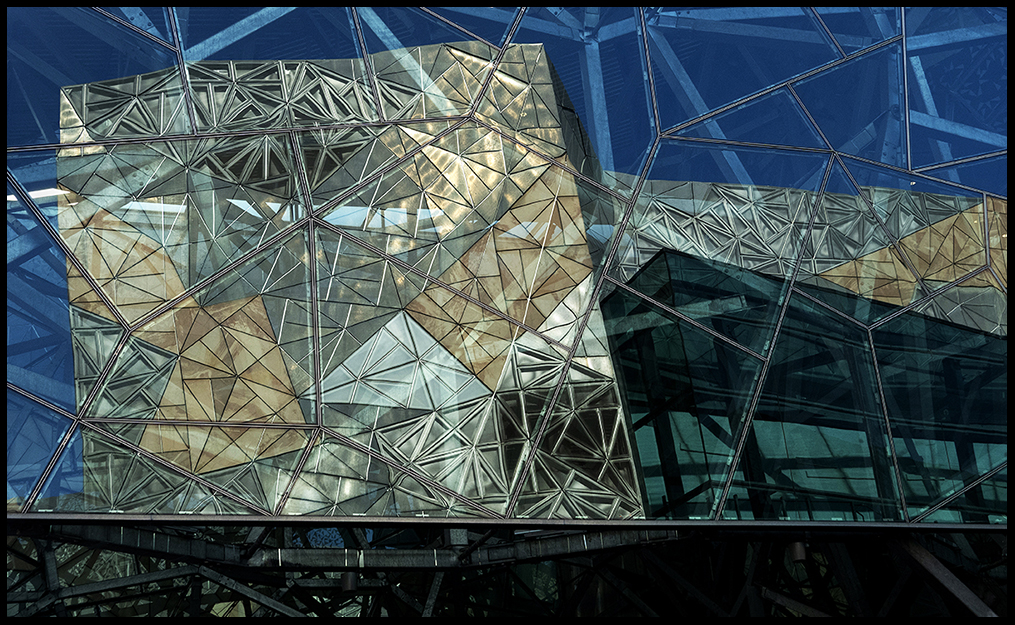
Federation Square reflections highlight the fractal nature of the buildings.
Adventure One – the intriguing alley walls filled by talented graffiti artists from all over the world. Not sure how space is allocated, but new ones are just painted over old ones. Some of the artists are quite famous…like John Murray who specializes in emus.
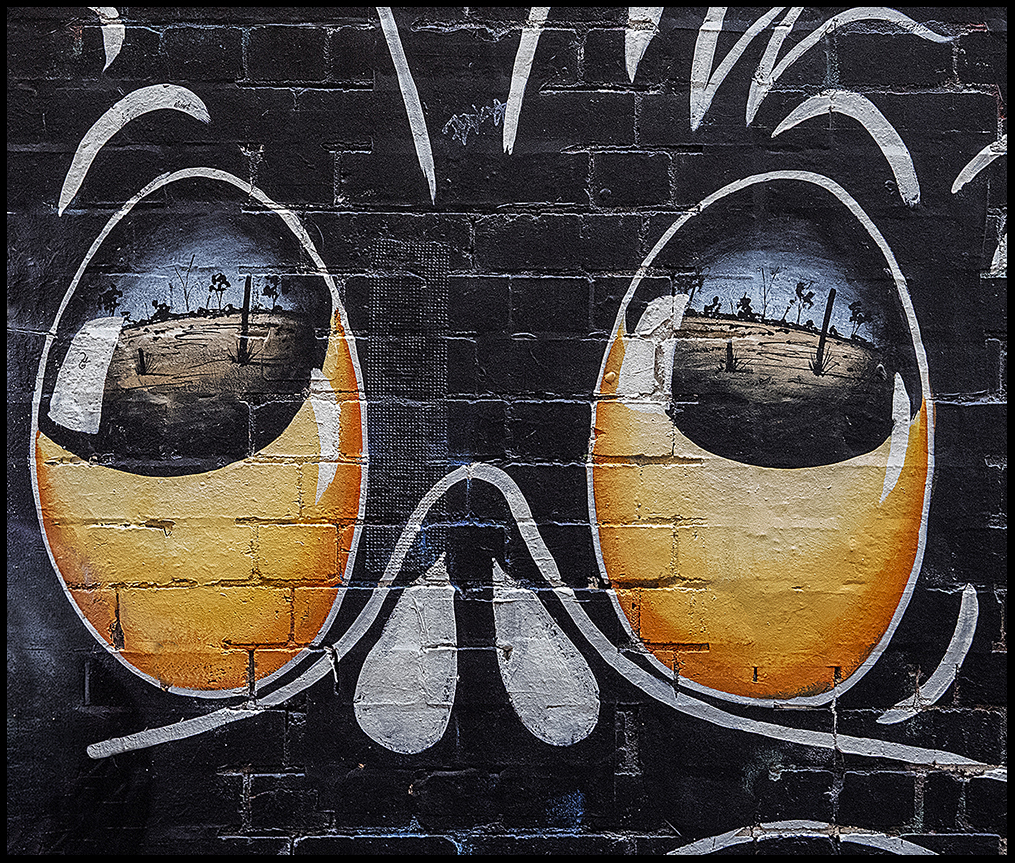
One of John Murray’s emus…notice the outback landscape it its eyes.
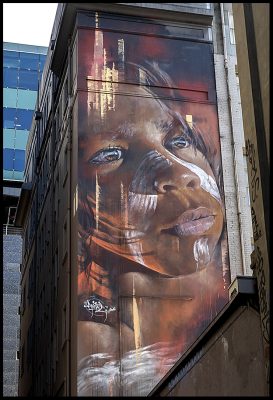
A building scale painting…
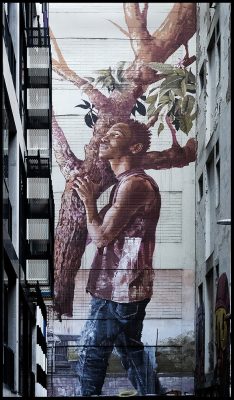
…And another huge painting
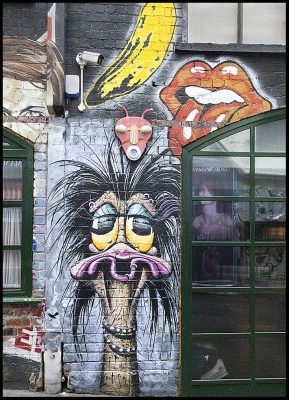
Another emu with extras
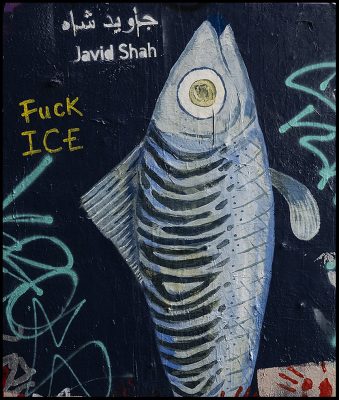
Good to know ICE is reviled the world over.
After prowling the alleys, we looked at more traditional areas. On our short day-tour we found many Victorian era buildings mixed in with modern ones. The population of the city is about 5.5 million, nearly 20% of the population of Australia. It was founded in 1835, with the arrival of free settlers from the penal colony (according to AI) in Van Diemen’s land (modern-day Tasmania). A great read, if interested in the history of OZ, is “the Fatal Shore” by Robert Hughes.
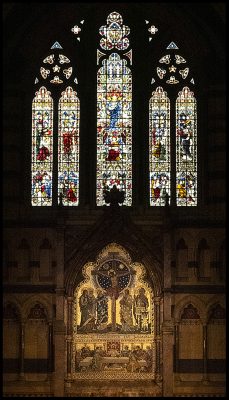
Large cities have a grand cathedral, and Melbourne is no exception.
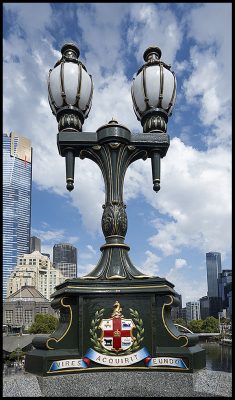
British influence is obvious throughout the city
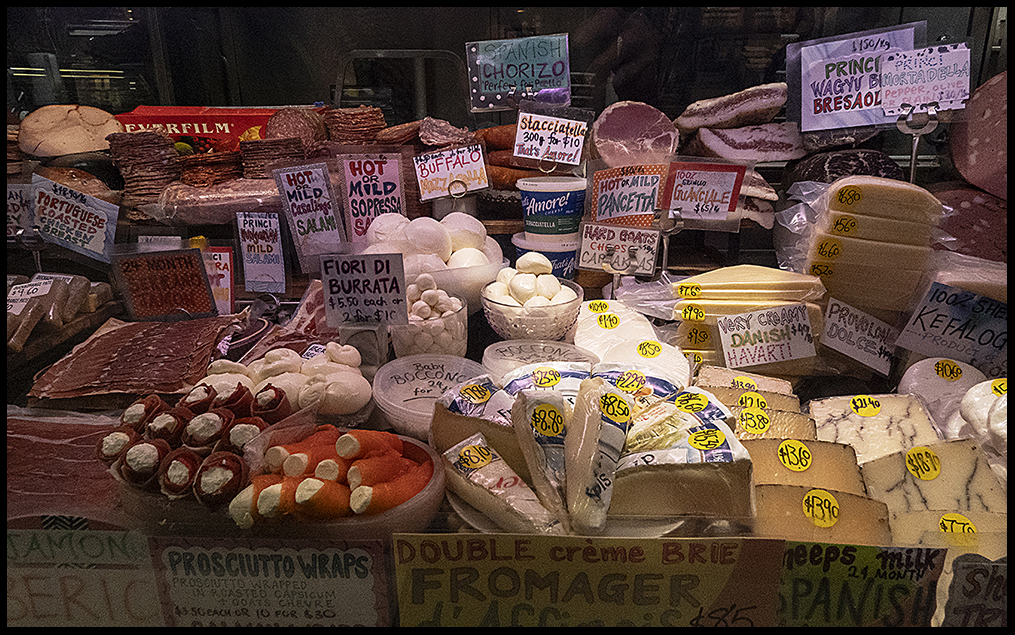
The city market has all sorts of food for sale. The cheese stall looked especially appealing.
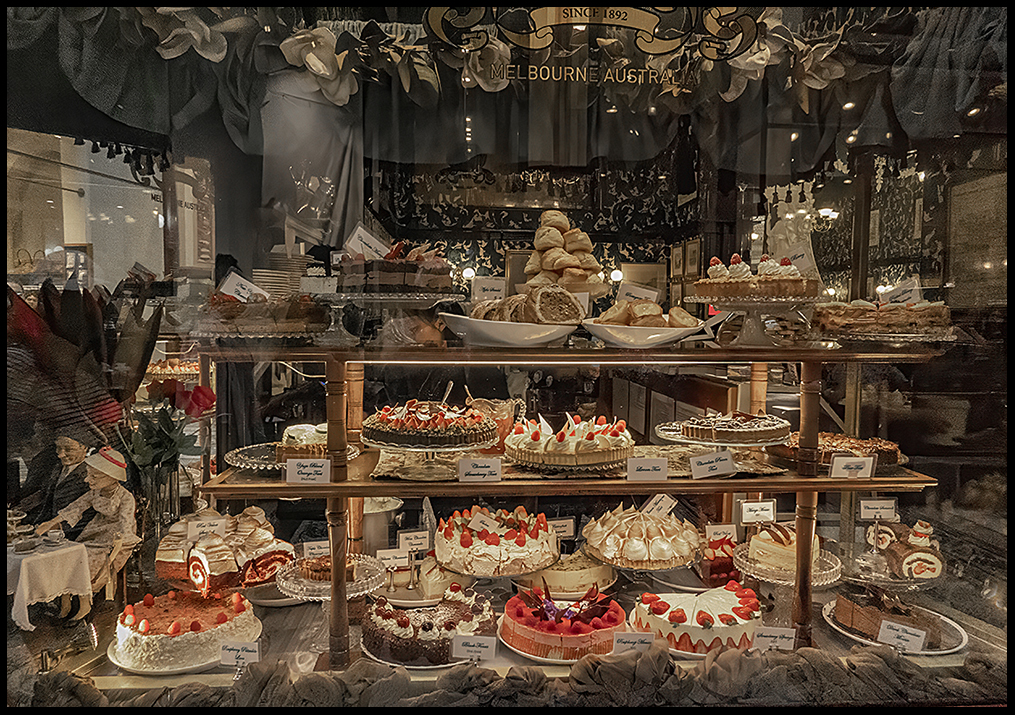
This trendy goodie shop in the Royal Arcade, has been in business since 1892. It must be good.
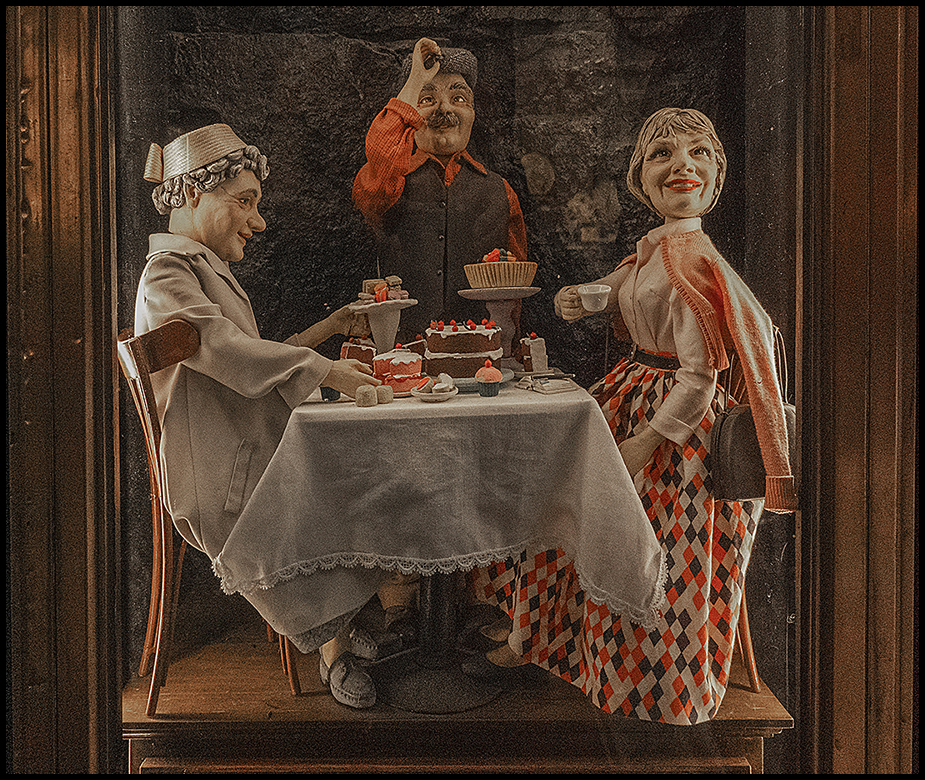
The window display looks like it’s been there since the beginning
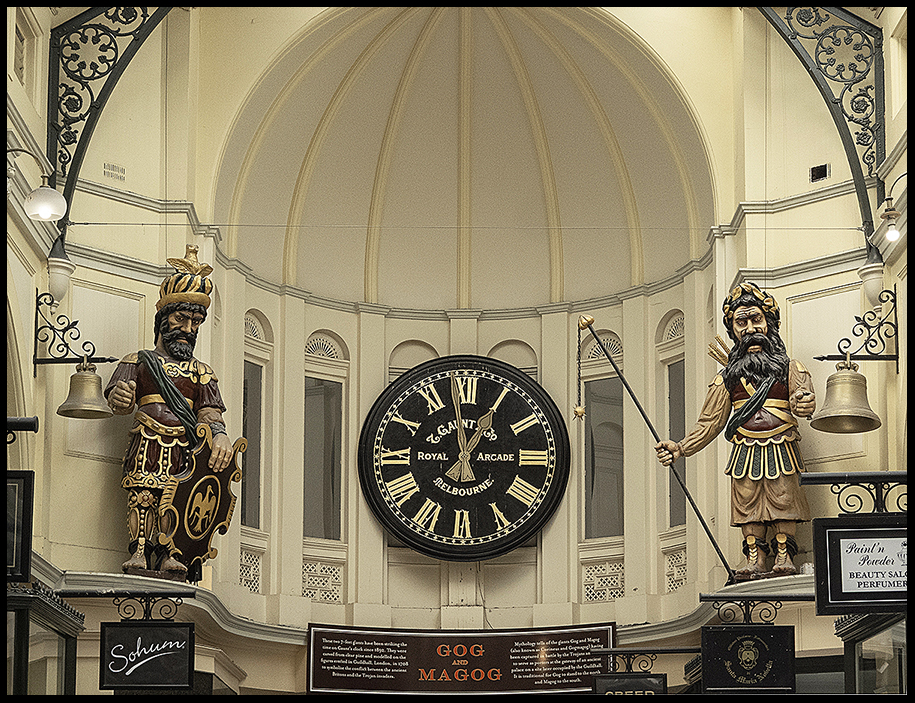
This evil biblical duo mark the passing of every hour by moving around and ringing the bells. They were installed in the Royal Arcade in 1892.
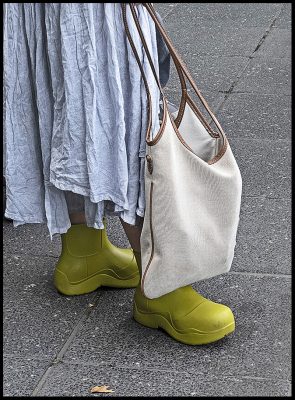
High style? Don’t ask me, the least stylish human on Earth.
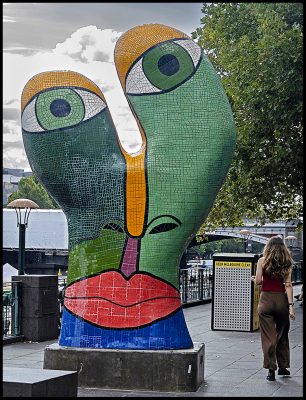
This statue is beloved by Melbournians.
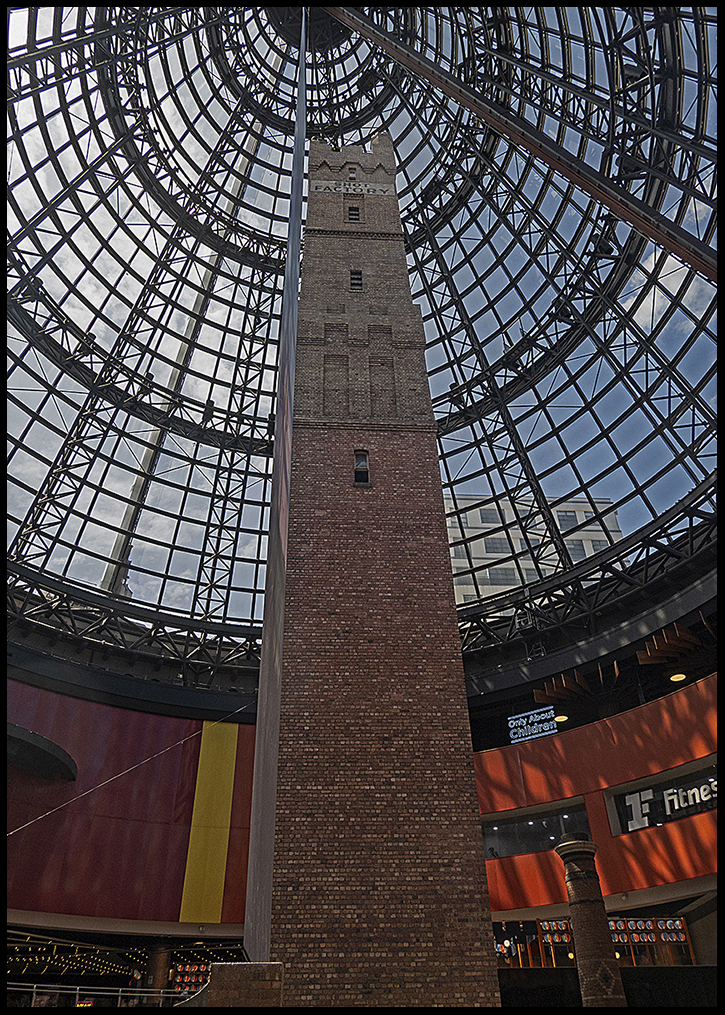
Coop’s Shot Tower dates from 1889. The mall was built around it. The way shot towers work, is… at the top, molten lead is poured through sieves to form uniform bits of lead that form spheres and solidify on the way down. They then drop into a water moat at the base to cool the newly formed ammunition.
During the 1850s Victorian gold rush, (similar to the California gold rush of the same era) the city boomed, and by the late 1880s, it was Australia’s largest and wealthiest metropolis. Sydney holds those titles today with all its foreign investment and larger population.
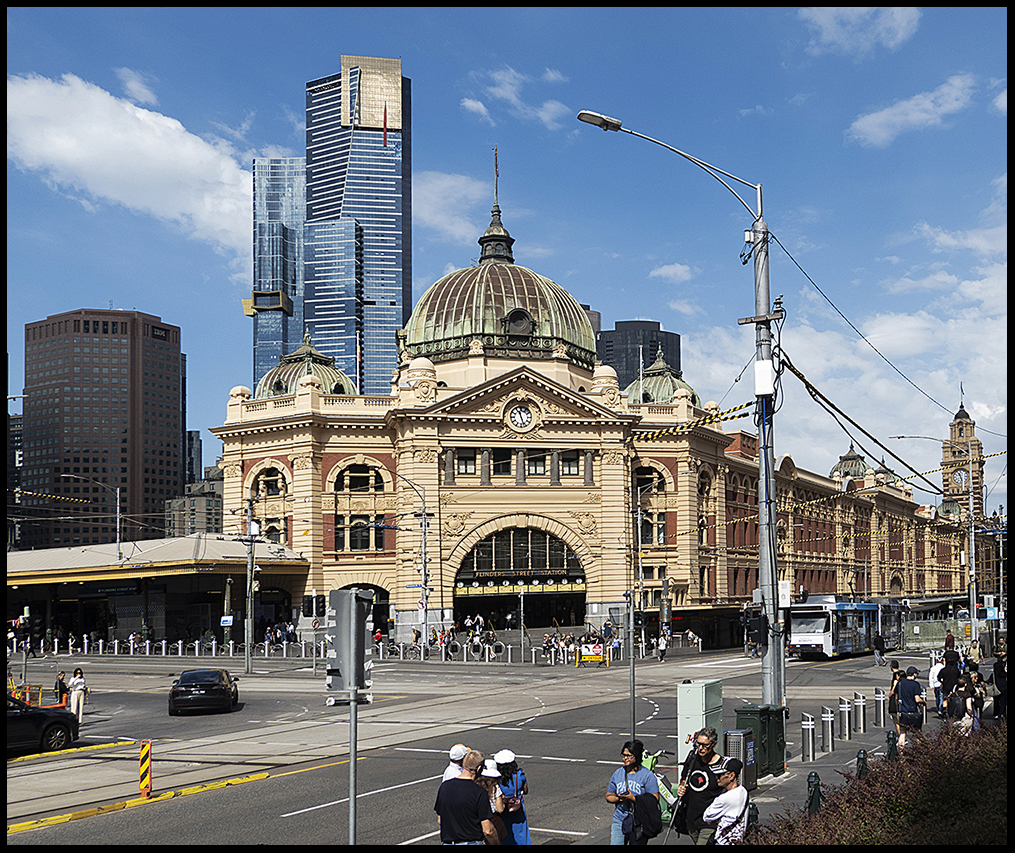
Flinders Street station has been the main transit hub since 1909. Victorian era buildings sit next to modern skyscrapers.
On day 2 we left town to drive to the Healesville Animal Sanctuary. It’s basically a large zoo featuring native animals. They have extensive breeding programs focused on threatened species.
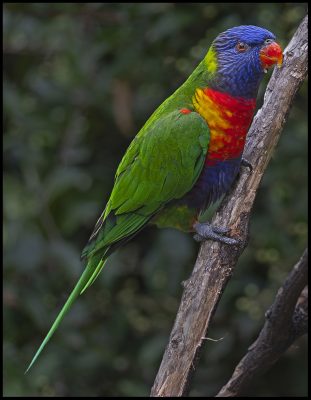
Rainbow Lorikeets are common and I did see several, but never got a better shot than this.
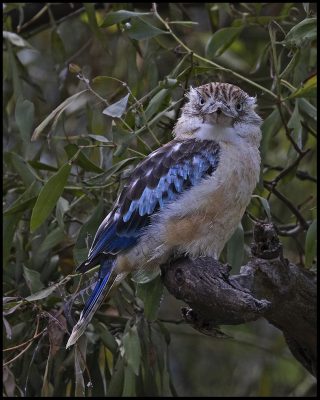
Blue-winged Kookaburras are native to the “top end” aka, northern Australia.
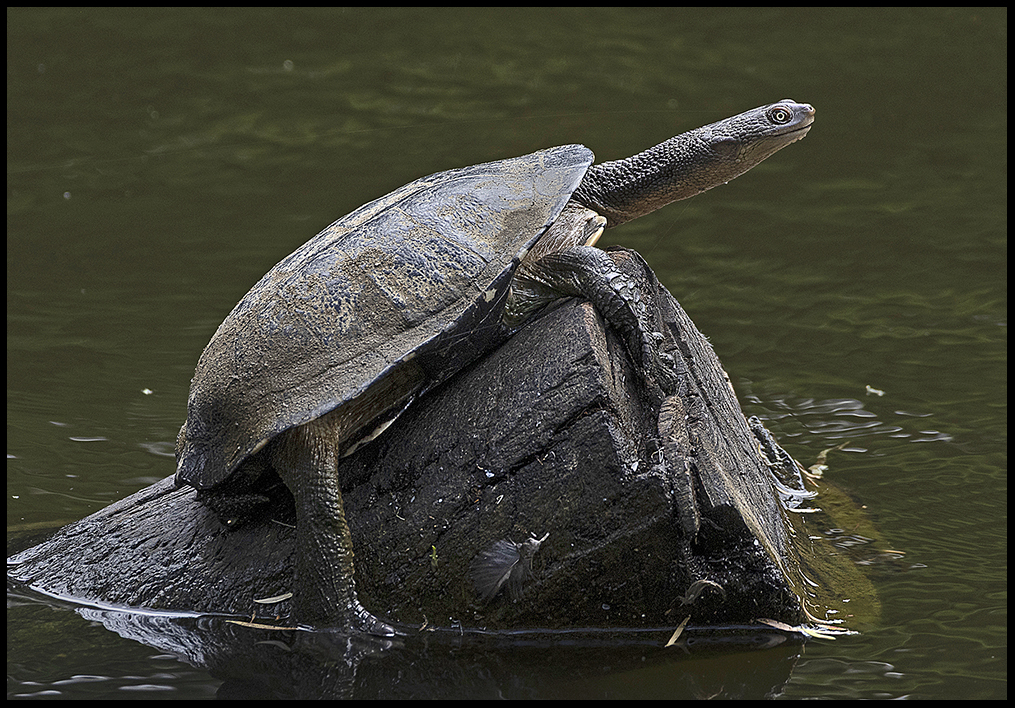
Being a turtle fanatic, I loved this long-necked version. They’re not endangered as far as I know.
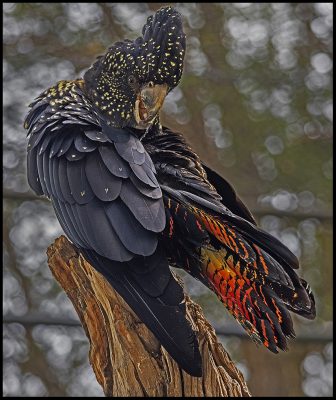
Red-tailed Black Cockatoos are more common farther north.
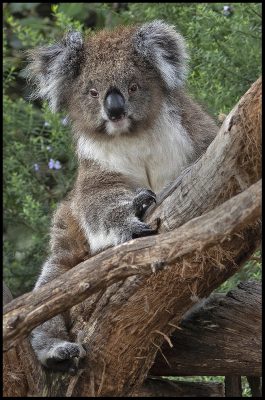
I so love koalas, I’ll take a photo any chance I get.
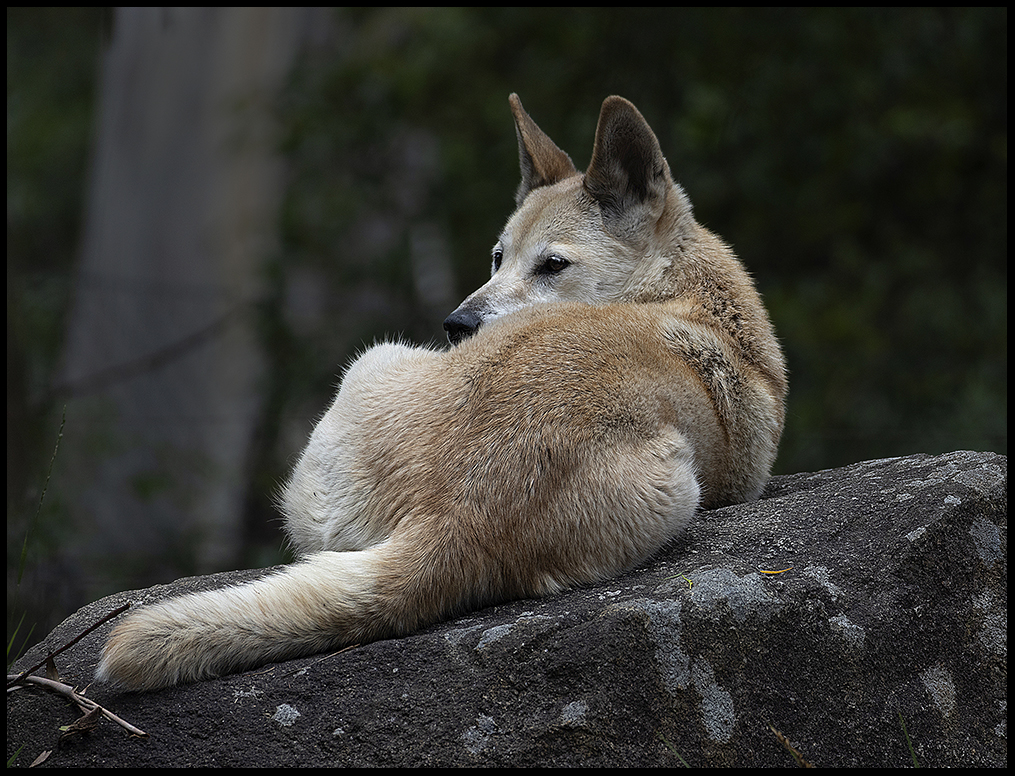
An infamous dingo. I think I saw a wild one on the south coast of S. Australia.
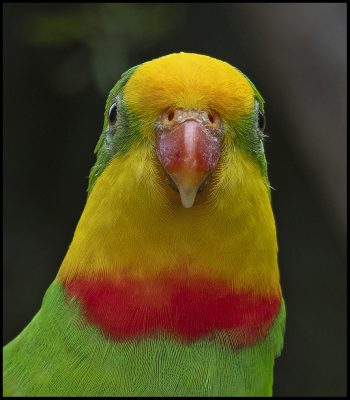
Superb Parrots are threatened as habitat loss and the lack of nesting cavities has shrunk the numbers in the wild.
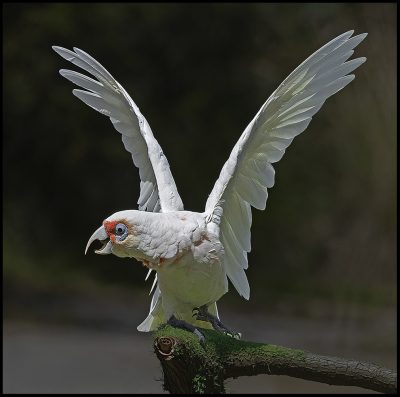
Eastern Long-billed Corellas are not in such dire straits.
Off on my own again, I take Jen’s advice and plan to camp at Lake Elizabeth in the Great Otway NP. The lake is reputed to be full of platypus, but alas, although I waited until it was almost dark, not a single platypus surfaced. One thing Jen neglected to tell me, is that the campground is for tents only. So, I camped at the trailhead parking lot and left early, before a ranger arrived.
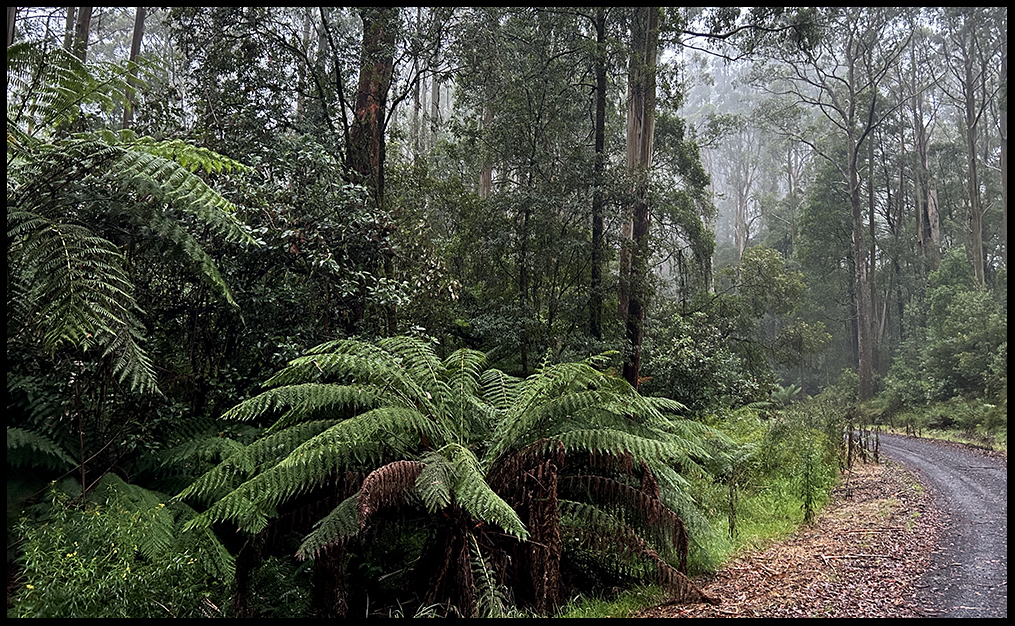
The road into the misty eucalyptus forest.
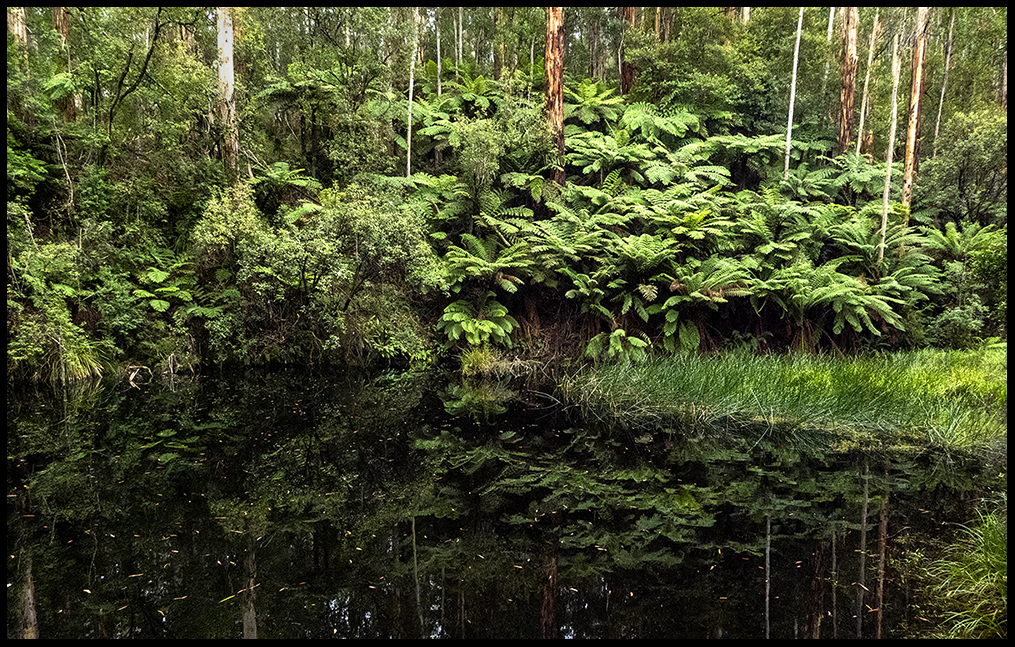
Young fern trees line a pond along the trail to Lake Elizabeth.
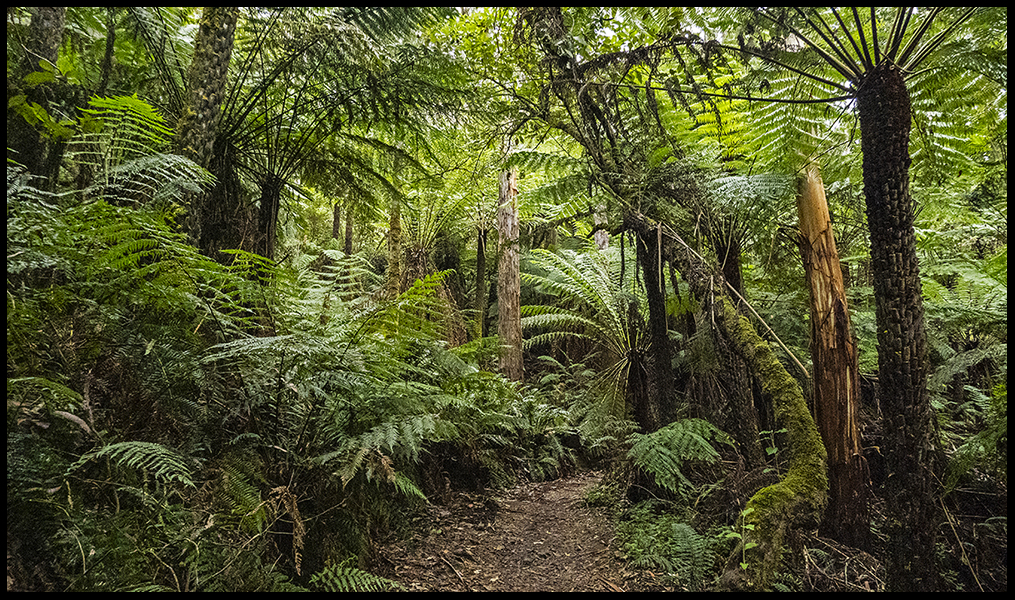
The trail to the lake. It’s so green it’s difficult to imagine that a drought is consuming most of inland OZ.
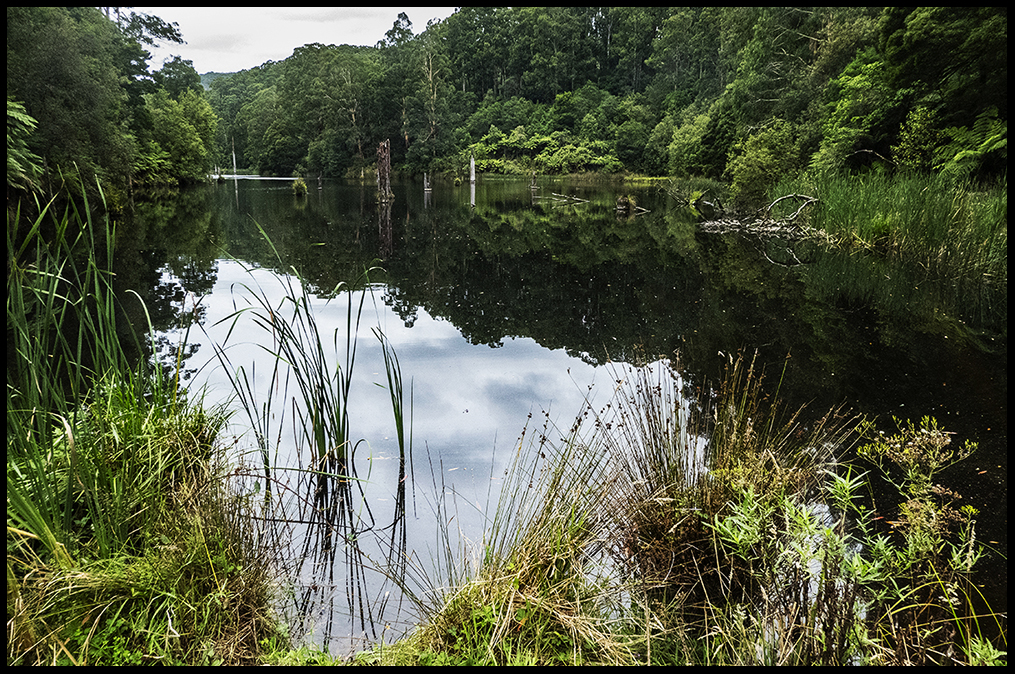
Lake Elizabeth isn’t very big.
Drove down the Mornington Peninsula for my first time and hopped the ferry from the tip of the peninsula, to Queenscliff on the other side thus avoiding most of Melbourne’s traffic. On to one of the most famous drives in Australia, the Great Ocean Road (GOR) featuring the 12 apostles, large limestone rock formations just offshore. (sadly, 5 have crumbled away since we first took the drive, now there are only 7 left). The weather was grey and windy, but not cold. The bad news is that this drive has gotten so popular, every parking lot along the way was jammed. Tour buses disgorge hundreds of tourists, mostly Chinese. I heard on the radio that the authorities are planning to start charging a fee to drive the road. I doubt that will keep the numbers down, but may make some money for the upkeep.
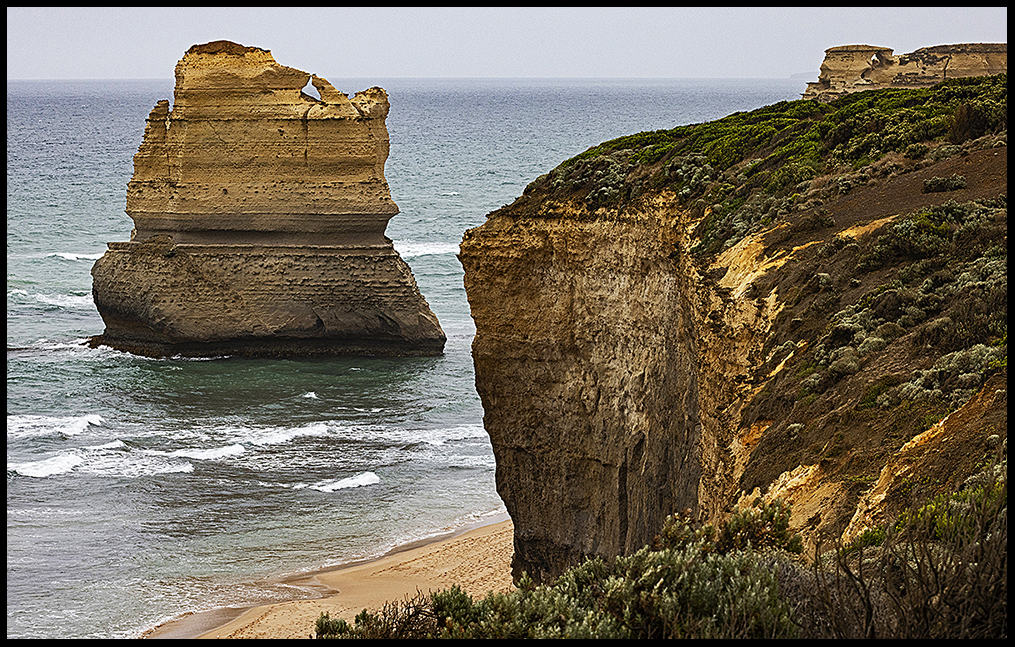
One of the surviving “Apostles”.
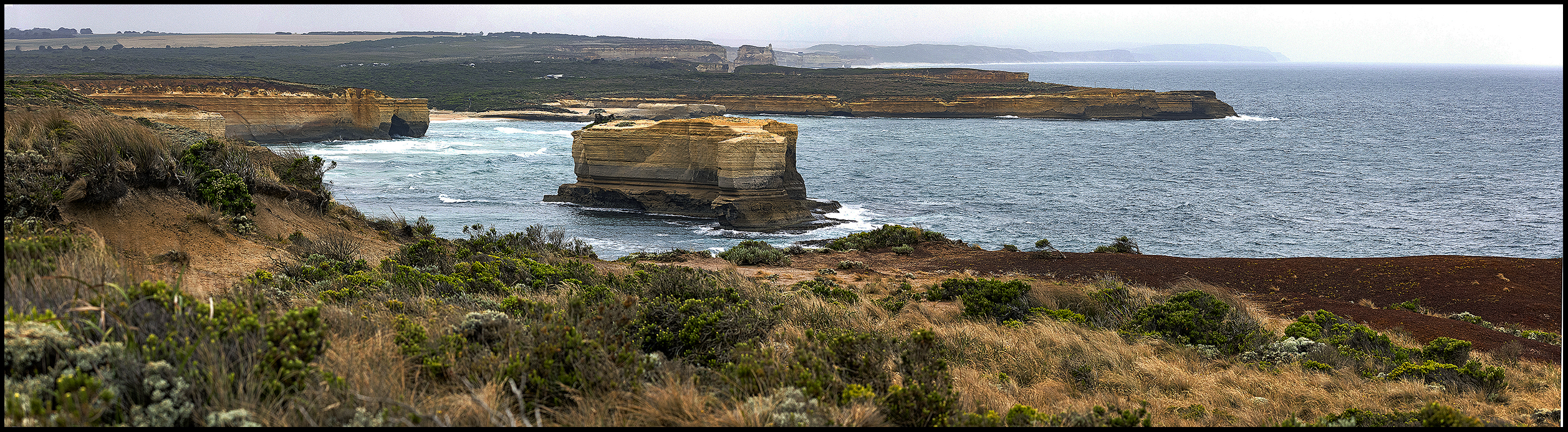
I drove down a dirt offshoot to find a quiet spot to view the shoreline.
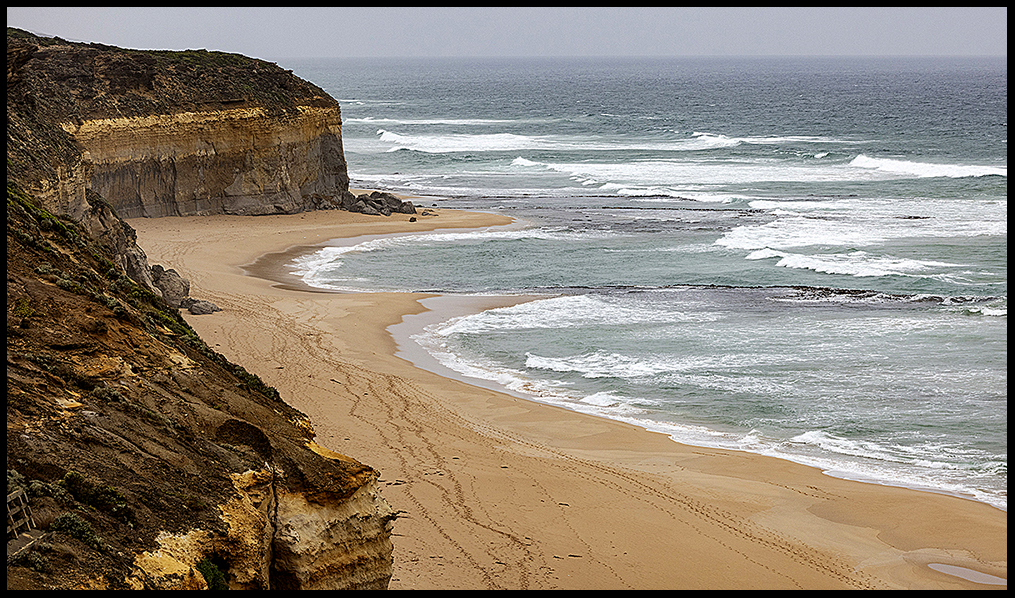
People can climb down staircases to the beach.
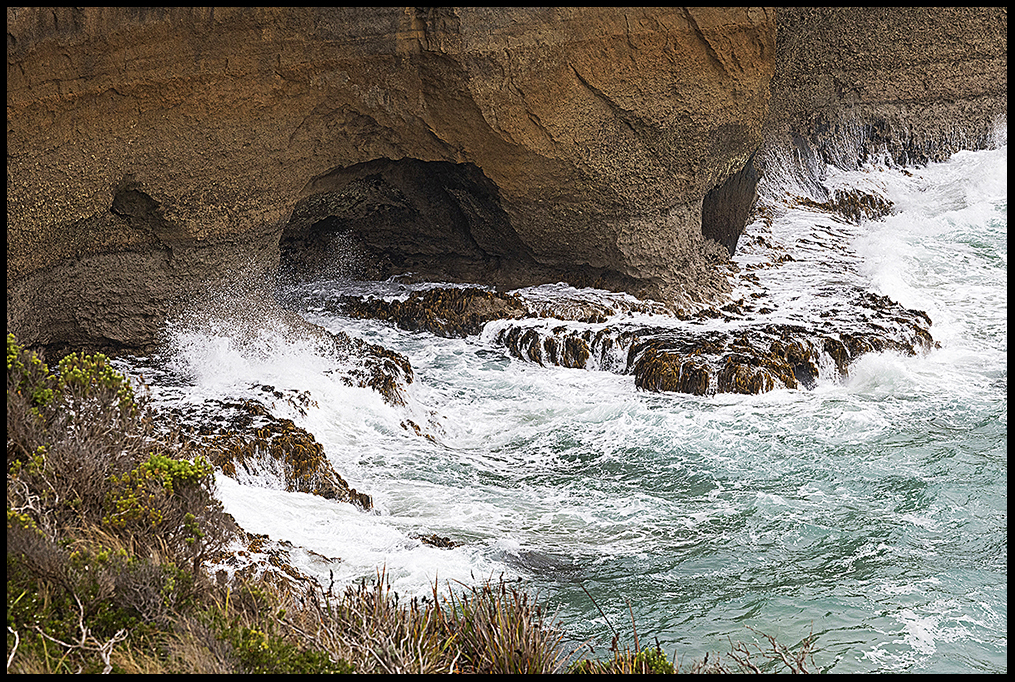
It is a lovely and wild south shore. The tourists are mostly above.
The west end of the GOR ends at the small town of Peterborough. My phone’s GPS led me on a wildly ridiculous route to Mt. Gambier, the first major town in South Australia. (My fault for not looking at my paper map). There is a fairgrounds parking area set up as an RV park in Mt Gambier. I was to find the fairgrounds in several towns are the best and cheapest places to camp. Here I find myself and my little Spaceship surrounded by big rigs. Years ago, almost no one in Australia had an RV, but during the Covid pandemic Aussies invested in swarms of them.
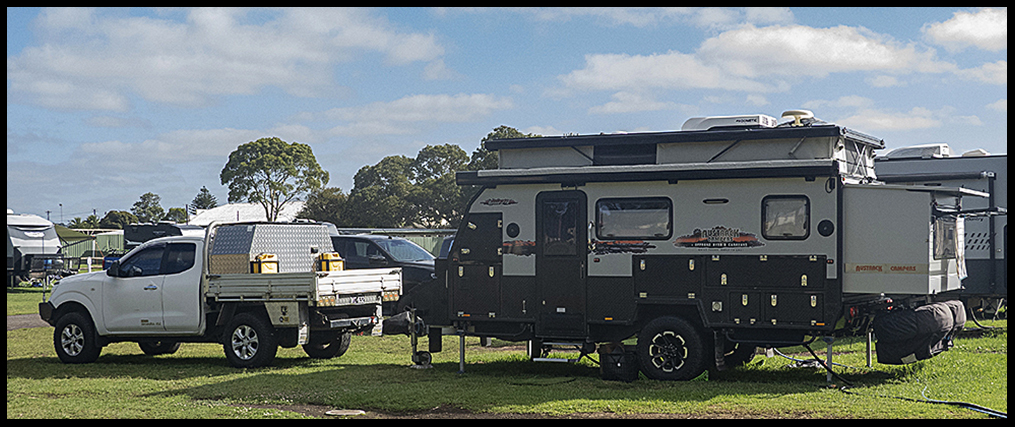
My neighbors at the Mt. Gambier fairgrounds RV park.
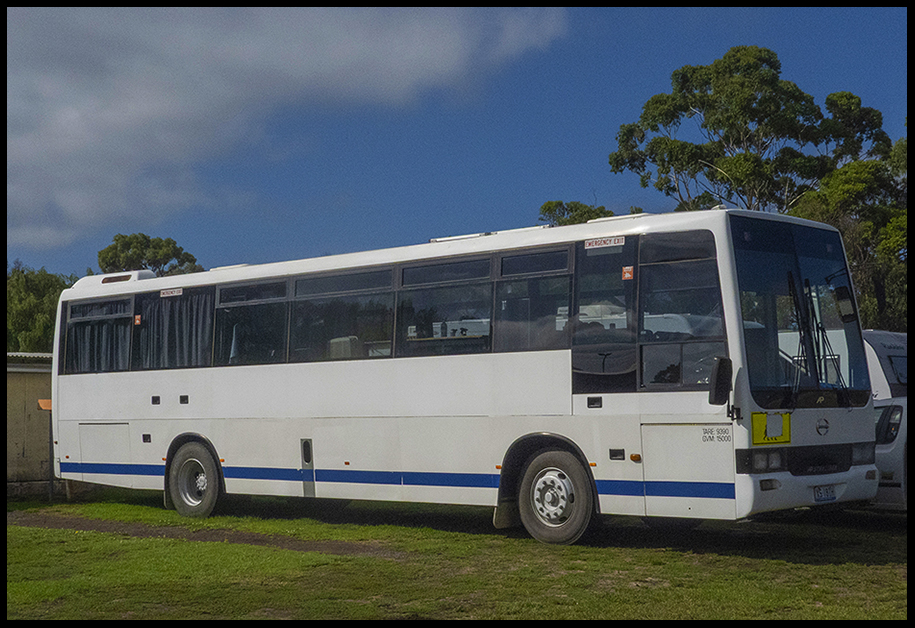
Not quite deluxe enough to make Clarence Thomas jealous, but big by Aussie standards
…until the next chapter. Thanks for following along.