
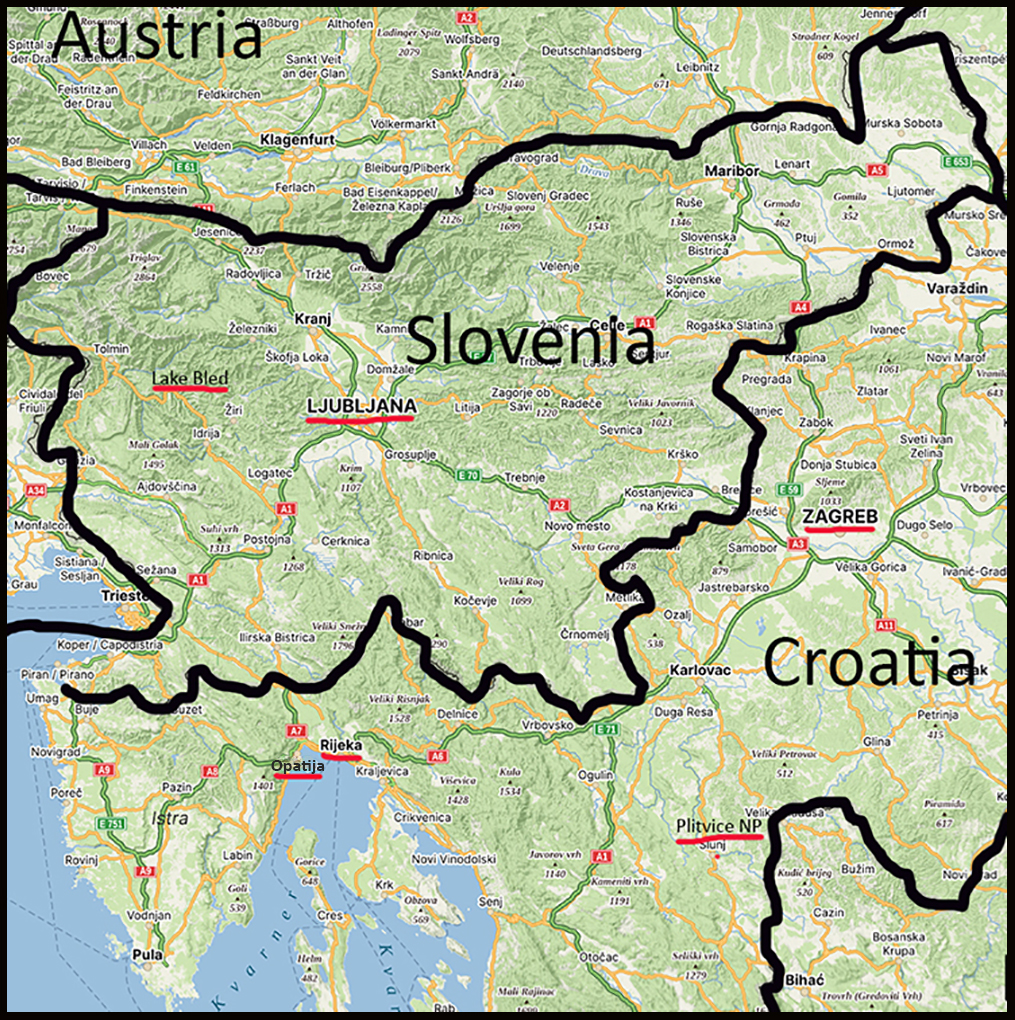
Map of northern part of the tour. Next points of interest: Zagreb, Opatija, and Ljubljana, Slovenia
From the bus on our way to Zagreb in the upper north part of Croatia.
Ubiquitous McDonalds.
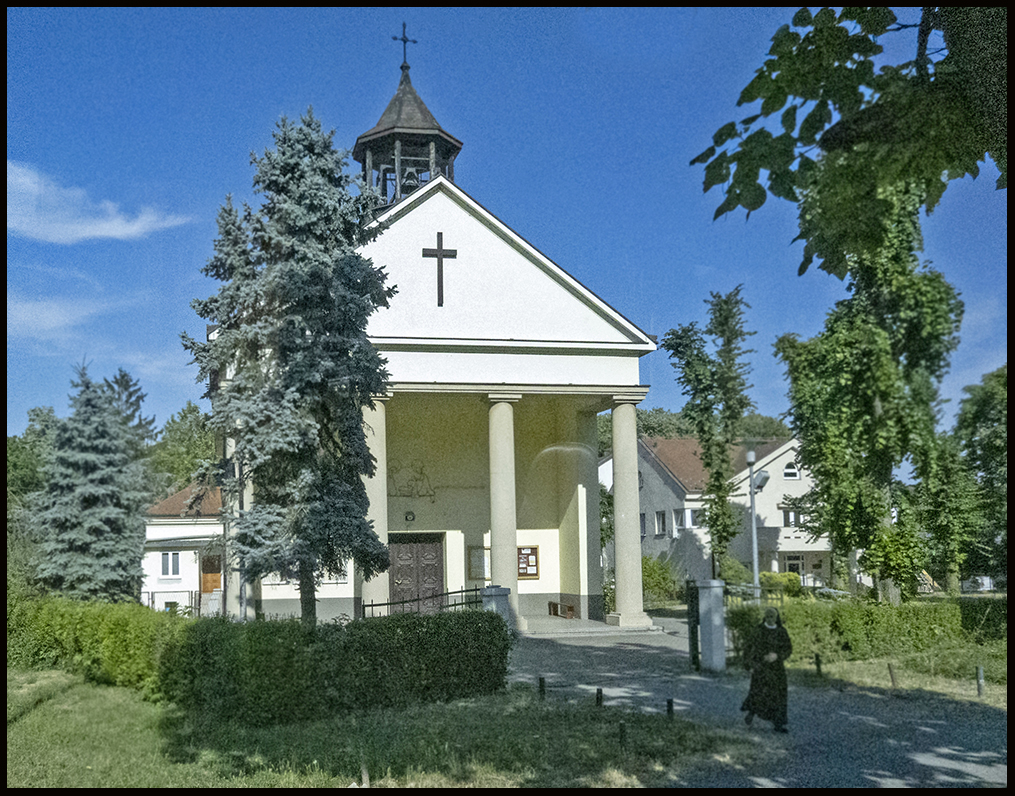
There are few, if any mosques in this section of Croatia
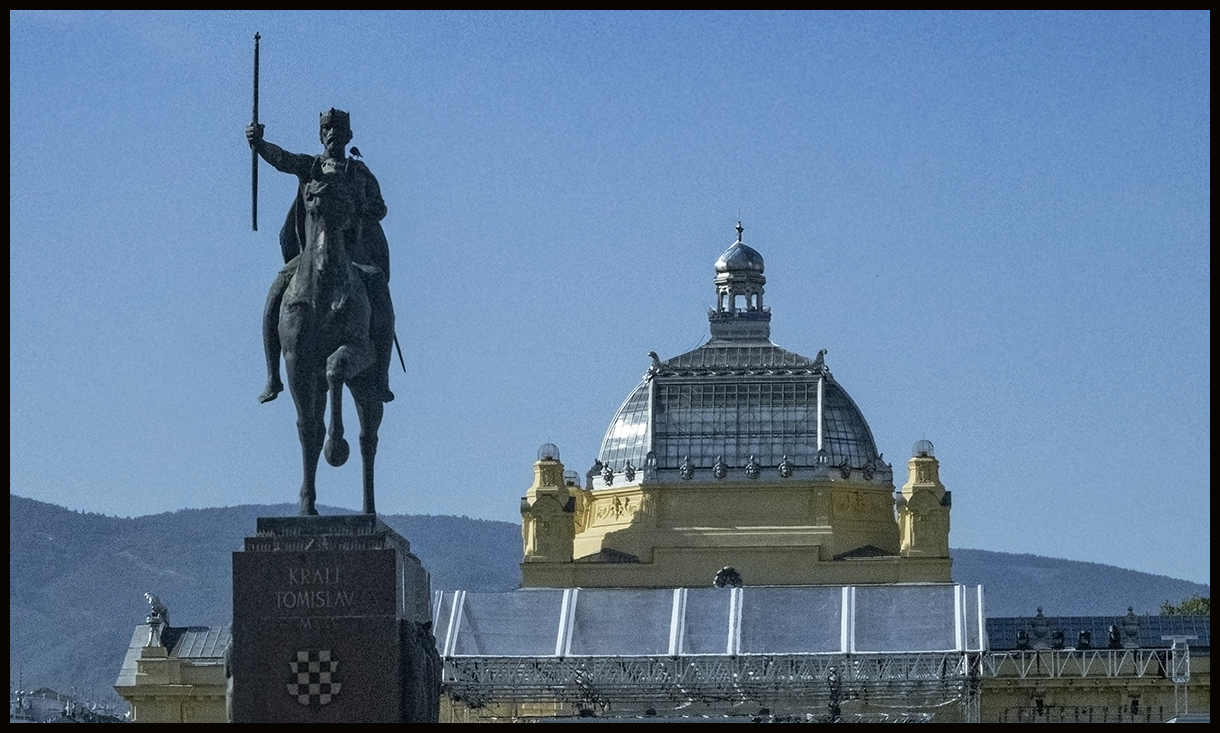
Entering Zagreb one of the first things we saw, was the statue of the first king of Croatia, Tomislav. He became Duke of Croatia c. 910 and was crowned king by 925. His statue is one of many scattered around the city. Art Museum in background.
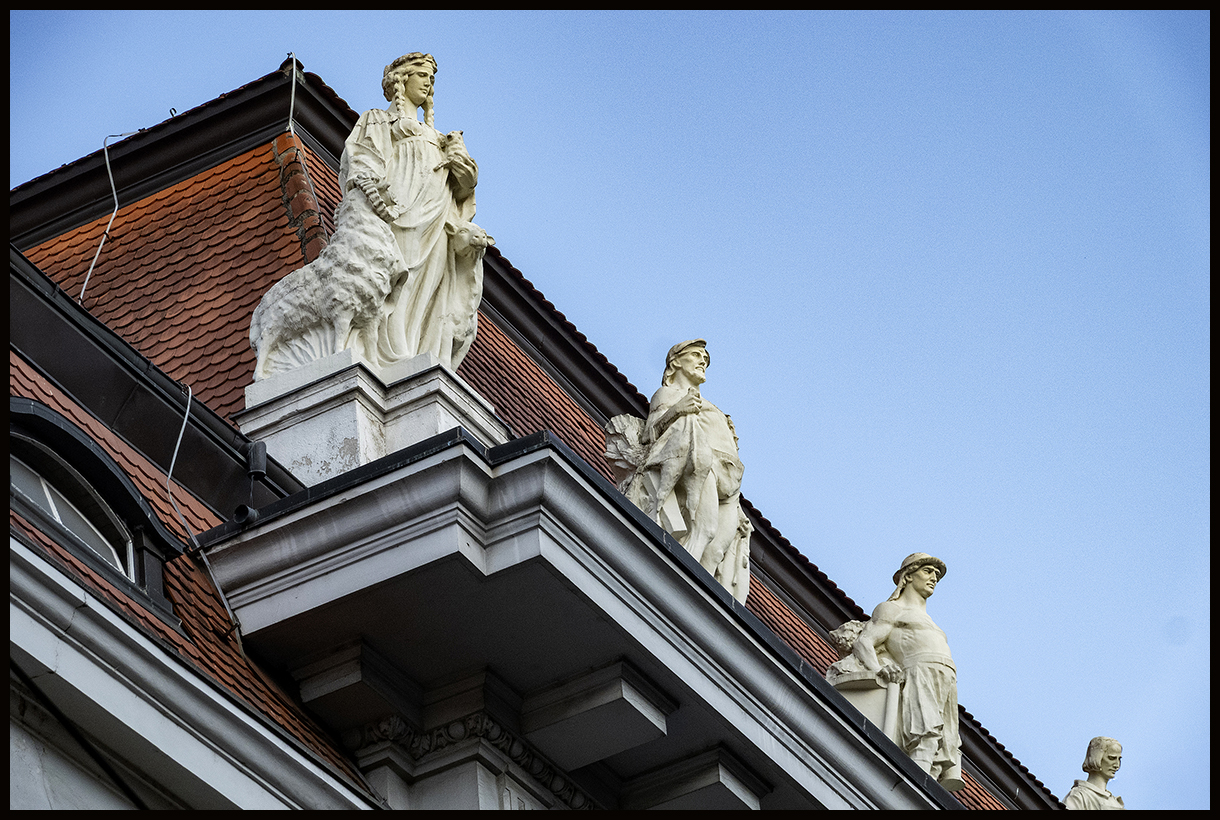
Also from the bus, we started to see buildings with heroic decor, for example….
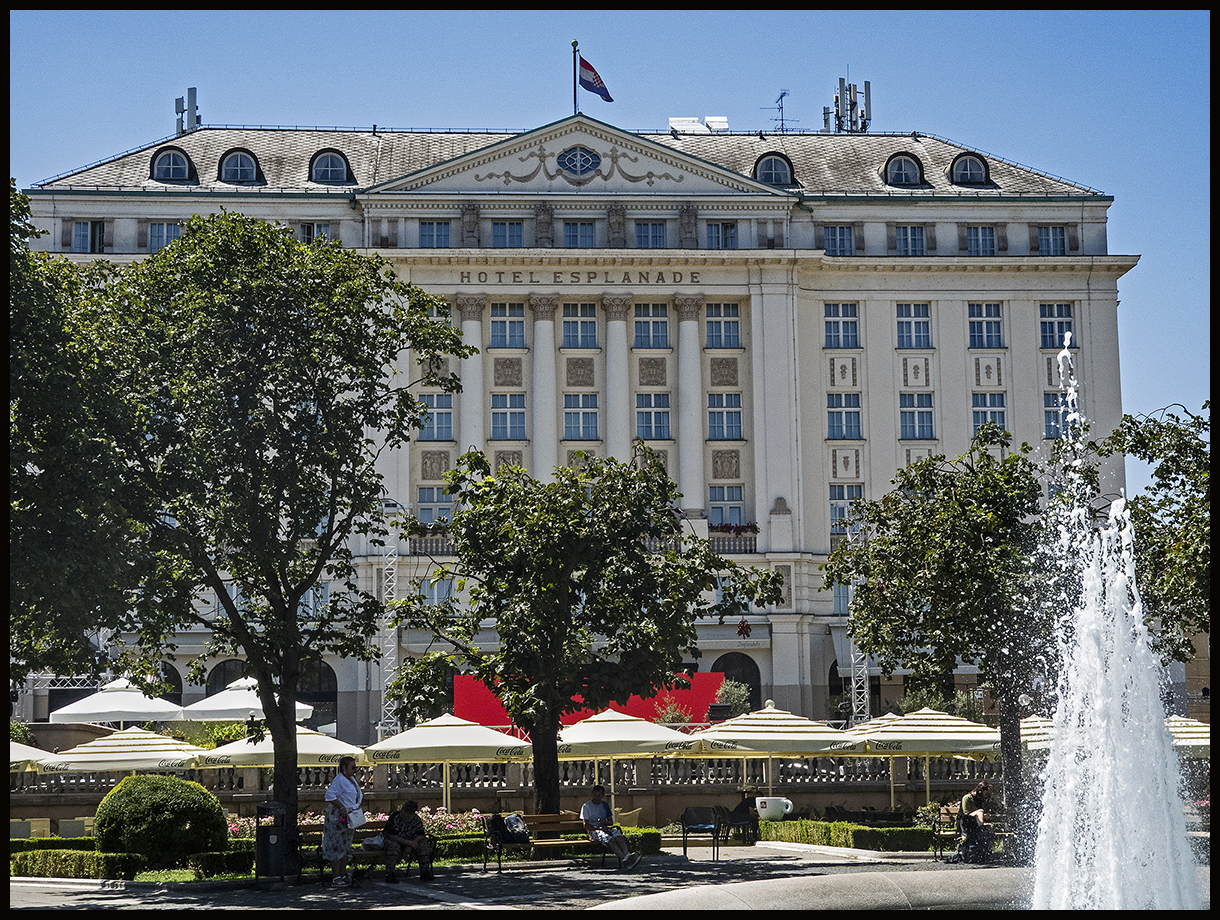
…the Esplanade Hotel, Croatia’s first historic luxury hotel built in 1925 to provide accommodation for passengers of the famous Orient Express train, which still travels between Paris and Istanbul.
Zagreb is the capital and largest city in Croatia. Over a million people live in the metropolitan area, a quarter of the population in Croatia. The city is known for its diverse economy, high quality of life, museums, sporting, and entertainment events. While we were there, a widely hyped concert was to take place. Billed as the largest paid concert in the world, 500,000 fans were descending on Zagreb. The traffic was horrendous. The draw was Thompson, a Croatian group led by Marko Perković, named after the Thompson submachine gun…his nickname during the breakup war of the 90’s. (Croatia was part of Yugoslavia 1918 to 1991). The group is part of rising interest in right-wing politics worldwide.
During the 1991–1995 Croatian War of Independence, the city saw some fighting, but escaped major damage. Most damage to Zagreb is due to earthquakes. In March 2020, an earthquake caused substantial damage. Hardest hit were the older buildings in the historic center of the city. One of the spires of Zagreb’s Cathedral broke off and fell. More than 1,900 buildings were severely damaged. The earthquake occurred during the Covid pandemic. Fortunately, it occurred on a Sunday morning and only 1 person was killed. In 2025, many historic buildings of the city are still closed for renovations.
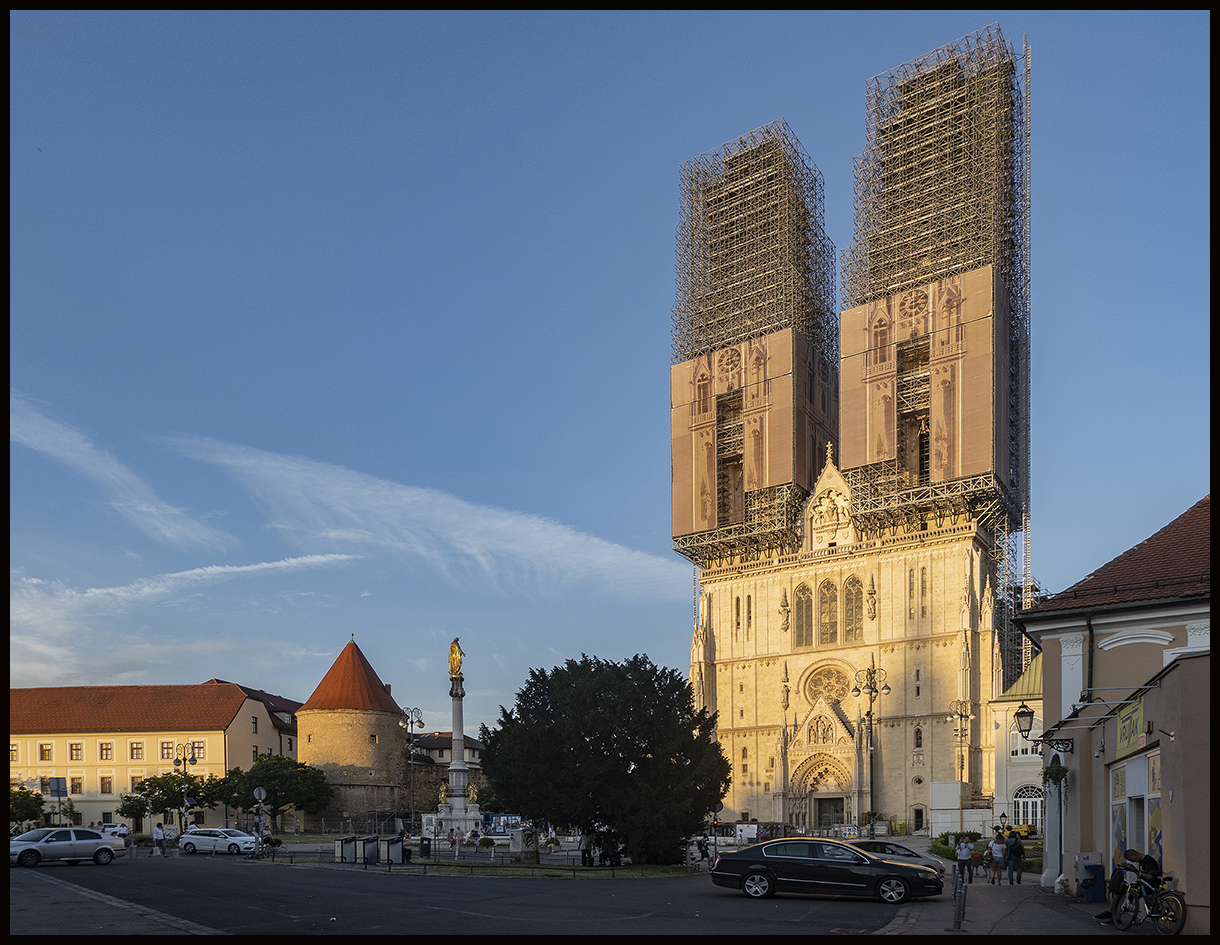
The Zagreb Cathedral towers are still under repair. The cathedral towers make it one of the tallest churches in the world.
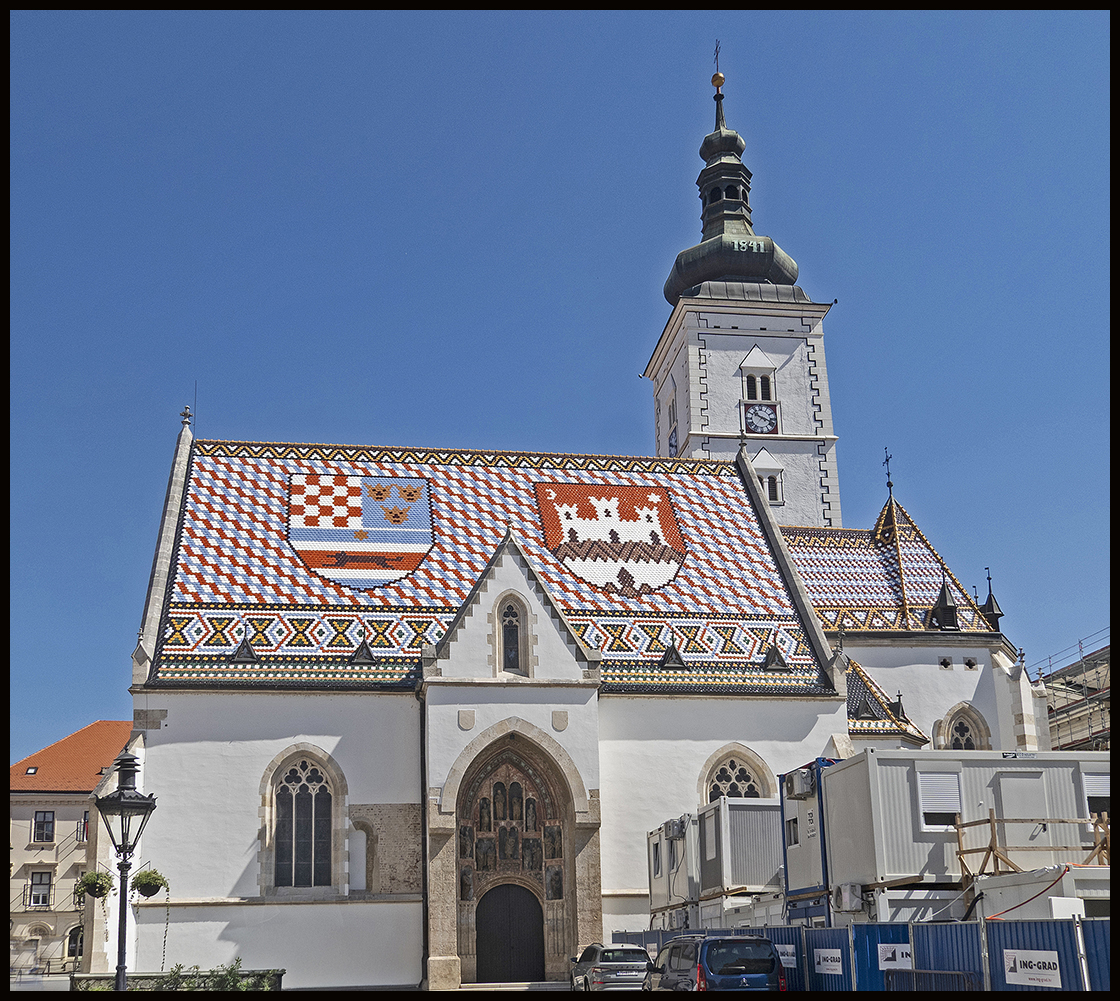
St Mark’s church with its stunning roof is also undergoing renovations…
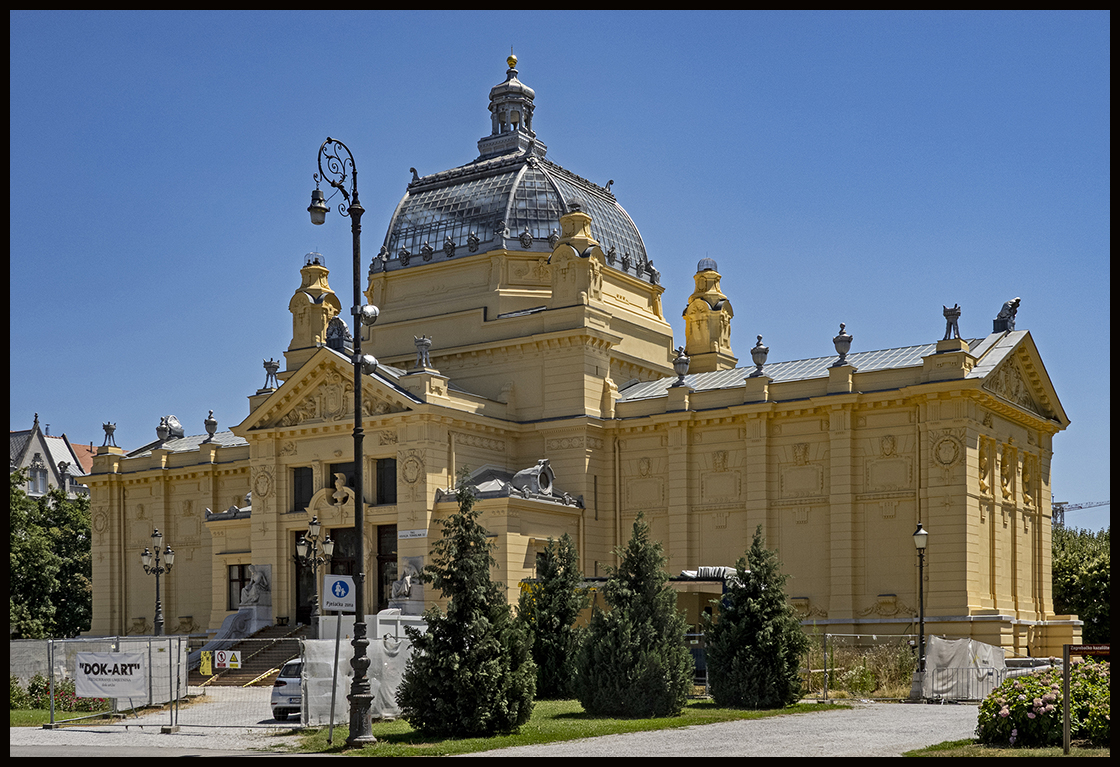
…and the Art Museum is also closed.
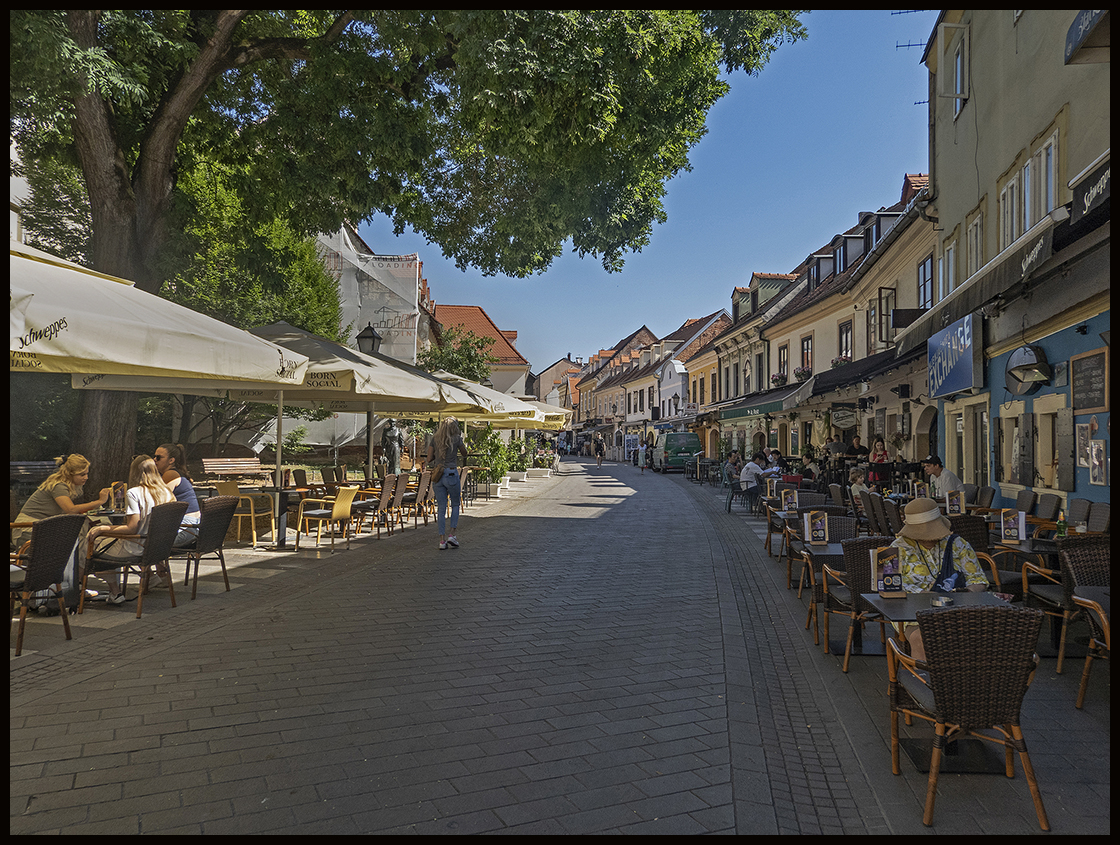
Street side cafes are everywhere and very popular for the time honored pastime, coffee drinking and chatting. This is during the heat of a summer day.
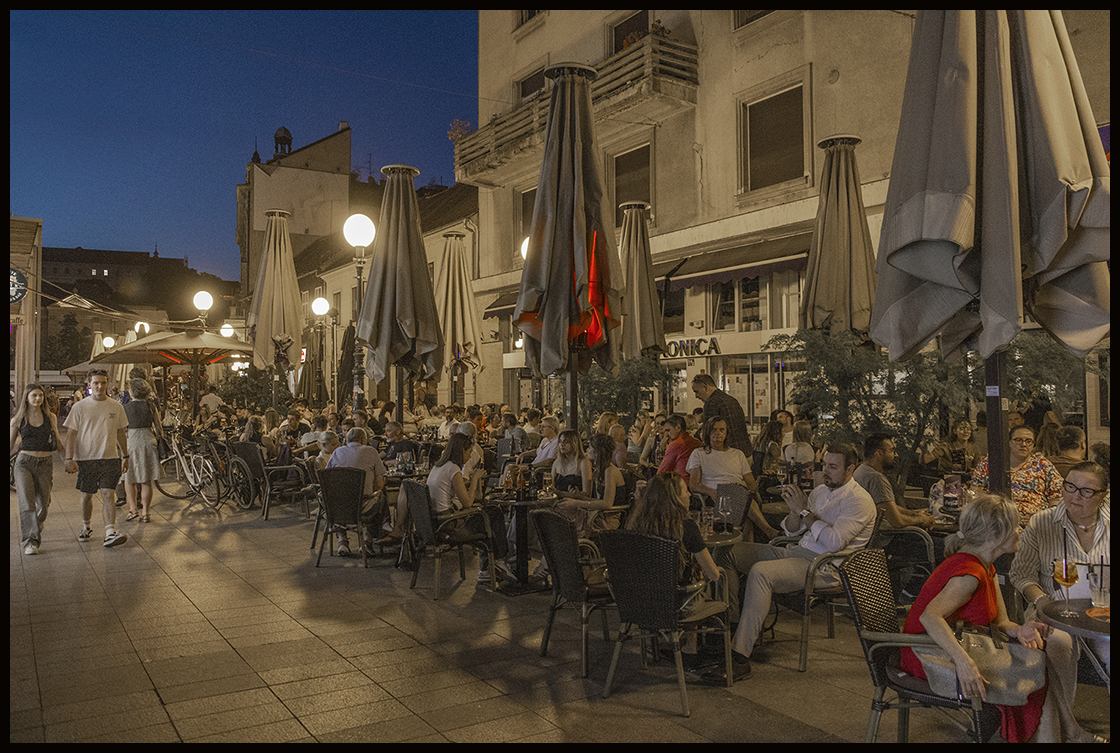
When the summer sun sets, Zagrebians flock outside to have a late dinner (like other European cities) and socialize.
Zagreb is a multi-cultural, cosmopolitan city rivaling any of Europe’s finest. The ambiance here is different from other cities we visited. Most of my time I spent people watching. One evening we watched a parade of what must have been models, very stylishly dressed, on their way to somewhere. We couldn’t believe our eyes. Not a single one of them was under 6’ tall, and all gorgeous.
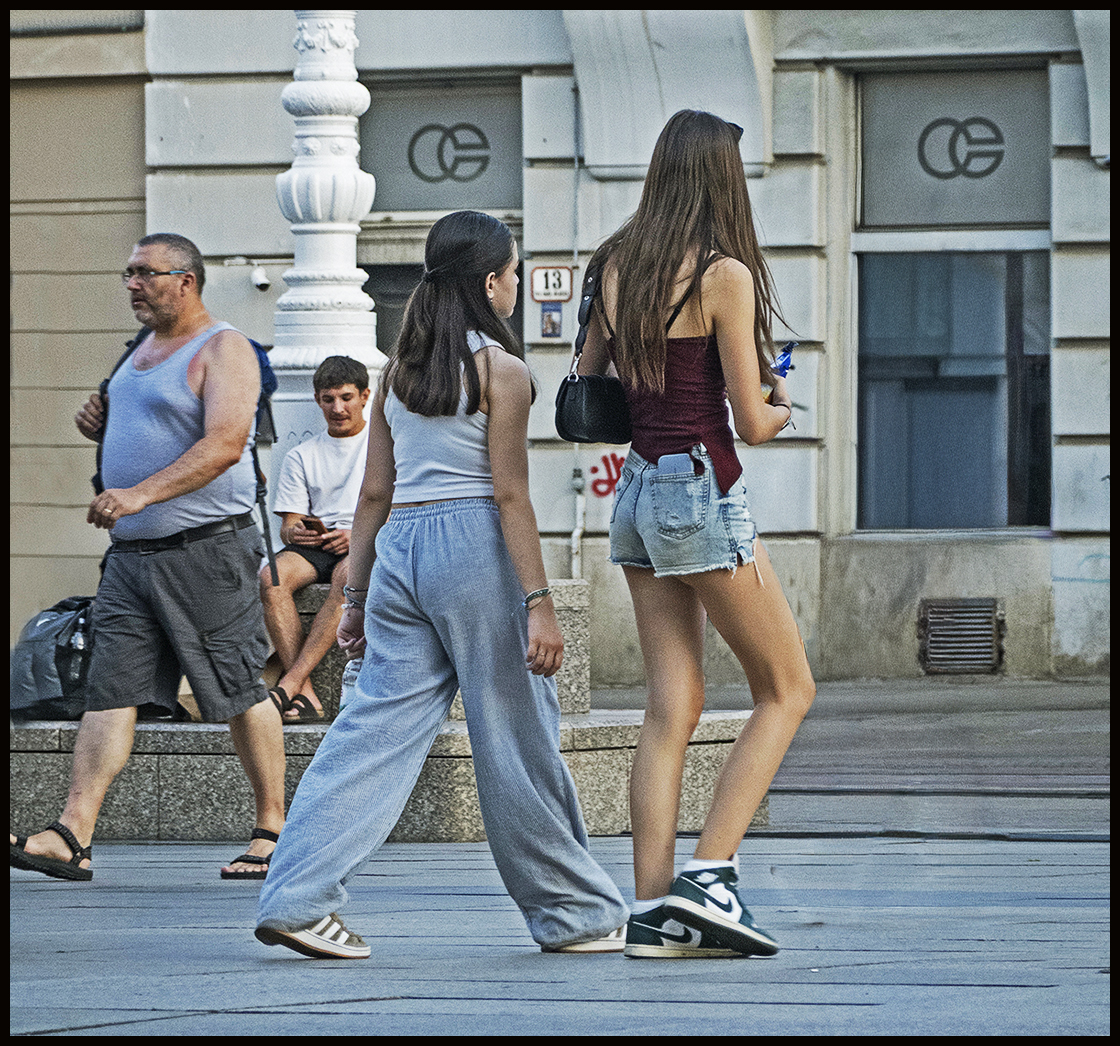
The closest thing I have to show is this daytime street photo of a statuesque young lady on the square.
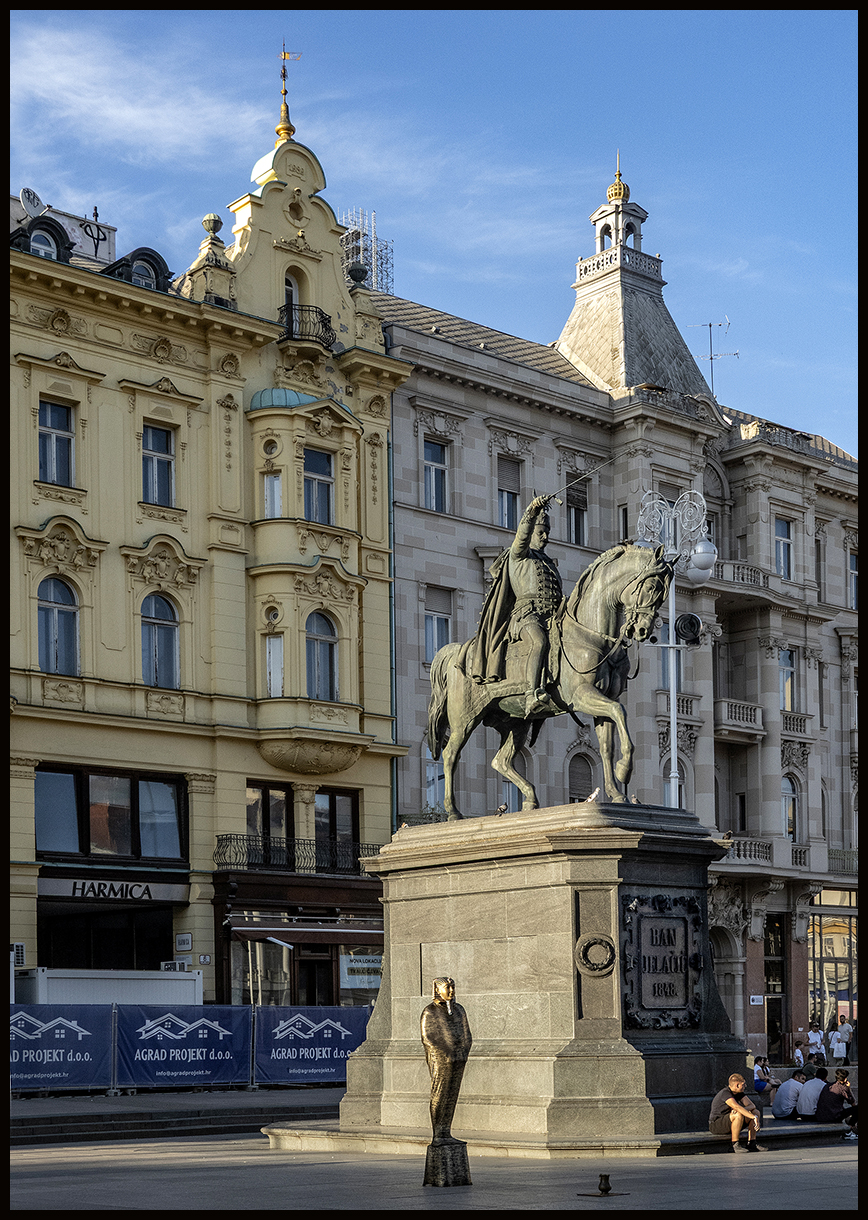
One of, if not the, main square featuring yet another heroic horseman.
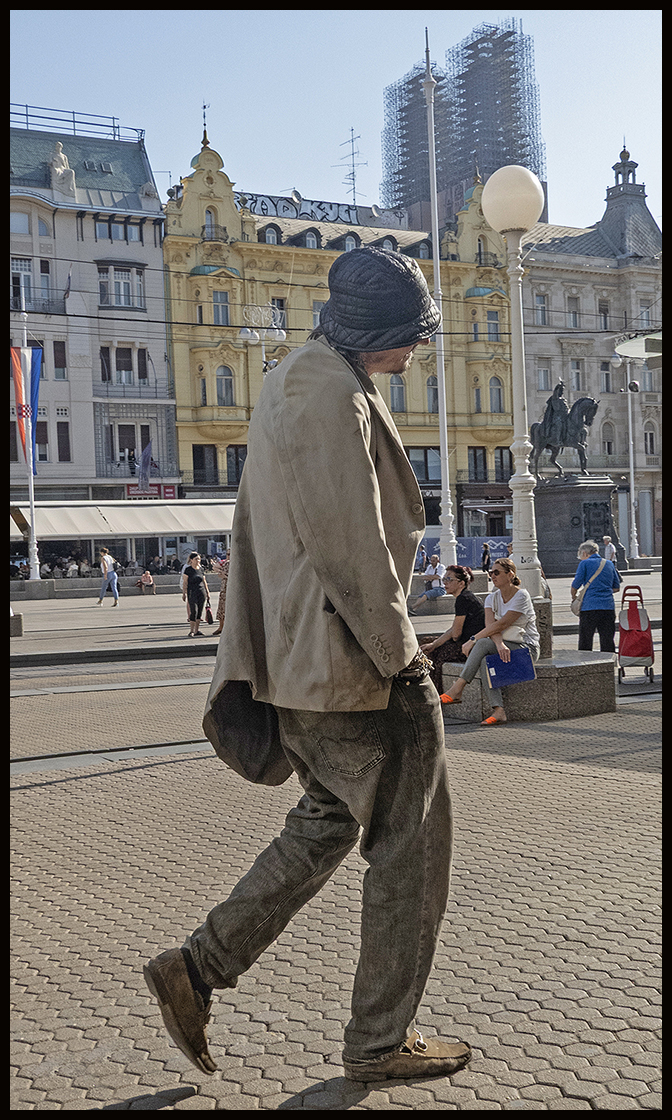
Not everyone in Zagreb is young and beautiful.
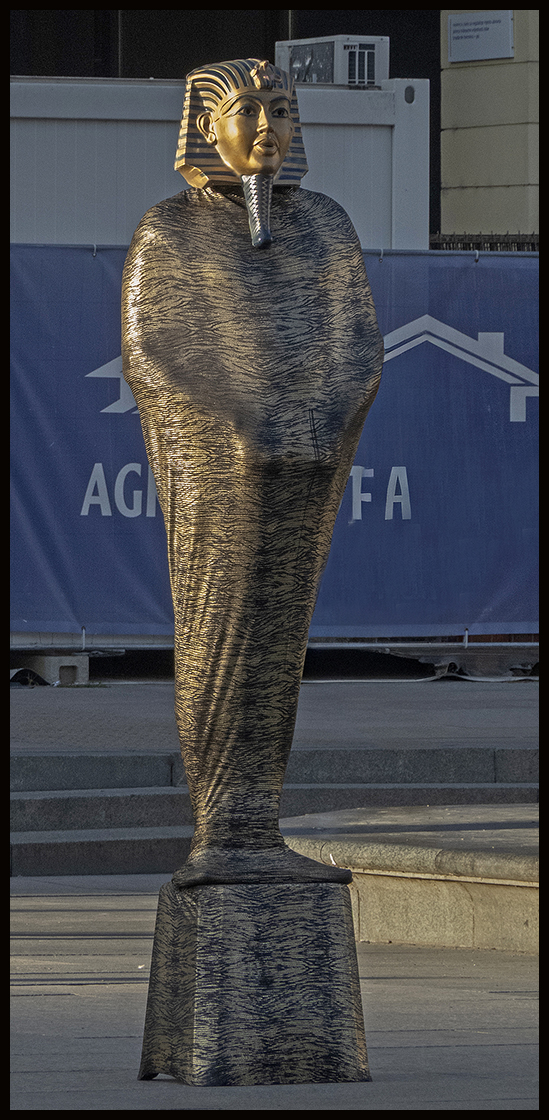
Did you notice the street performer below the statue?
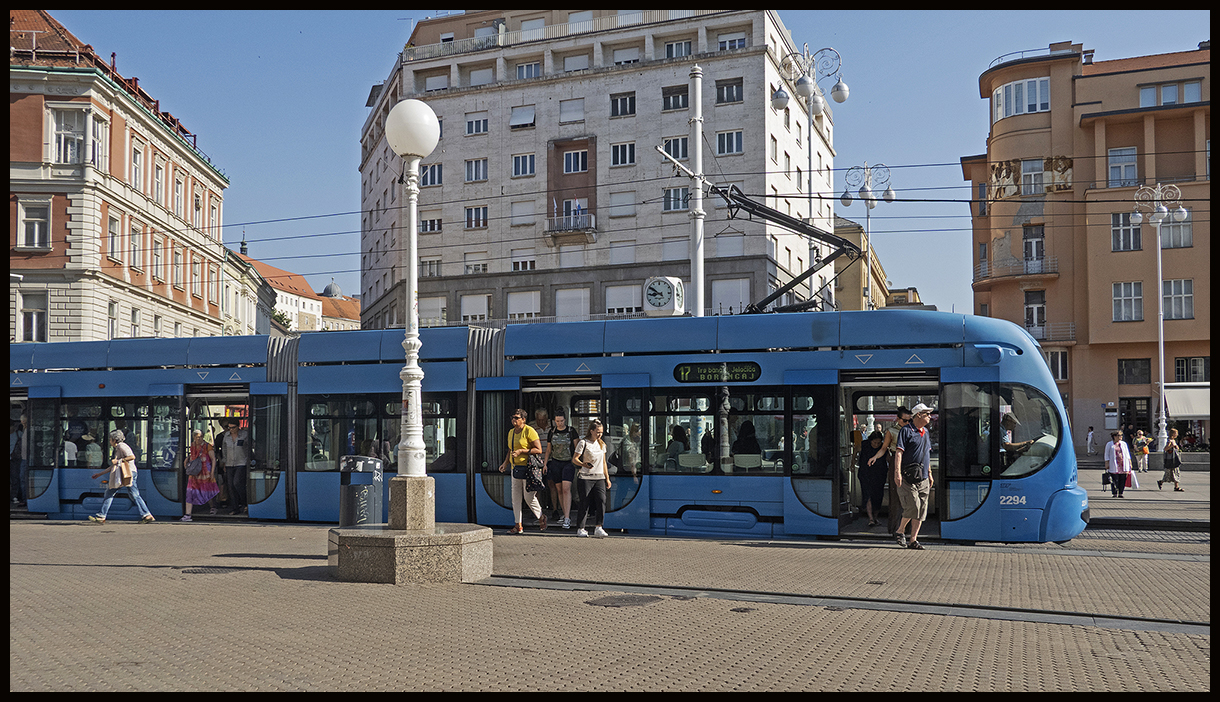
Electric trains are popular in Zagreb.
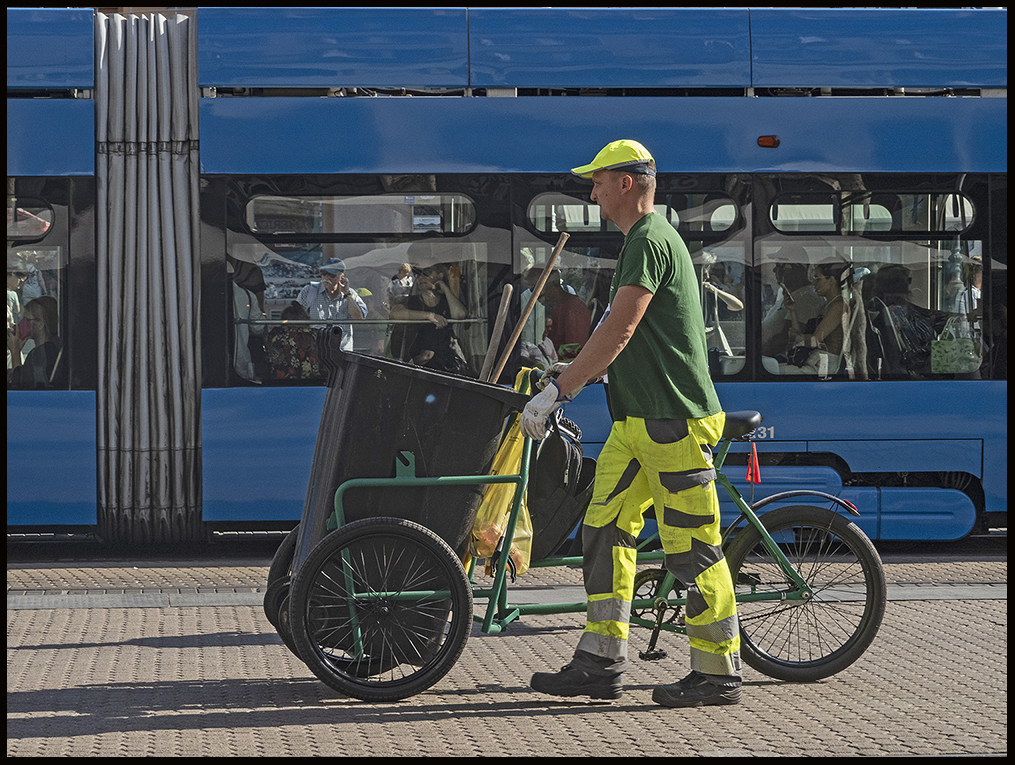
It is a very tidy city.
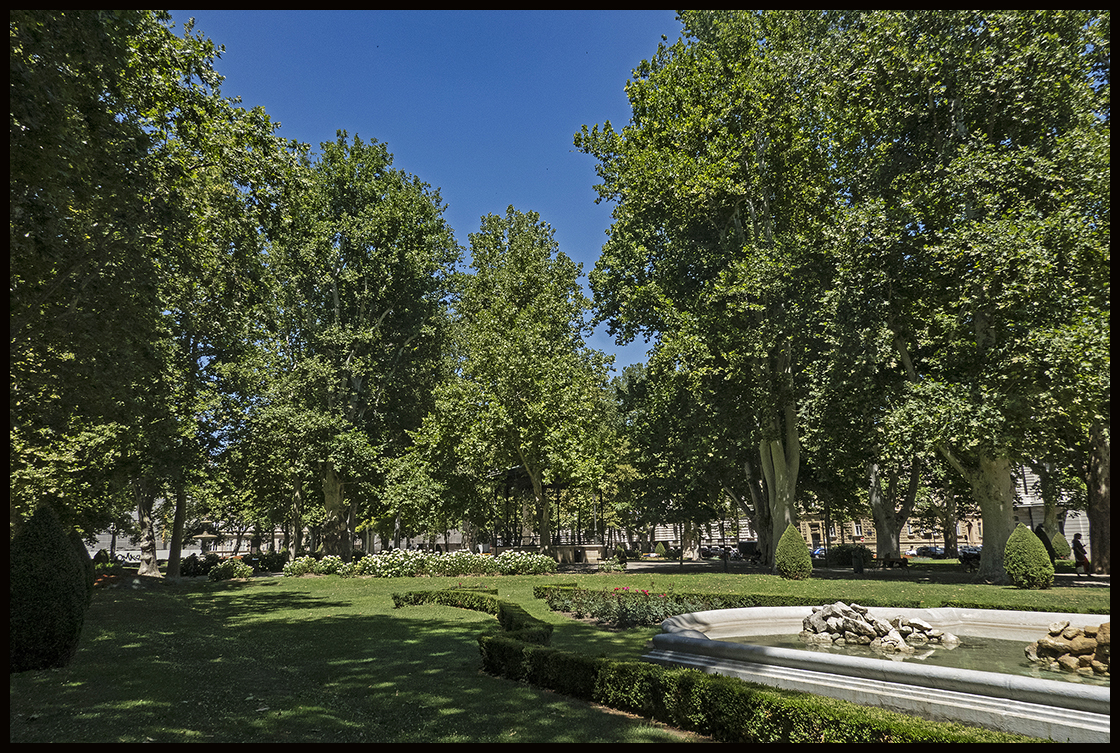
There is a large park, called Horseshoe park because of the shape.
One sweltering day we made our way to the cooler botanic garden end of horseshoe park. The botanic gardens, opened to the public in 1891, are part of the University of Zagreb. Its 12 acres is home to over 10,000 plant species from around the world, including 1,800 exotics. It has large ponds for aquatic plants.
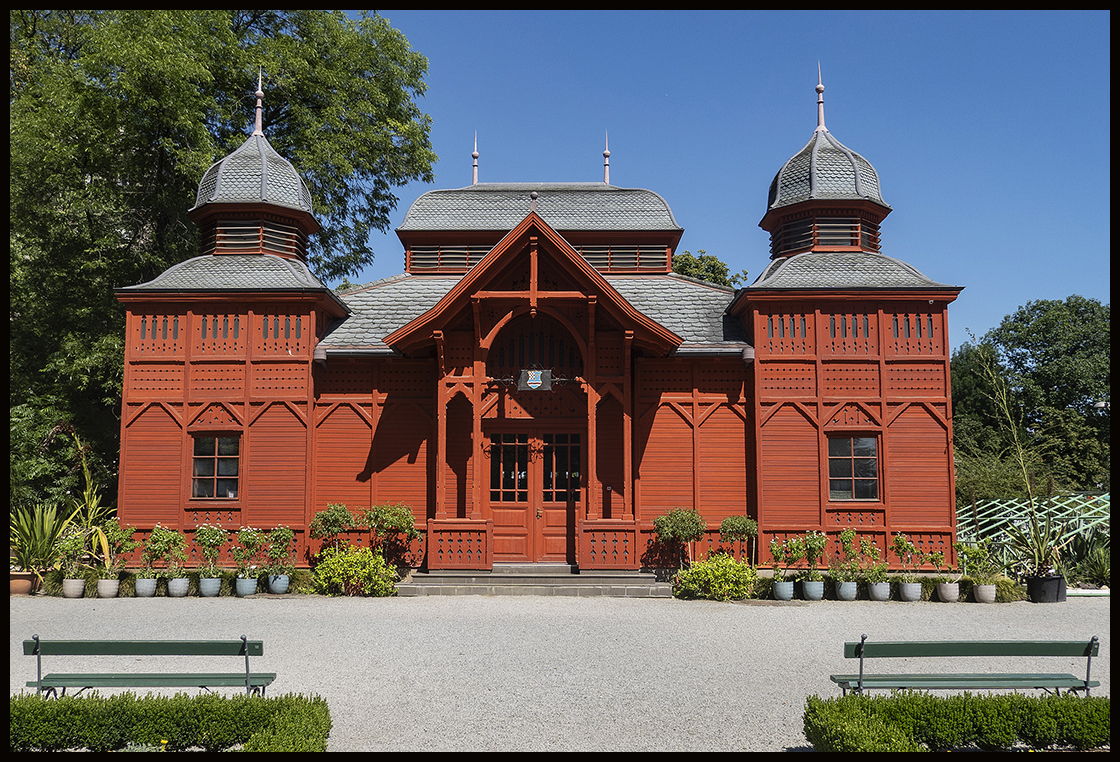
The park’s exhibition pavilion, built in 1891 was left to molder away after WWII, but was restored to what you see today in 2007. Mediterranean plants overwinter inside. In summer it is used again for exhibitions.
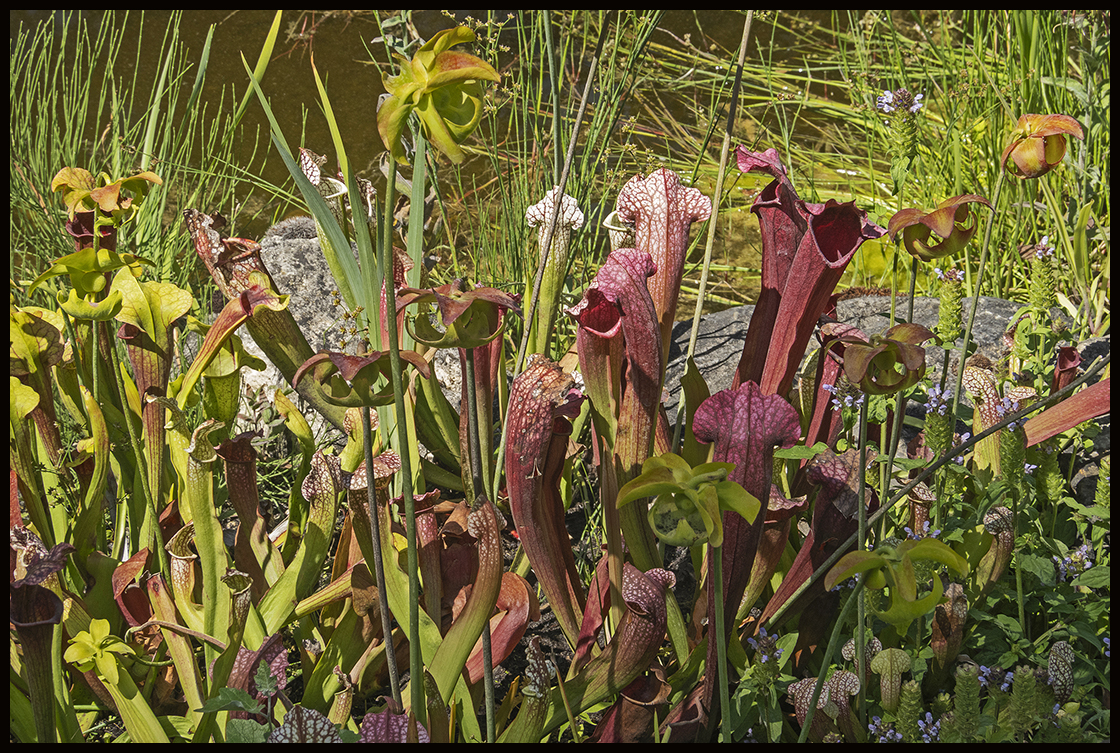
Carnivorous plant species are well represented.
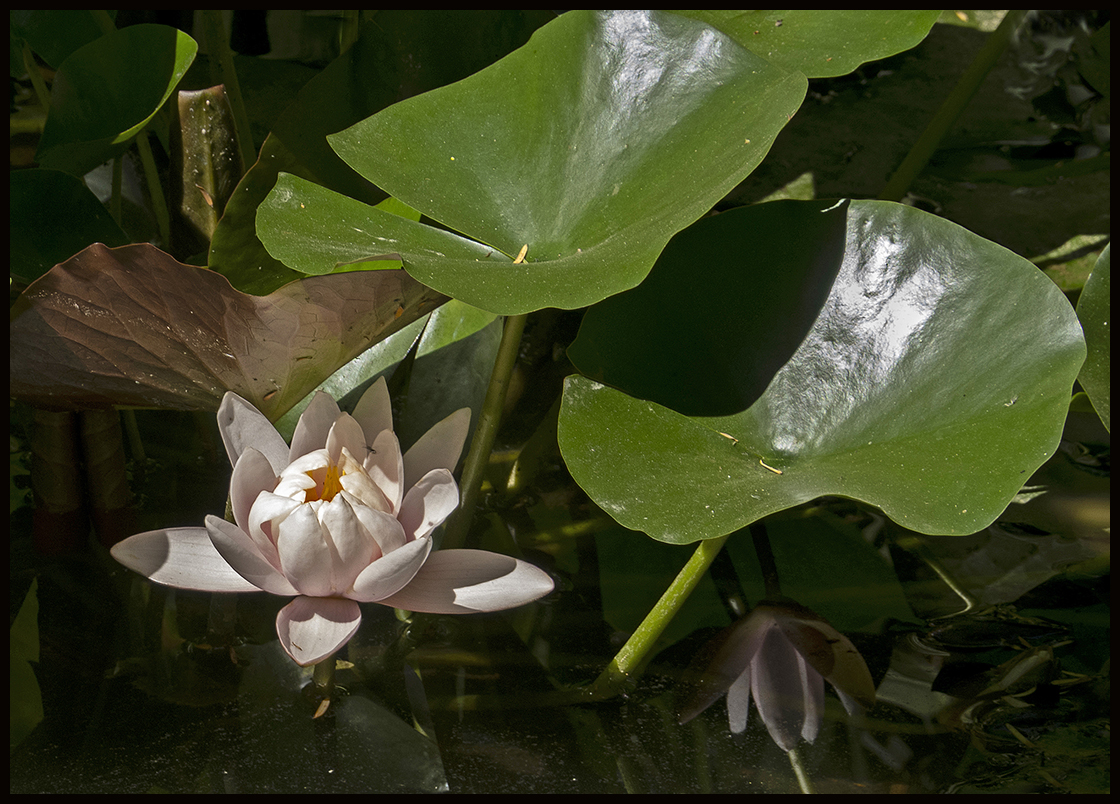
The ponds help cool the gardens.
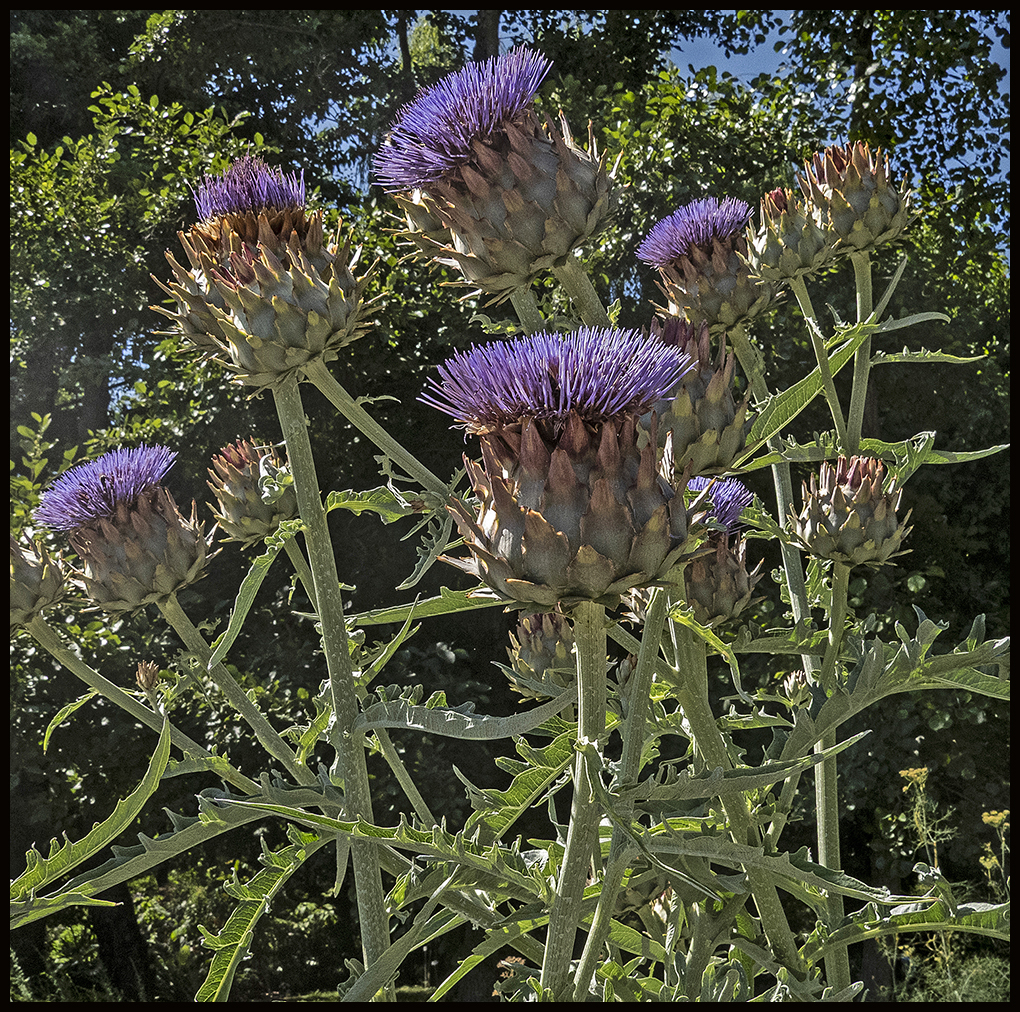
The thistles were over 6 feet tall.
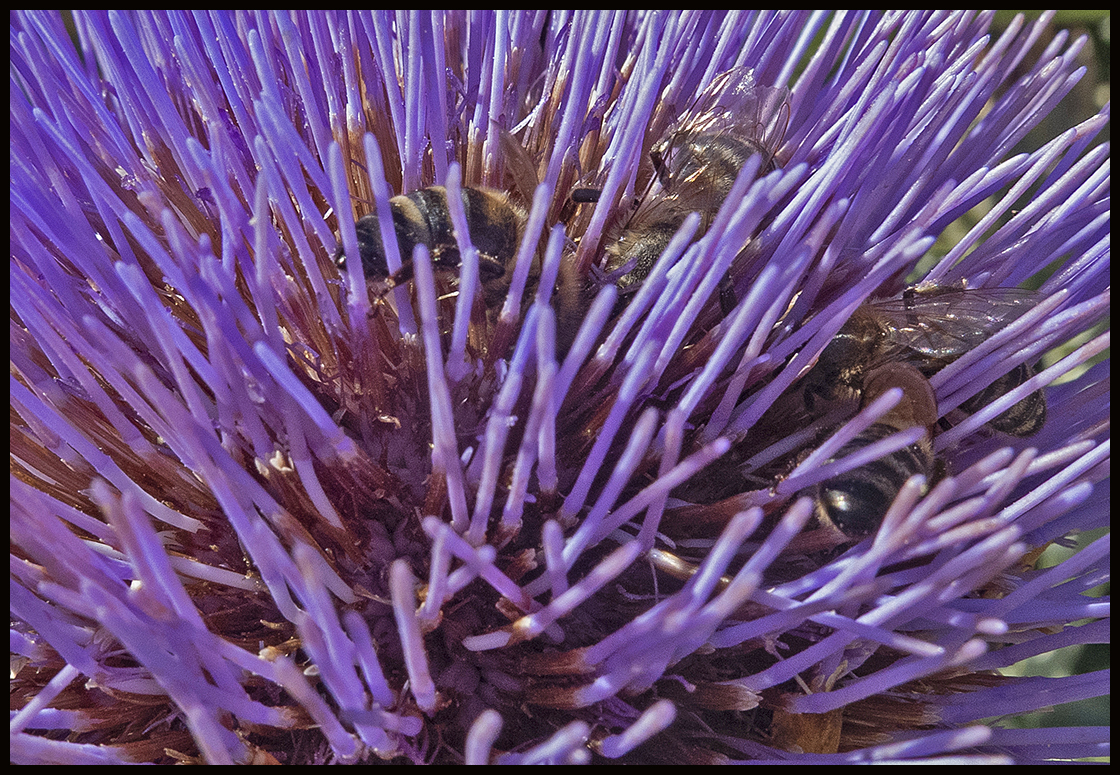
Within the thistle blossoms was a nectar smorgasbord.
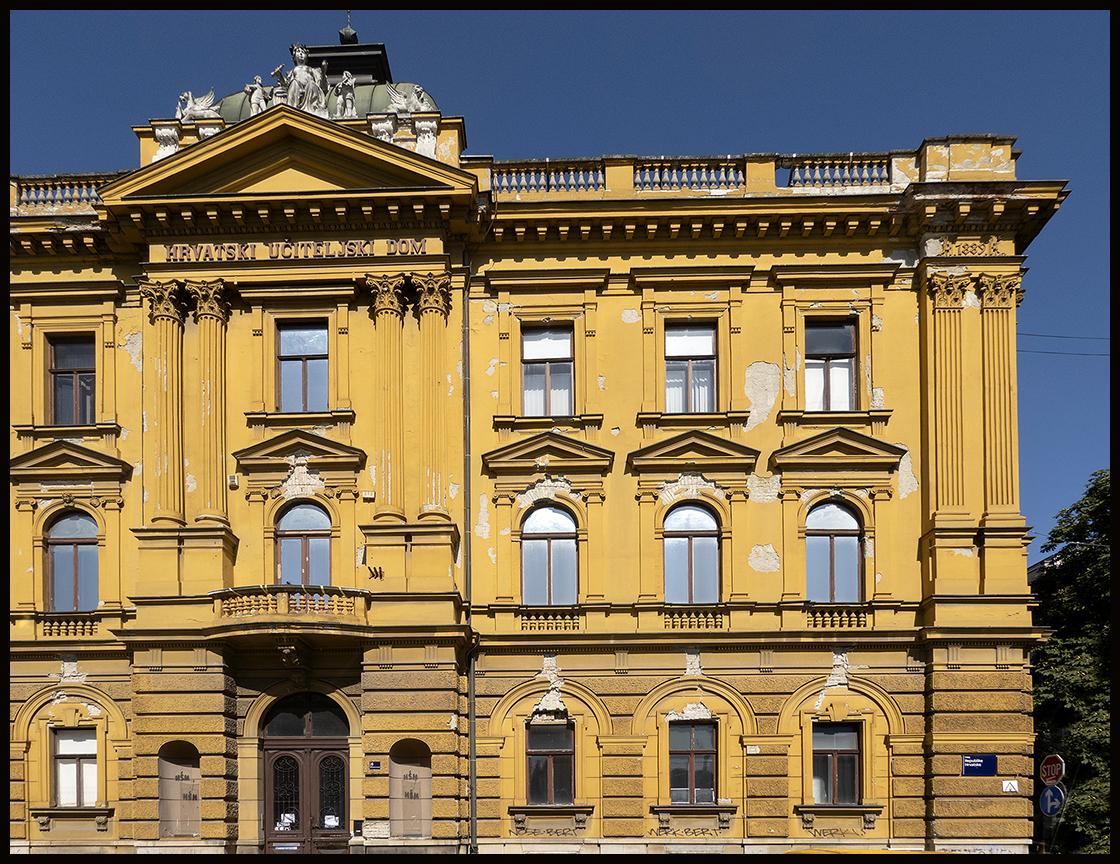
Signs of the earthquake can be seen on the facade of a building near the gardens.
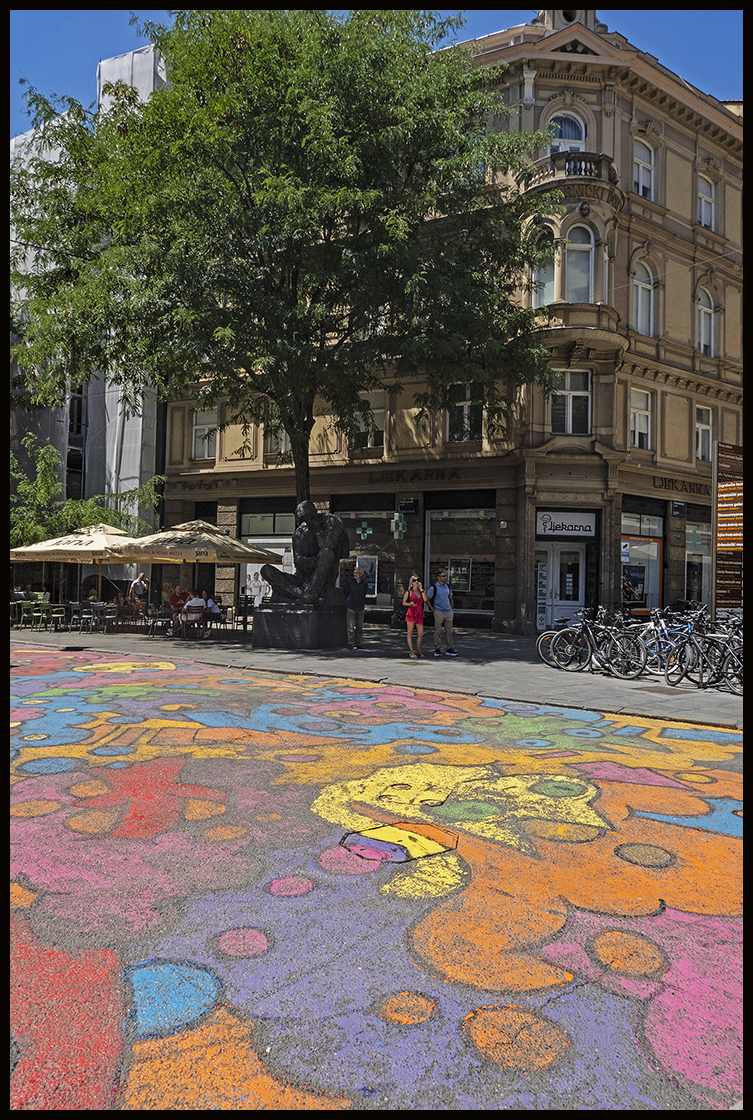
Street art with Tesla’s statue under the tree.
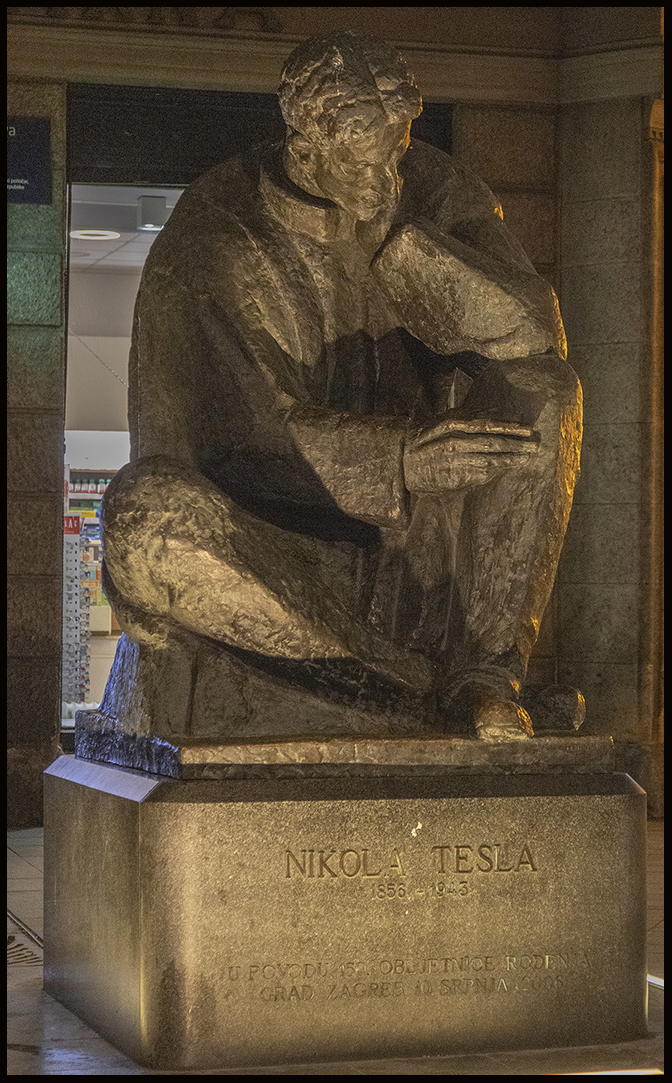
Statue of Nikola Tesla, a Serbian-American (1856-1943)
Nikola Tesla is famous for his revolutionary work with alternating current (AC) electricity, developing the AC motor and power transmission systems. His inventions laid the foundations for technologies such as radio, X-rays, and robotics.
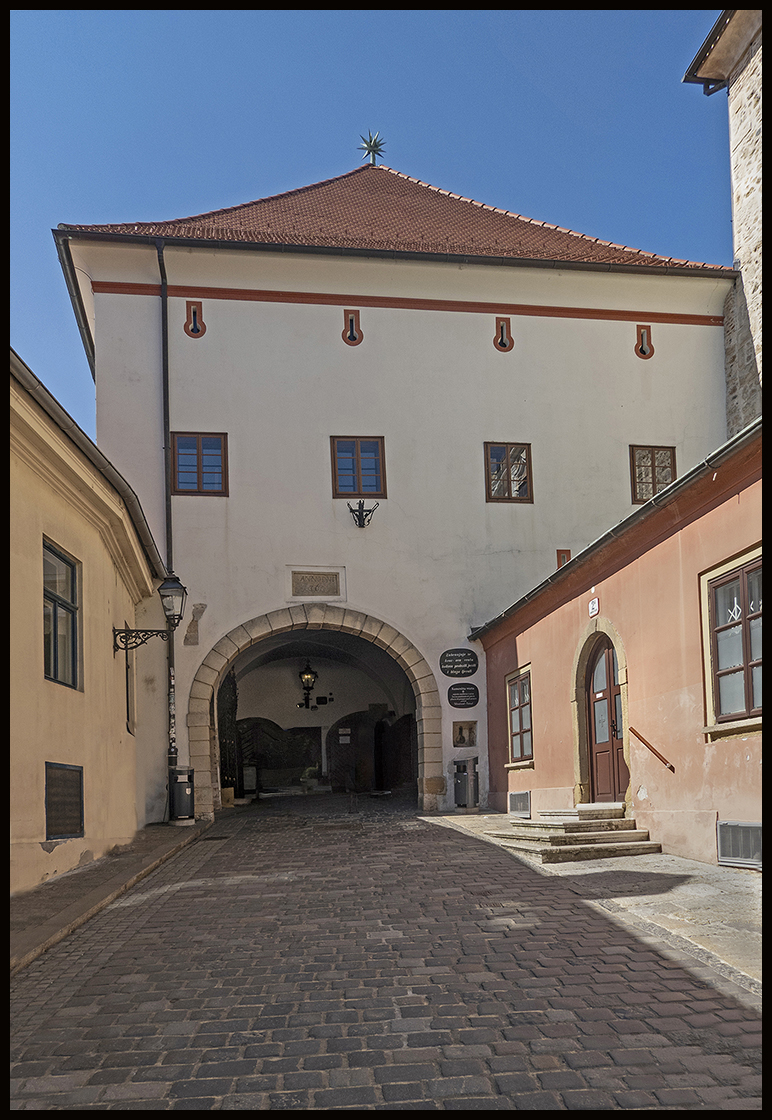
Gateway to the upper section of the inner city. Year over the arch is 1760
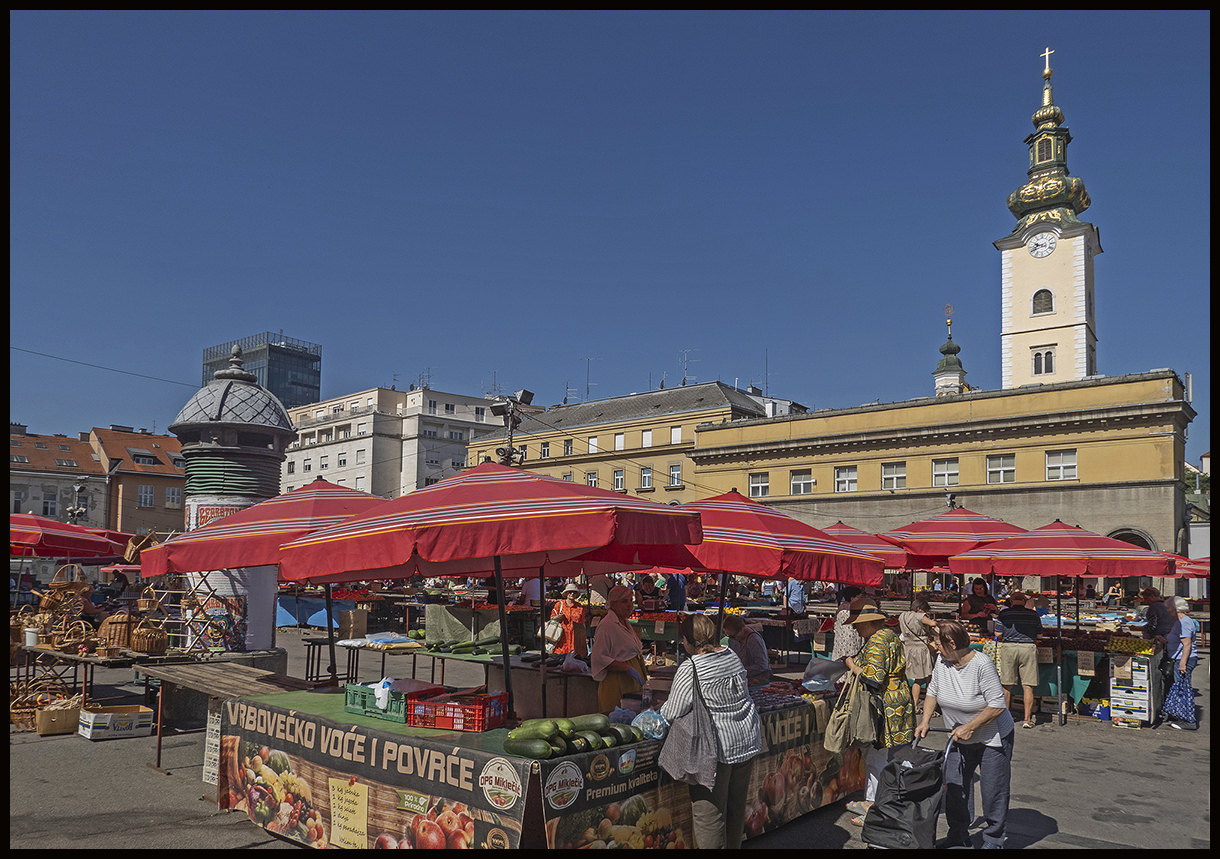
Soon after walking under the arch you’ll find the popular open market, the Dolac.
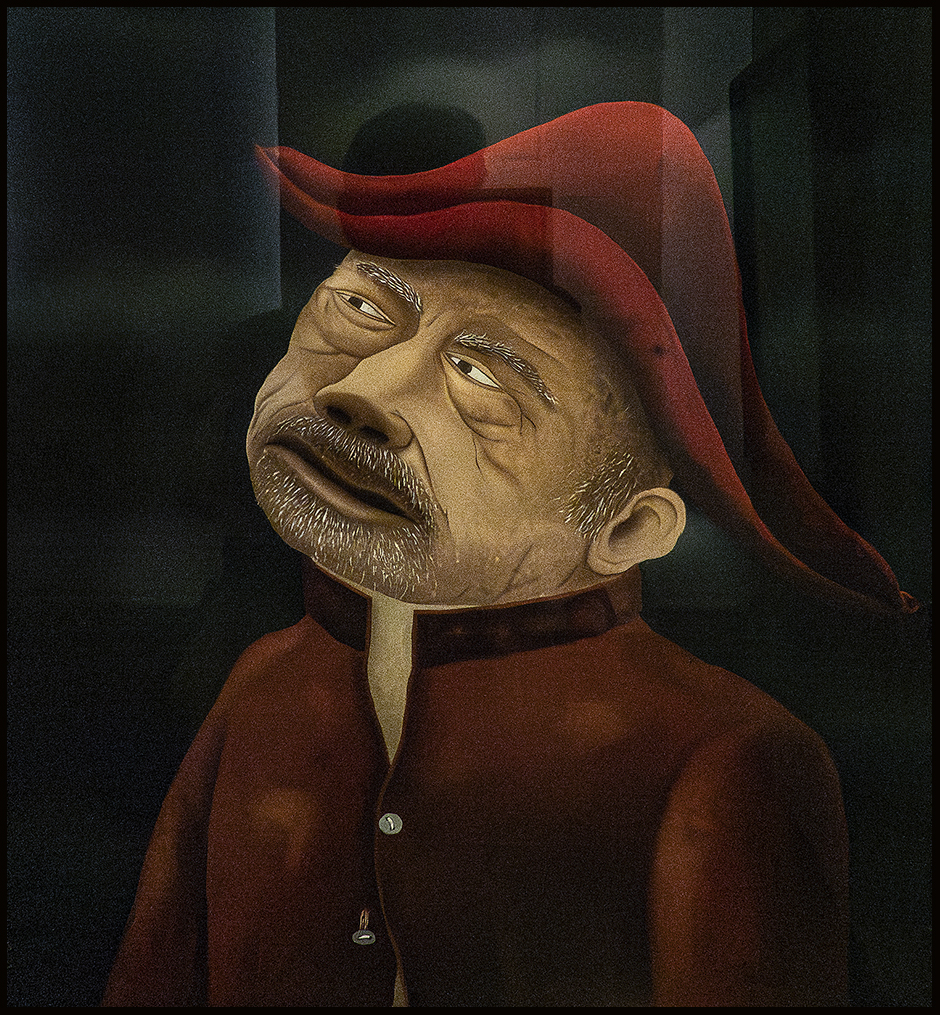
We visited the Museum of Naive Art…art made by self-taught artists with no formal training. I like this fellow.
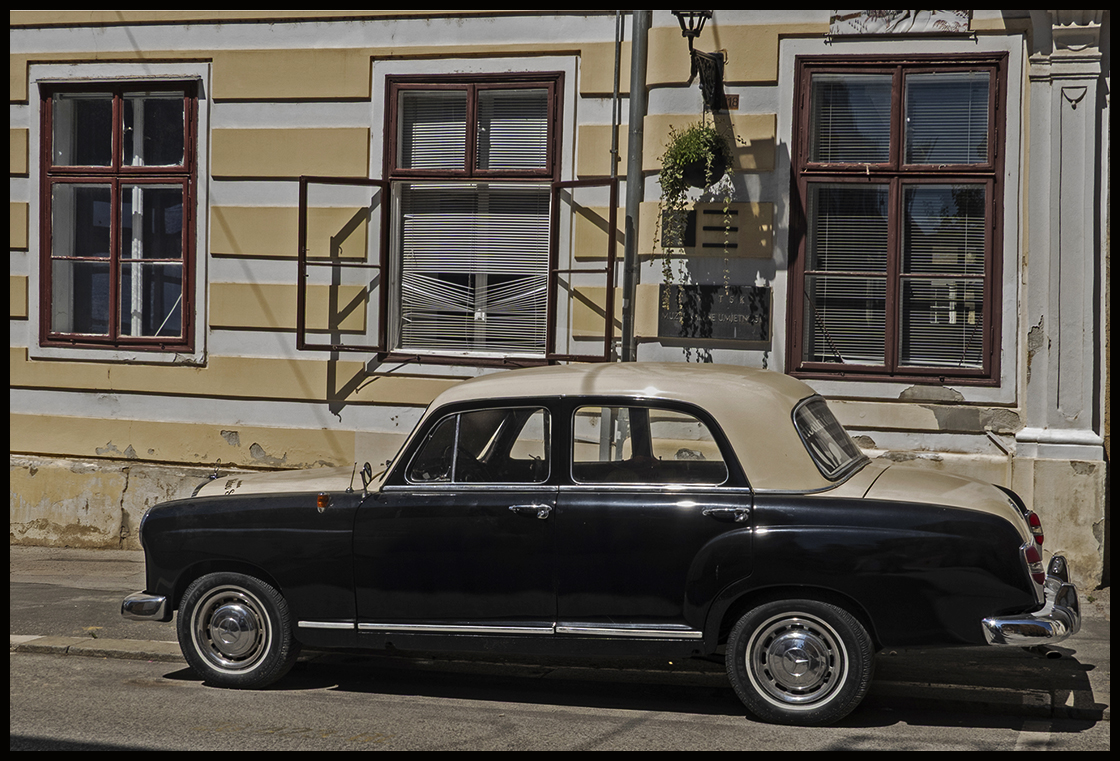
Near the museum was a car Craig loved. A 1959 Mercedes.
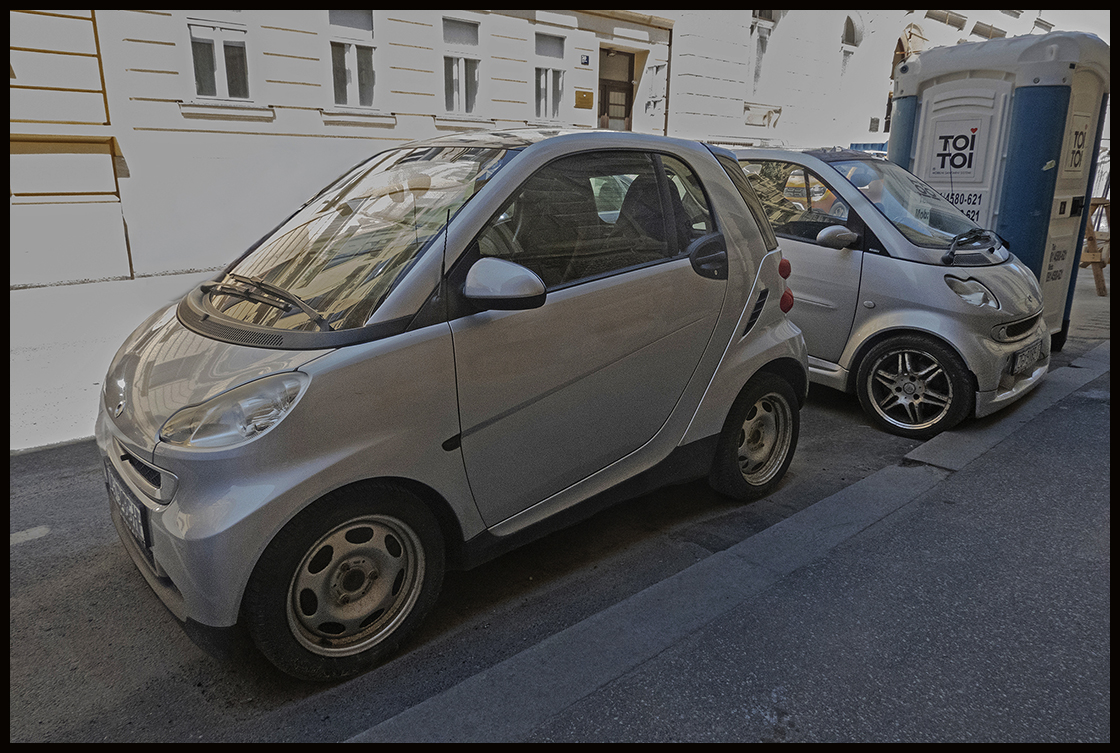
Had to include this to show a clever parking idea in a crowded city.
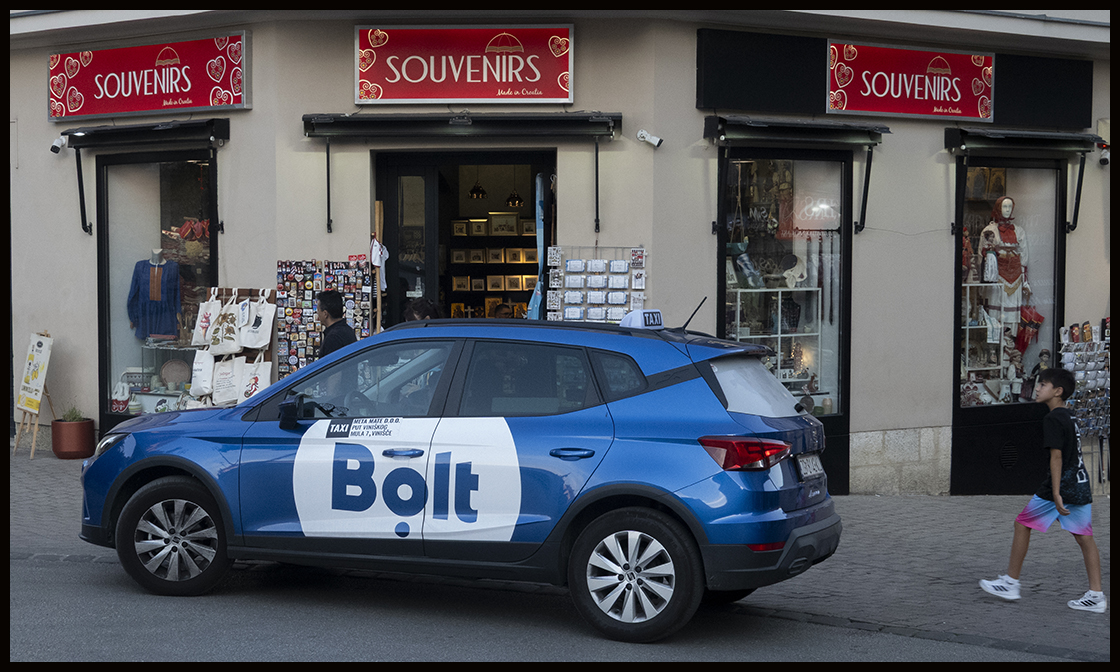
The Uber/Lyft option here.
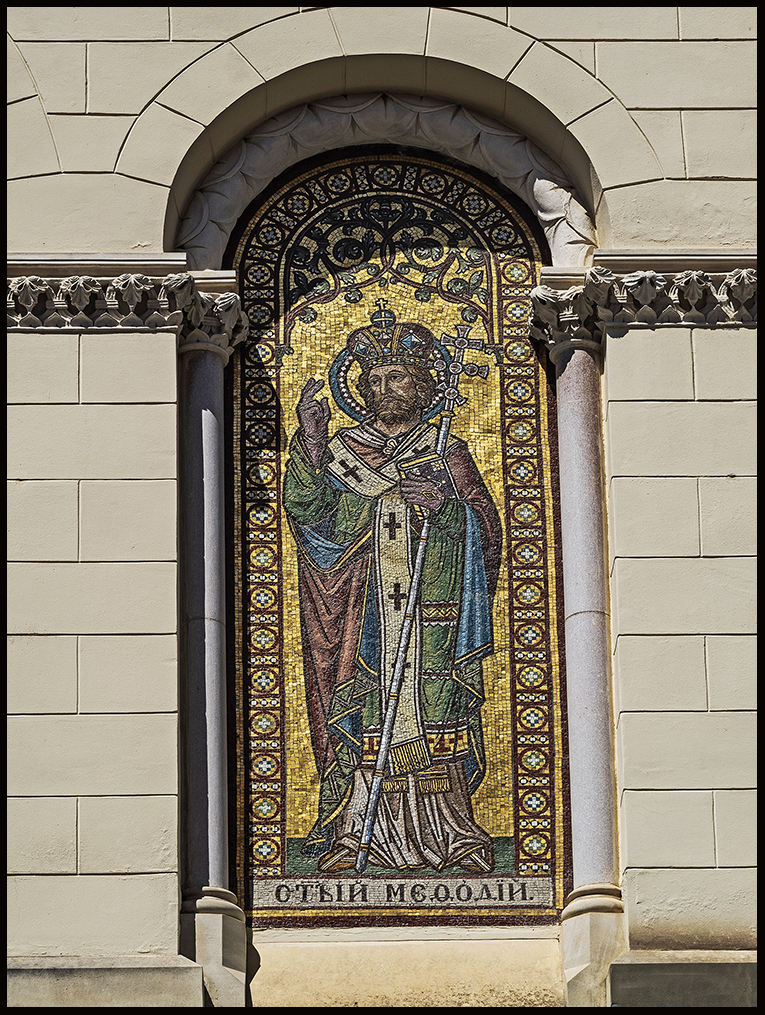
Greek Orthodox church mosaic
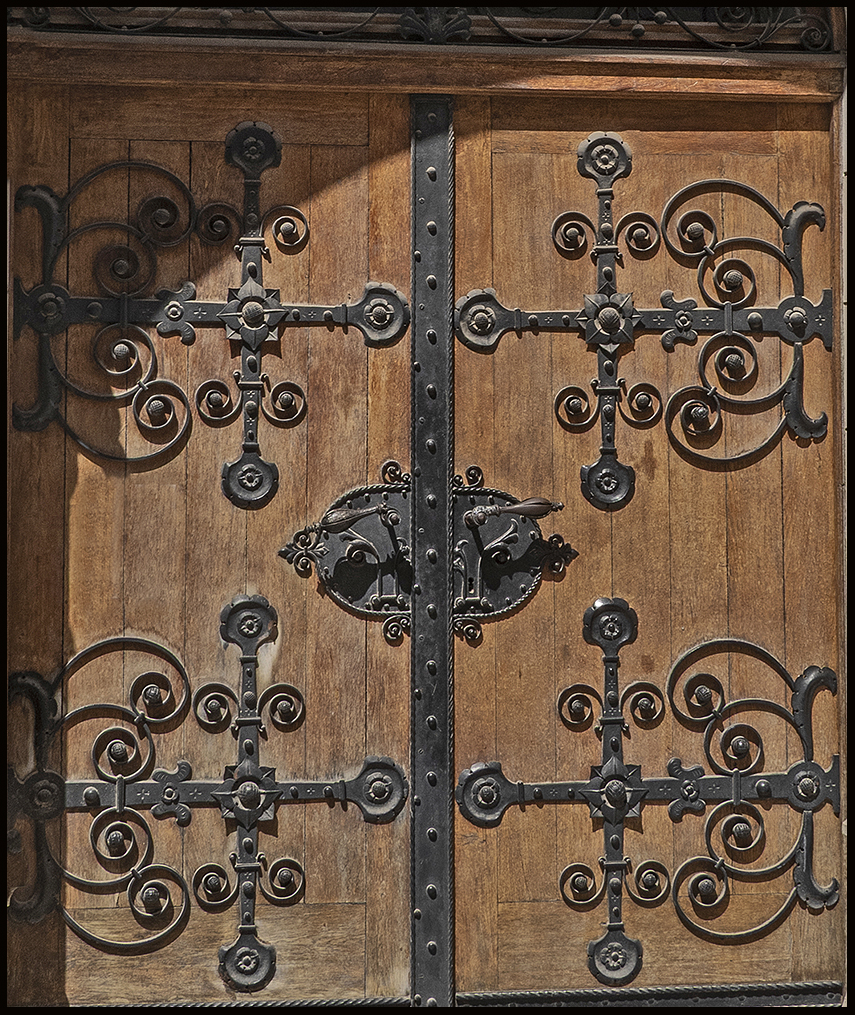
Orthodox church’s ornate ironwork
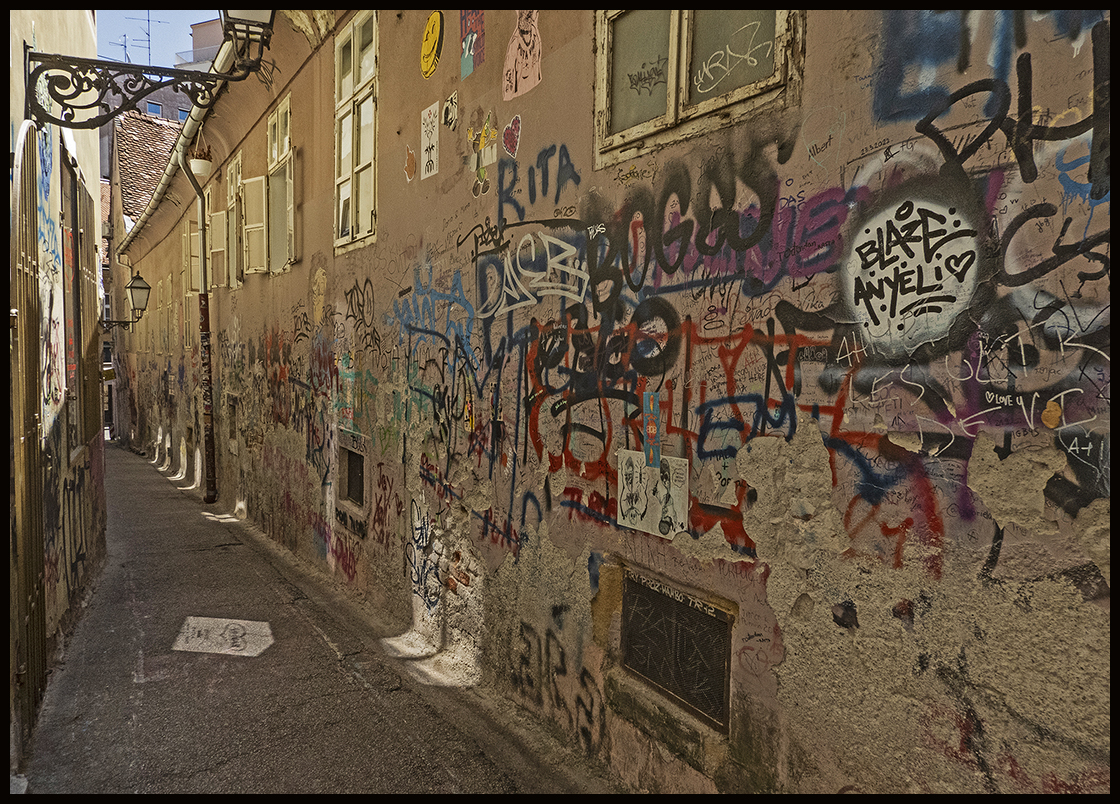
Returning to the lower section we passed through a graffiti alley. I’m a sucker for good graffiti. Although not much was good in the alley, a few stood out.
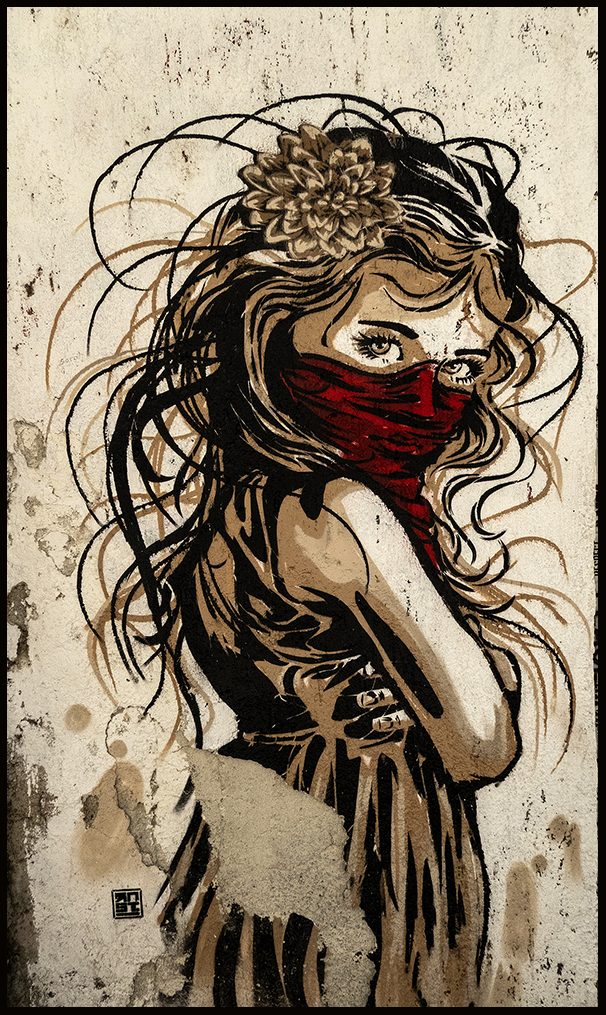
Good graffiti
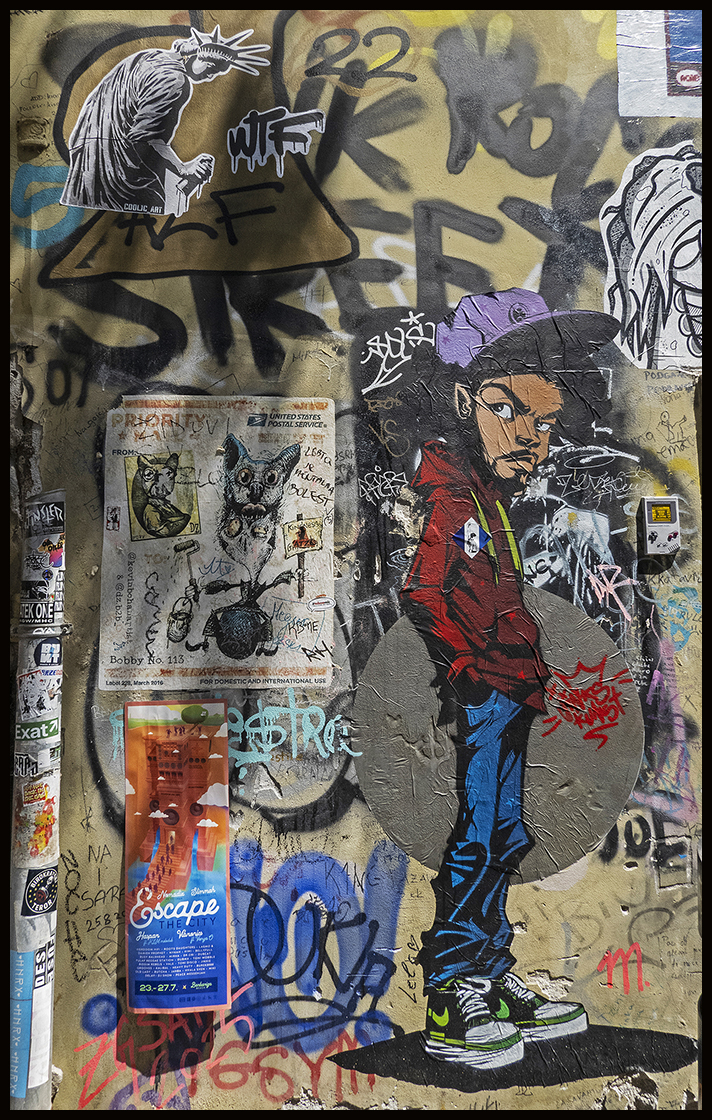
Busy graffiti
Before leaving Zagreb, I’m going to show some of my people-watching shots.
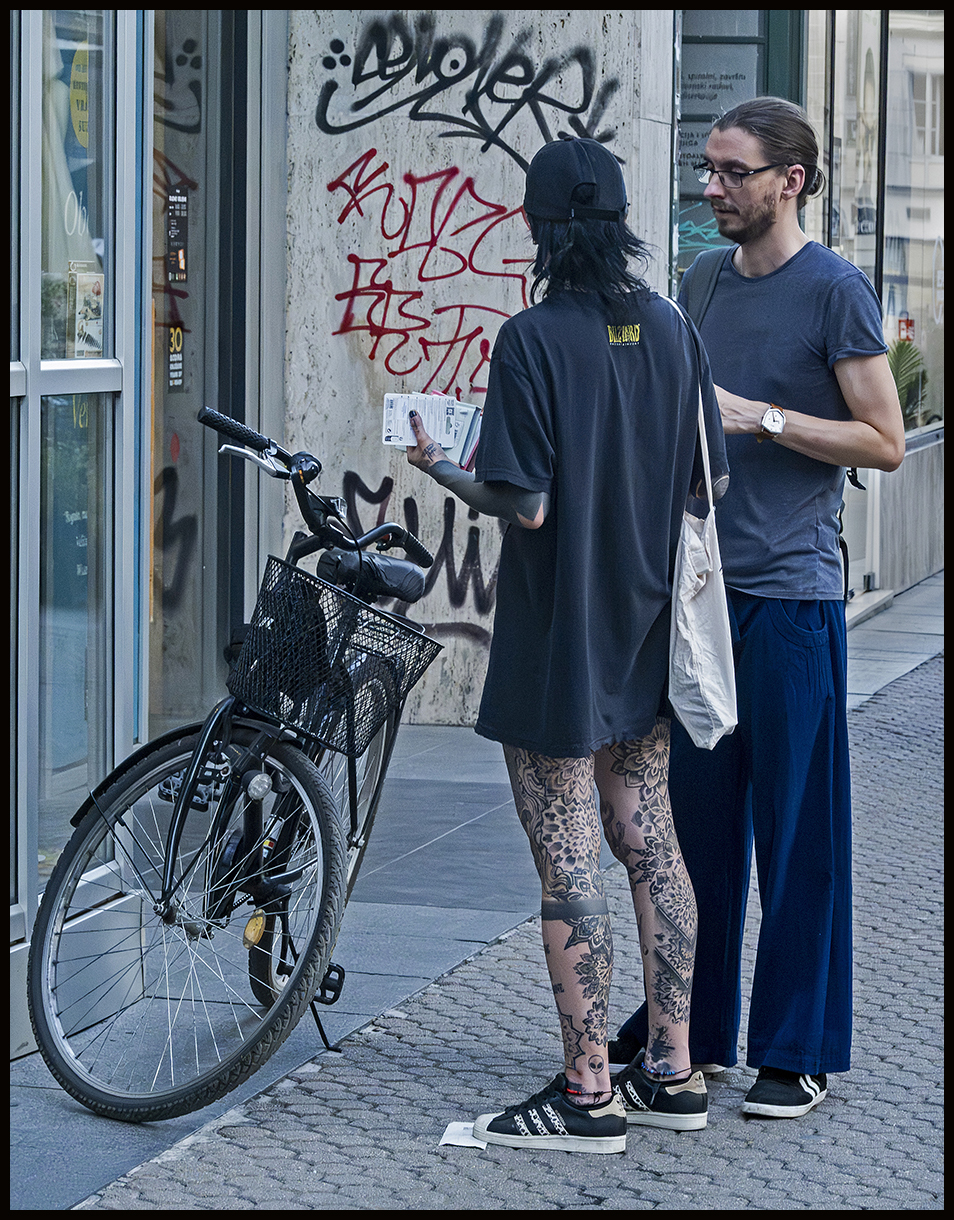
Dusk was descending when this illustrated woman caught my attention.

I surreptitiously snuck around to face her and took a quick shot. The quantity of metal accoutrements is noteworthy.
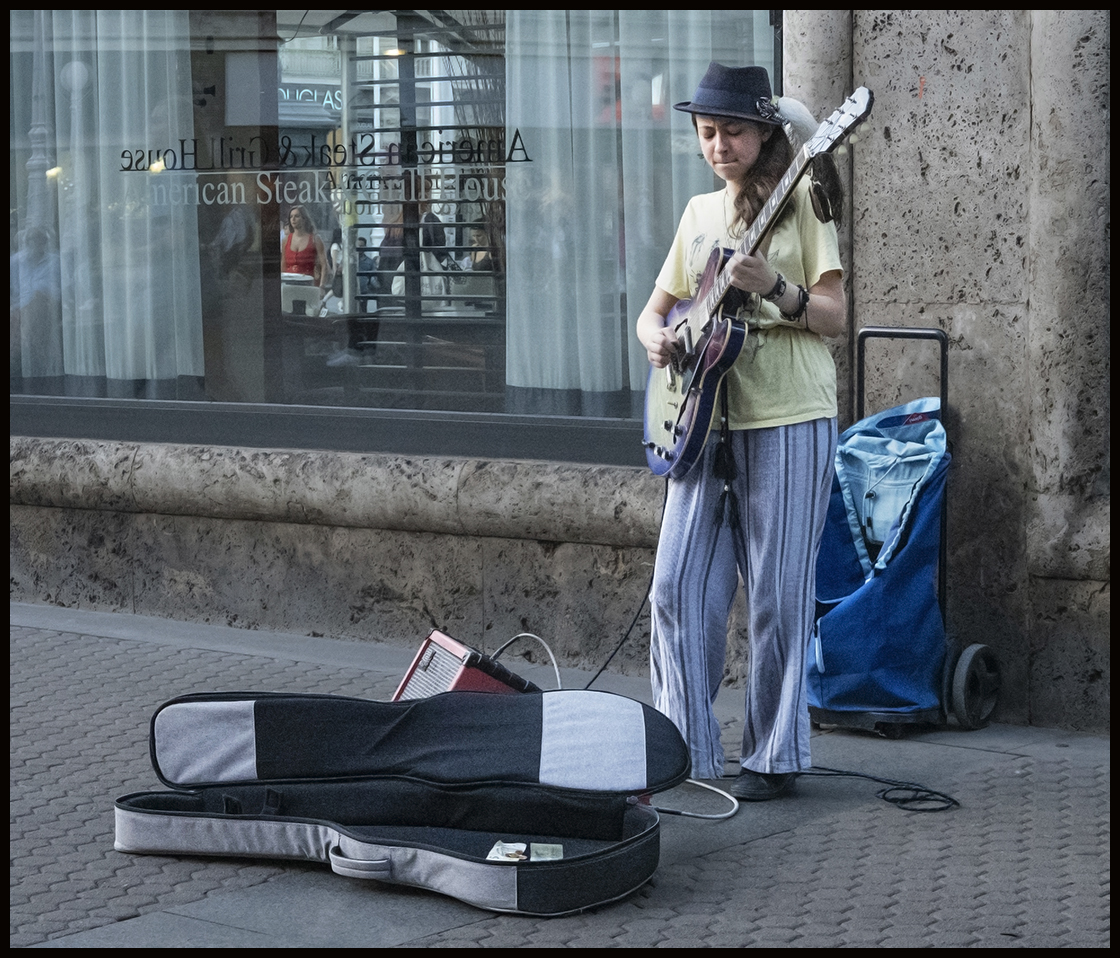
Busking troubadours are on every corner.
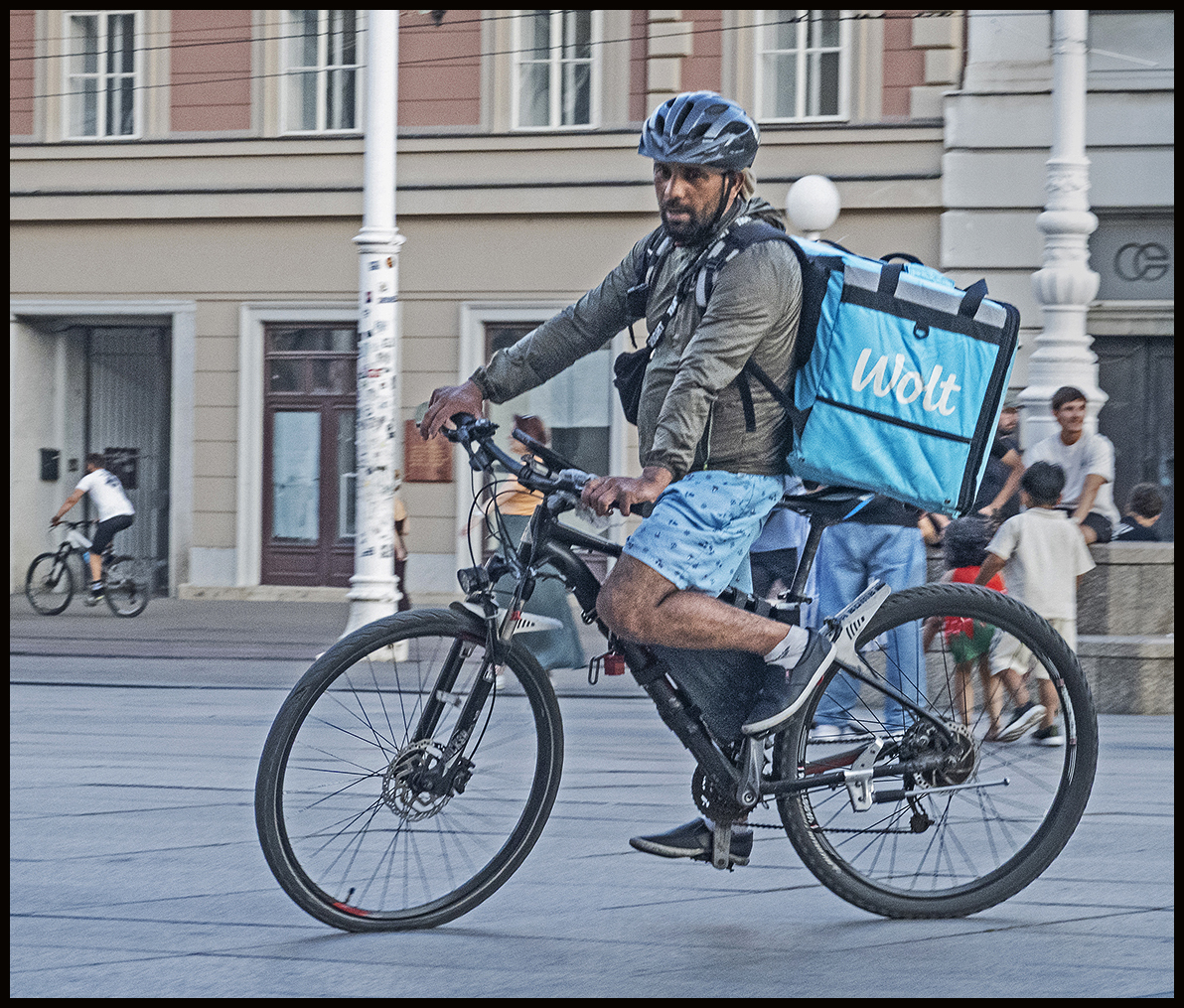
This is the Zagreb Door Dash.
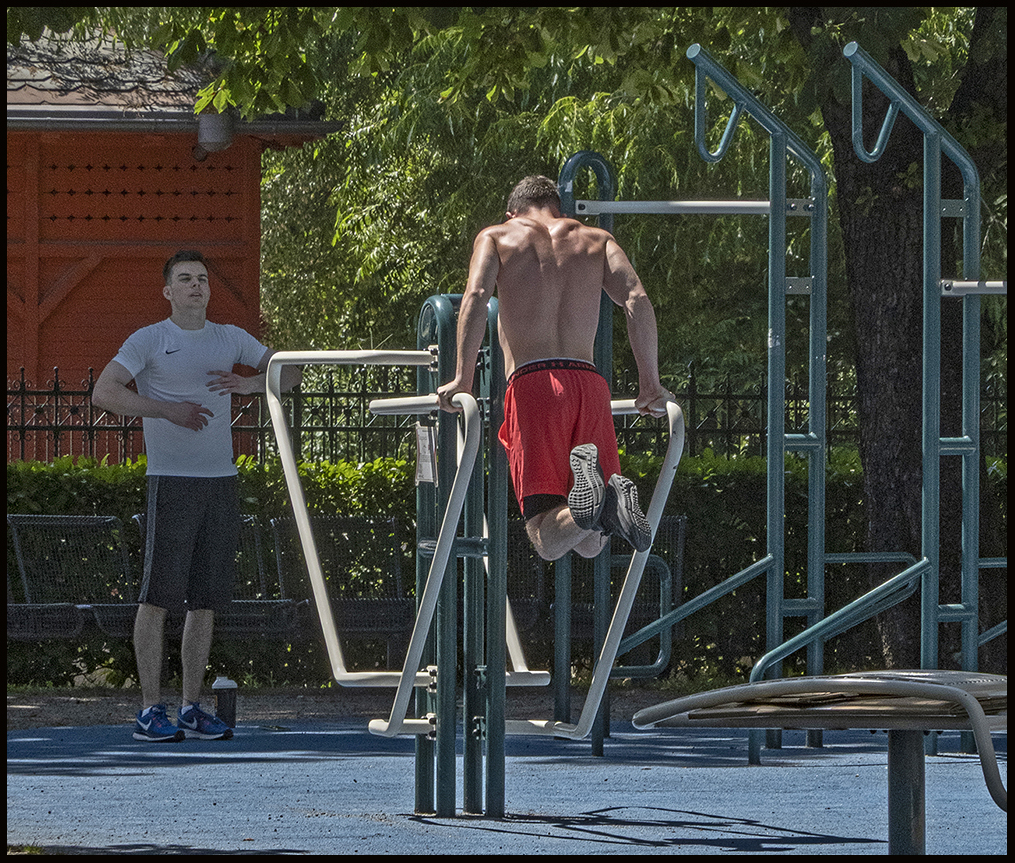
Folks in Zagreb are very fit.
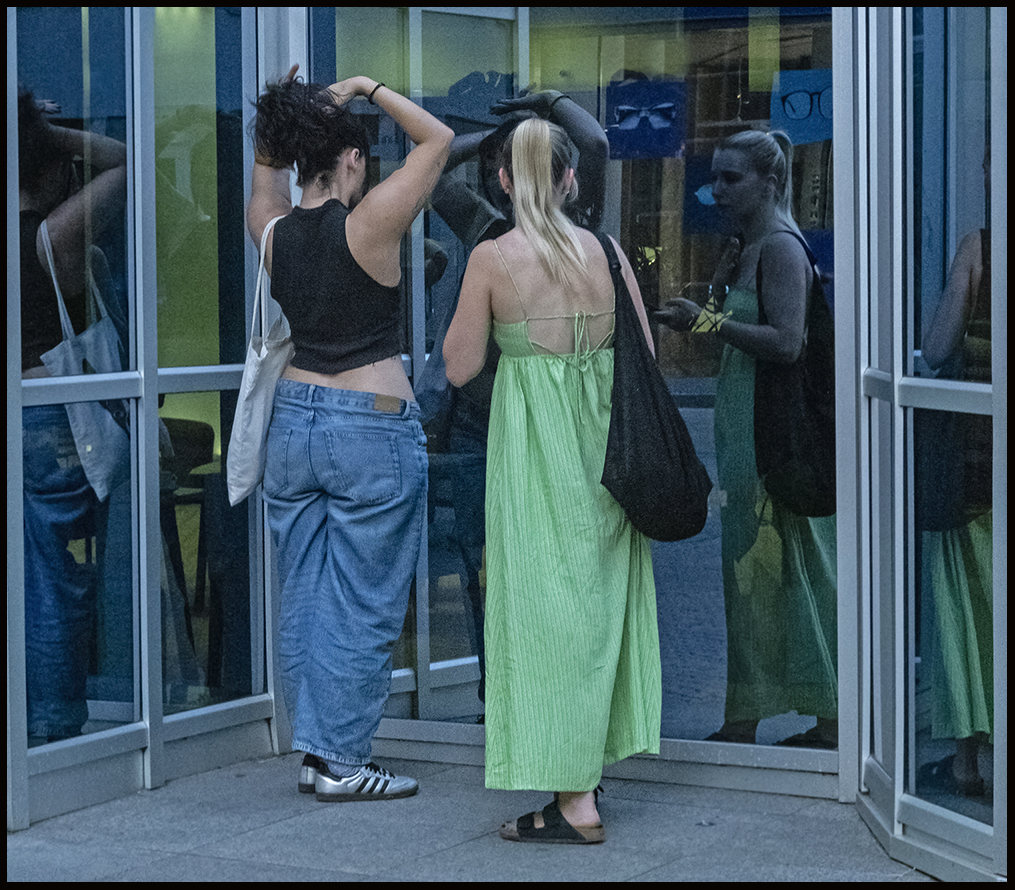
Tourists primping in the hotel window.
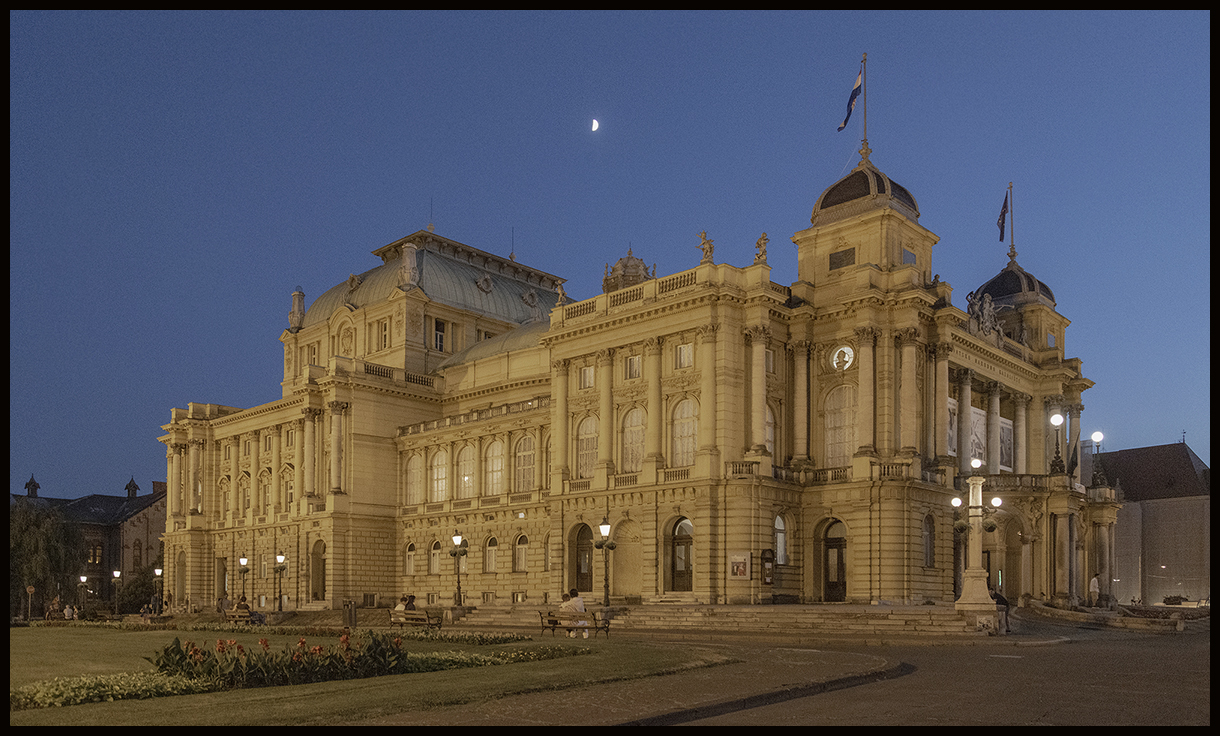
Before leaving Zagreb we walked over to see the National Theater by moonlight.
Finally, off to the Plitvice Lakes National Park. Out the bus window I managed a few shots.
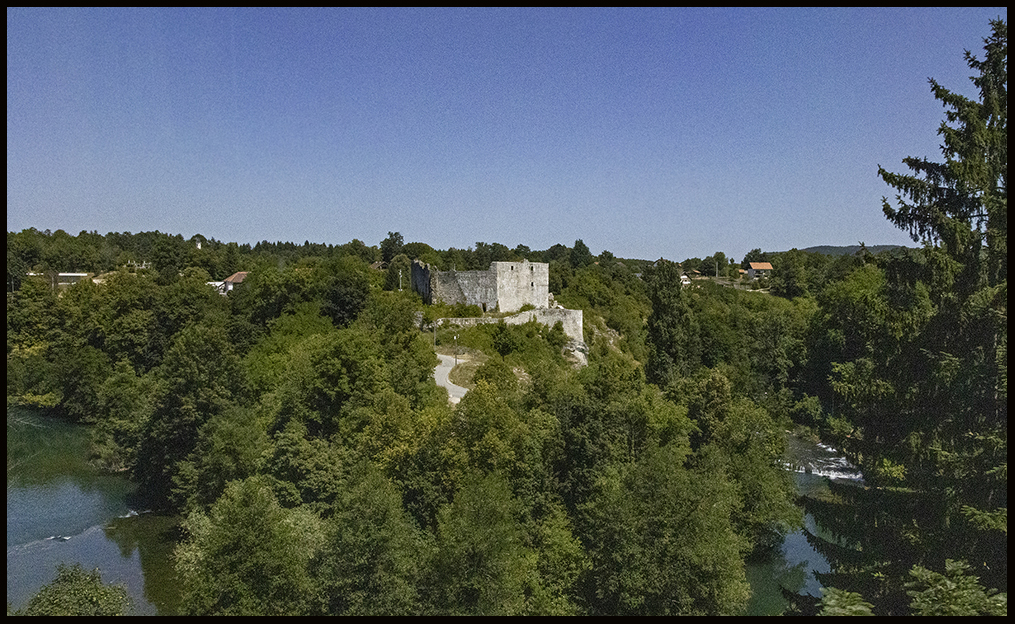
Nearly ever little burg has an old fortification on the highest point.
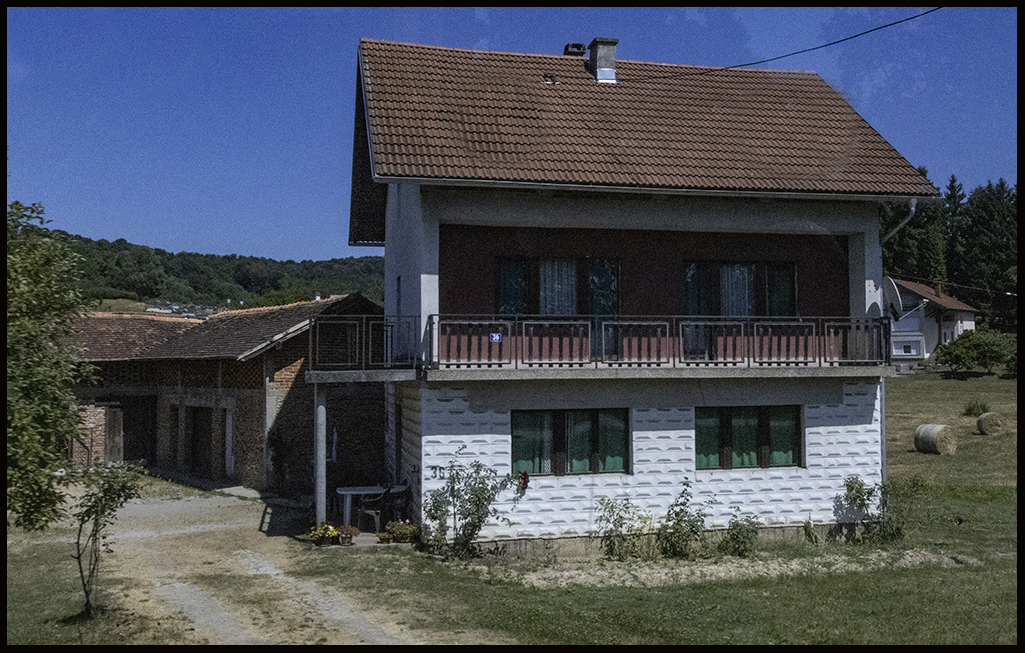
This is an example of the most common house style in the countryside: Comfortable whitewashed house with barn in the back.
Plitvice Lakes National Park is one of the oldest (1949) and largest national parks in Croatia. In 1979, the park was added to the UNESCO world heritage list, for its picturesque series of tufa lakes, caves, and connected waterfalls. The park’s 16 lakes are arranged in descending cascades. The lakes are famous for their colors; from azure to green, grey or blue depending on the quantity of minerals in the water and the angle of sunlight.
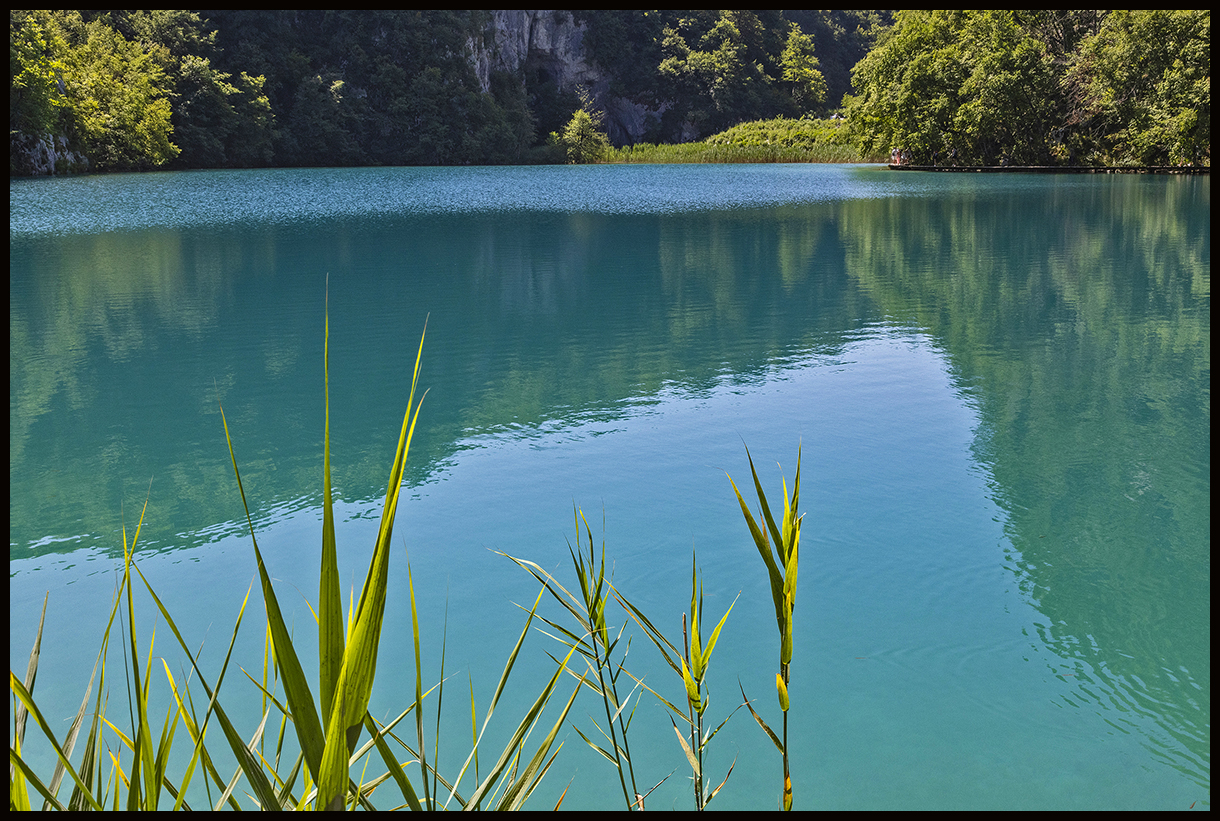
Incredible colored water.
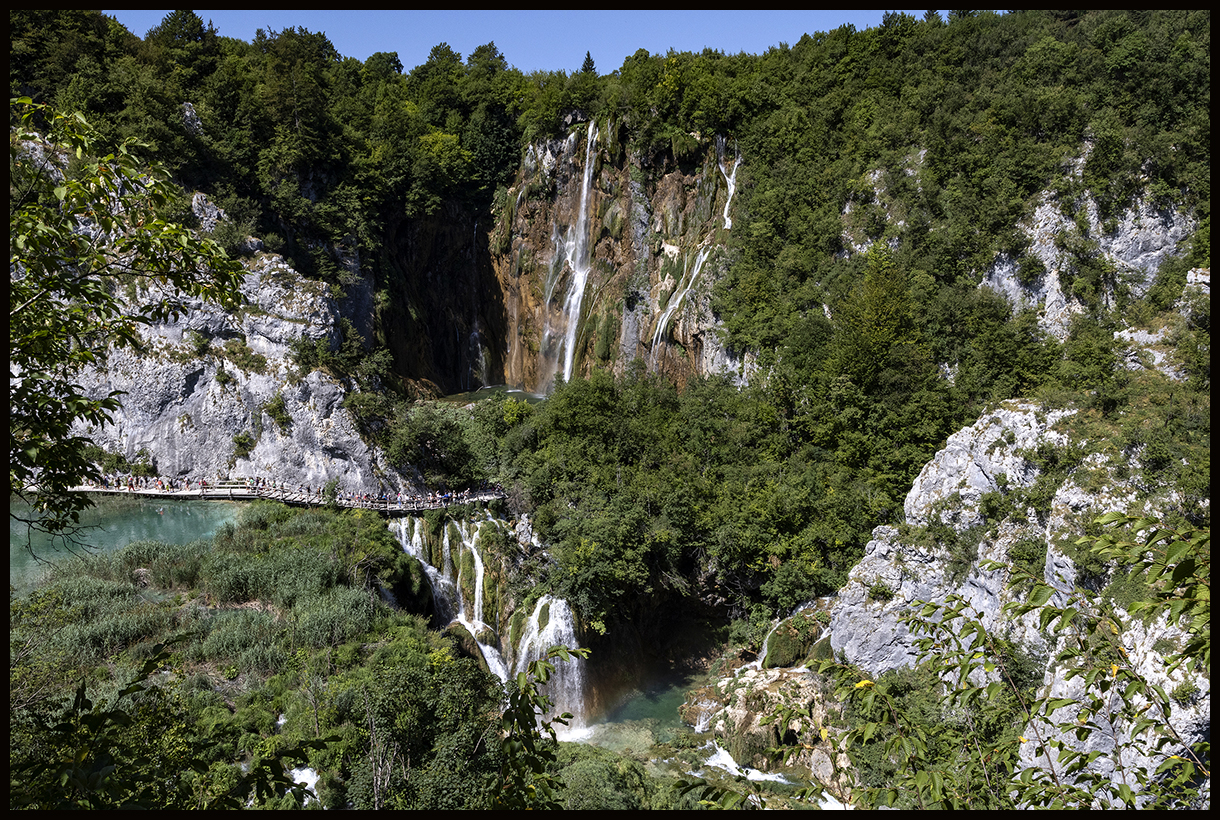
The first overlook gives an example of the waterfalls.
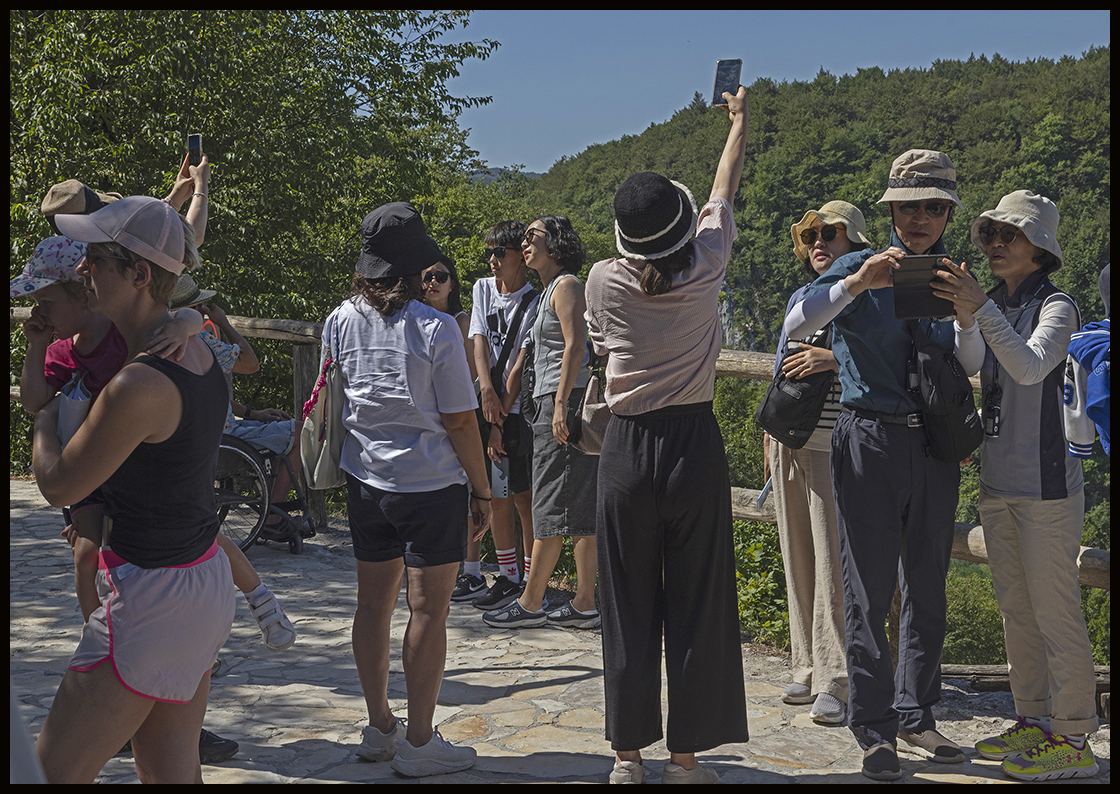
Don’t think you will have the park to yourself. It is very popular.
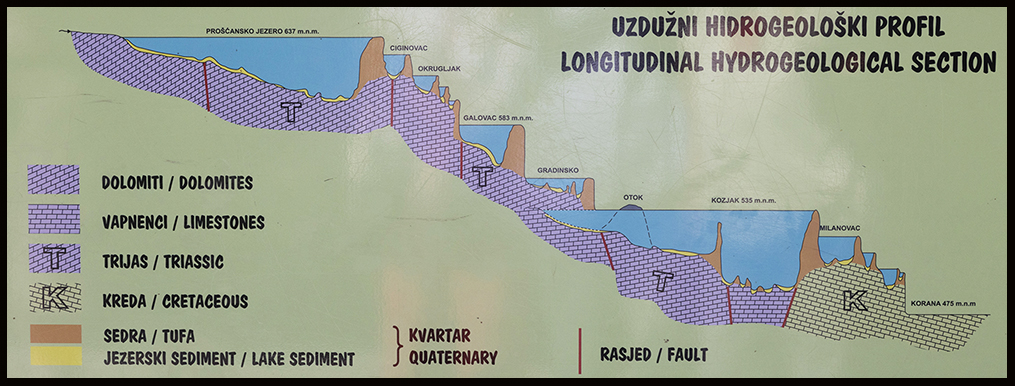
Here is a park schematic describing the park’s formations.
The name Plitvice came from the shallow basins (Croatian pličina or plitvak, plitko means “shallow”) which are filled with water. Travertine barriers are continuously growing in height. These natural dams slow and retain the flowing water.
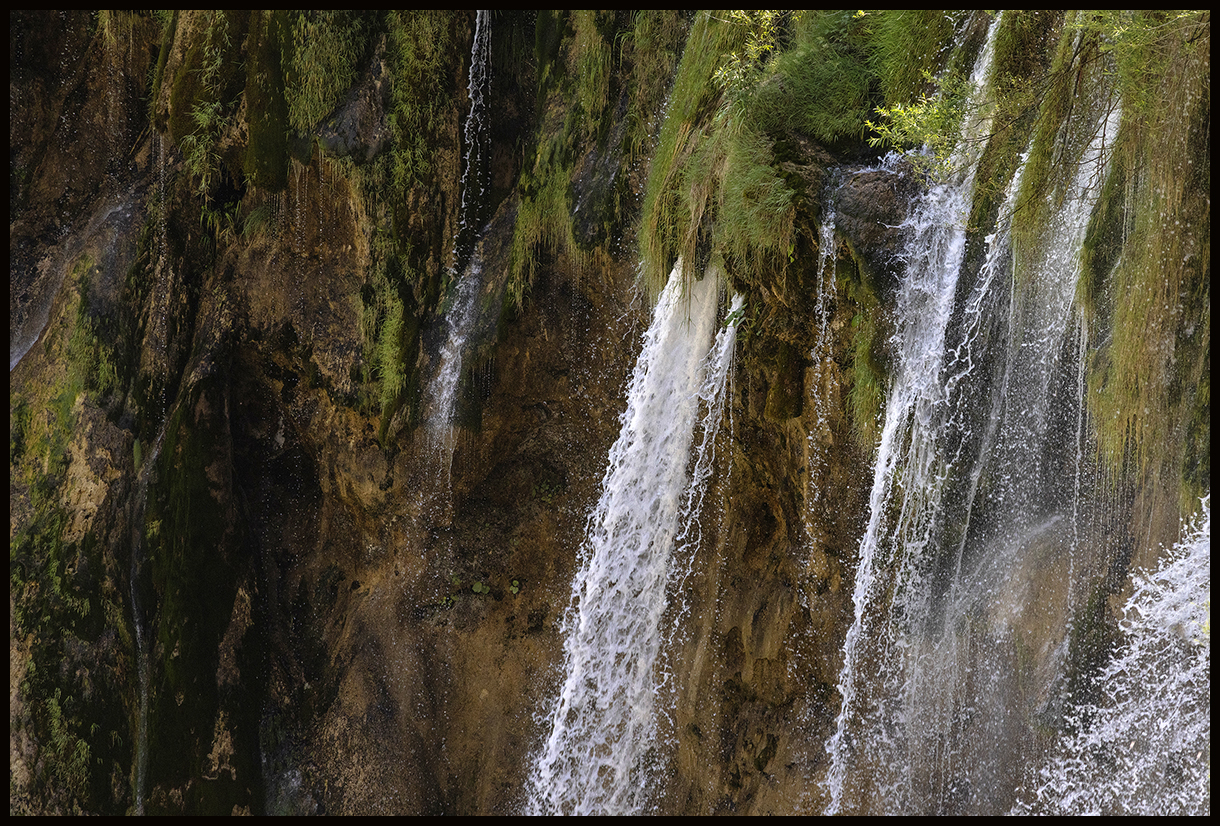
Water pours from every wall.

Looking down on the boardwalk you can see how popular the park is.
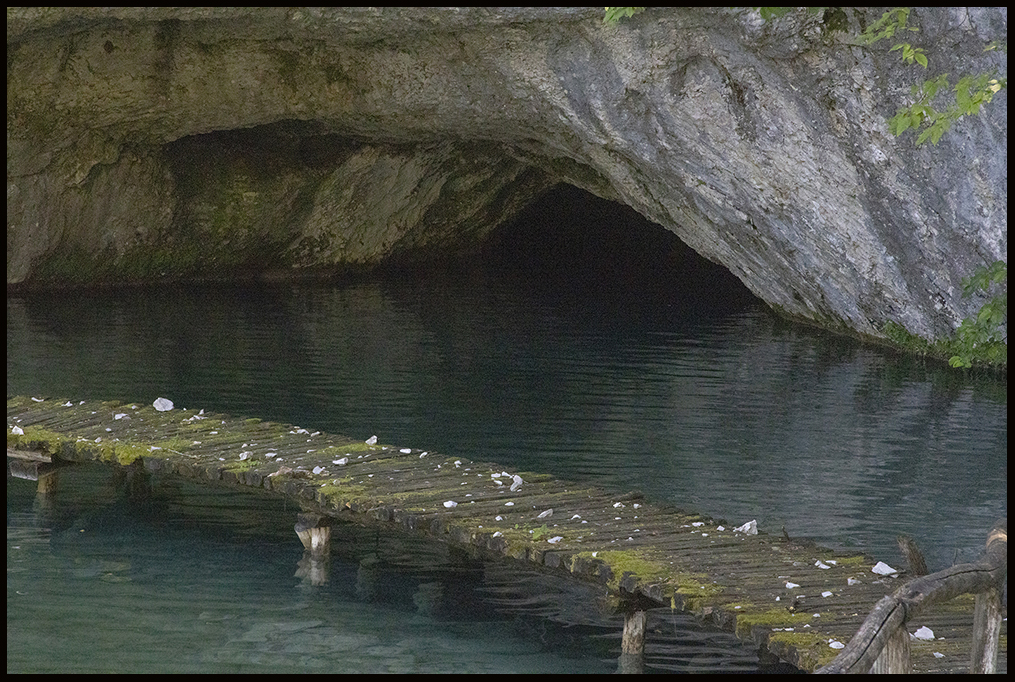
Limestone caves riddle the park. This is an abandoned part of the boardwalk.
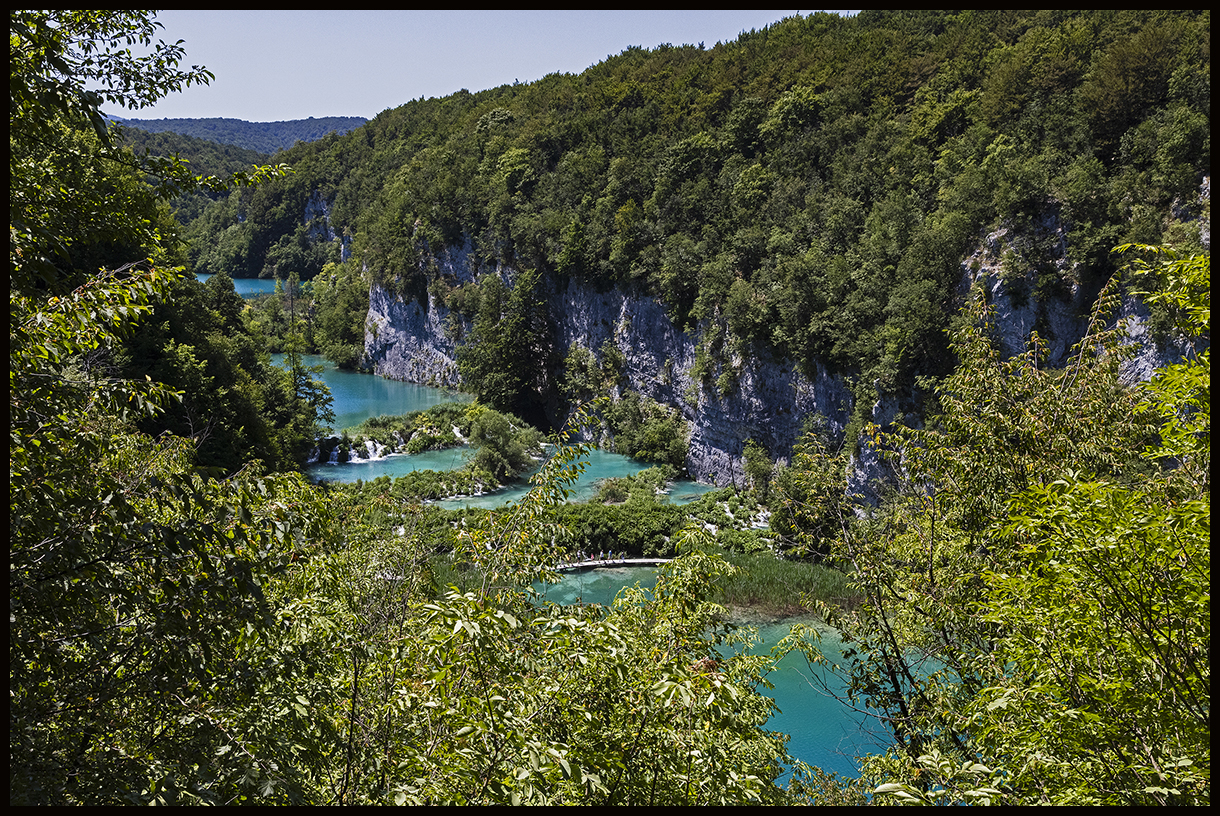
Looking up the valley, the ascending series of lakes can be seen.
Next chapter, we’ll visit one more place in Croatia, Opatija; the once and current playground of Europeans.