
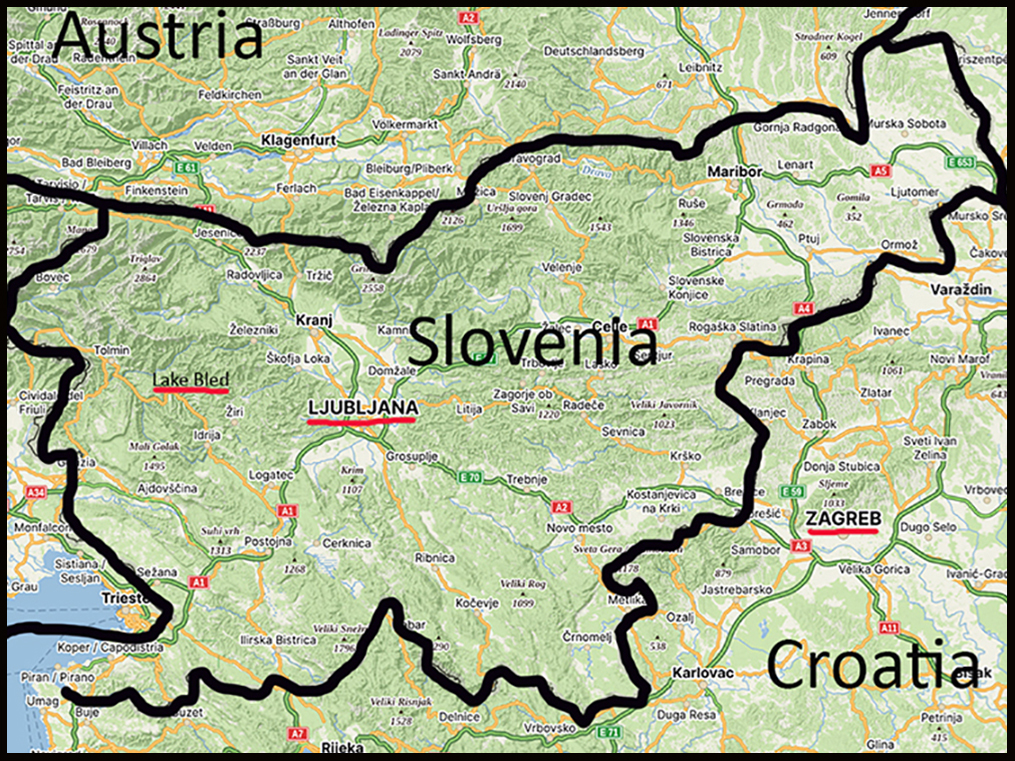
Map of Slovenia with neighbors noted
When Tito died in 1980, Slovenian dissatisfaction with the Serb-dominated government deepened. In 1987 Yugoslavia’s new de facto leader, Serbia’s Slobodan Miloševic, resolved to put an end to any talk of independence. Slovenia rebelled and in 1990, it voted to become an independent republic. The Yugoslav army attacked, but after meeting with unexpected resistance, the federal army left. Yugoslav government agreed to a truce and finally withdrew in October 1991. Slovenia drew up its own constitution, and was recognized by the European Community in January, 1992. In 2004, it joined the European Union. Of the six former communist sectors in Yugoslavia, Slovenia, perhaps because of its proximity to Europe, made the transition to a market economy more smoothly than the others.
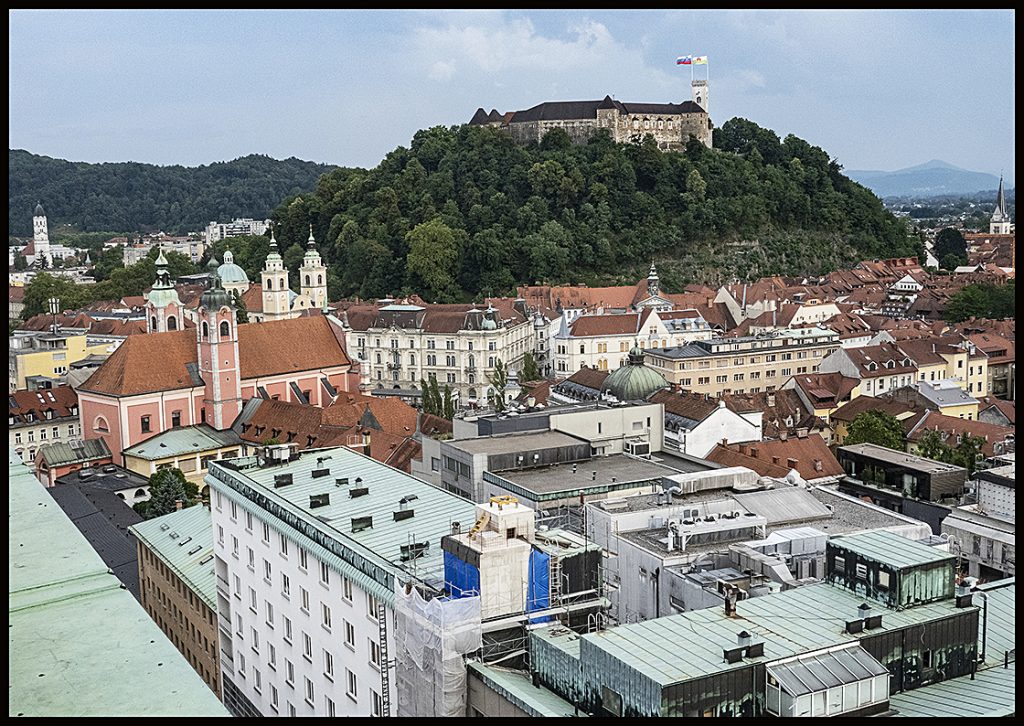
Ljubljana Castle/Fortress
Ljubljana Castle looms over the town. Originally a medieval fortress, it was probably constructed in the 11th century and rebuilt in the 12th century. It acquired its present outline with an almost complete overhaul in the 15th century, but the majority of its buildings date to the 16th and 17th centuries.
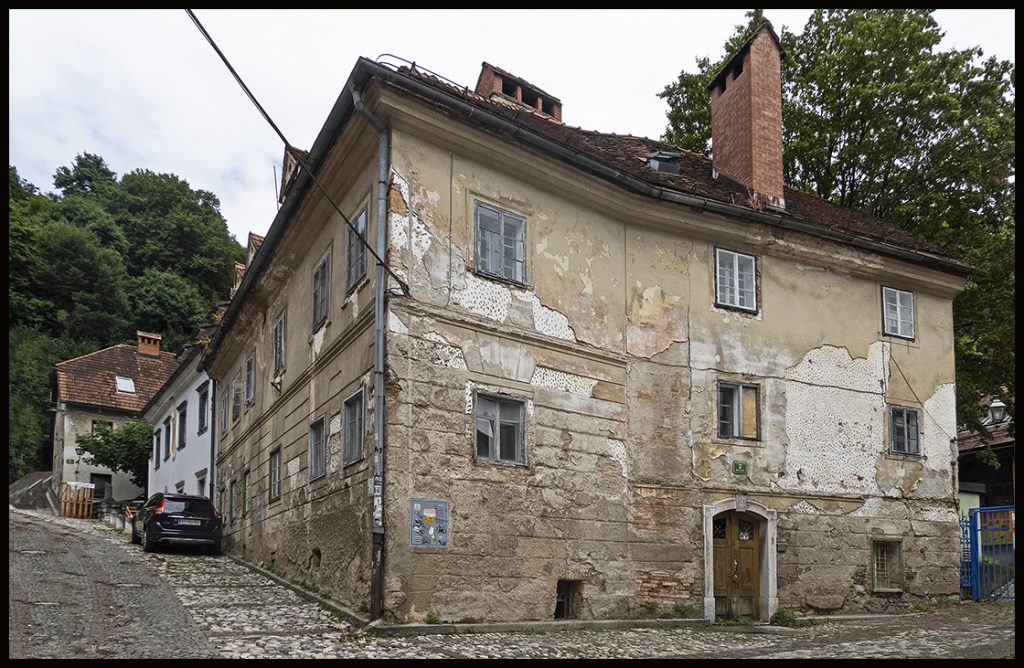
Instead of taking the “funicular” to the top, we hiked up, starting at this corner.
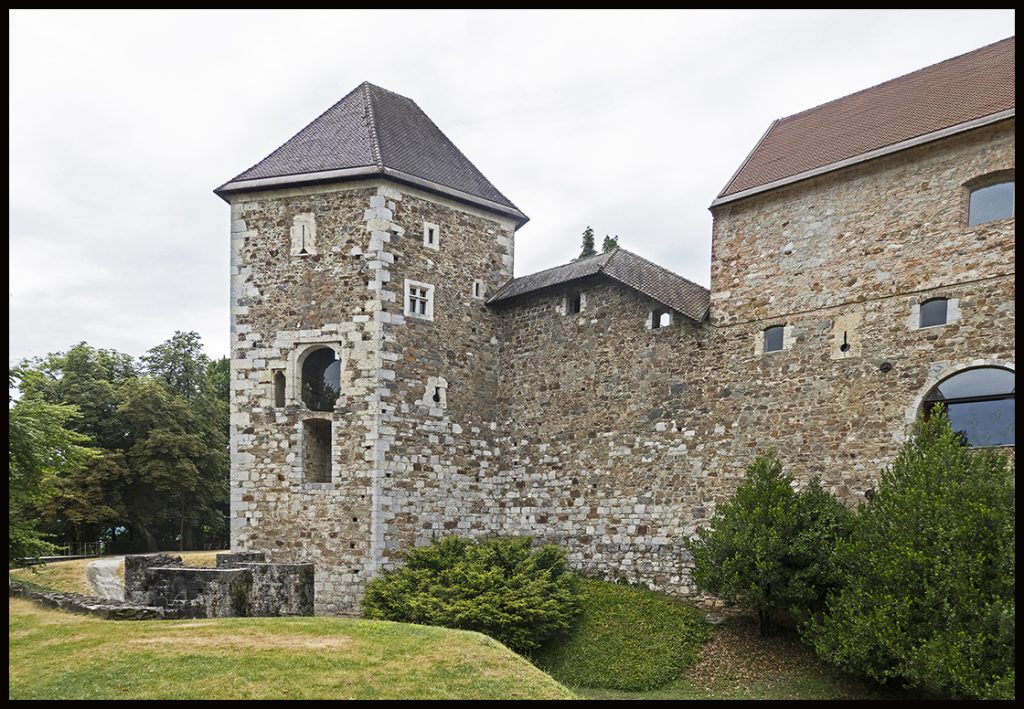
Approaching the entrance
Because it was never the home of a ruler and because a it had outlived its importance as a fortification, the state started to lose interest in maintenance. The upkeep costs were so high the castle began to crumble. In the 19th century, the castle was redesigned partially as a prison and partially as a military stronghold. In 1905, the castle was bought by Ljubljana city for a museum. But that never happened. Instead, the city settled poor families there. They stayed until 1963, when renovation of the castle began. Extensive renovations commenced in 1970. Since the 1990s, the castle has been used as a tourist draw and place for weddings and cultural events.
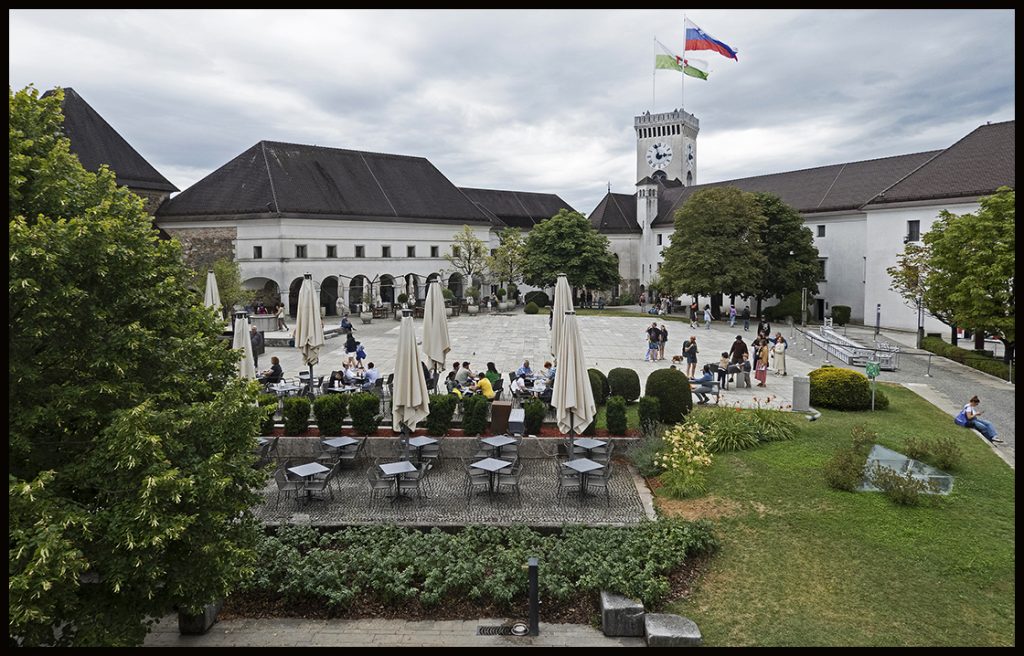
Central courtyard inside the walls.
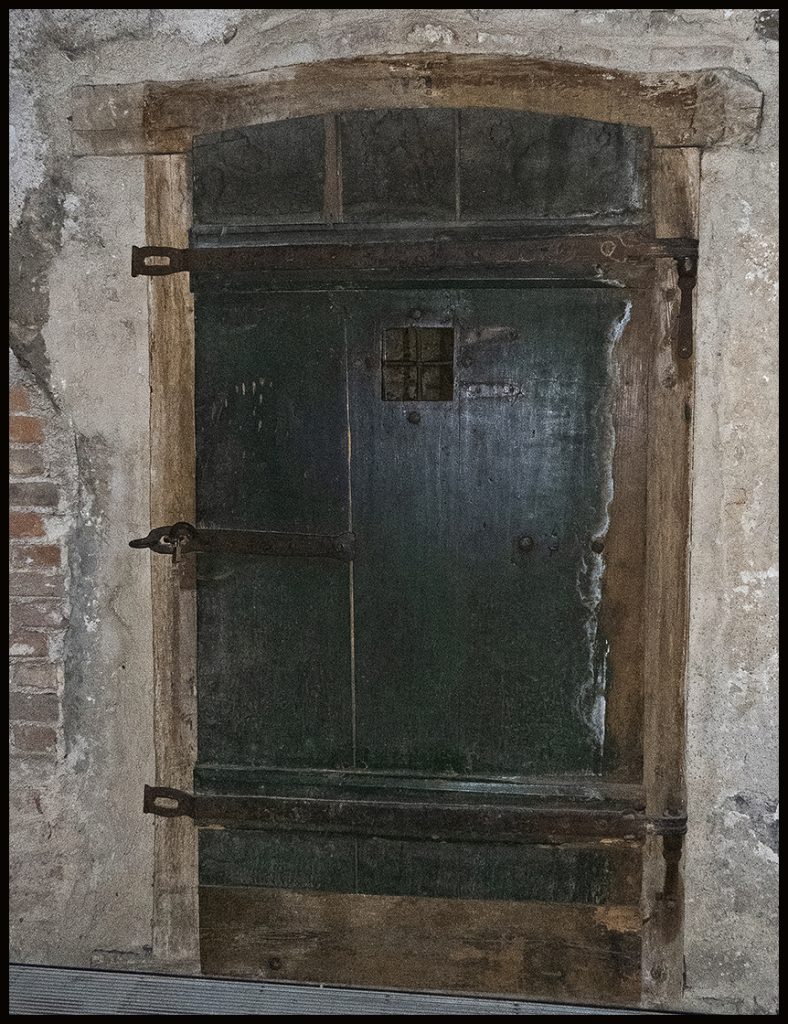
One of the prison cells with a stout door.
Back down the hill. The Ljubljanica River flows through the town. It is the focal point for life in the central part of the old city.
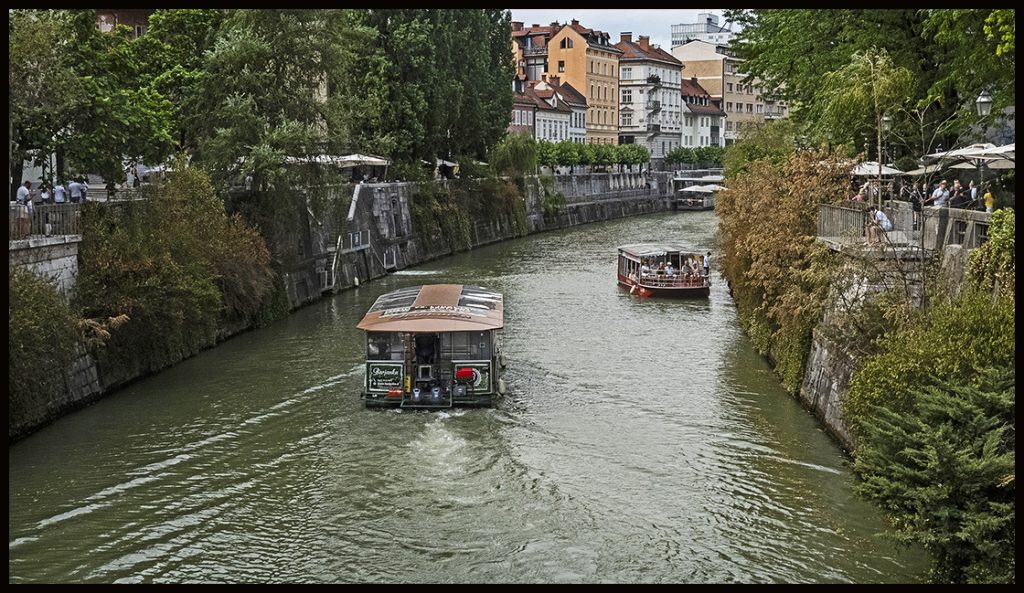
The Ljubljanica River with tour boats. River edges are lined with shops, restaurants and bars.
First a stone a bridge was built in 1842 to replace an old wooden one… in 1929 two footbridges were added, one on either side, to improve vehicle traffic connecting the medieval part of the city with the new town. Hence the Triple Bridge. All three sections are now built of sturdy stone.
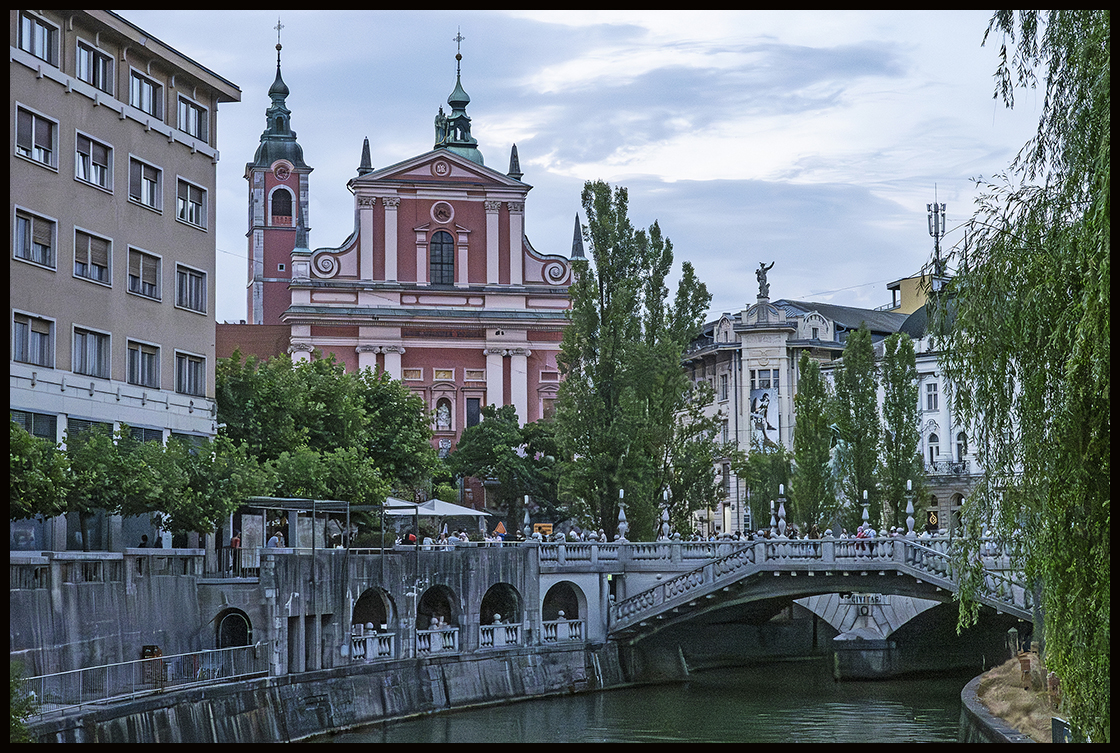
The triple bridge with stately buildings beyond. It is a lovely city.
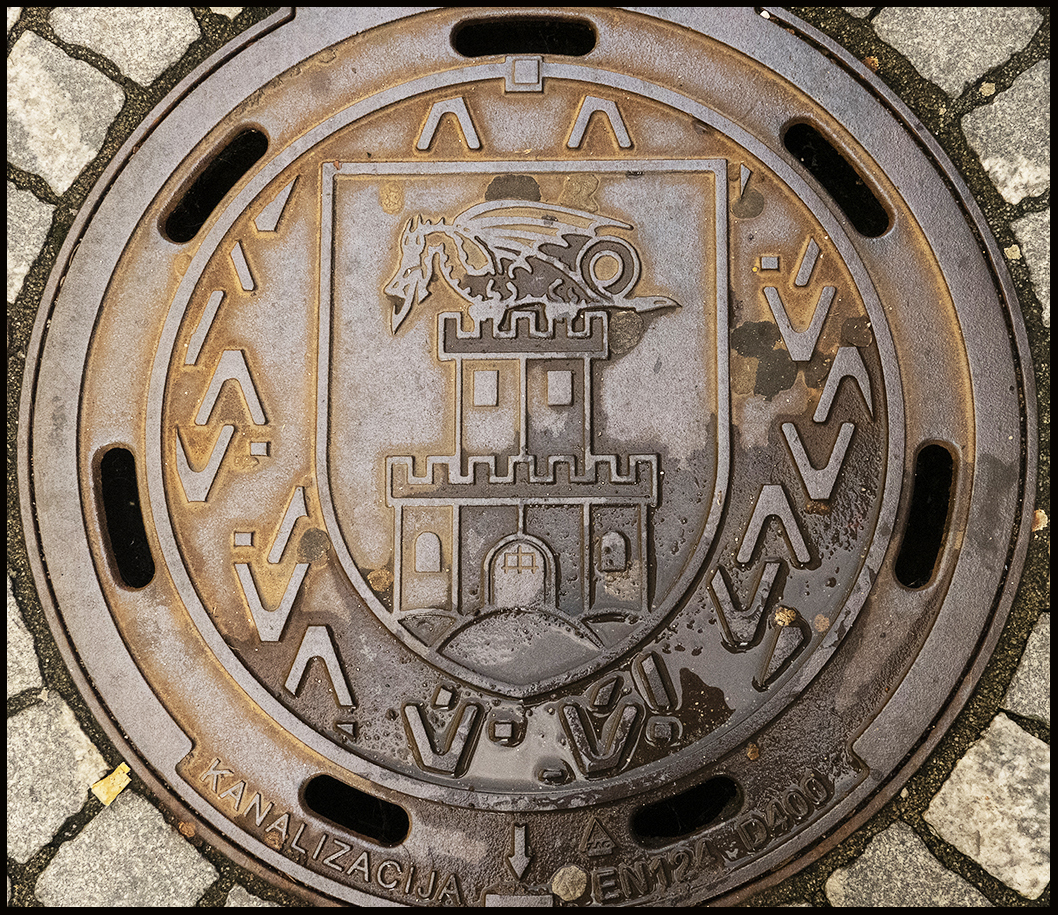
Manhole cover
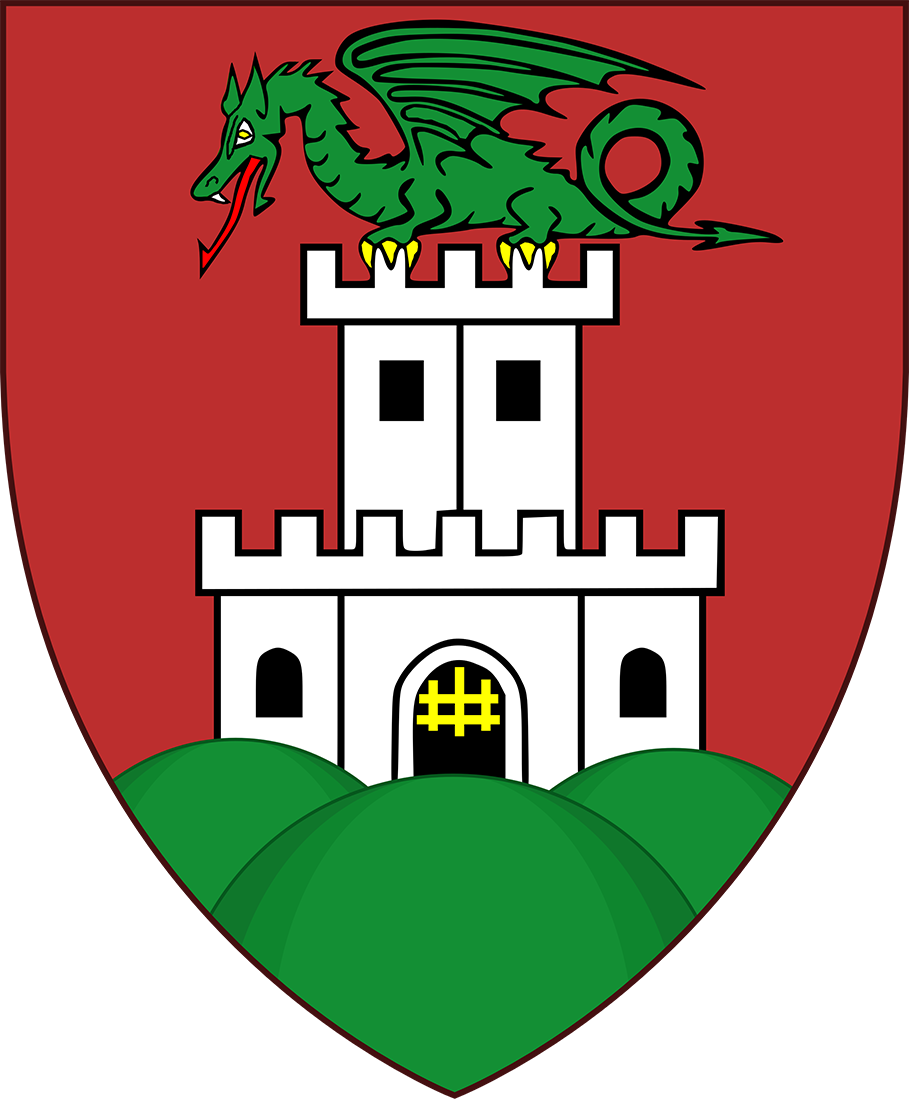
Ljubljana’s coat of arms
A dragon sits atop Ljubljana’s castle on the city’s official emblem. Dragons appear on the city’s coat of arms, bridges, flag, buildings, license plates and even manhole covers.
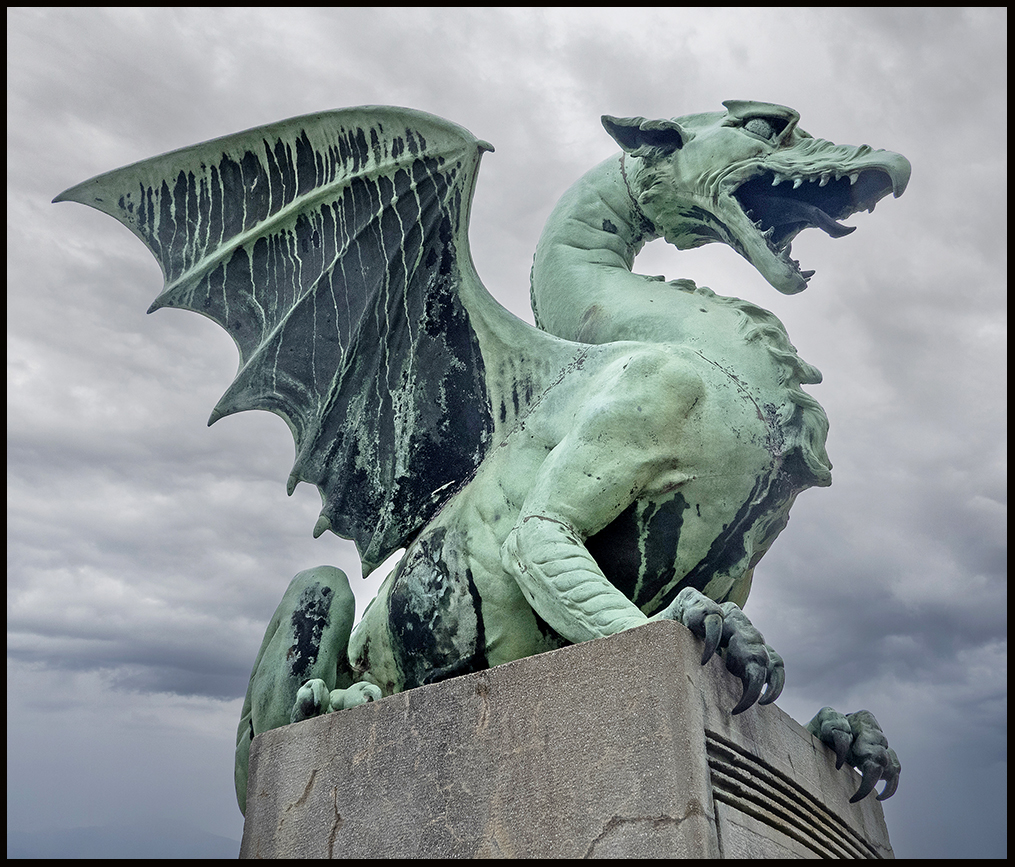
One of four guardians of the dragon bridge.
Dragons are central to Ljubljana’s identity. They protect the city and symbolize its resilience, power, strength, and courage.
Because the river runs right through the center of old town, more bridges became necessary. The statuary for each is unsettling.
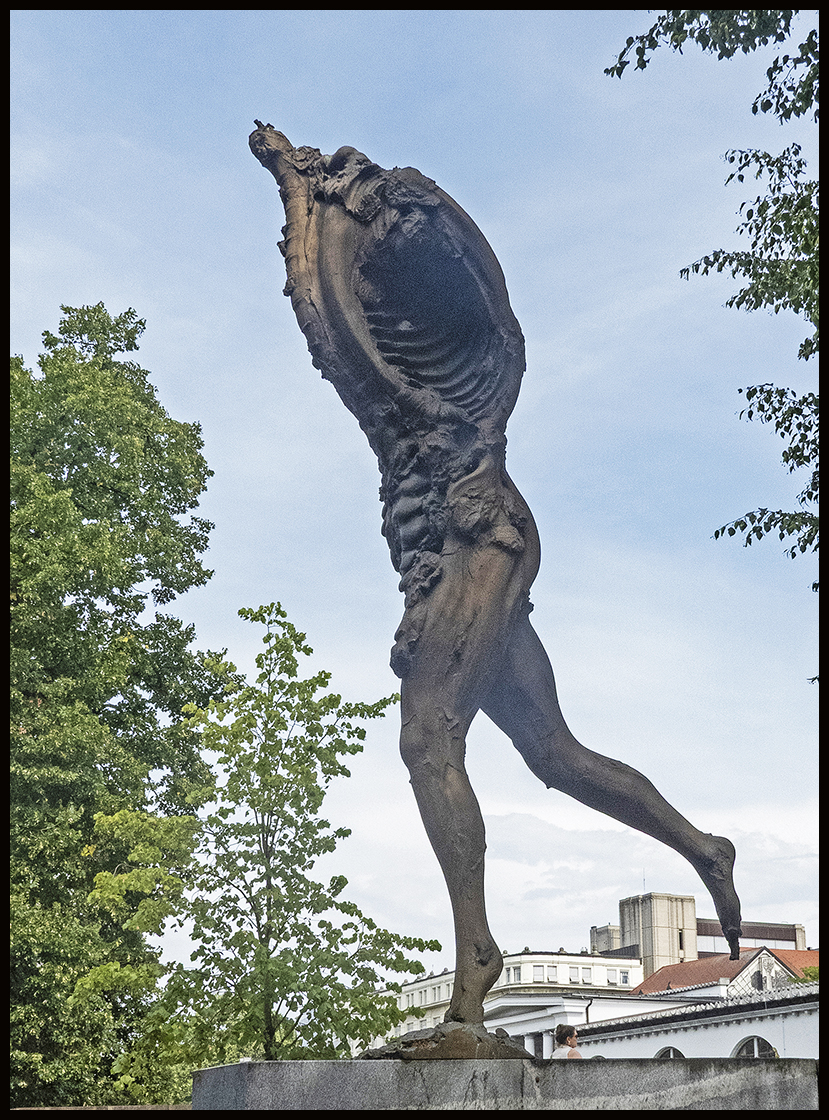
Butcher’s Bridge features man as carcass.
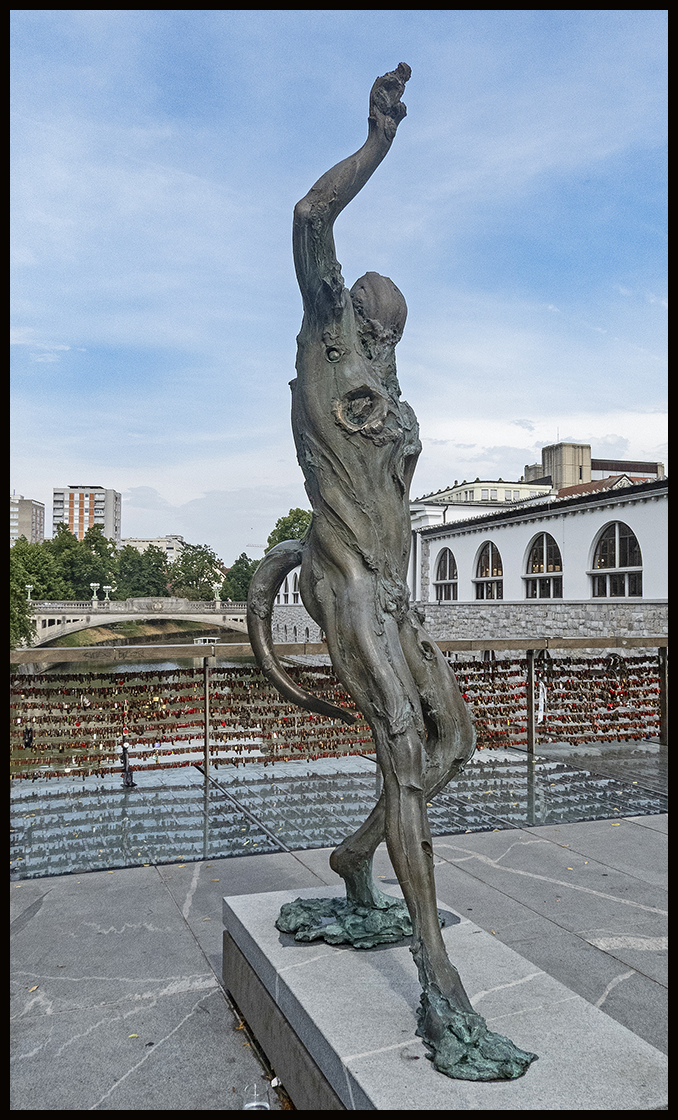
Satan graces one bridge. Behind him are locks fastened to the railings. They are put there by couples declaring their love “forever”.
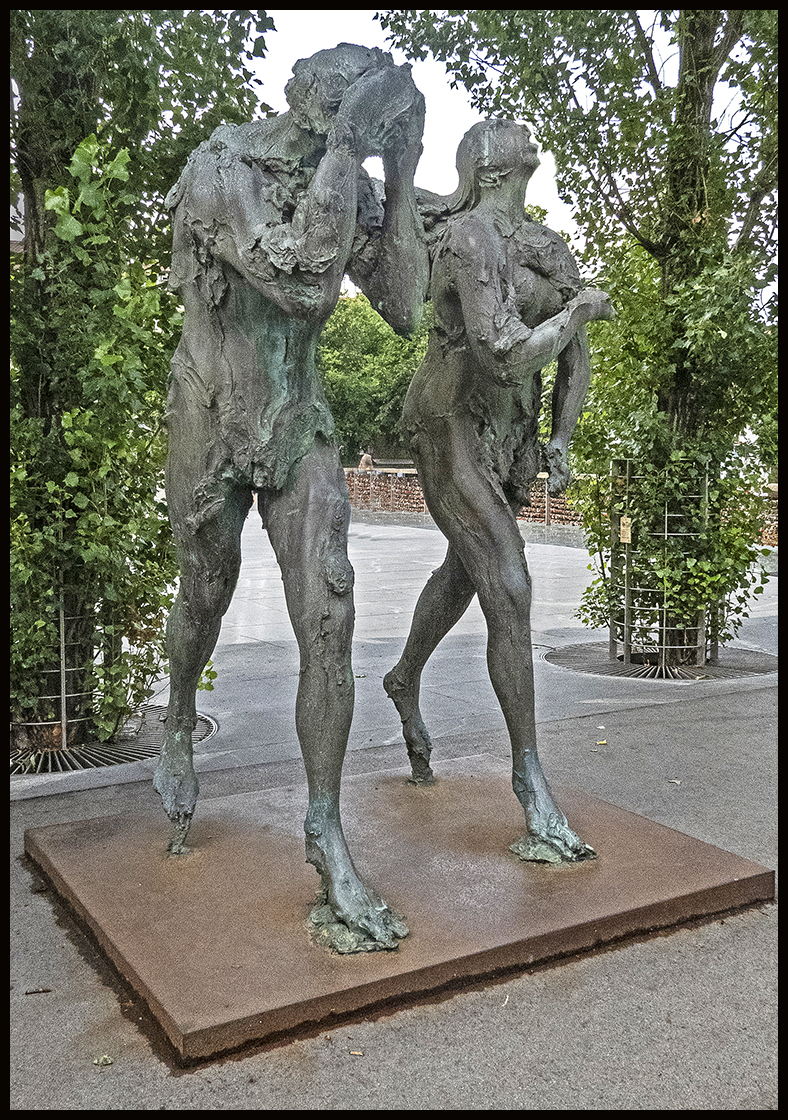
Adam and Eve scream as they are cast out of Eden.
There were designated streets for various craftsman’s guilds. One has a locksmith’s insignia at he entrance to a small, dark alley. There are no locksmiths there now. A lined drain down the middle of the lane is filled with strange distorted faces.
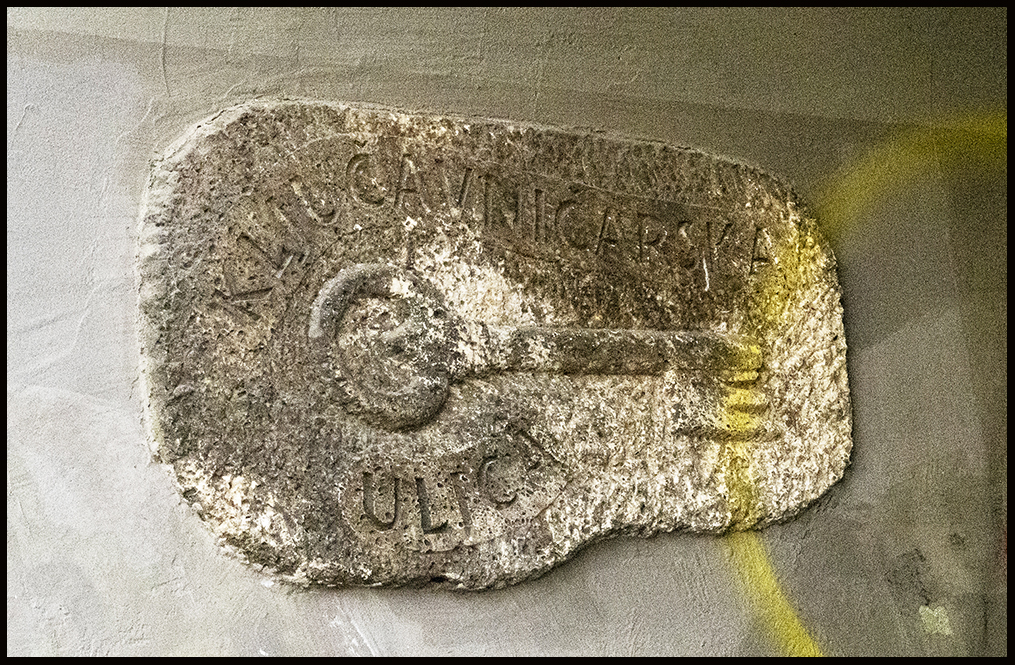
Locksmith Lane sign
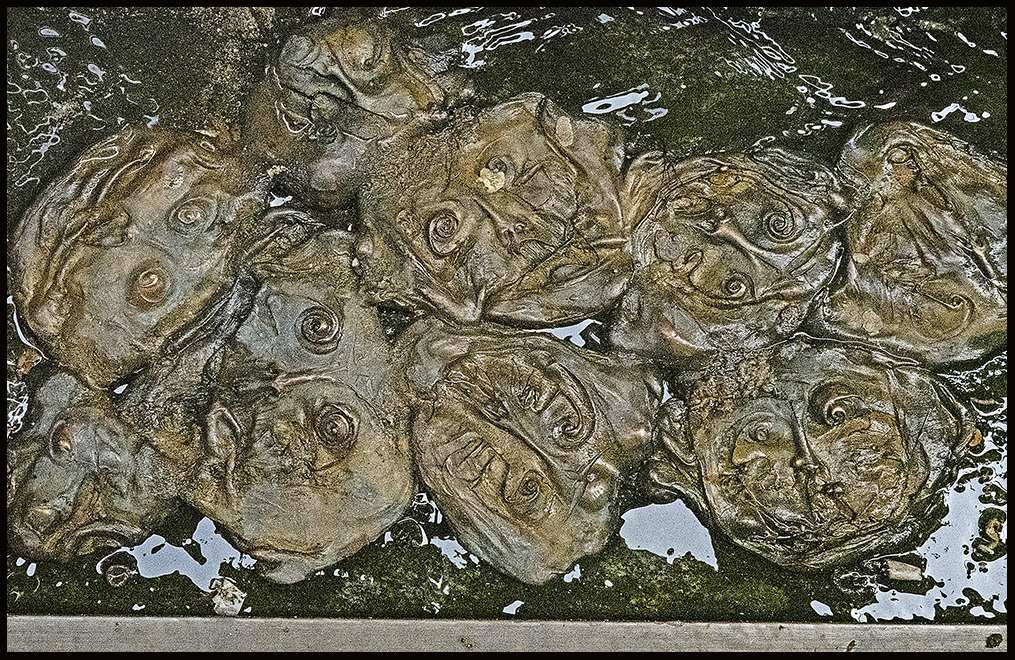
Strange faces in the lane’s drainage channel.
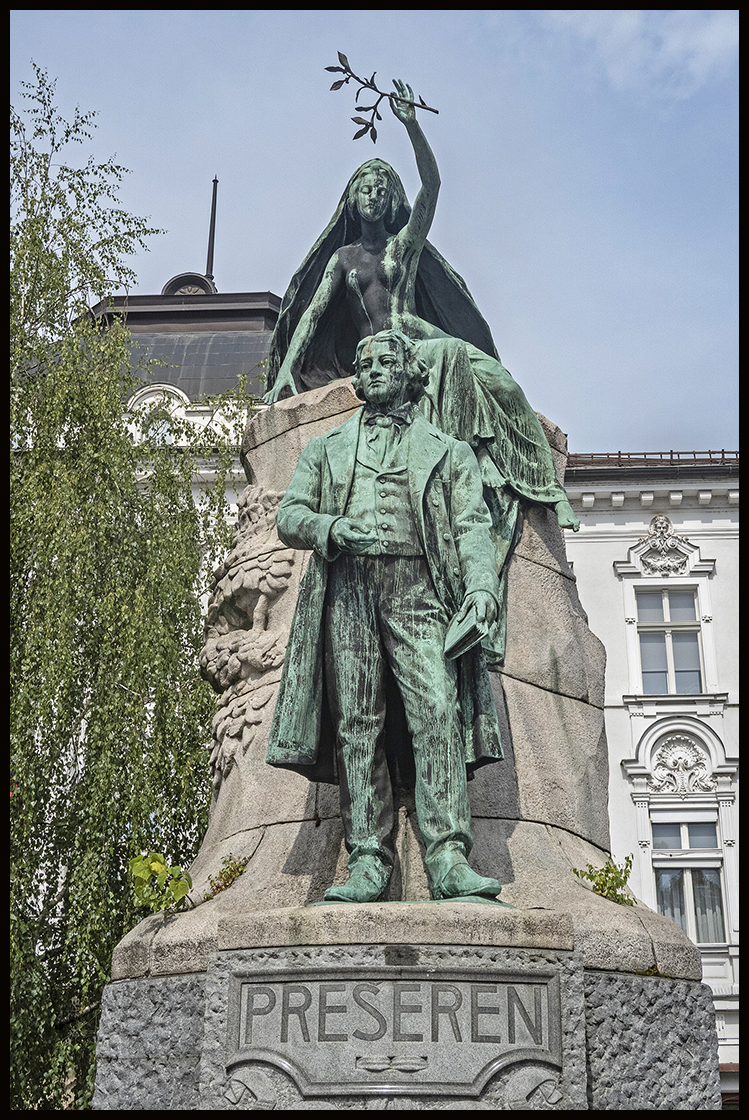
There are several main squares in the area. One features a statue that was considered blasphemy to a local priest. Her uncovered breasts were visible to him. Mon Dieu! A tree planted there solved the problem. He would no longer be affronted looking out his window.
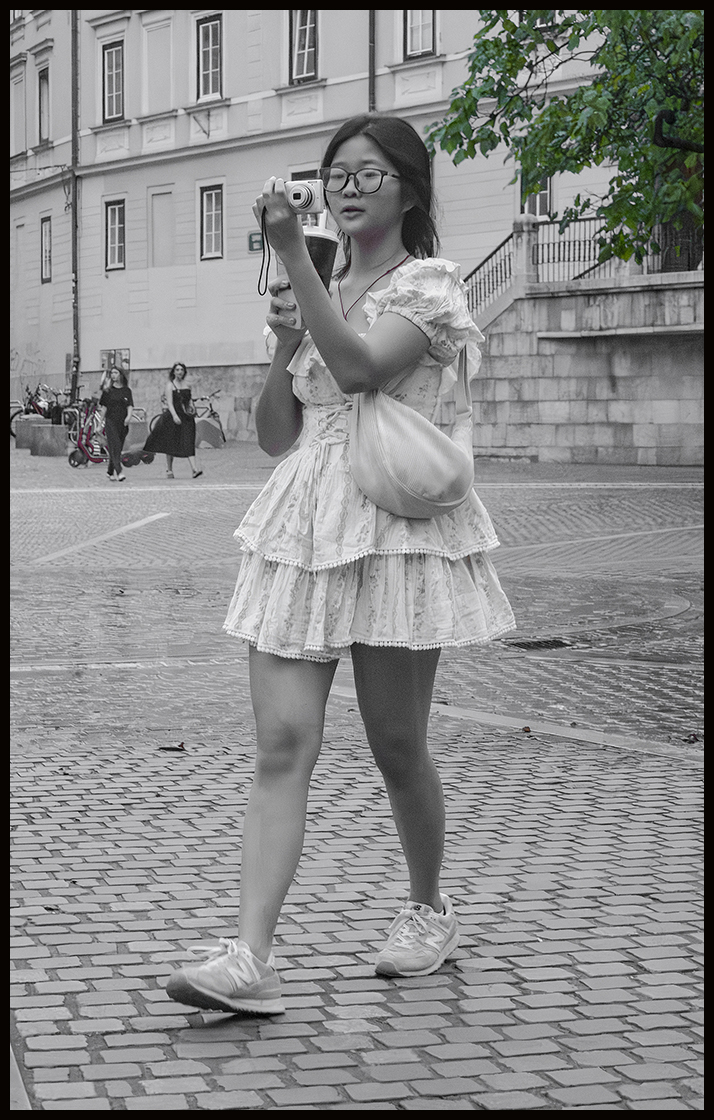
Typical tourist
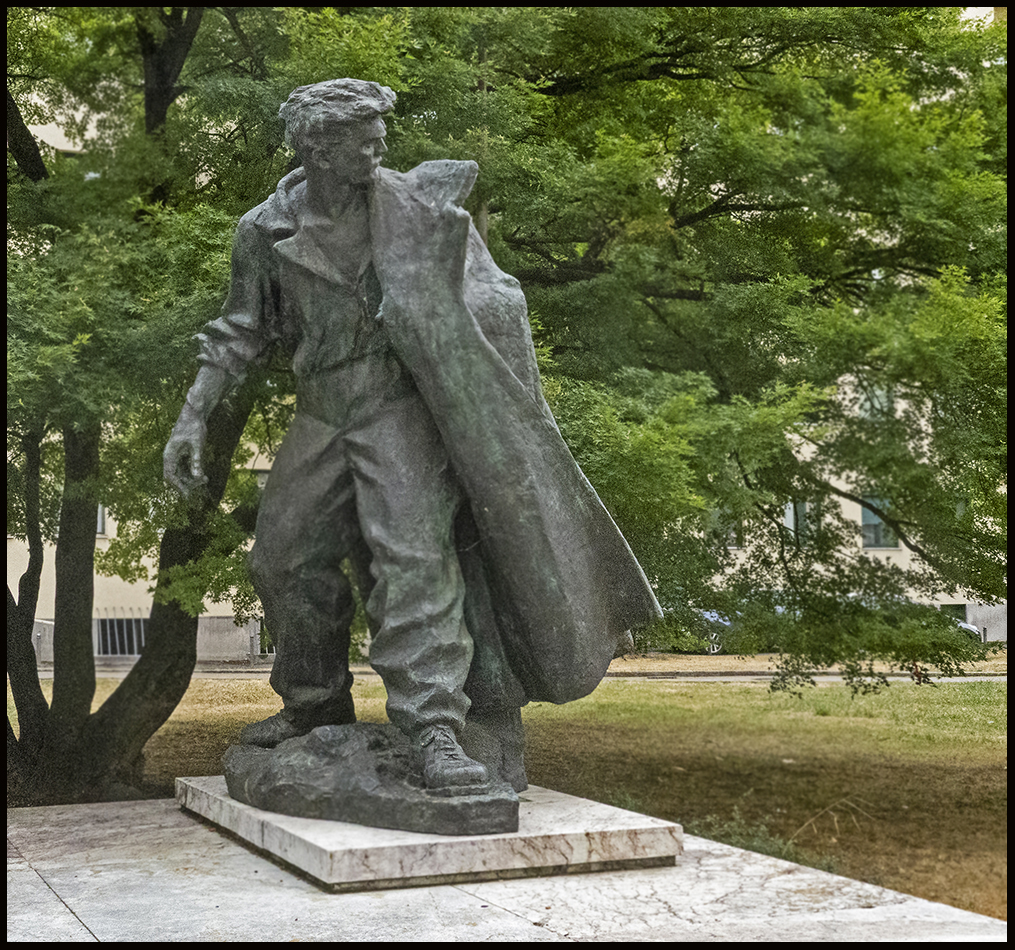
A furtive looking fellow we passed each time we returned to our hotel.
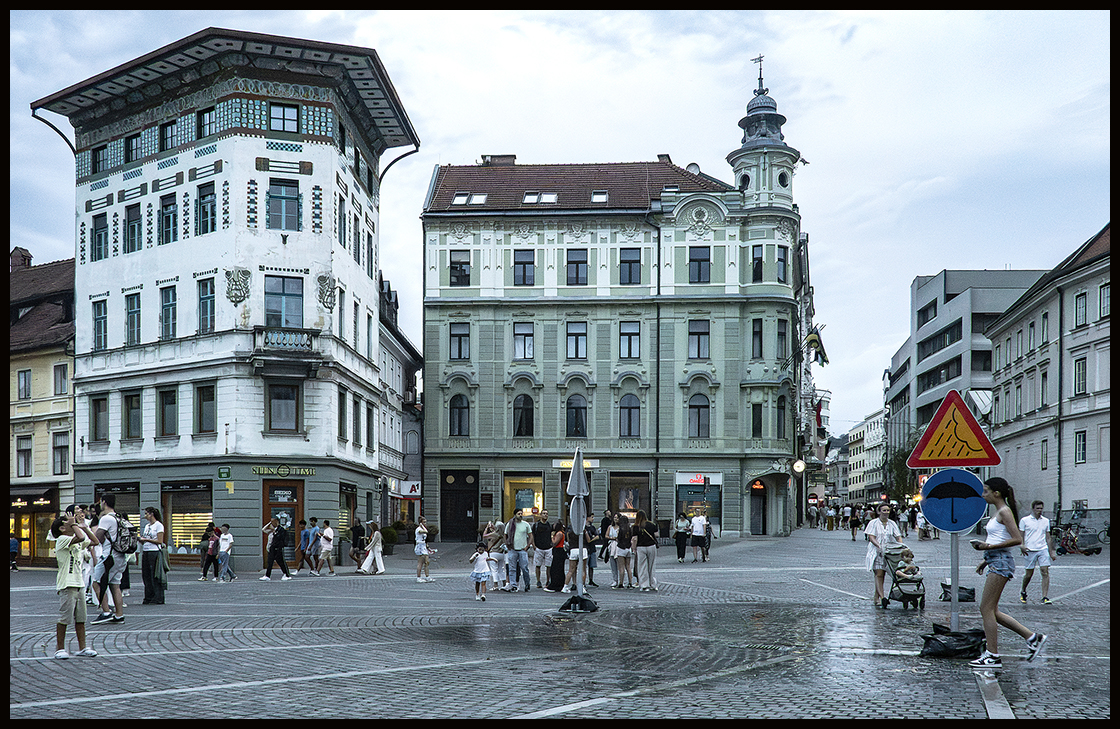
One large square had a water feature in the center. Perhaps for cooling off on hot days?
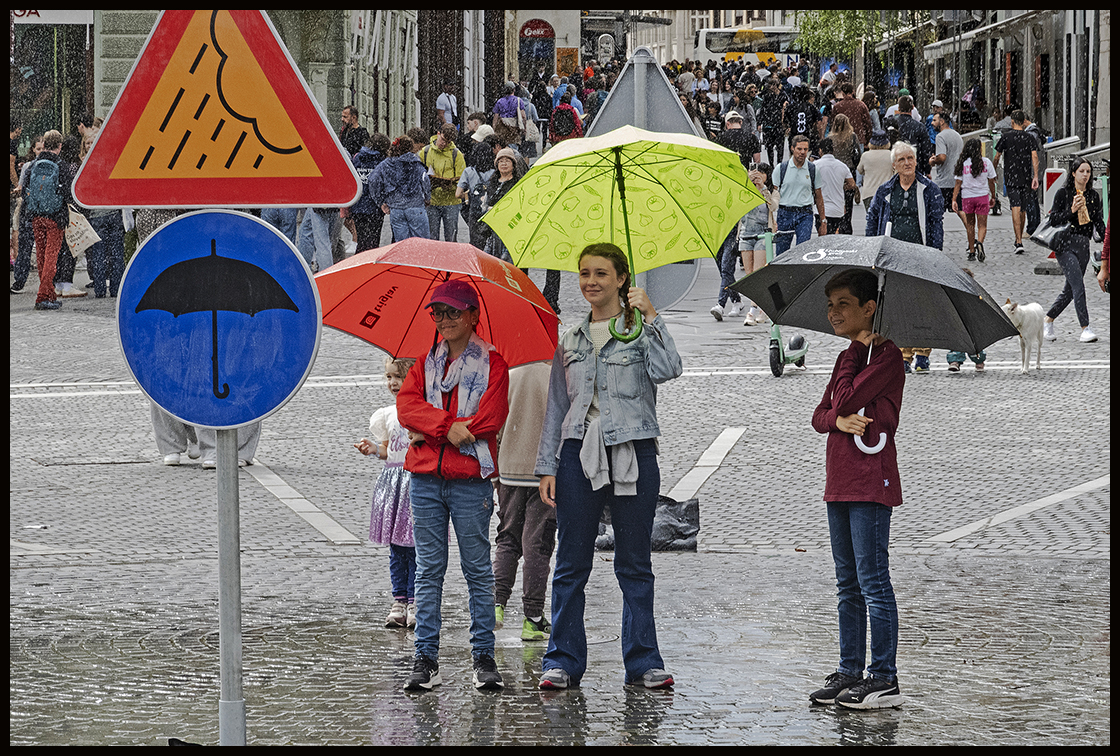
Closer view of the fake showers. You see there are many tourists in town, but few Americans.
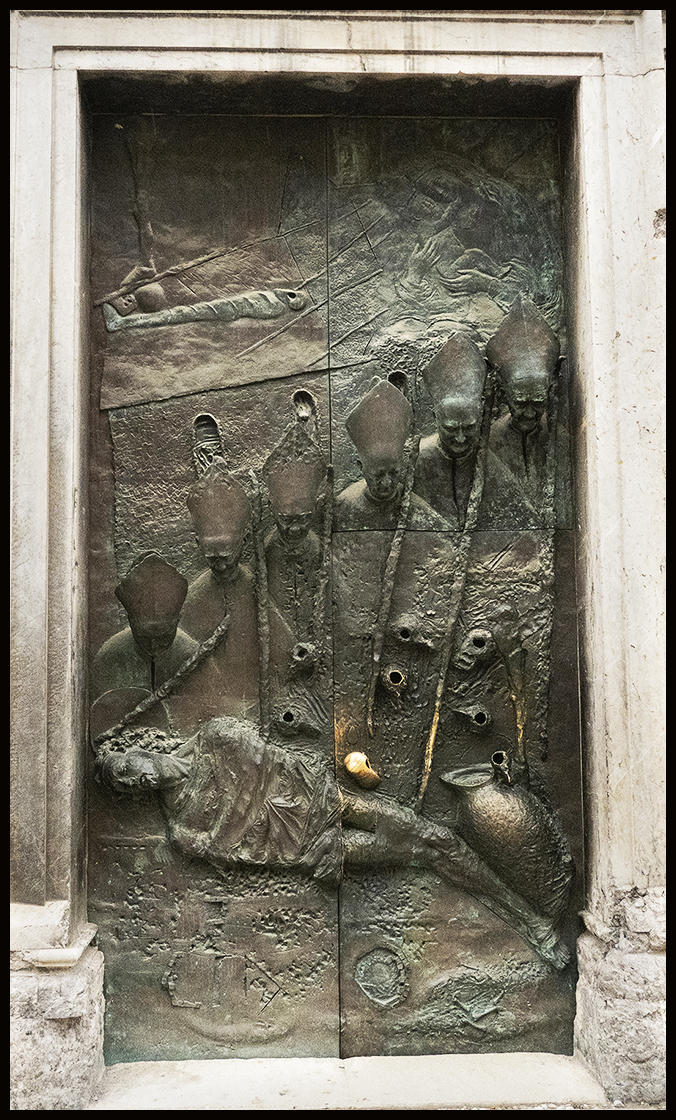
A disturbing sculpted door.
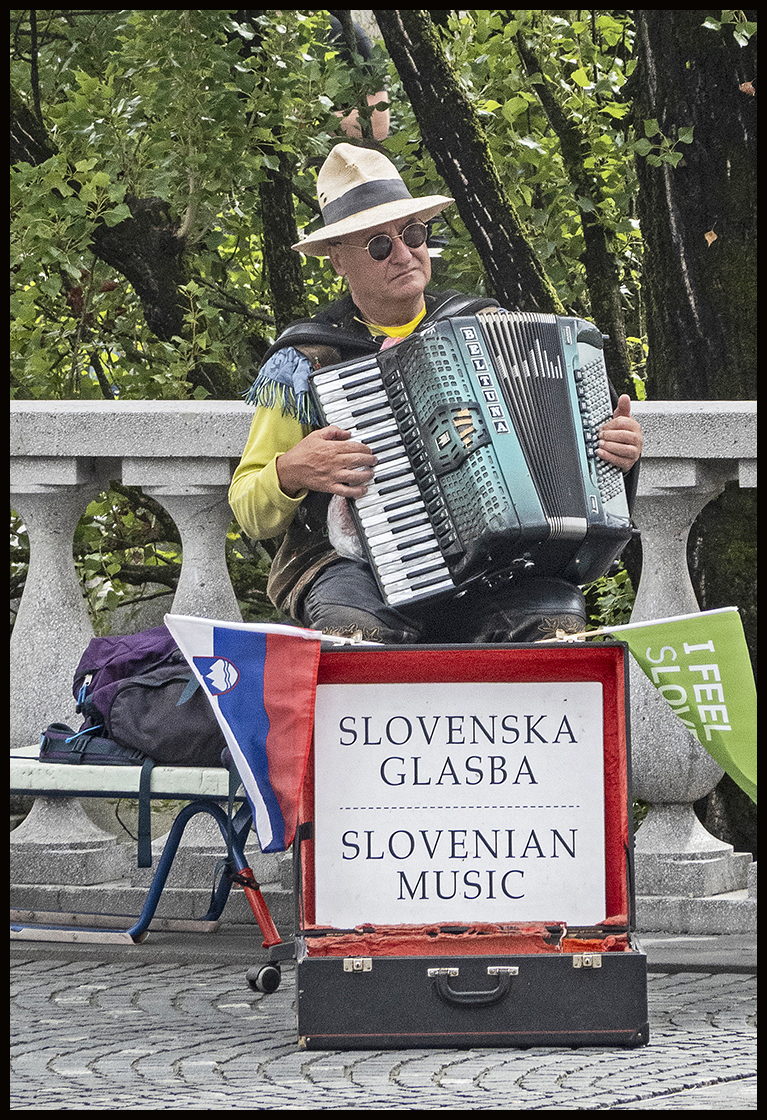
Busker on the square
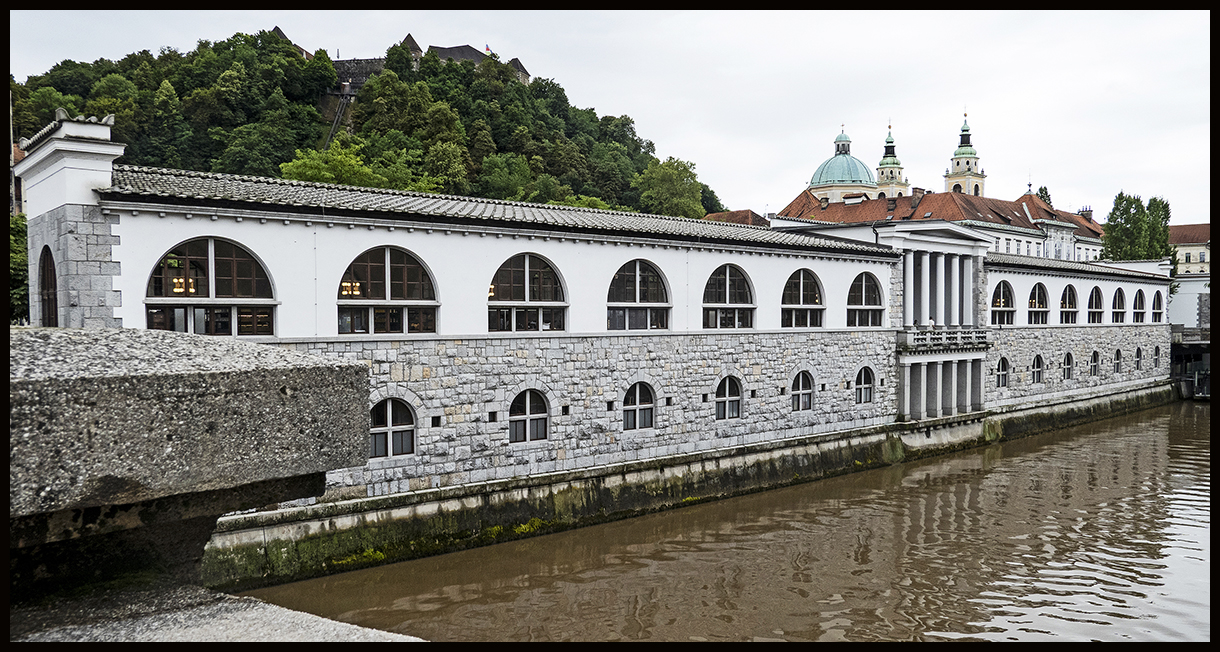
An indoor market building fronts the river…
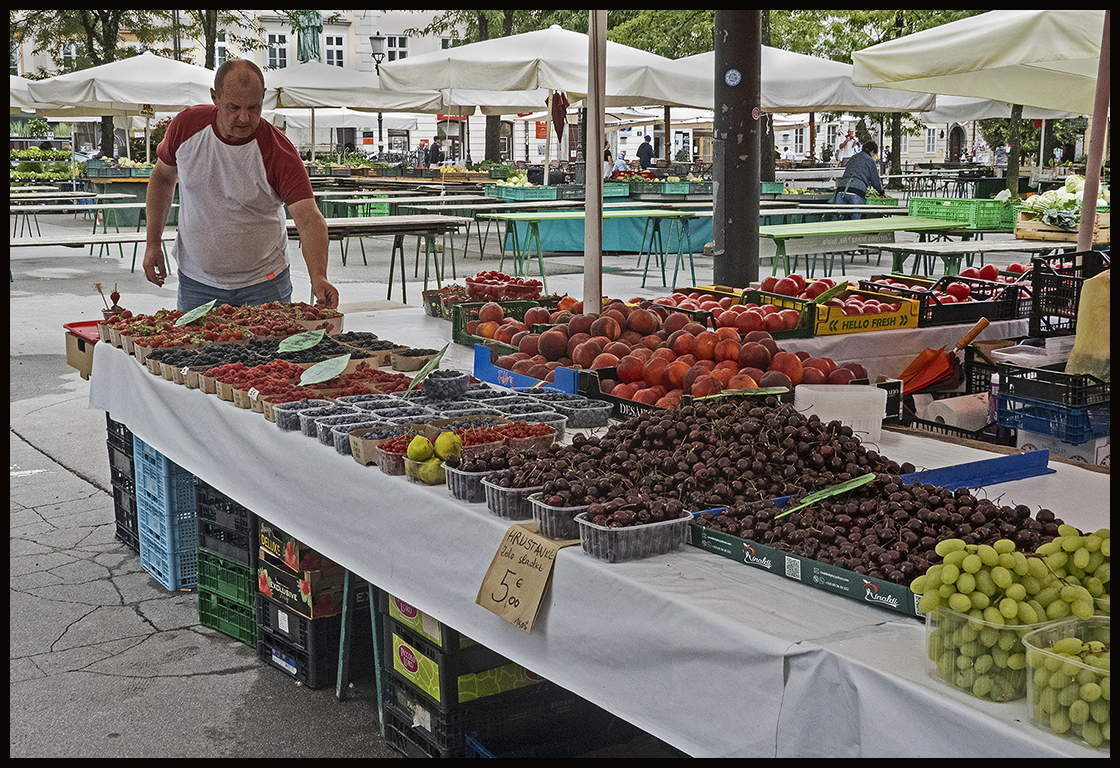
…and behind is the outdoor market. Very busy until it starts to rain….
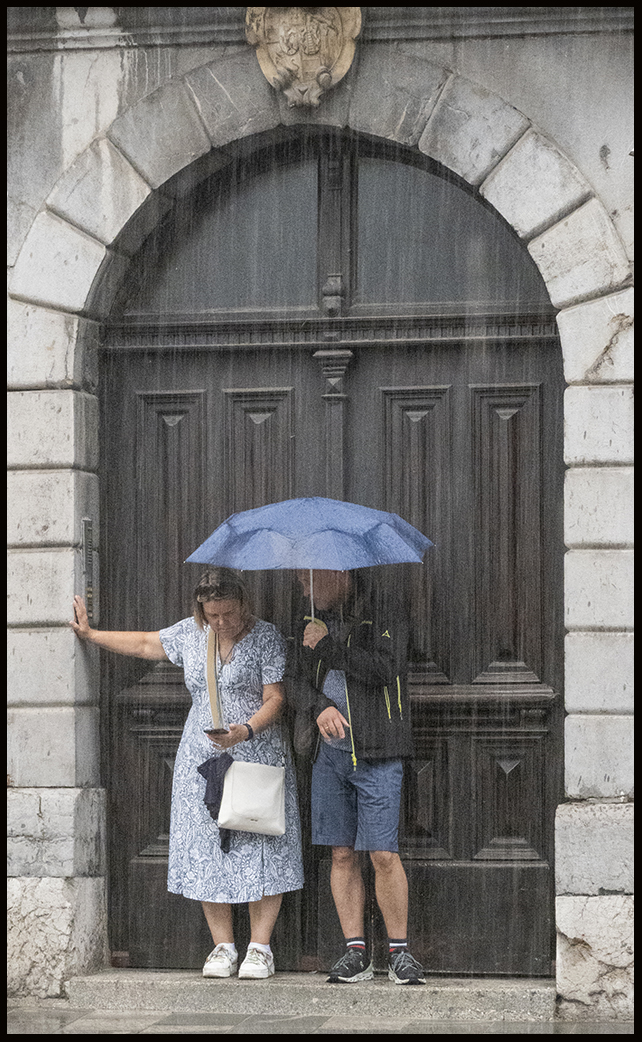
…and it does occasionally pour.
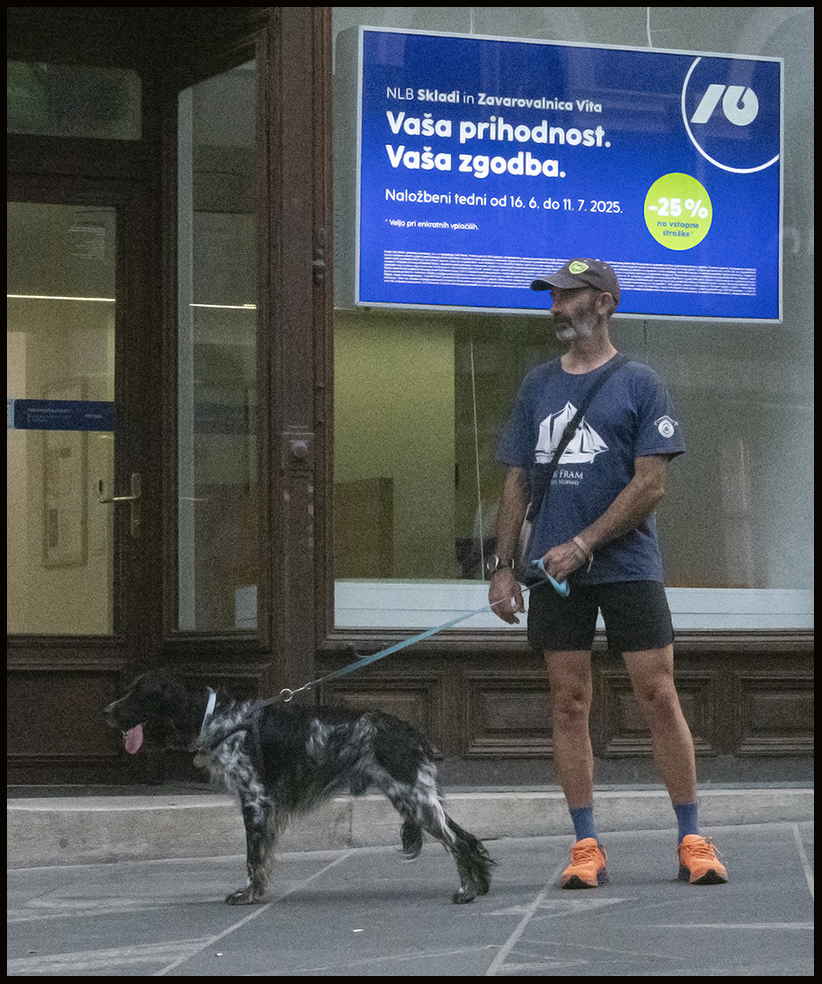
This is the first city we have seen people out with their dogs.
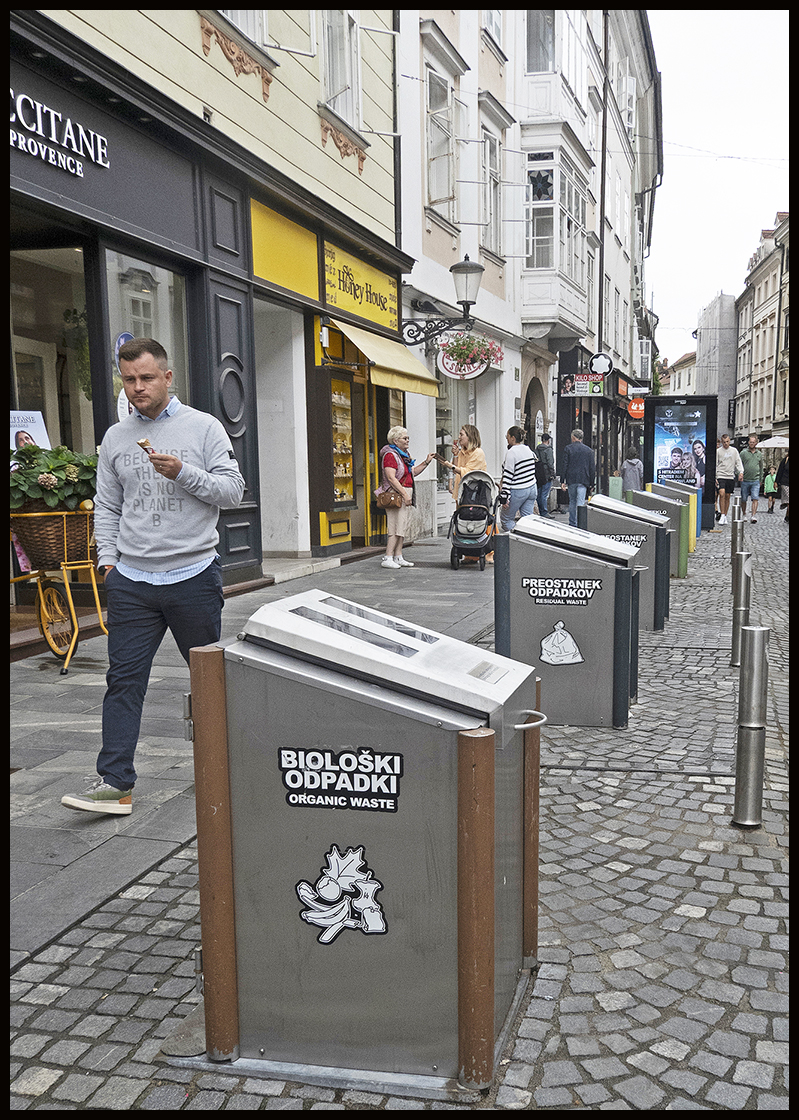
Street-side recycling program.
One of the cleverest recycling ideas we have seen. These above ground bins are conscientiously used by the public, leaving the streets very tidy. Under the street are large collection dumpsters.
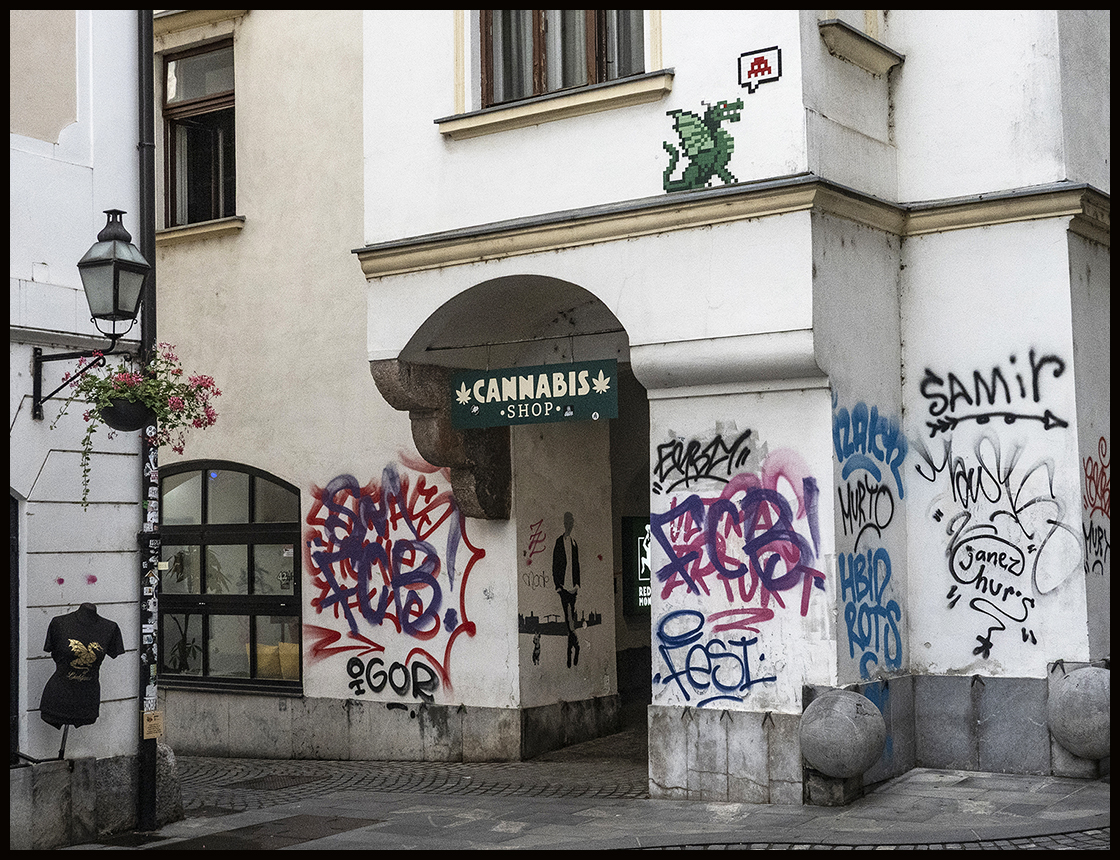
And look what else they have here.
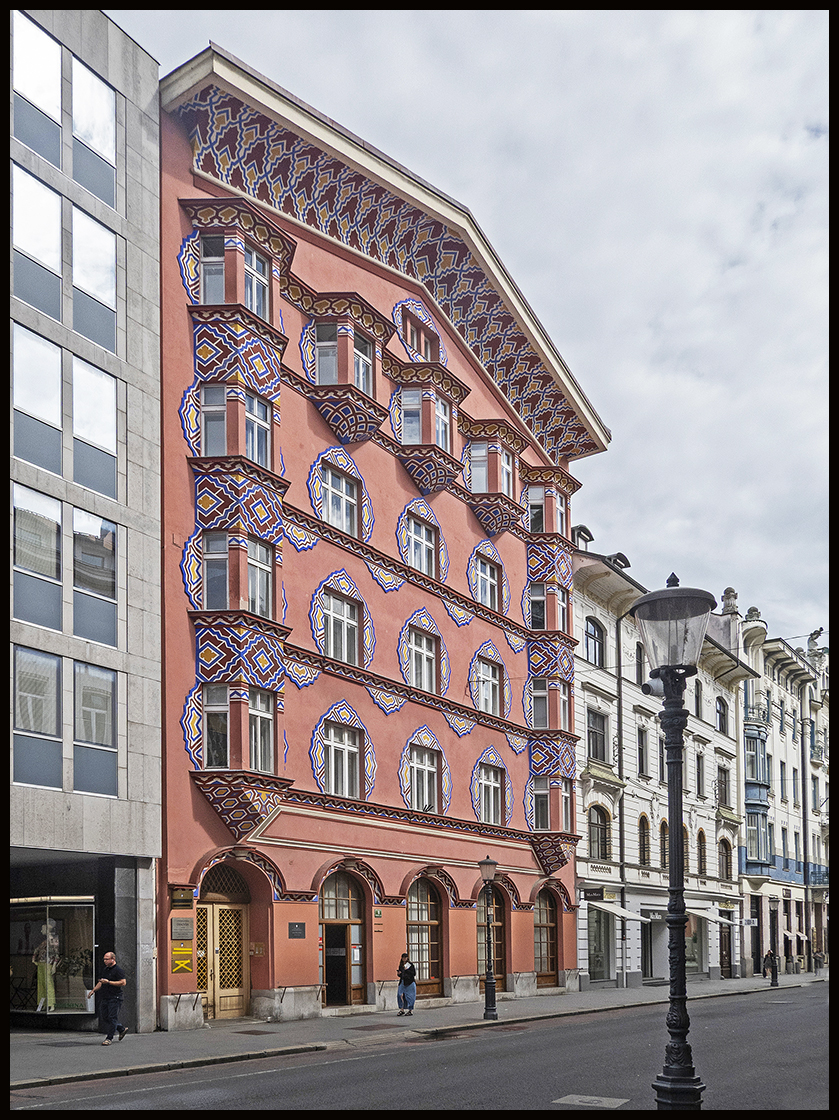
Colorful, artistic building, and…

…another with a tropical mural.
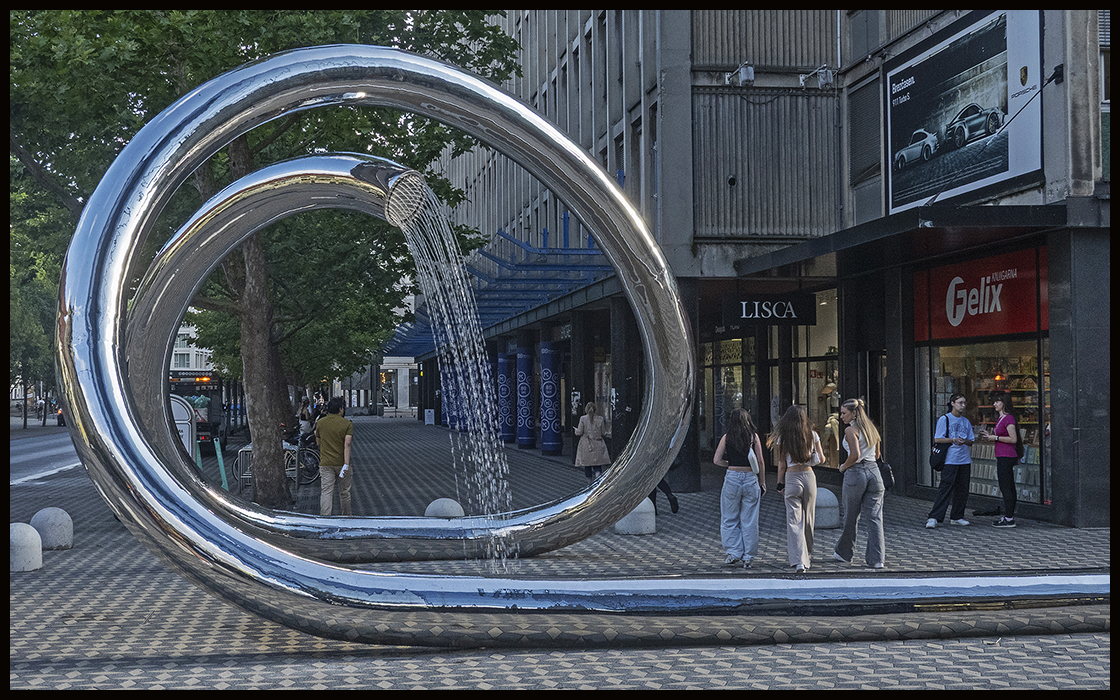
Along a main street leading to the old town area is a clever sculpture with cooling water.
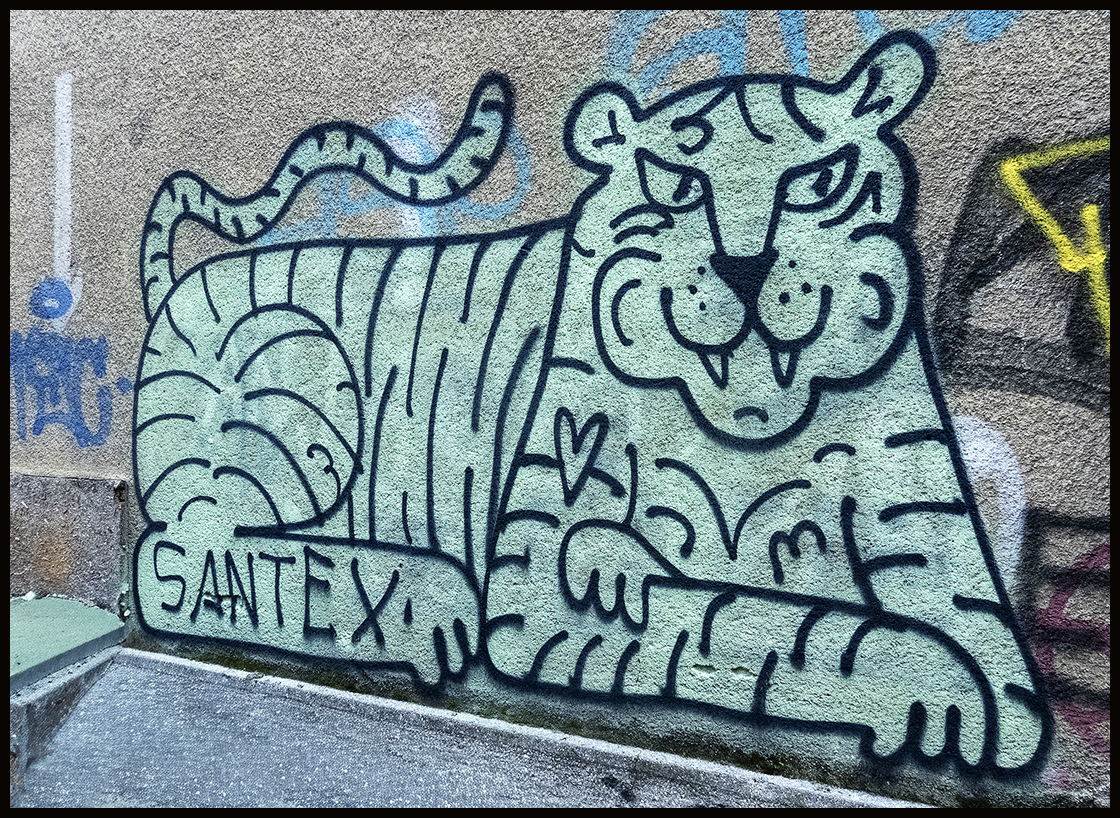
This is a signature graffiti artist’s work. This same cat was found all over town.

At the end of this street we found a taco shop serving the best fish tacos ever…and we are connoisseurs of fish tacos.
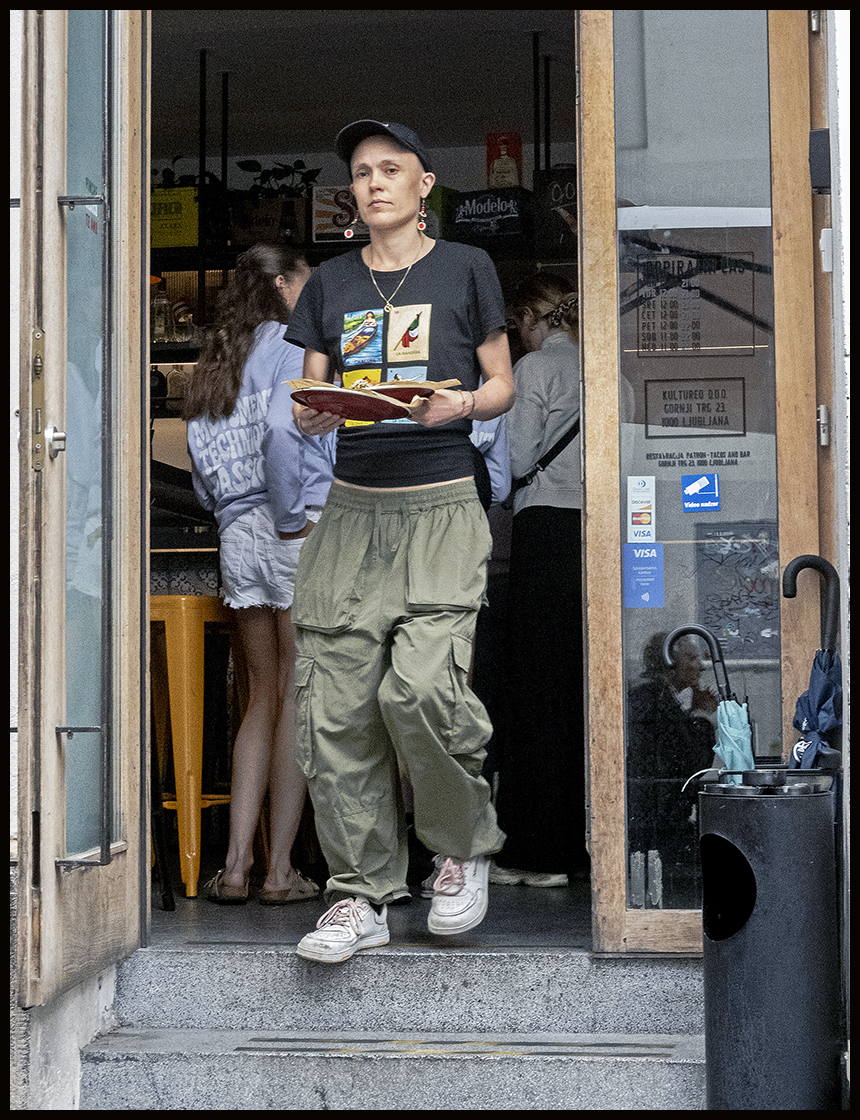
Here she comes with our tacos.
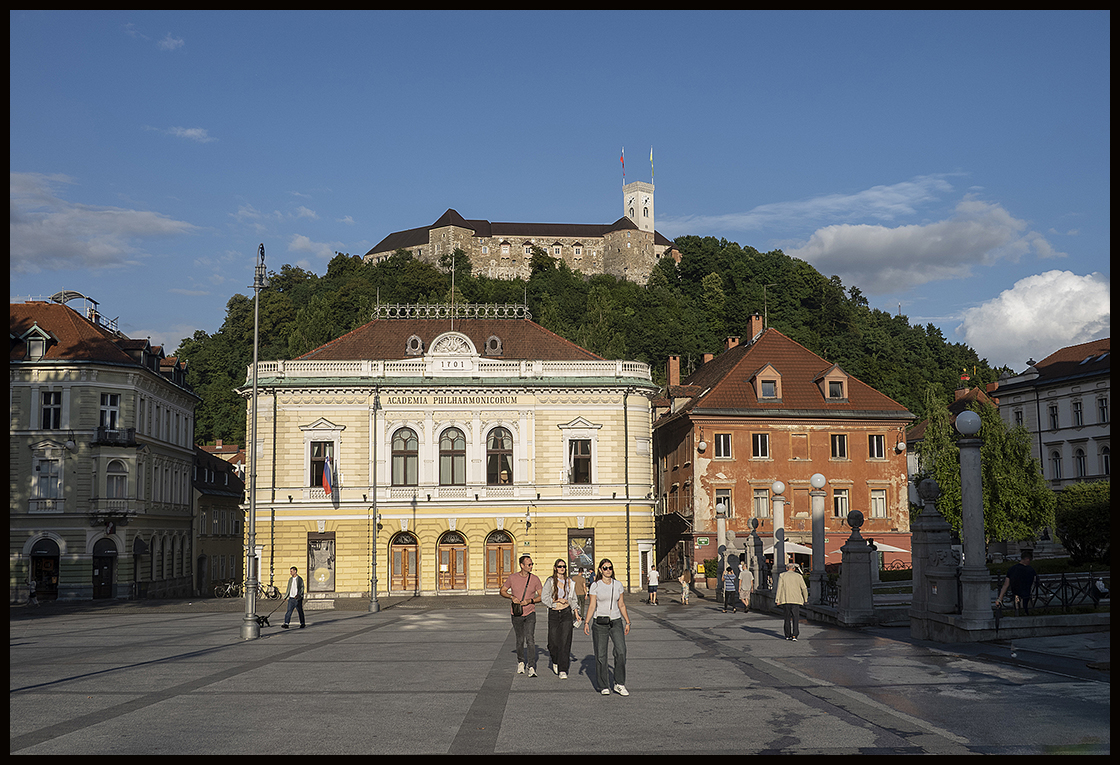
One more shot of the town with the castle above. Next day we leave to visit Bled
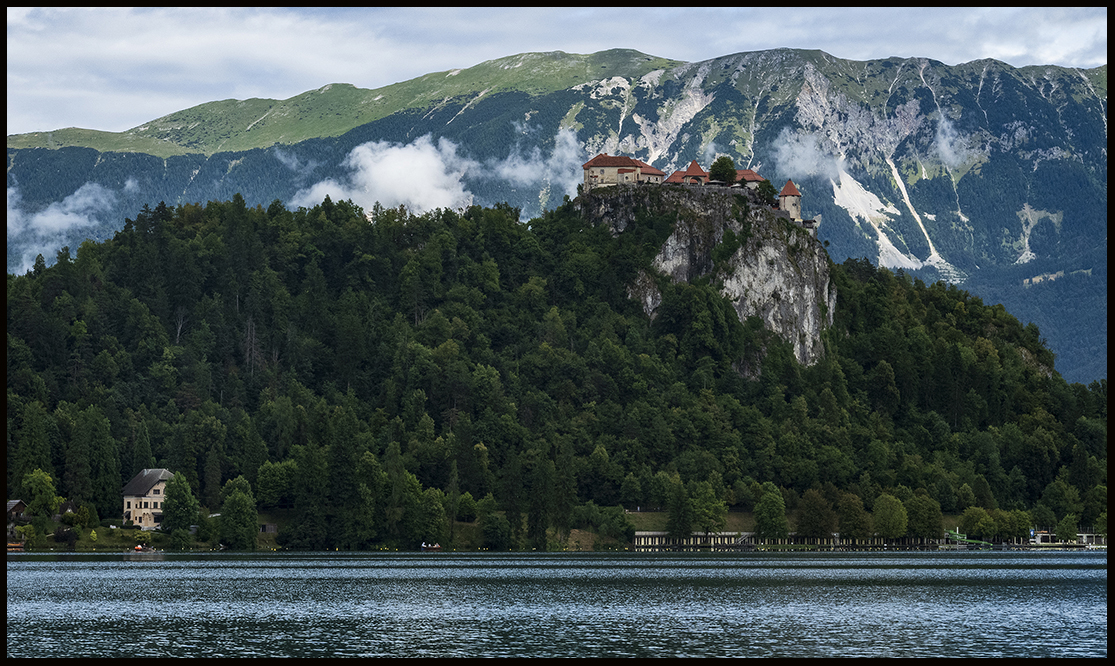
Bled Castle on the ridge
BLED CASTLE:
The castle was located at a strategic spot at the end of the easiest passage through the Alps to the south. Built high on an outcrop, it had a good view of invaders from any direction.
In 1004, a German king gave the estate of Bled to a Bishop in gratitude for his support in solidifying German rule in northern Italy. In 1371, the Bishops of Brixen gave up the direct administration of the Bled estate and leased it to Konrad von Kreigh. The Kreigh family ruled Bled for nearly 200 years.
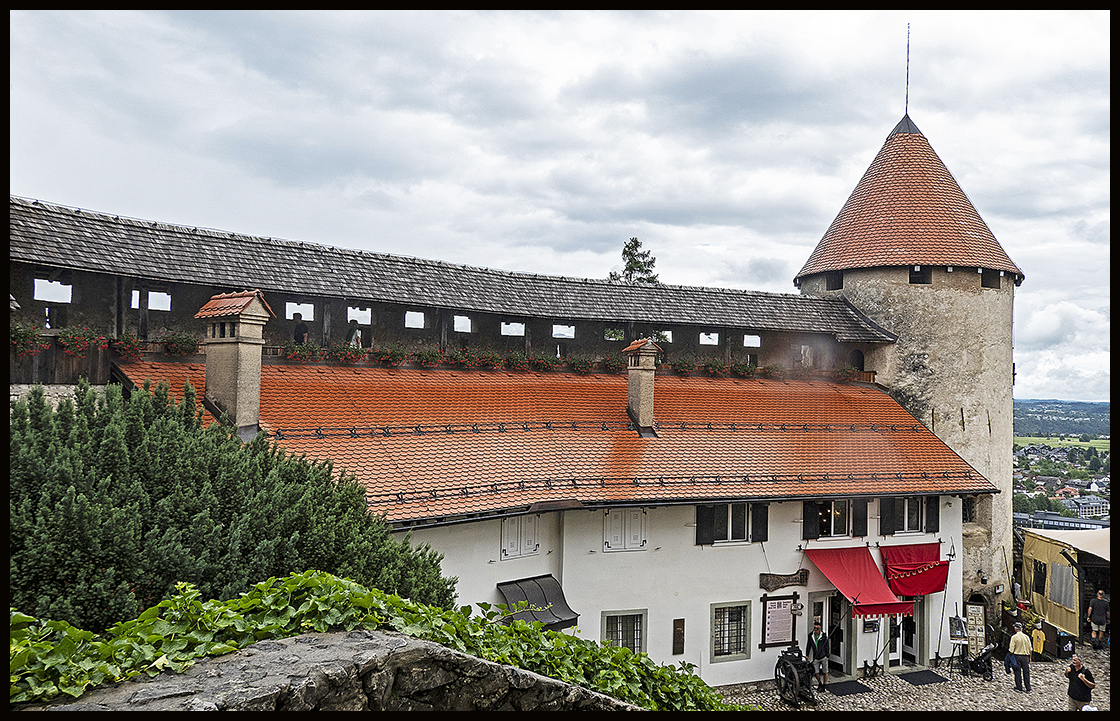
Bled castle view
An earthquake in 1509 damaged the castle. In fear the castle might collapse, the residents left. The damage was not fully repaired for many years. The first Slavic families started arriving at Bled in the mid-1600’s and found work as feudal serfs. Some lived on the castle grounds. The castle was struck by lightning several times, causing extensive fires. In 1690 there was another earthquake and it was again slowly repaired.
In 1803 Bled castle was nationalized by decree from the Viennese court commission. But then, in 1809, oops, Napoleon occupied the area and it was owned by the French for a while.
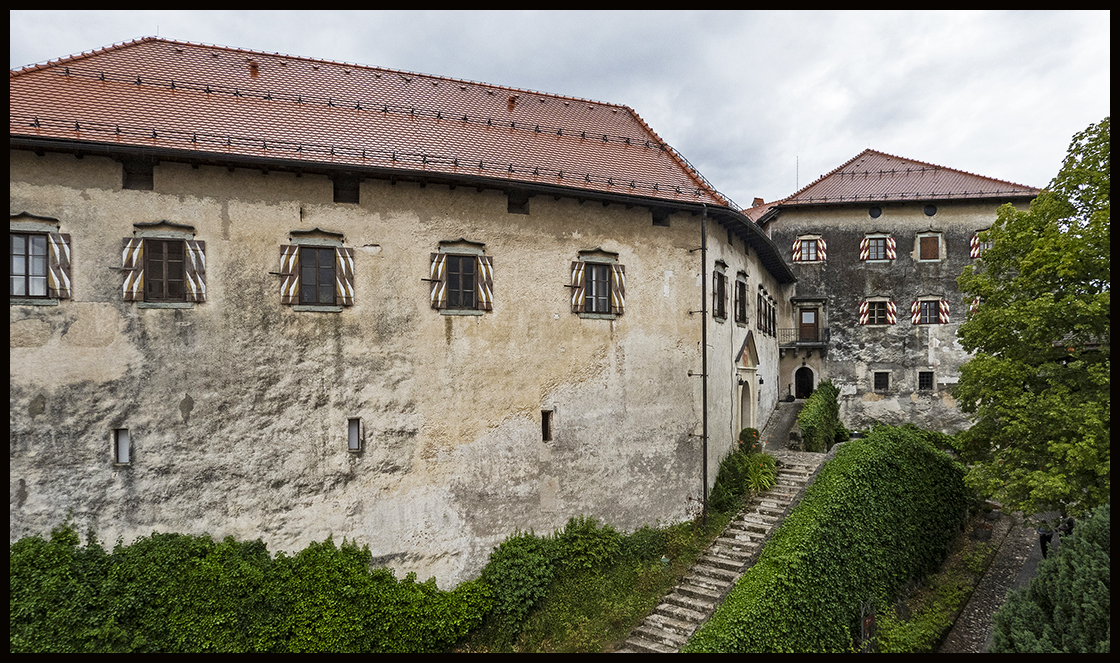
After the French left, and following the abolition of the feudal system, the state was unable to maintain the property and was forced to sell. After the Second World War, Bled Castle began to deteriorate. A thorough restoration began in 1952. The restoration was completed in 1961. Finally, Bled Castle was declared a national cultural monument in 1999. Today it is a national treasure and a tourist destination.
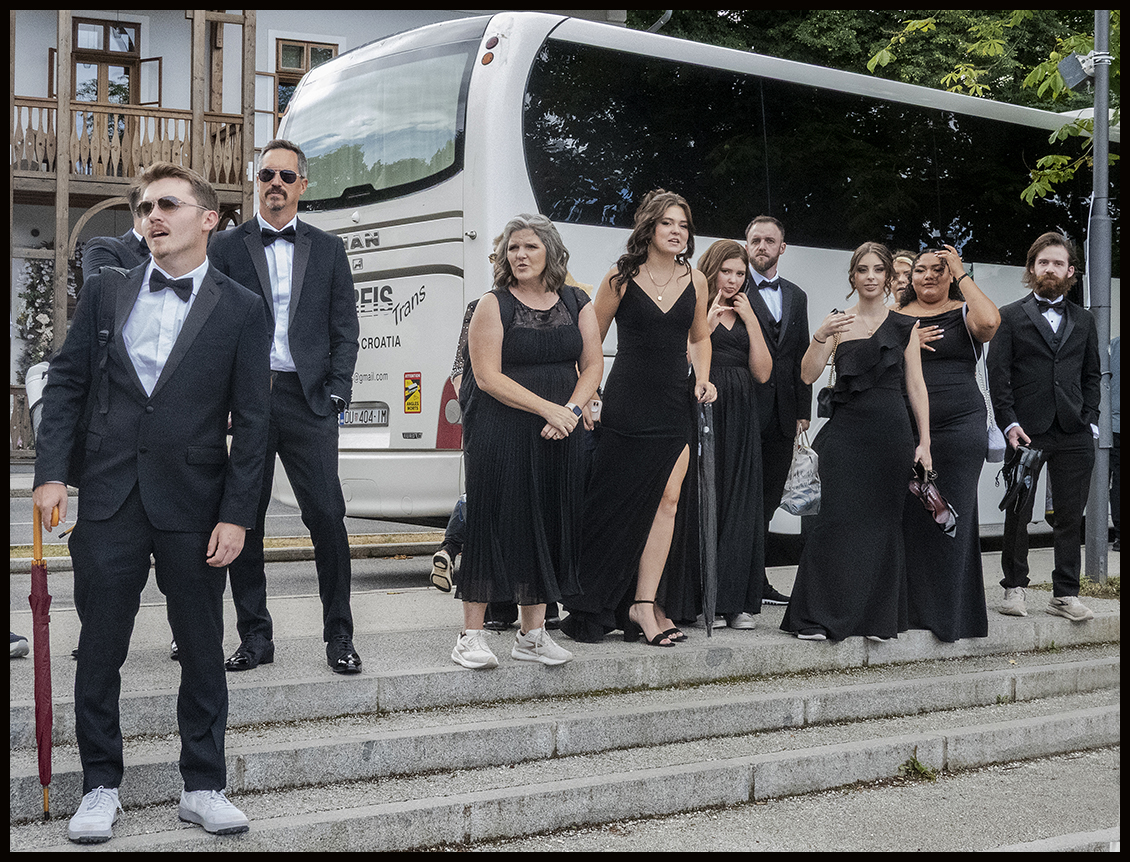
A wedding party in black, getting ready for a ceremony at the church on the island in Lake Bled.
The valley was glaciated until the end of the last ice age, 14,000 years ago. Its retreat left the lake with a small island in the middle. (see feature image at top also)
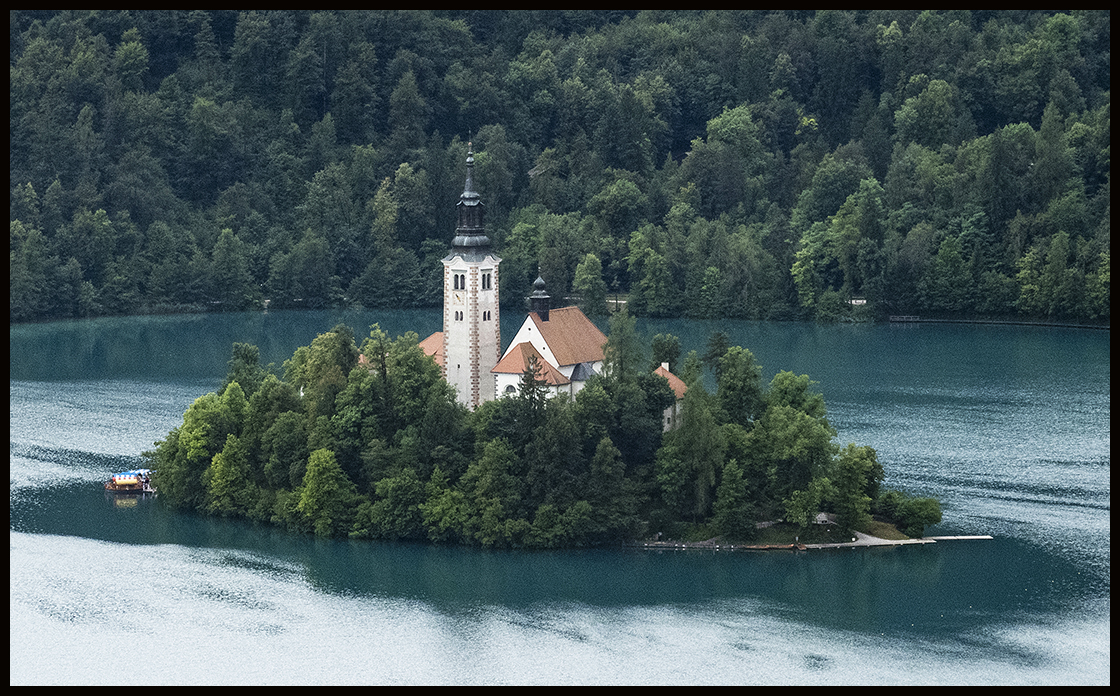
The Church of the Assumption of Mary, is a 17th-century Baroque church built on the island.
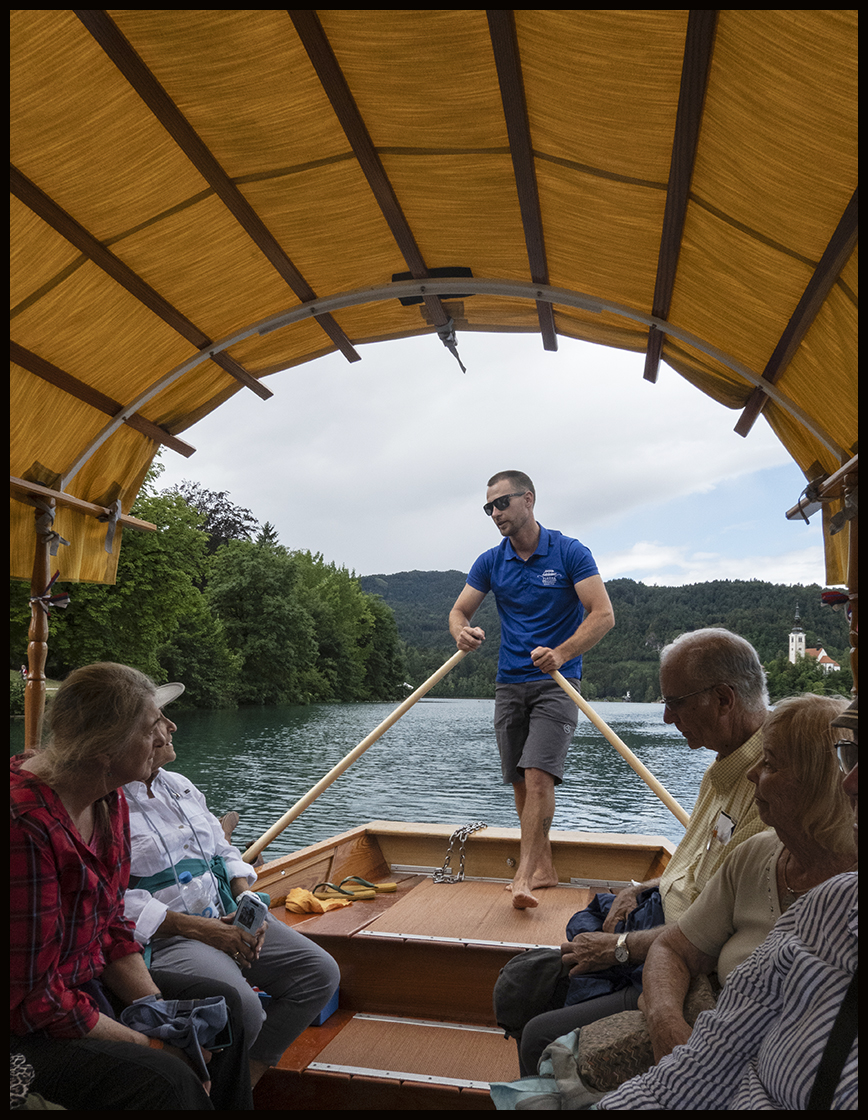
Pletnas (boats) and their owners ferry tourists to the island in the middle of Lake Bled.
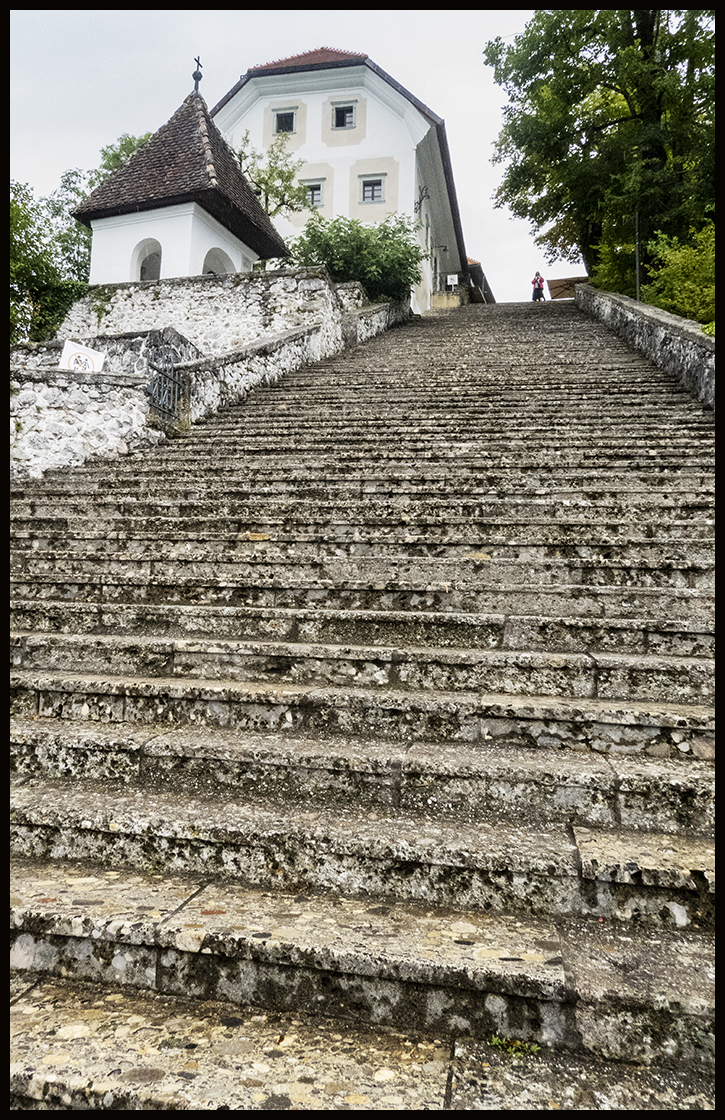
The first obstacle after arriving on the island is a formidable 99 step staircase.
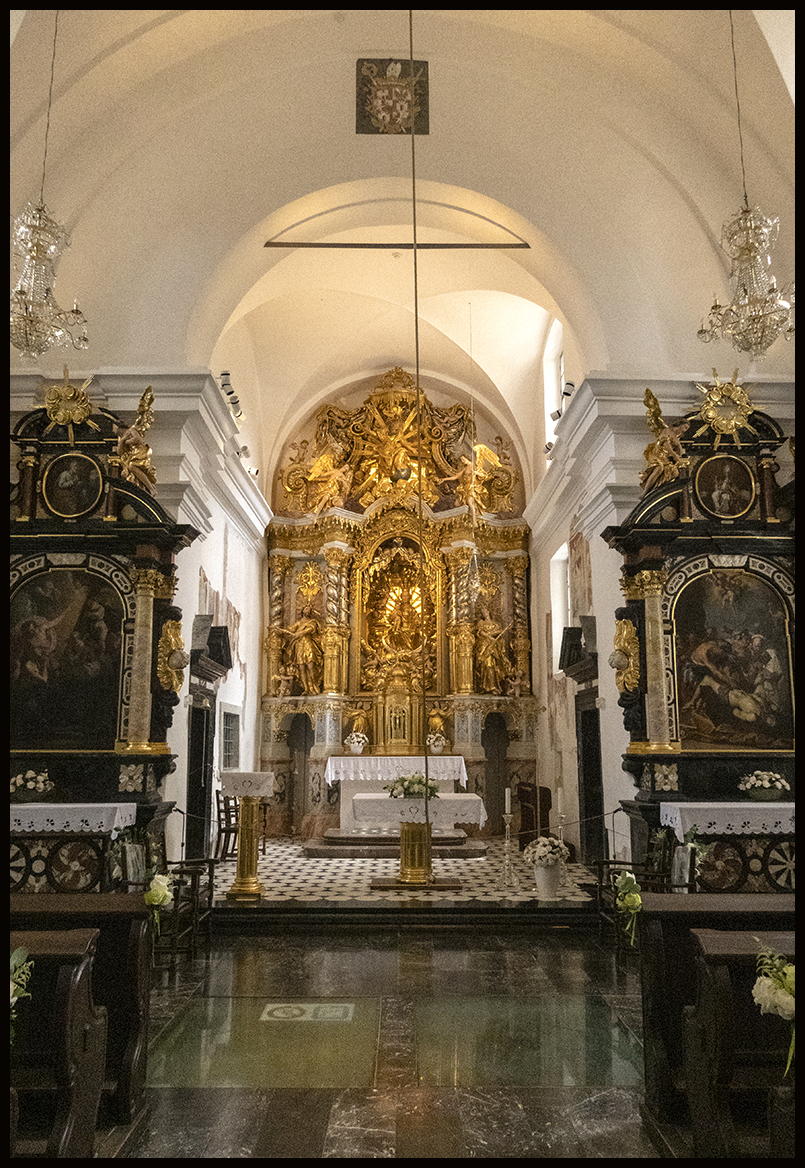
Interior of the church on Bled Island.
The clock in the bell tower is an engineering marvel from the 1800’s. A huge pendulum turns huge cogs to the advance the clock. It chimes every 15 minutes on its own or whenever someone in the church pulls the cord. Small people have a hard time getting the heavy bell to ring. If one does succeed, a wish is granted.
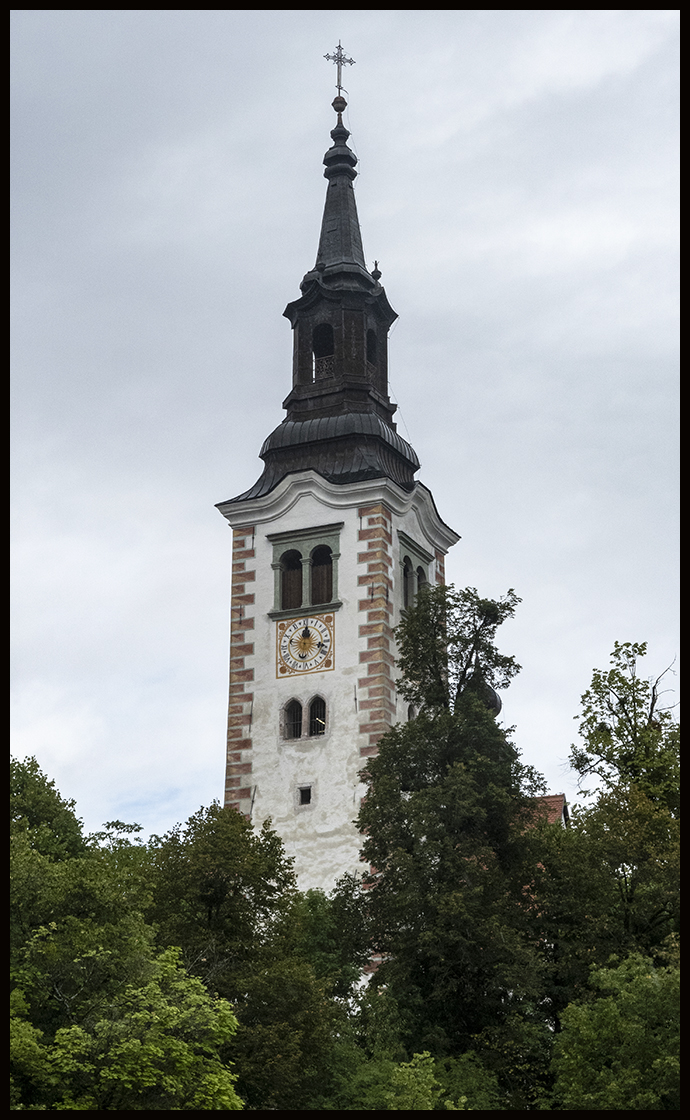
The 52-meter, free-standing bell tower.
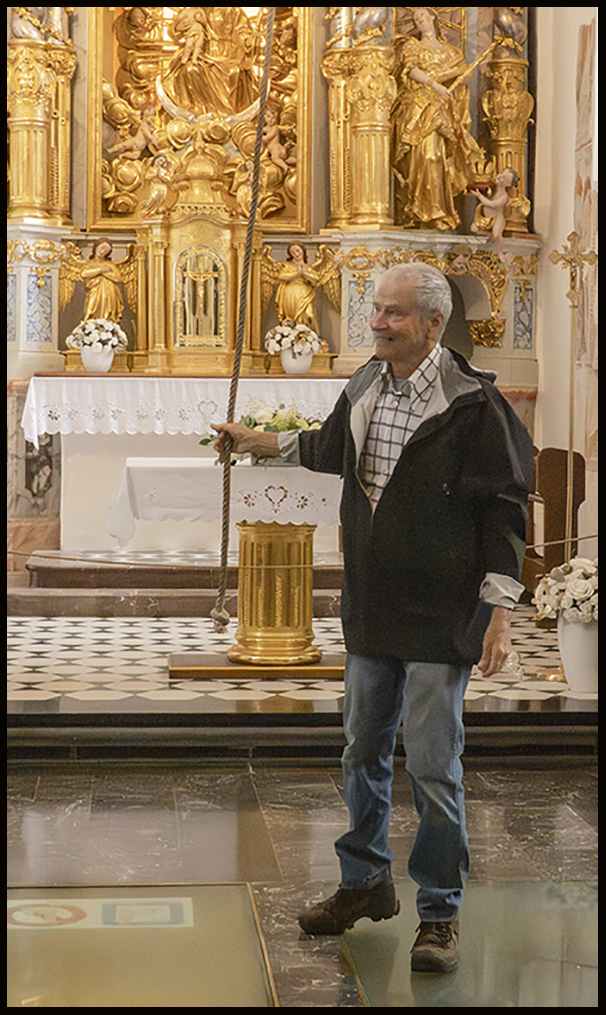
Craig demonstrates how to ring the bell.
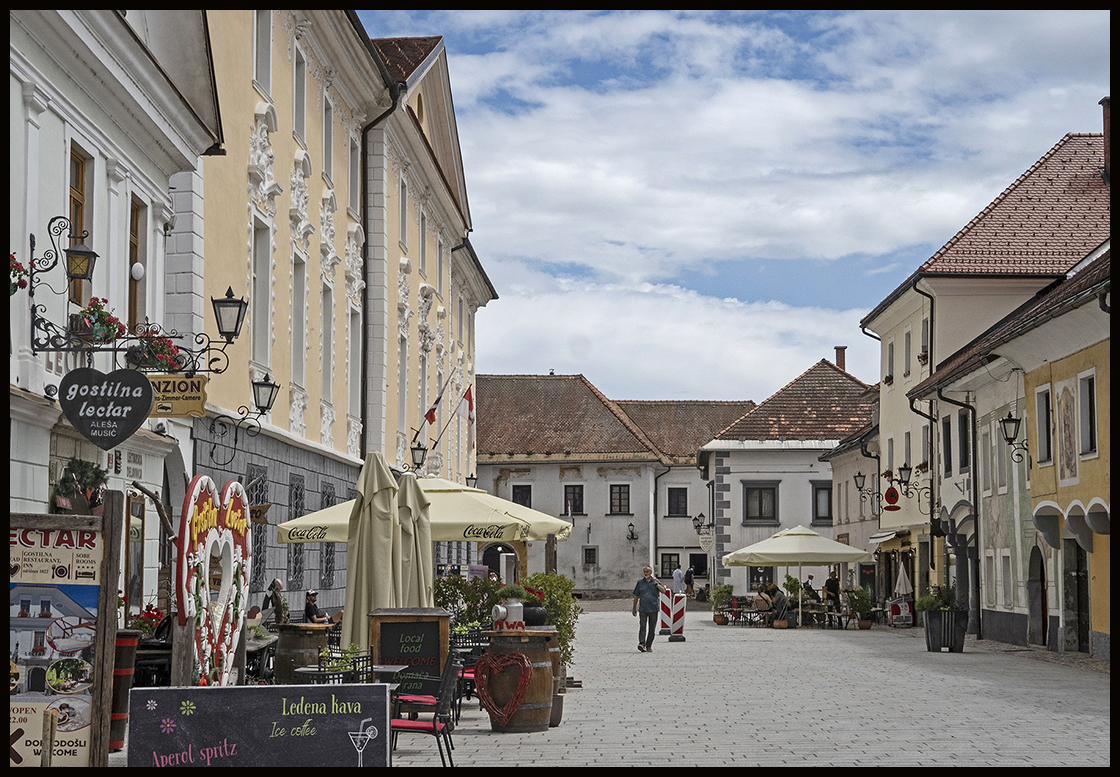
Leaving Bled we stop at Radovljica, a restored medieval walled city between Bled and Ljubljana.
The settlement at Radovljica, built around a church, was first mentioned in a 1296 deed. It was a walled city, but is walled no more. Seems people first built walls around their cities to repel invaders. Some left during the day to tend fields, but returned at night with the gates locked behind them. As the population grew, people and their animals moved to outside farms. Originally built with wooden roofs, when the town burned down, they replaced the roofs with tiles to be fireproof.
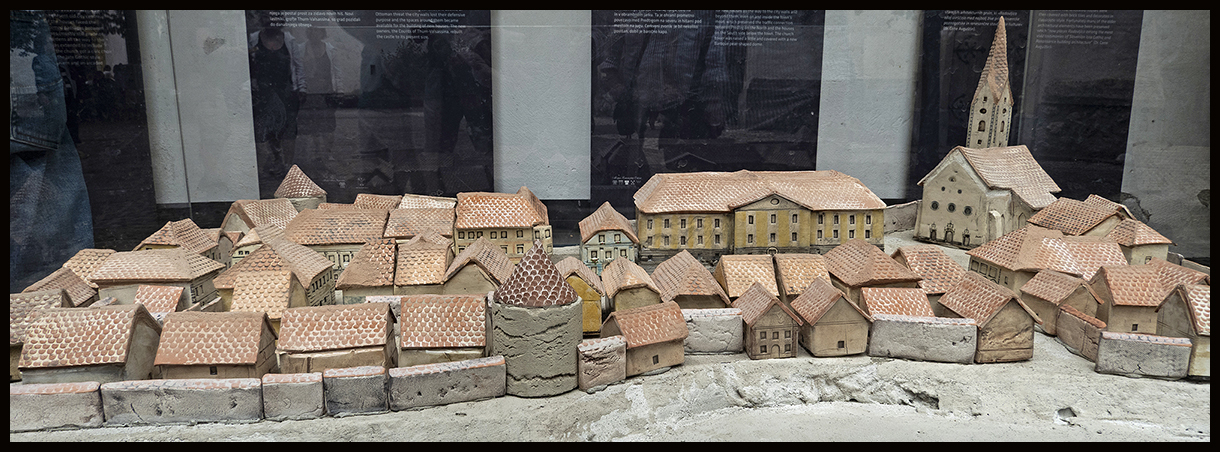
Clay rendering of the original town after tile roofs were added.
However, with more modern weaponry, the walls were no longer effective protection. People tore them down and offered the stones to residents to use for themselves. Some walls, like those surrounding Dubrovnik, Croatia, were too much trouble to take down, and other building materials more readily available, so they survive today.
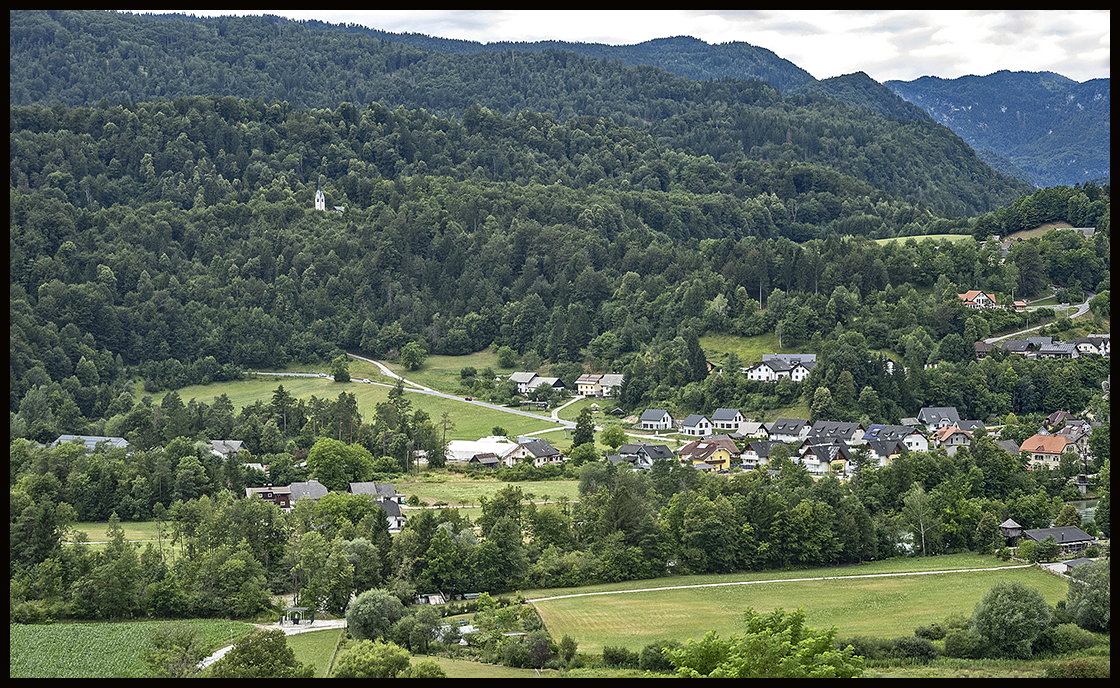
With more time it would be nice to visit the small villages and drive into their part of the Alps.
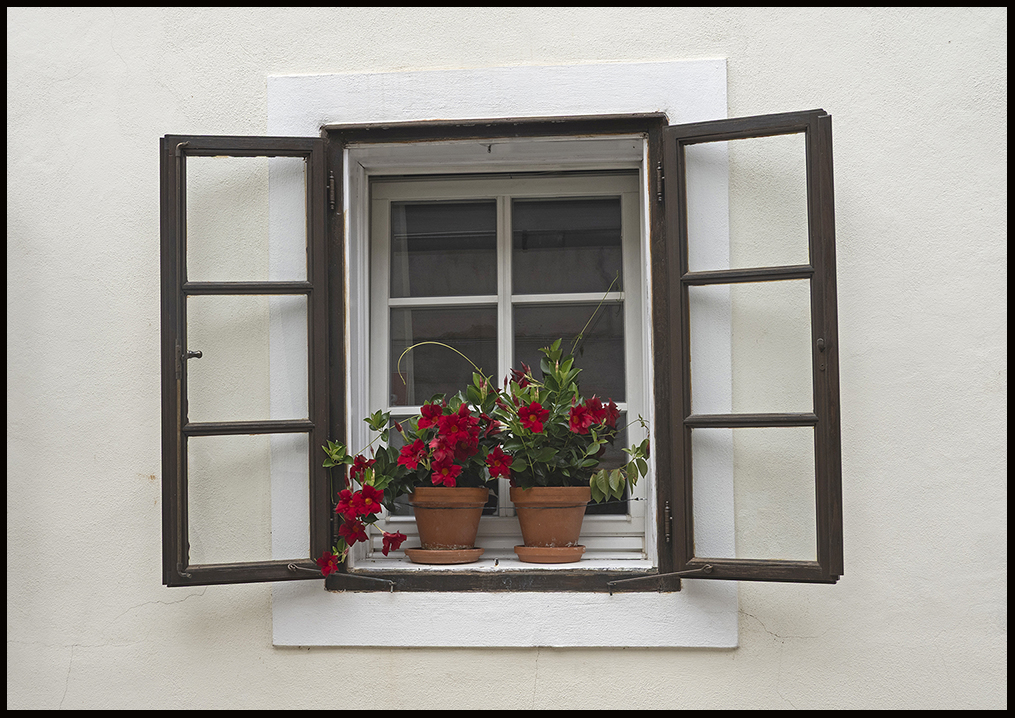
Alas, time to leave Slovenia.
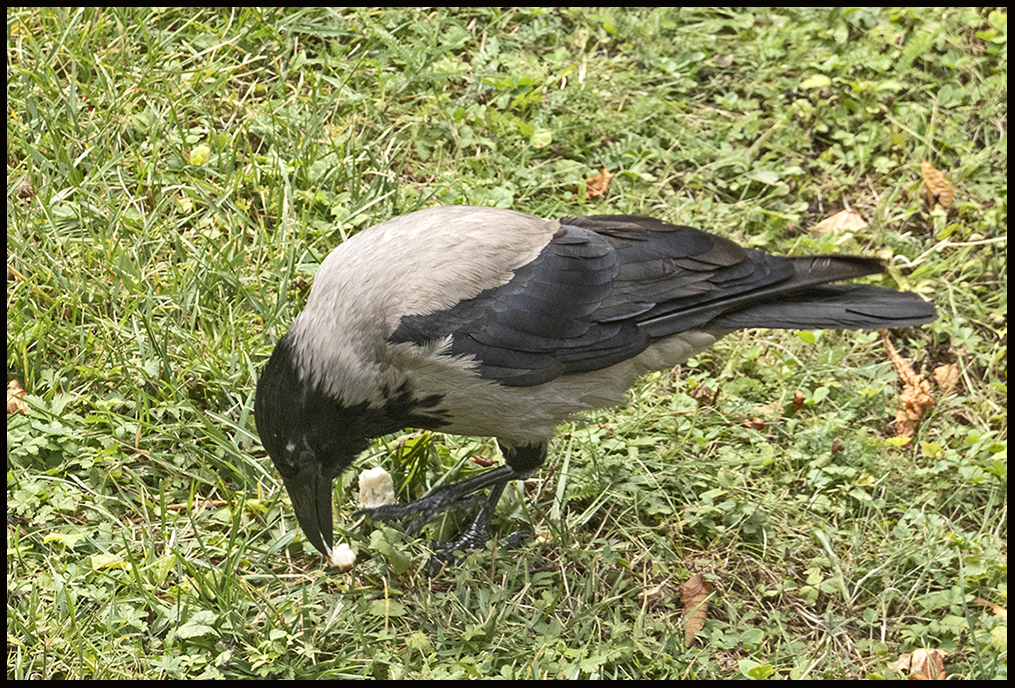
Since I didn’t see much bird life the entire trip, I have to include (for Dan C.) at least one common bird we saw, the Pied Crow.
Thanks for following along with us on our quest to find out what happened to Yugoslavia. It is an area that deserves a lot more time to explore.