
Sarajevo’s history…The short version: Ruled at various periods, first by the Roman Empire and with its fall, the area became autonomous until 1463 when the Ottomans took over. When that empire fell, the region was given to Austria/Hungary which angered the Serbs. In 1914 it came to a climax when a young Serb, Gavrilo Princip, shot the Austrian archduke, Franz Ferdinand and his wife, Sofia, in Sarajevo. As we remember from our history books this was the fuse that ignited the first world war.
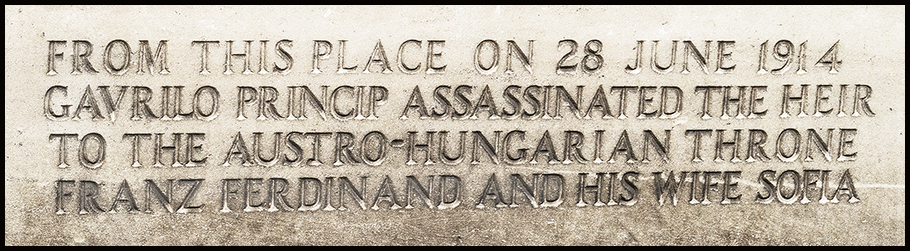
Sign near the assassination spot
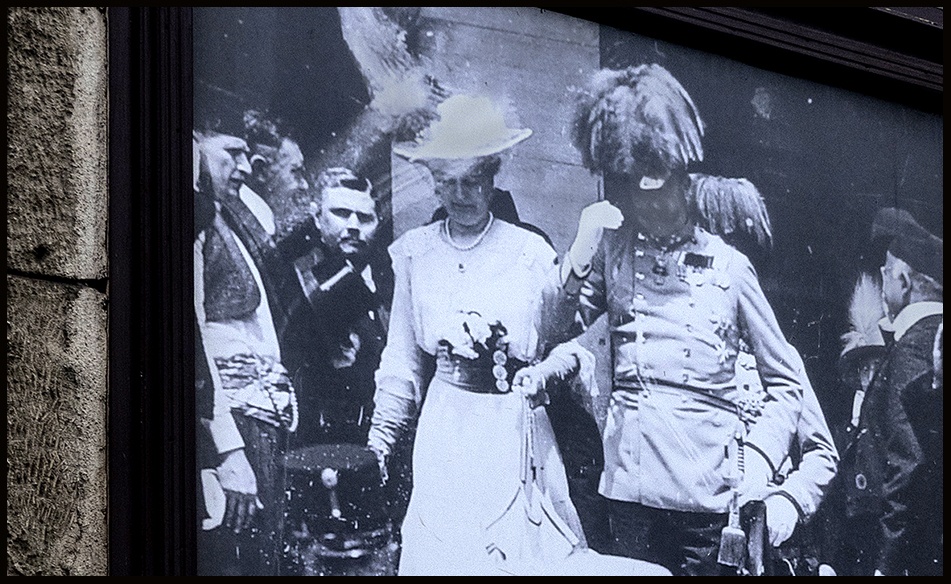
Photo on the wall of Franz Ferdinand and his wife, Sofia.
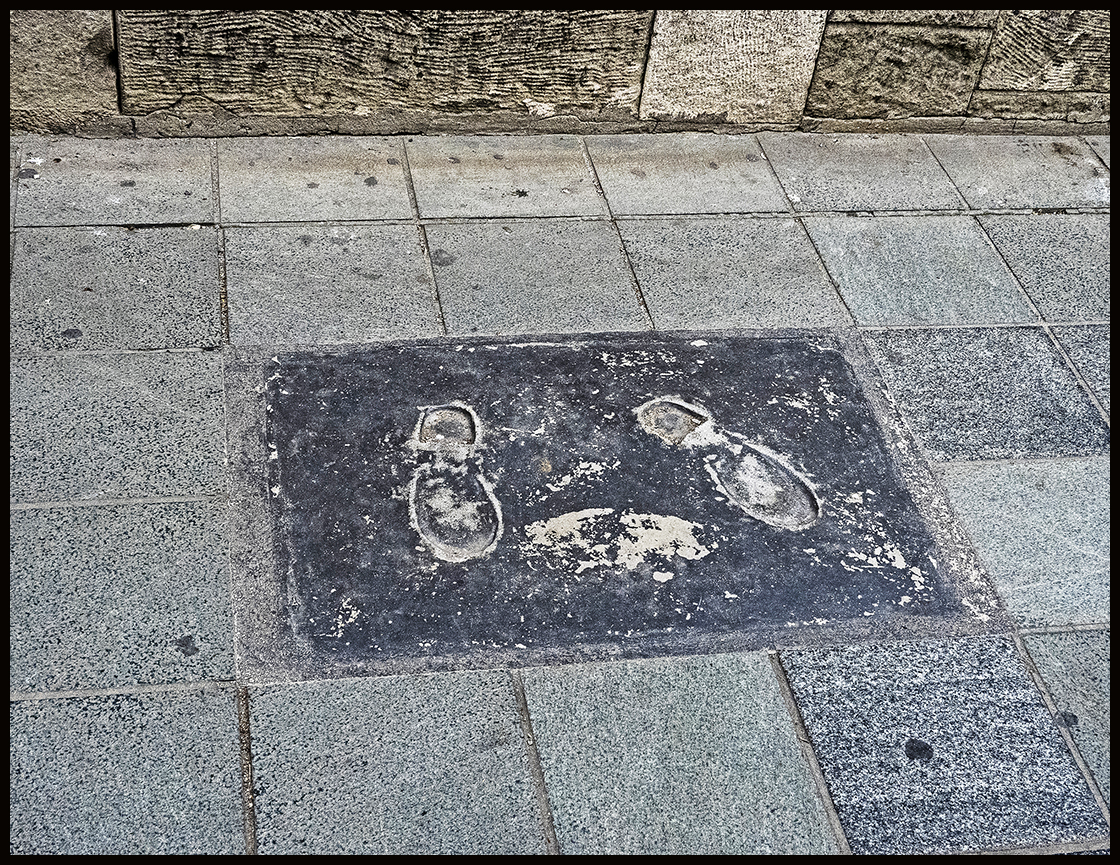
Footprints memorialize the spot where Gavrilo Princip fired his deadly shots.
After WWI, in 1929, Yugoslavia was formed from the various countries in the region. Nazis invaded in 1941. They gave control of the Bosnia area to a puppet government that implemented a reign of terror targeting Serbs, Jews, and Roma. Josef Tito, leader of Yugoslavia, managed to keep things from imploding, but after his death in 1980, the unraveling began.
In ’92 Bosnia/Herzegovina (B/H) declared independence from what remained of Yugoslavia, but Croatia and Serbia, as Christian nations, wanted it for themselves. Serbia started a siege of Sarajevo which lasted 4 years and led to horrendous atrocities. In 1995, in the nearby town of Srebrenica, 8,000 Bosniak Muslim men were massacred. That was the final straw for getting NATO forces involved to attack the Serbian army. Later that year at a convention in Ohio, the Dayton Peace Accords were signed and the fighting ended. The resulting boundaries favored the Serbs, but at least the attacks ended and rebuilding could begin.

Photo from the war years of Sarajevo.
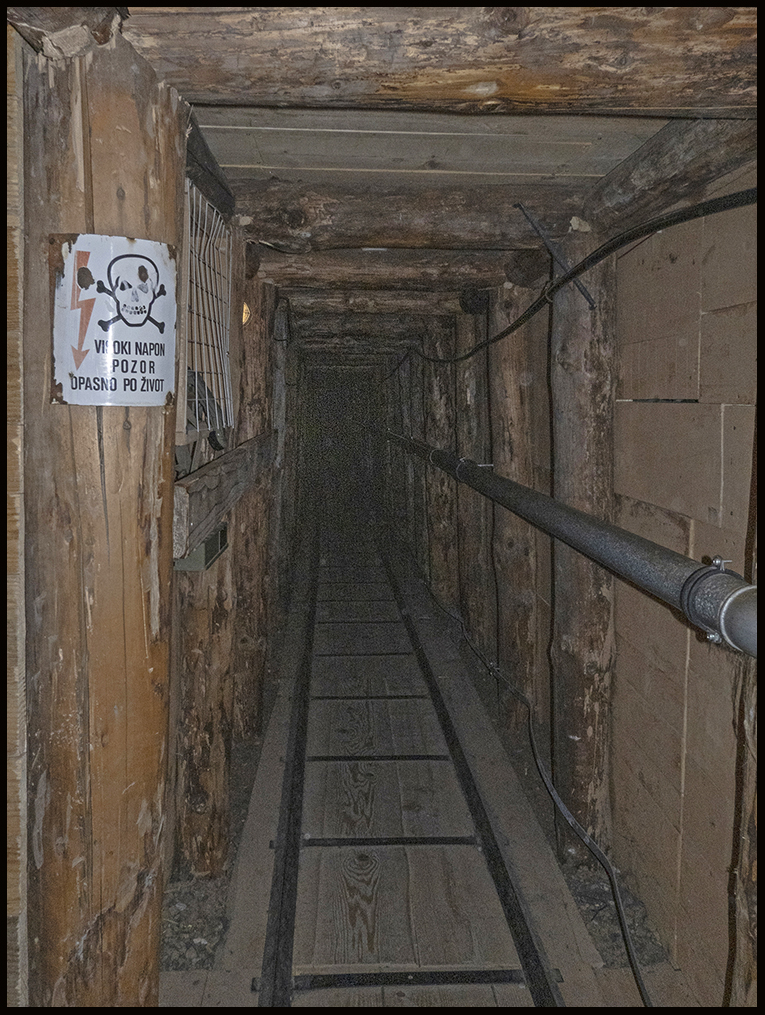
Entrance to the tunnel

Information map at the site of the tunnel. Some figures of the siege…11,541 killed, over 56,000 wounded, 329 shells on average fell on the city per day for the 1,425 days of the siege.
During the Siege,the “tunnel of hope”, was dug under an airport runway between March and June of 1993. It was built in order to link the city of Sarajevo, which was entirely cut off by the Serbian army, with an area controlled by the United Nations.The tunnel allowed food, war supplies, and humanitarian aid to come into the city, and allowed people to get out. The tunnel became a major way of bypassing the international arms embargo and providing the city defenders with weaponry.
(A bit of trivia here. In 1984 Yugoslavia hosted the Olympics in Sarajevo. The Olympic sites are noted on this map. Until a few days before the alpine events were to take place, there was not enough snow to host them. Miraculously, just before it was too late, the snow fell and the festivities proceeded.)

A house at the tunnel site showing shell damage.
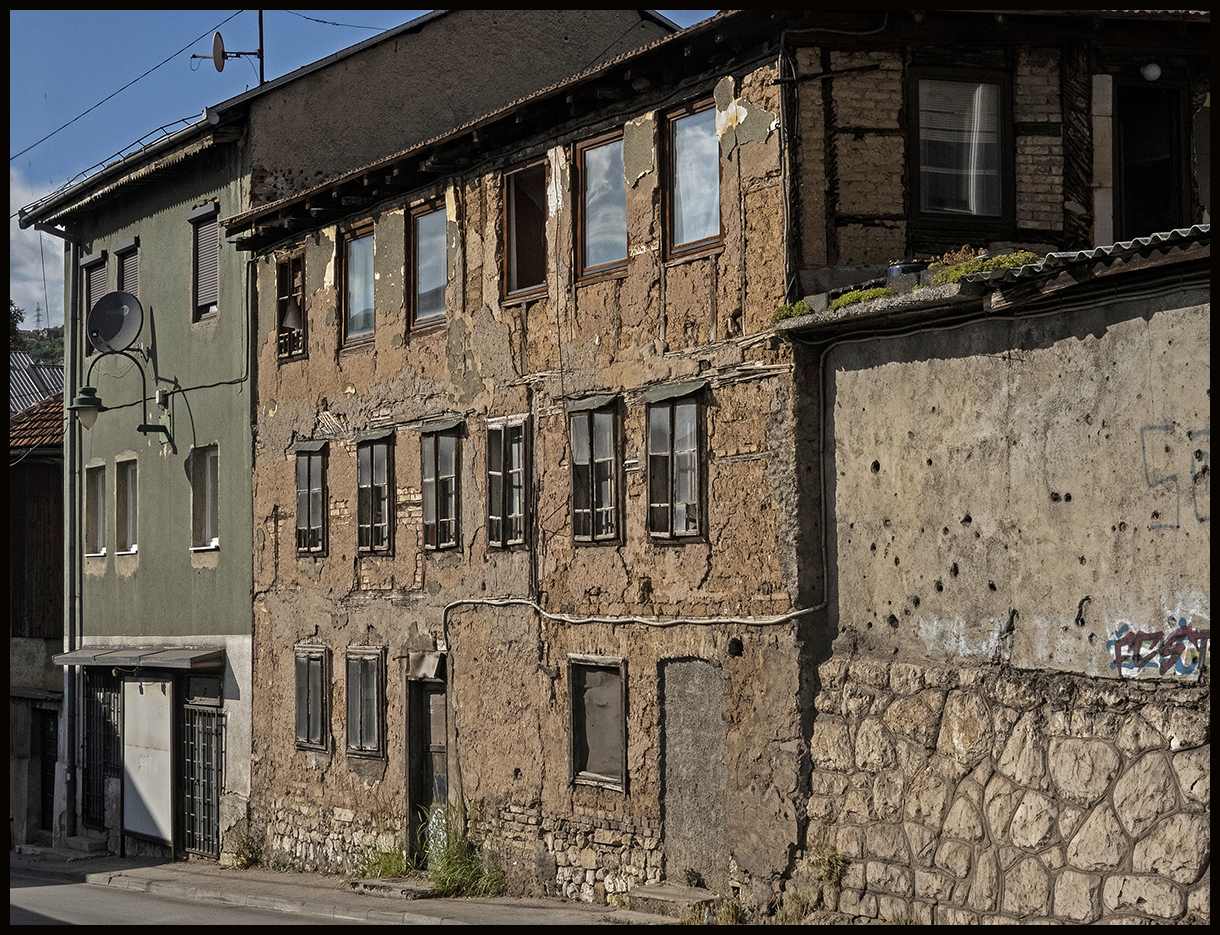
Many buildings are not repaired even now. Perhaps all family members were killed during the siege and no one owns these buildings? Just a guess.
One afternoon we decided to walk up to the white fort. This is what we saw along the way.
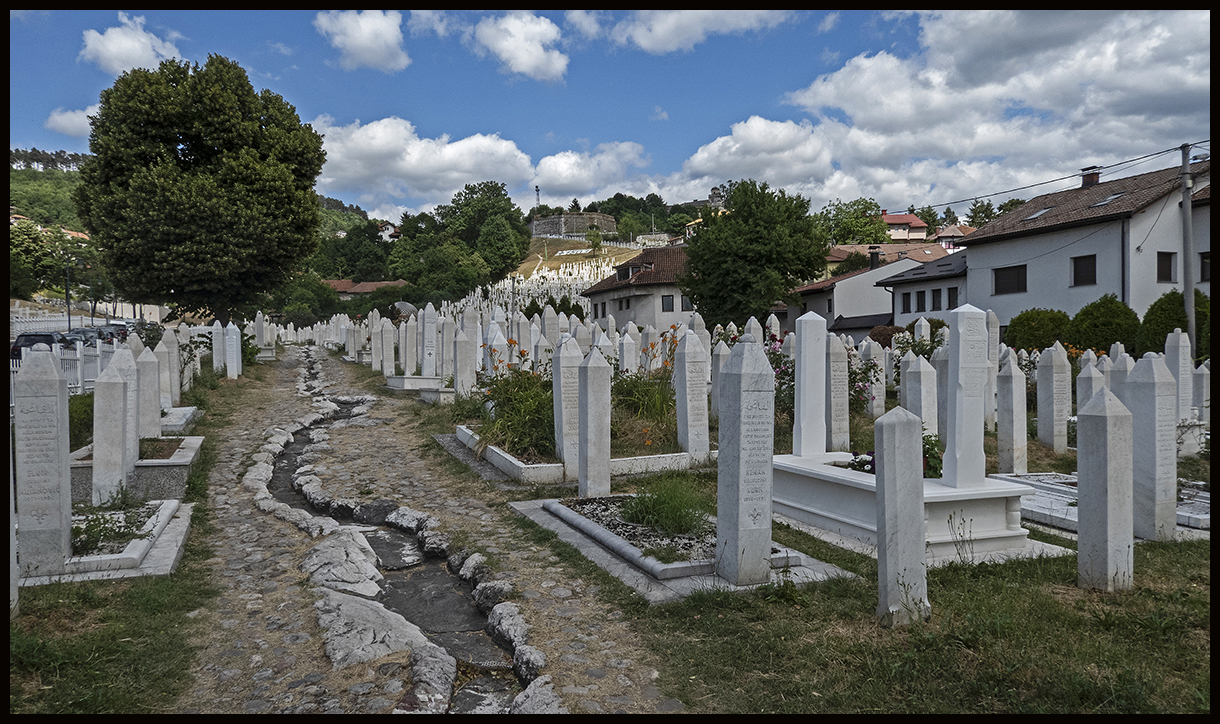
Alifakovac Cemetery is one of Sarajevo’s oldest sites. Its origins trace back to the 15th century. The cemetery became the resting place for locals, visitors, scholars, officers, and travelers who died in the city. In Muslim tradition bodies must be buried within 24 hours in a white shroud…no casket. The white fort is visible on the hill behind.
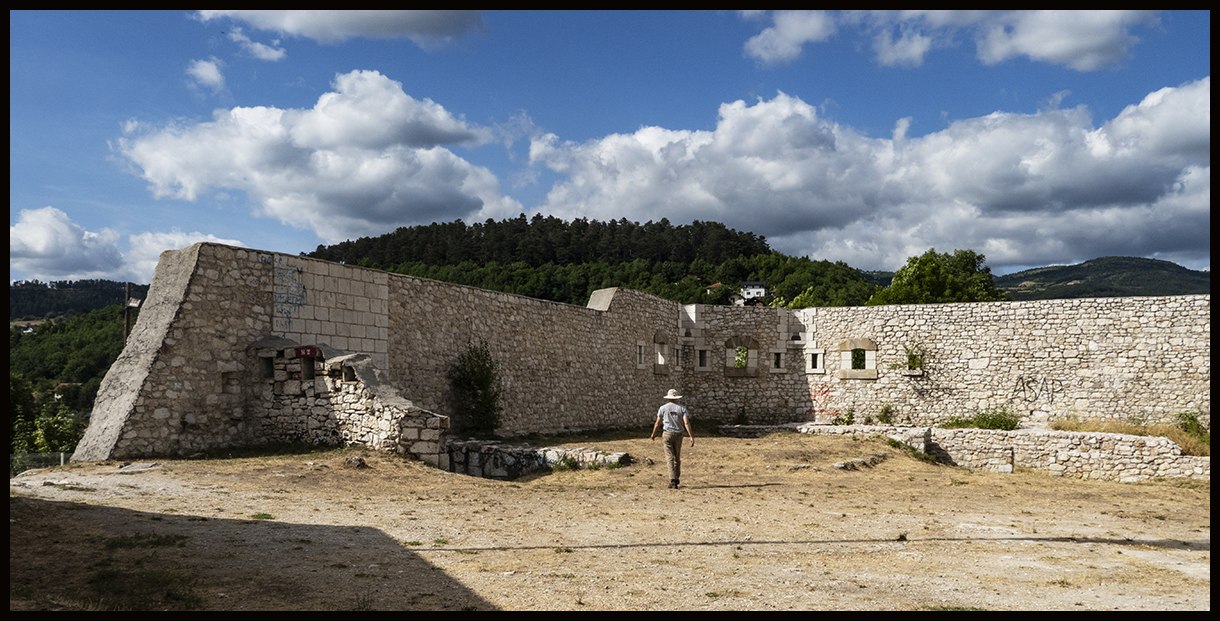
Inside the white fort ruins. Originally built in late 14th century on this site, today’s version was probably built in 1500’s.
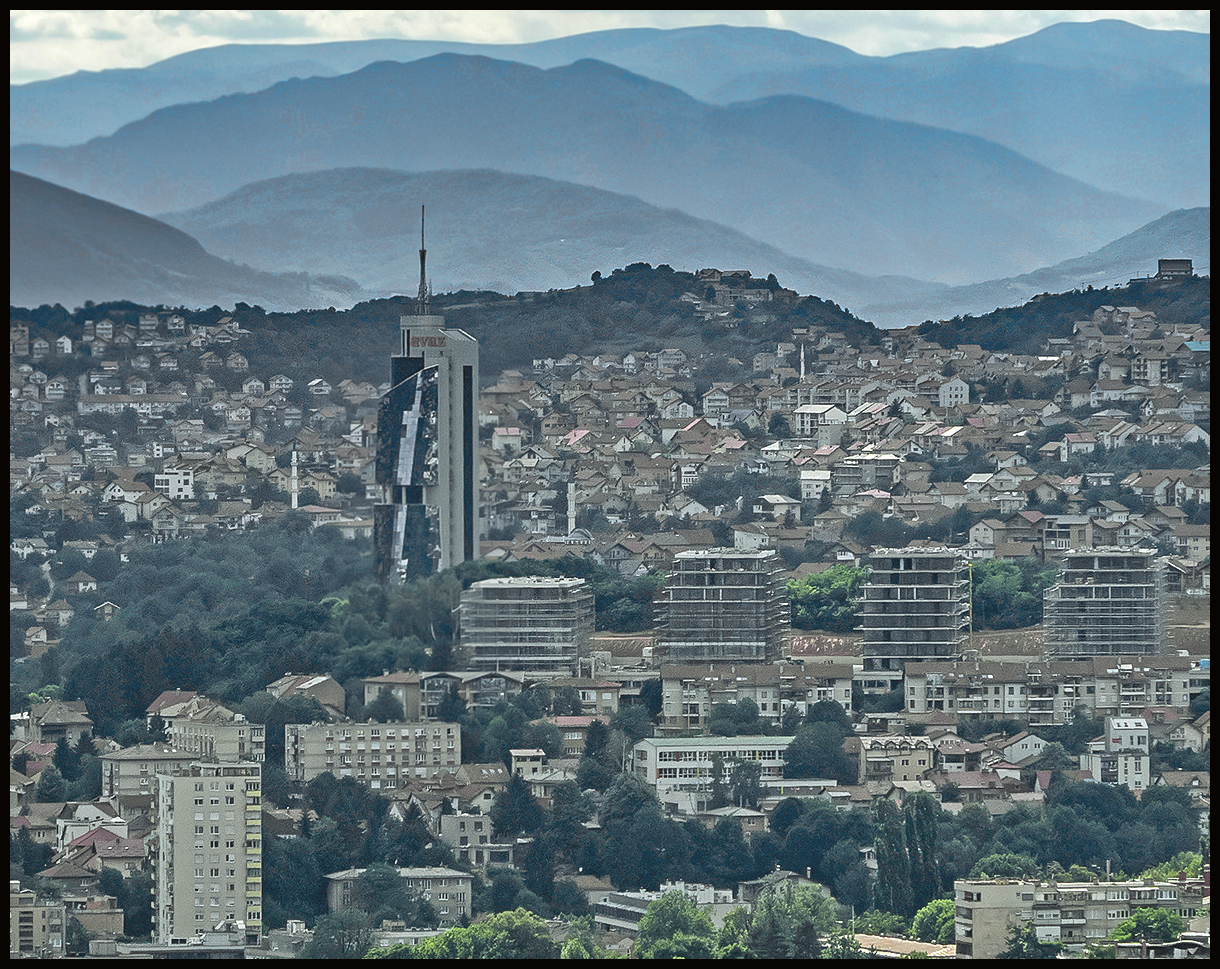
View of the city below. The tallest building in Bosnia, the Avaz Twist tower is 40 stories tall, and headquarters for the largest news/media company in B/H.
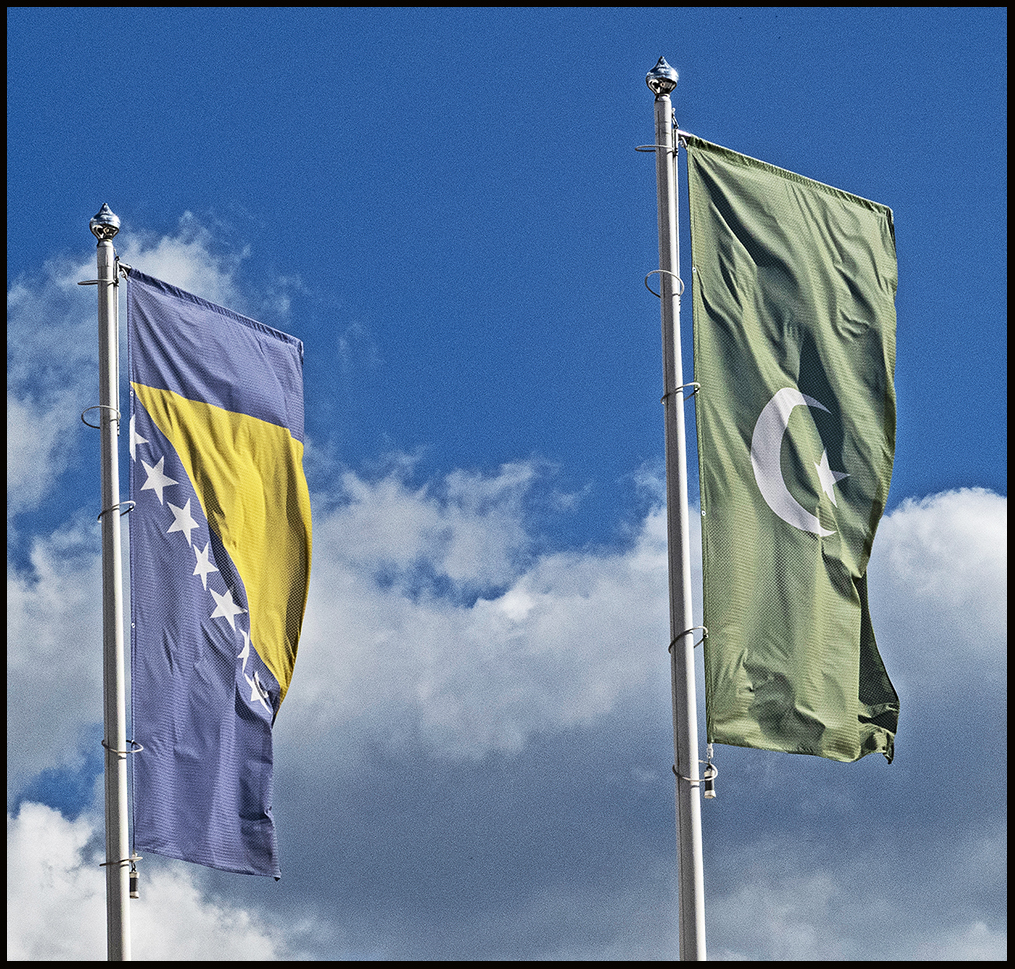
Flags flying over the fort show how well the religious factions get along. Blue one is the national flag of B/H.
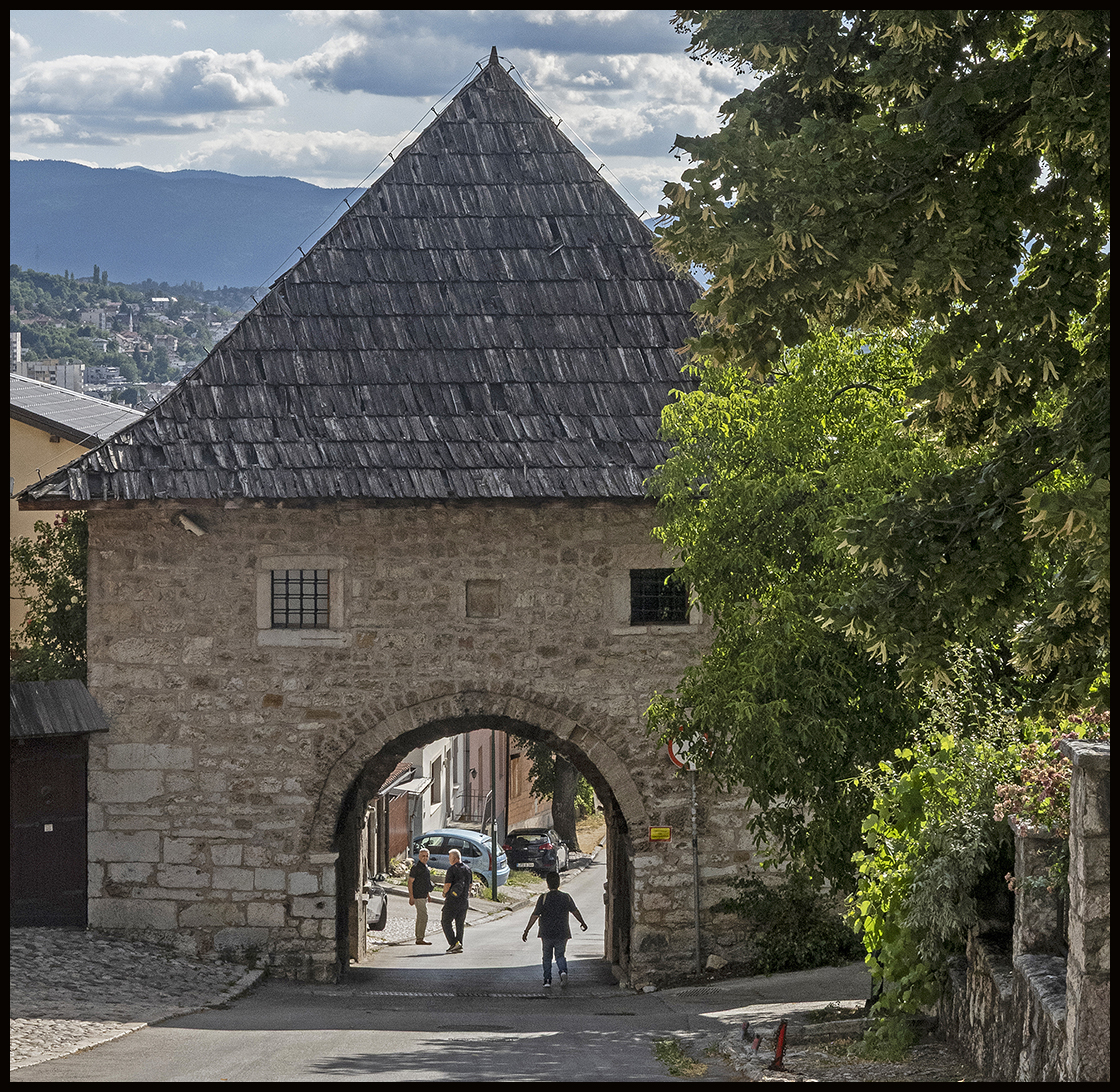
Heading back down, we passed through an old gate; part of the ramparts built between 1729 and 1816 to protect those within in case of attack.
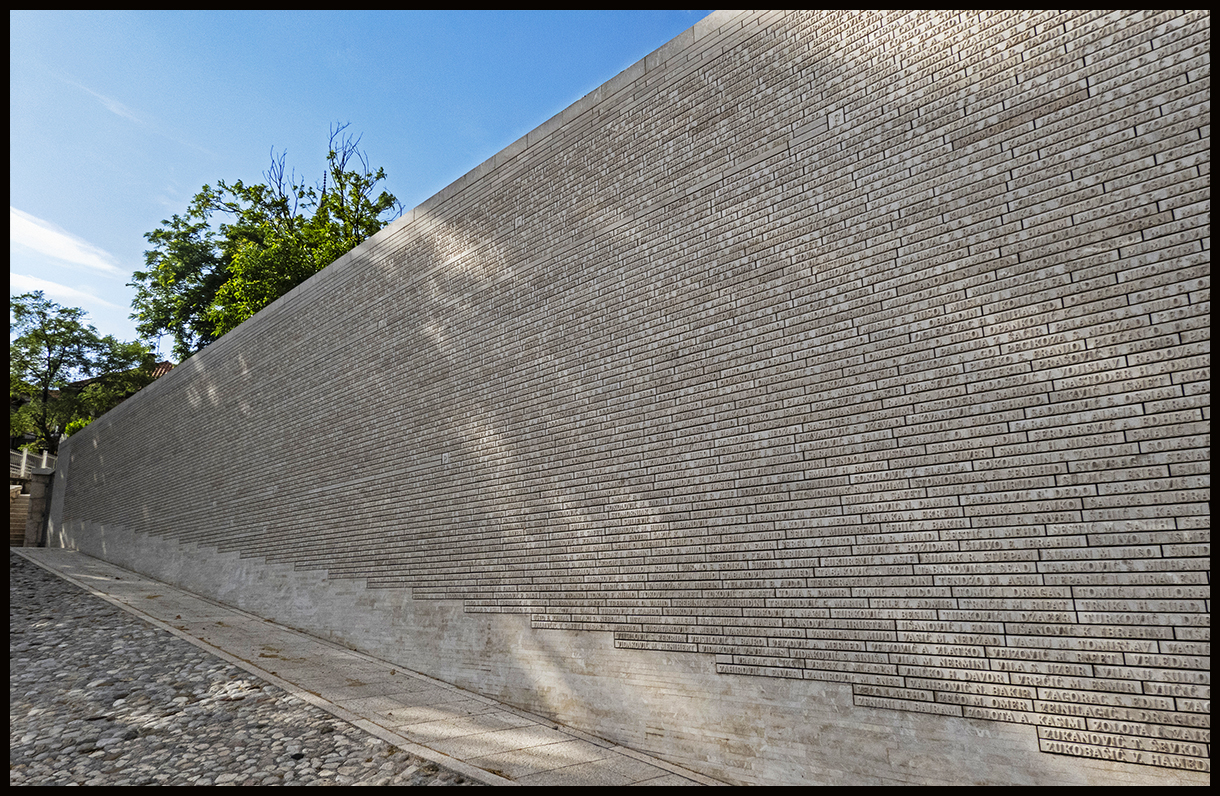
Just below the gate is the wall of the dead from the Serbian siege, similar to our Vietnam war memorial. All those are names of individuals; thousands of them.
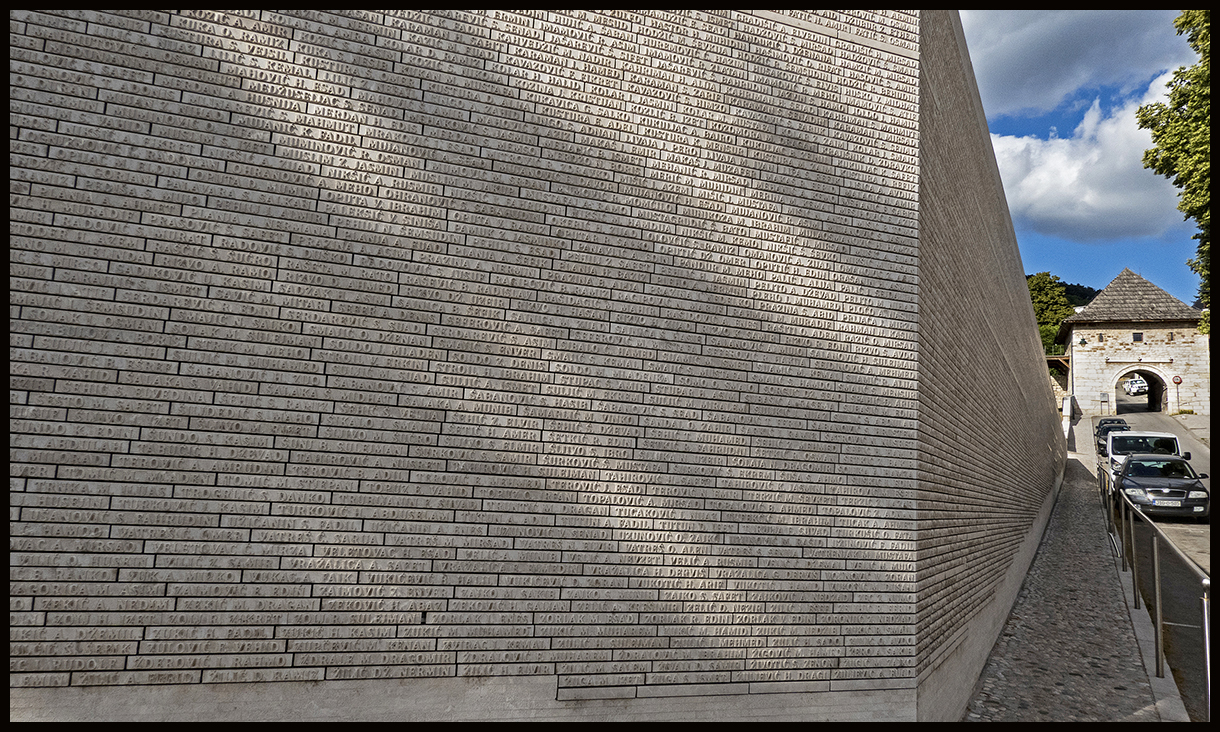
Looking the other way. The gate is visible.
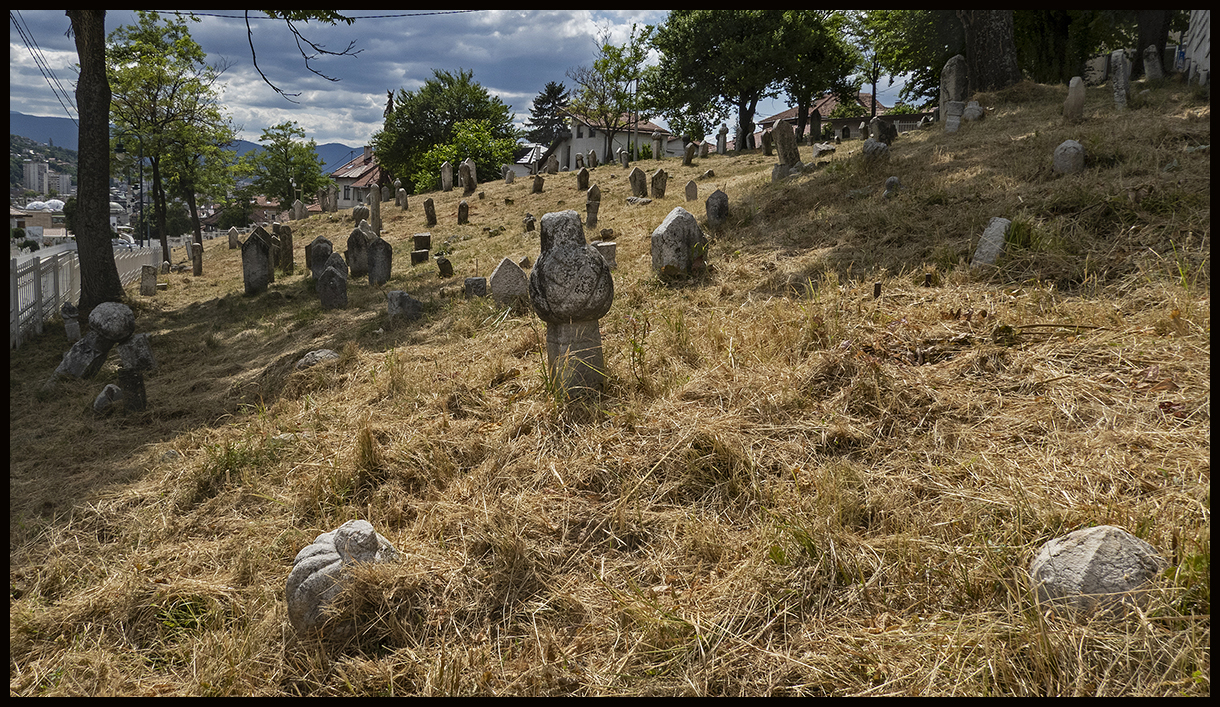
And a few steps more and we find an ancient graveyard.
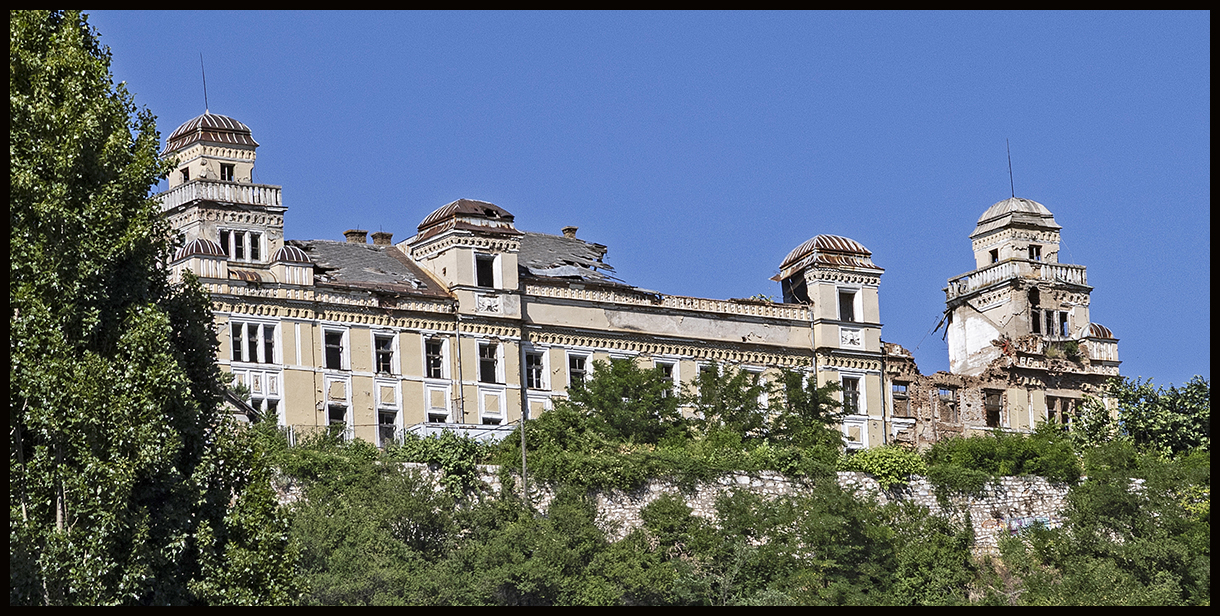
Not far is the Yellow Fort which was shelled during the siege.
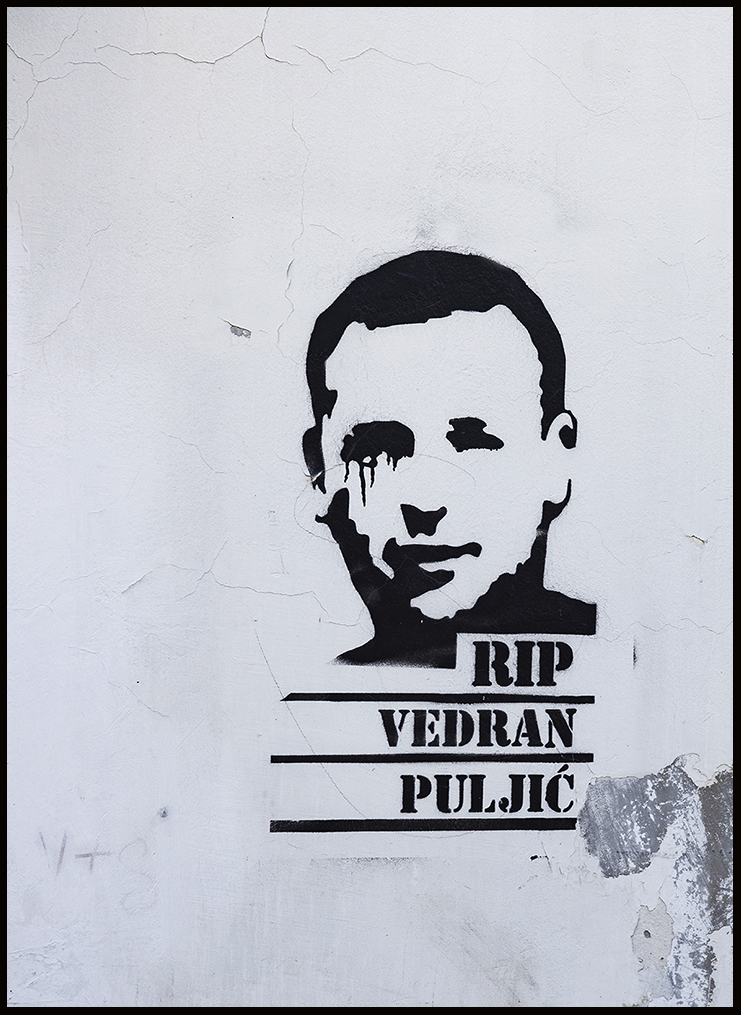
In 2009 rival football fans started a riot. 31 people were injured in the riots, 6 of them severely. One was killed, Vedran Puljić. No one faced any consequences. This image is screened on walls all over the place…
Back down near the Old Town section we find the exquisite Town Hall. Work began in 1892 on the Moorish Revival style building. It opened in 1896 as a government building. In the 1940s it became the national library.
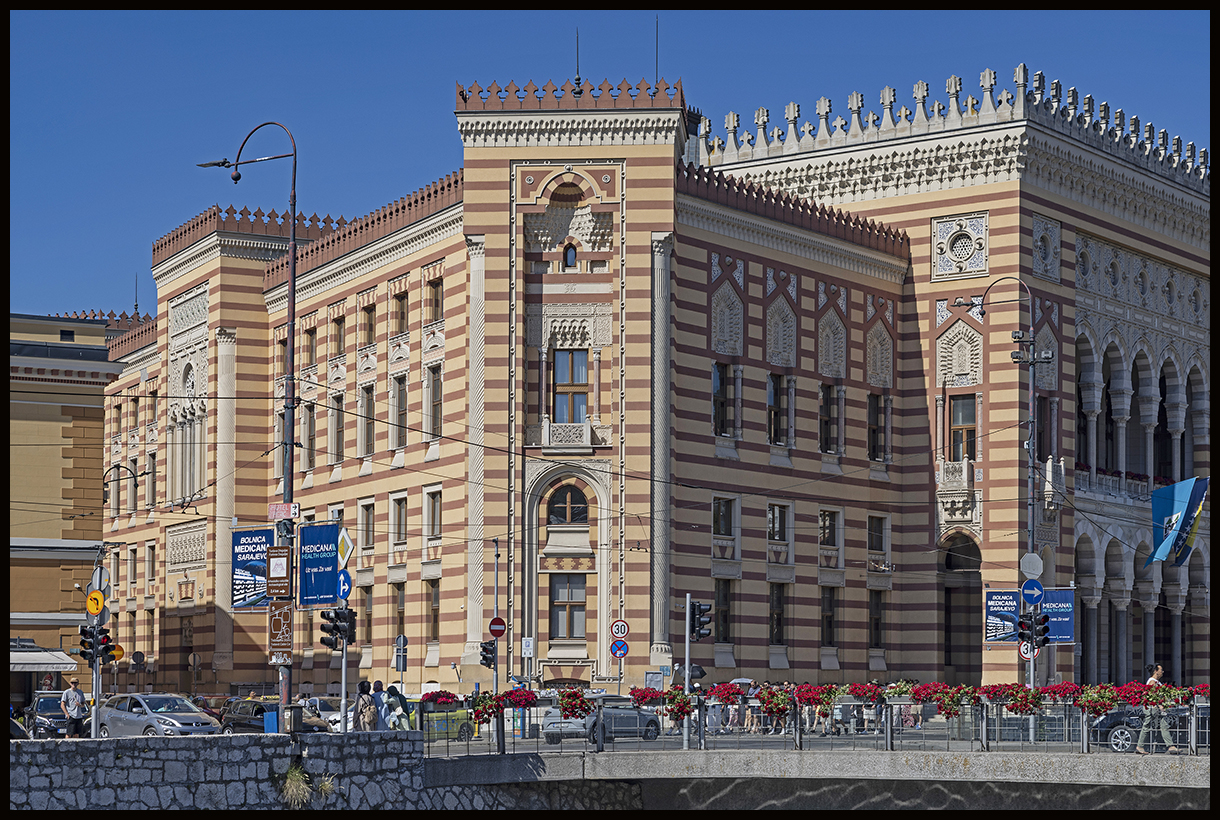
Sarajevo City Hall. It’s hard to believe this gem of Islamic architecture was restored from ruins.
In 1992, Serb shelling during the siege caused the complete destruction of the library which held 1.5 million volumes with over 155,000 rare books and manuscripts. It was inside the city hall. Citizens and librarians tried to save books while they were under sniper fire. Most of the books and the building were ruined. It was carefully restored and reopened in July 2014. For a better understanding, read People of the Book, a novel by Geraldine Brooks that follows the saga of the real Sarajevo Haggadah, a medieval Jewish illuminated manuscript.

Entering Sarajevo we had noticed the tall blocks of dreary looking apartment buildings in the distance. This style of architecture is called “brutalist” and was very popular during the communist era. Construction was cheap and provided housing for all…a benefit of the era.
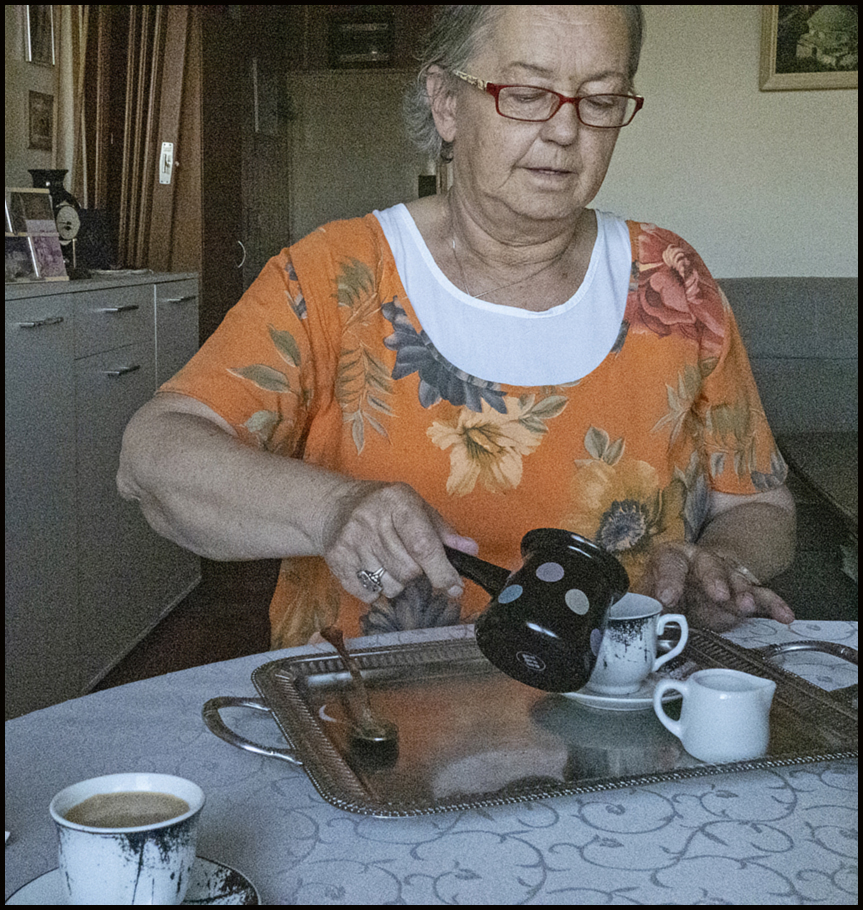
For dinner one evening, we visited a lady and her niece in one of these buildings. The lady had lived through the siege in her apartment and watched from her window as shells landed nearby. Many of the buildings were pocked with evidence of shelling, but most are still standing and functional.
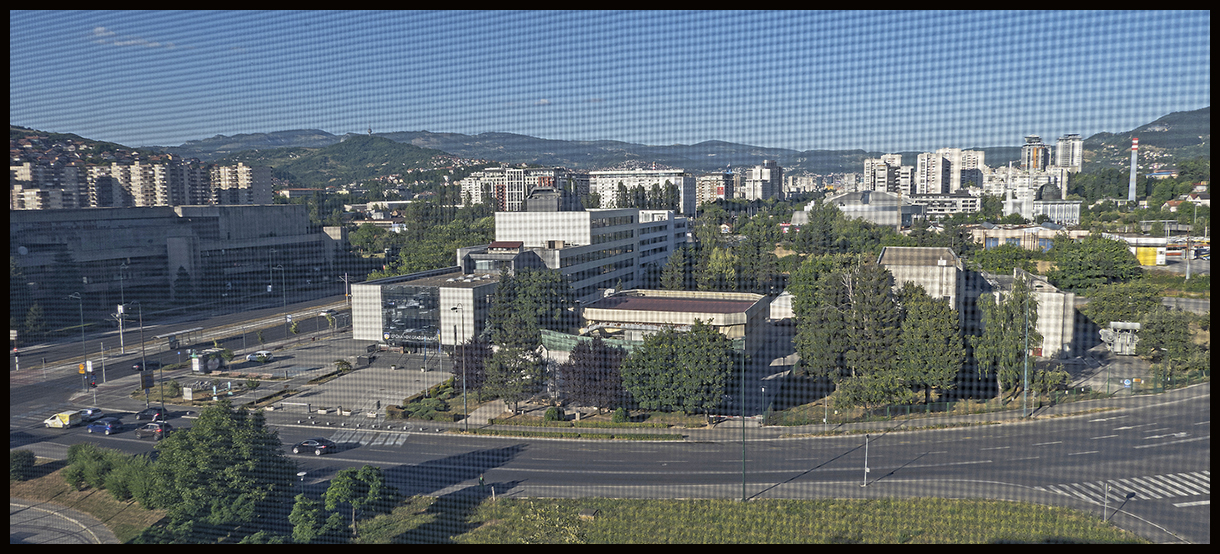
She could watch the shelling from her window. To understand what life was like for citizens during the siege, read The Cellist of Sarajevo by Steven Galloway.
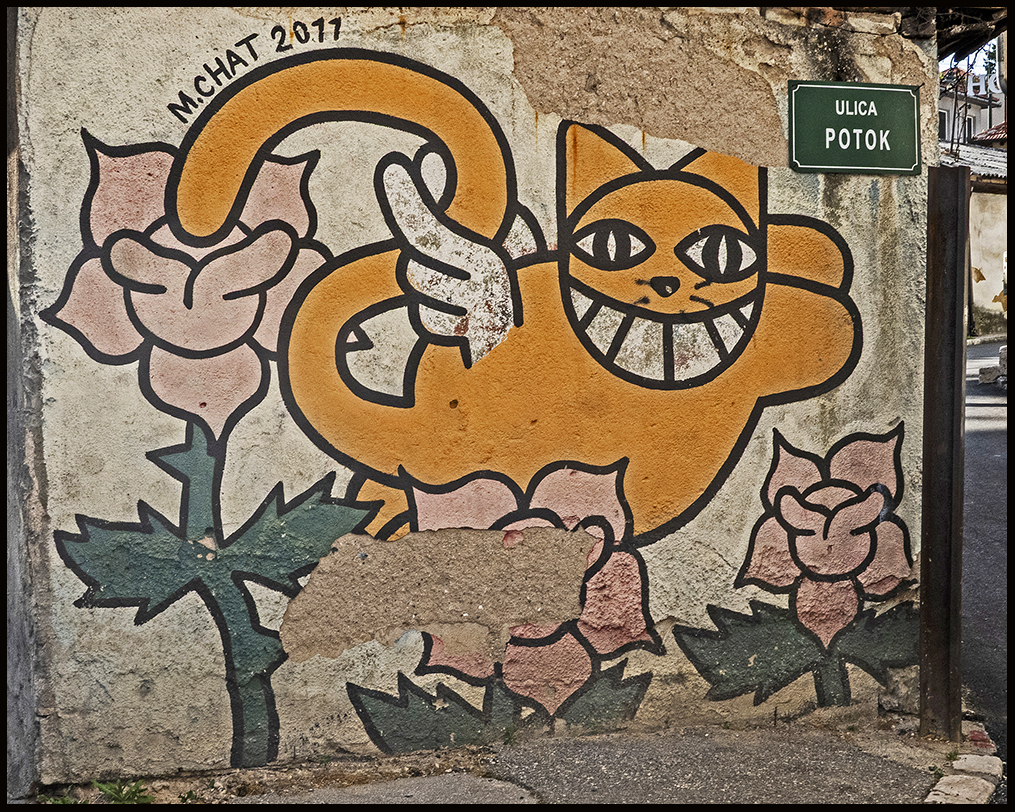
Leaving behind the sad history, we’ll explore the happy, hopeful Sarajevo of today.
Islam is the most popular religion in Bosnia/Herzegovina. It was introduced to the local population in the 15th and 16th centuries as a result of the Ottoman conquest of B/H. Most of the original followers of Islam were Slavs that converted during that period. Muslims make the largest religious community in Bosnia and Herzegovina at around 51%, much higher in Sarajevo. There are over 100 smaller mosques scattered through the neighborhoods.
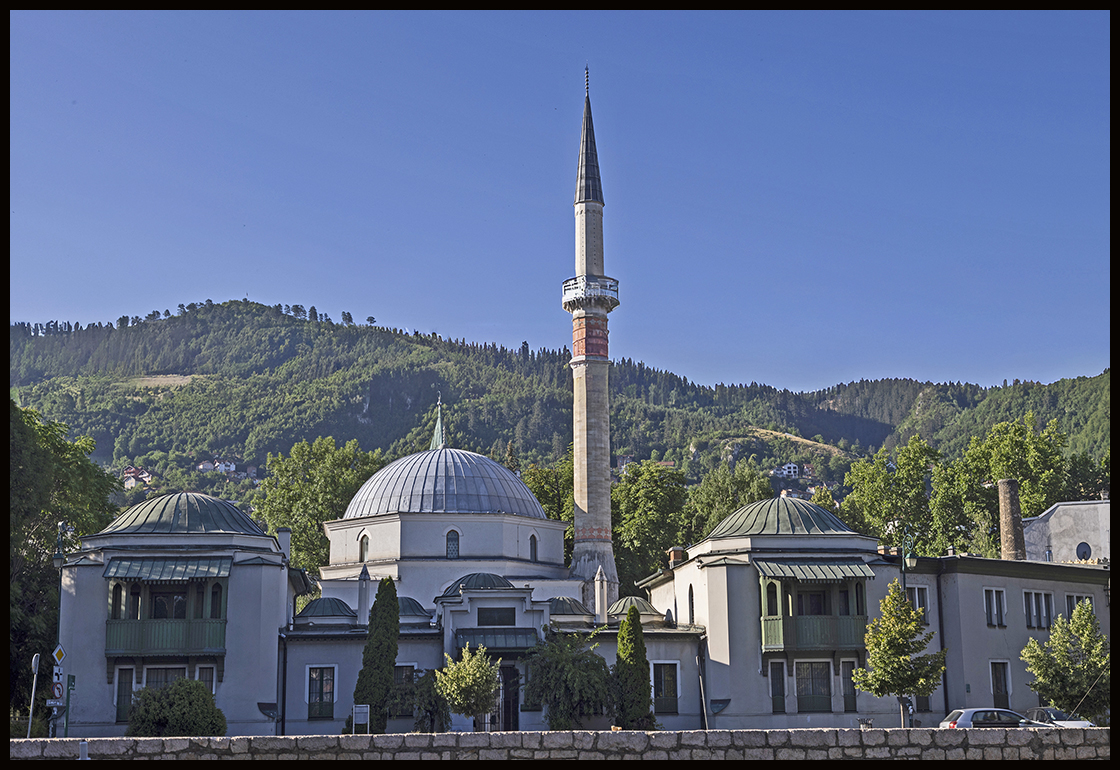
We toured the Gazi Husrev-beg (Emperor’s) Mosque. Begun in 1530, it was severely damaged during the siege. The Saudis paid for most of the restoration.
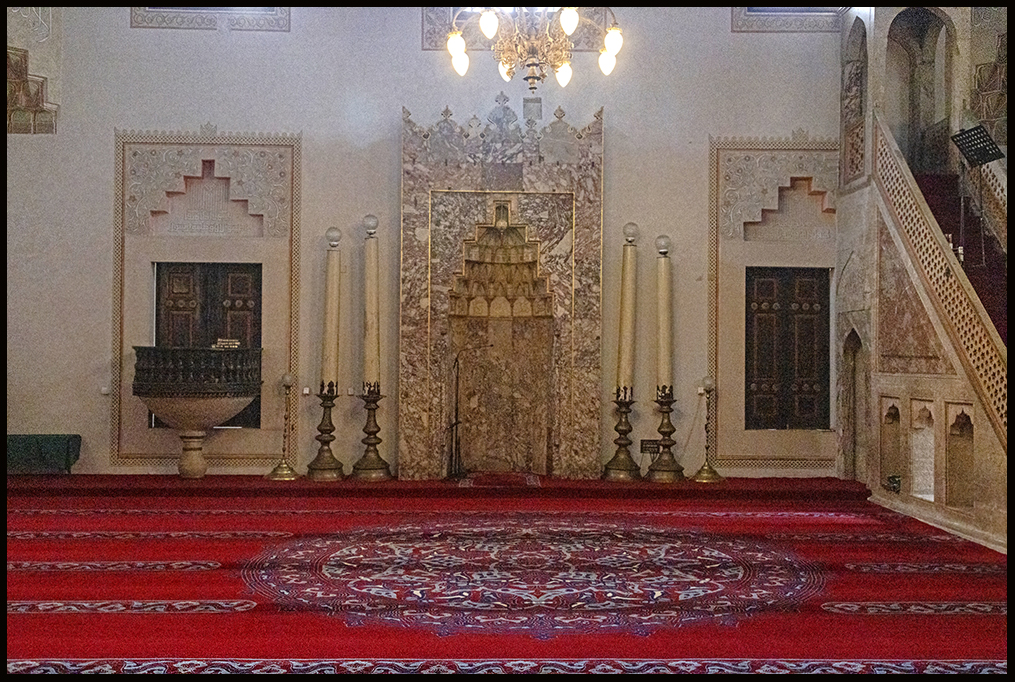
Mosque interior. The imam’s pulpit is on the right.
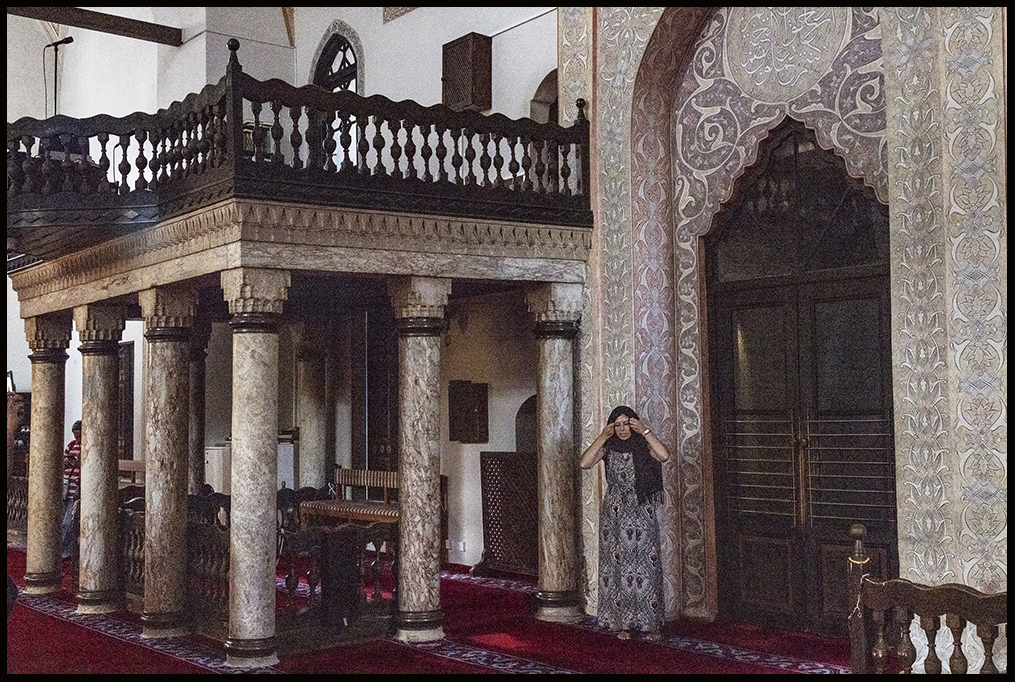
Turning around, the view. Shoes are taken off at the entrance.
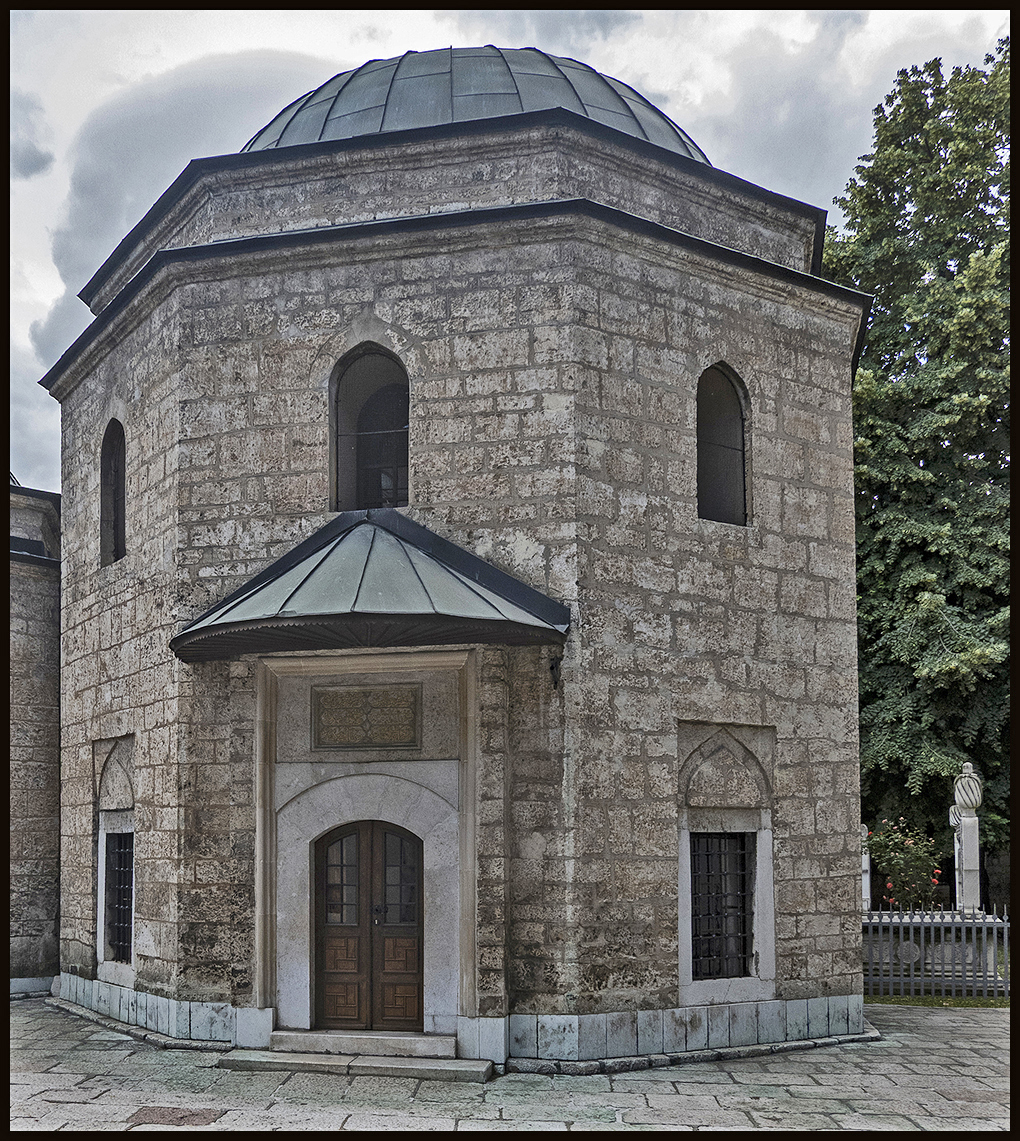
The Emperor’s mausoleum
There is a line across the street in the center of Old Town, marking the division between Occidental and Oriental. In the center is a brass marker on the pavement that divides the Ottoman-influenced side from the Austro-Hungarian-era buildings. It symbolizes the city’s unique blend of cultures, with distinct architecture and cultural norms.
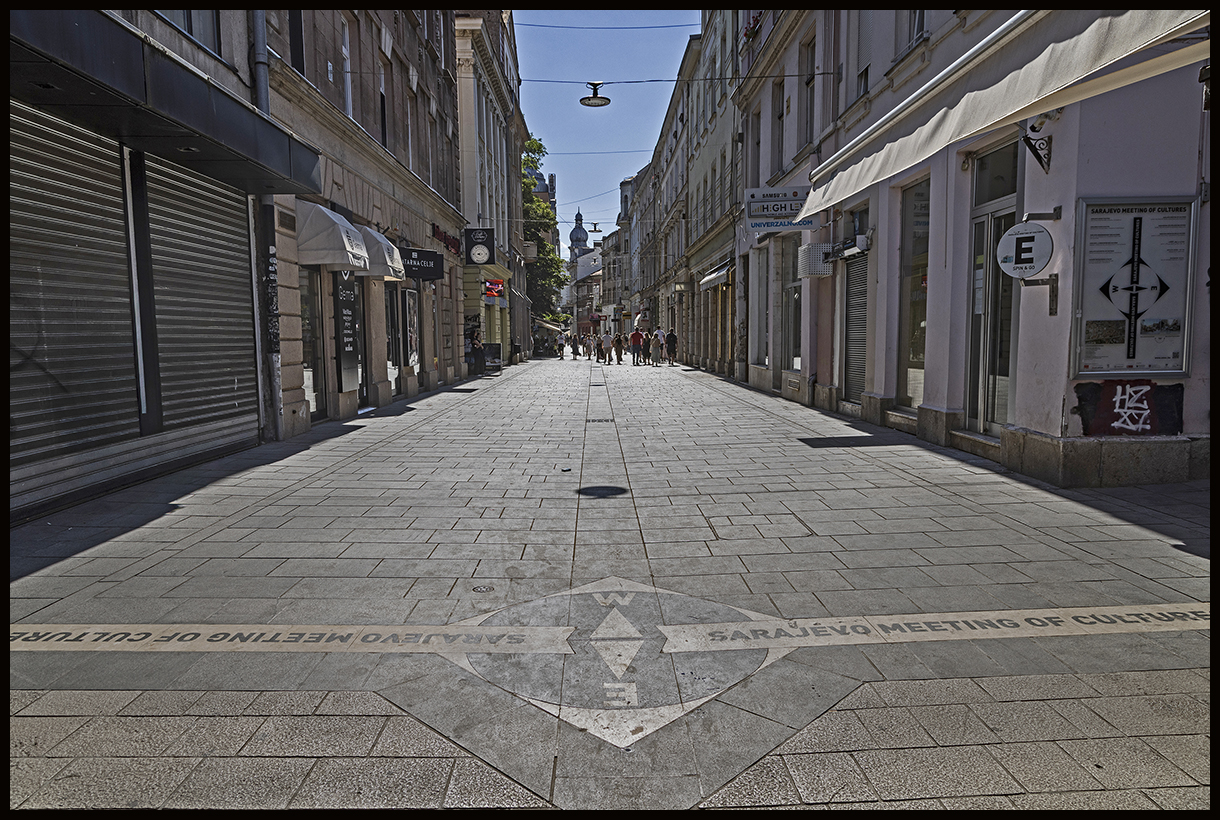
Standing on the compass facing west, you are looking at the Ottoman architecture and culture zone.
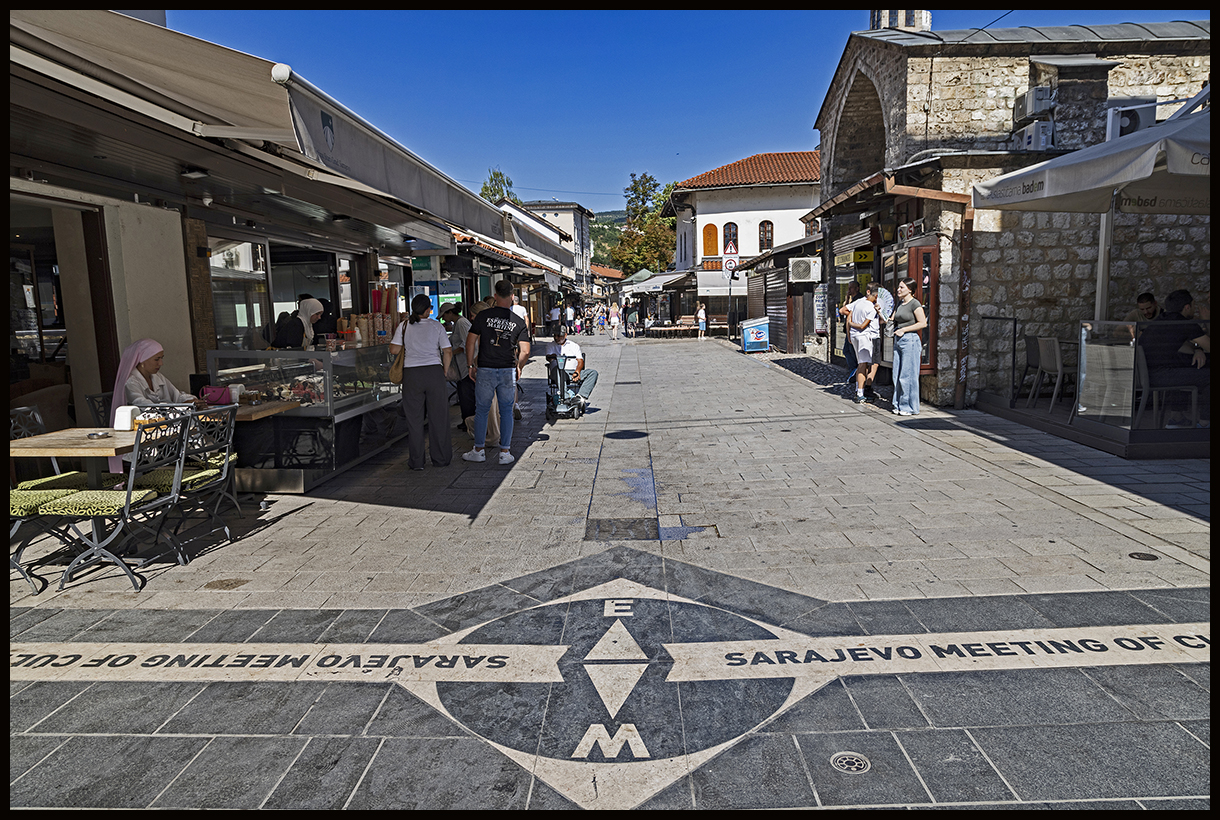
This view is of the Austrian/Hungarian architecture and cultural norms.
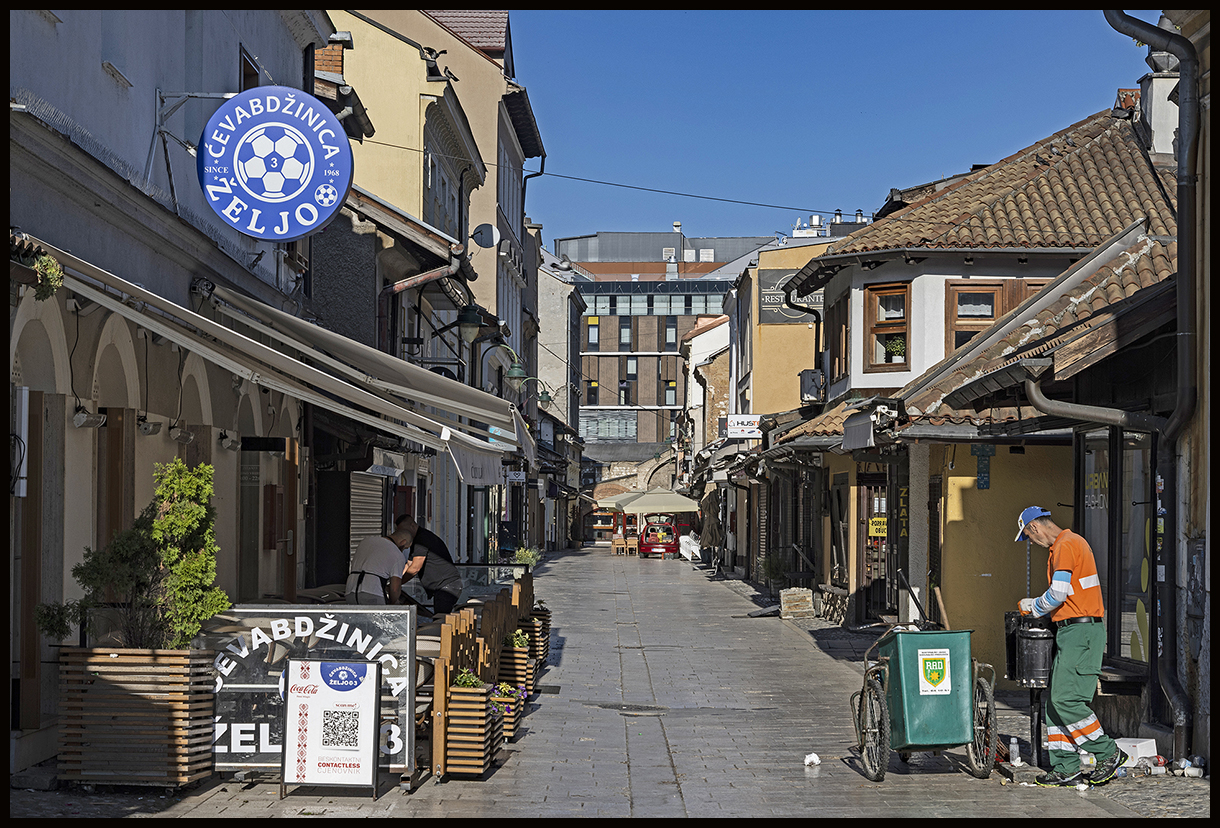
Old Town in the morning before the hordes arrive
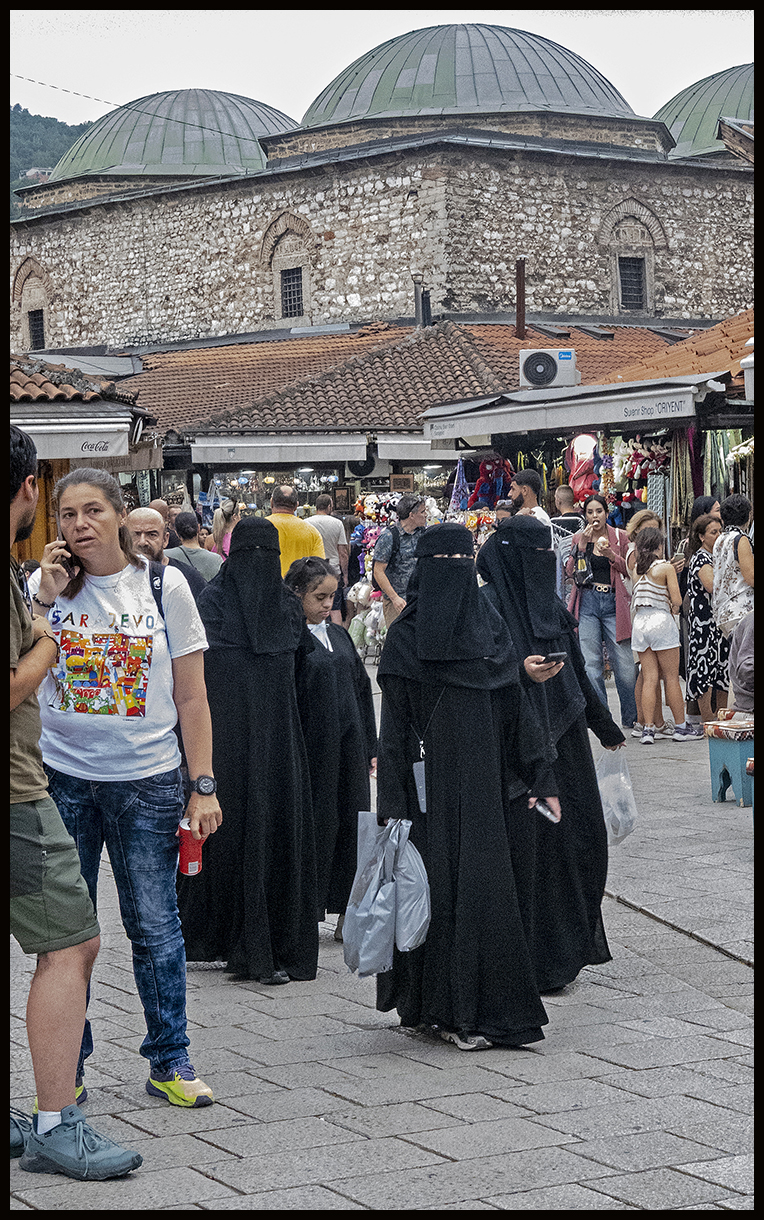
Tourists in Old Town. The black clad Muslims are from out of town, likely Saudi Arabia.
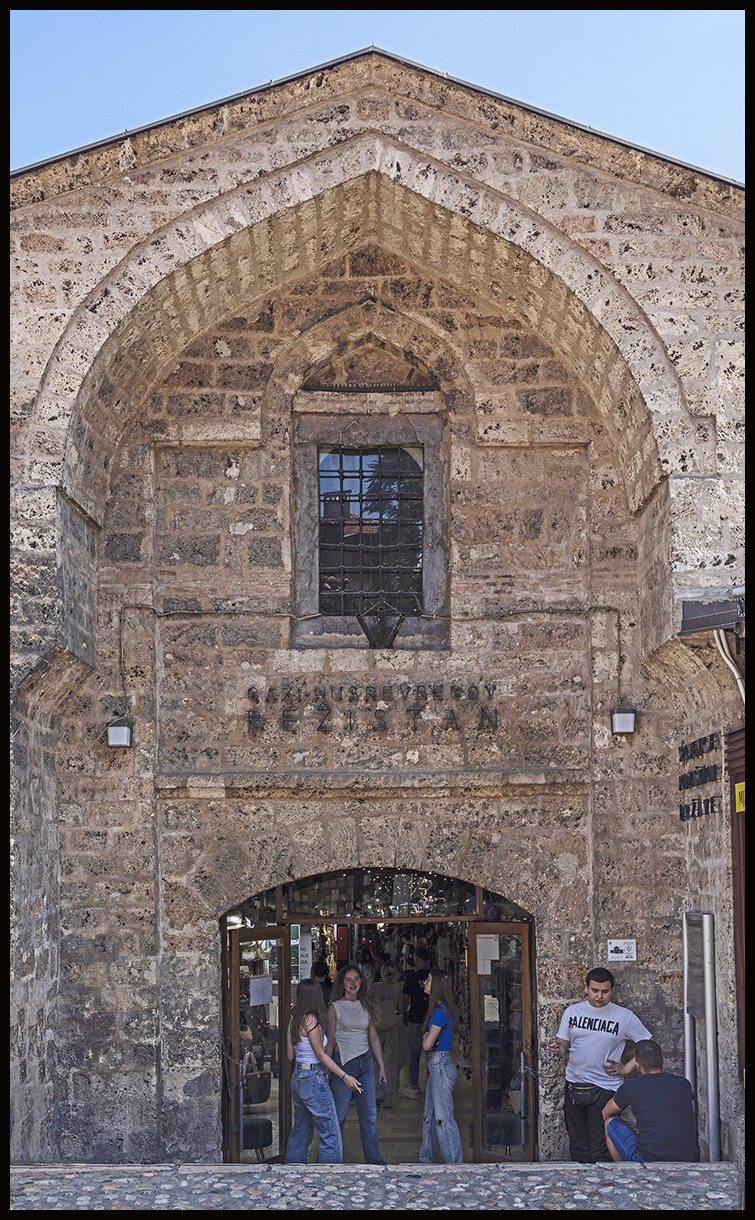
The very old market still in operation.

An archeological site next to the old market building. It was a hostel built mid 1500’s to provide accommodation for merchants, their wares and their horses. It had a courtyard with a fountain and shops along the edge. The fire of 1879 destroyed it.
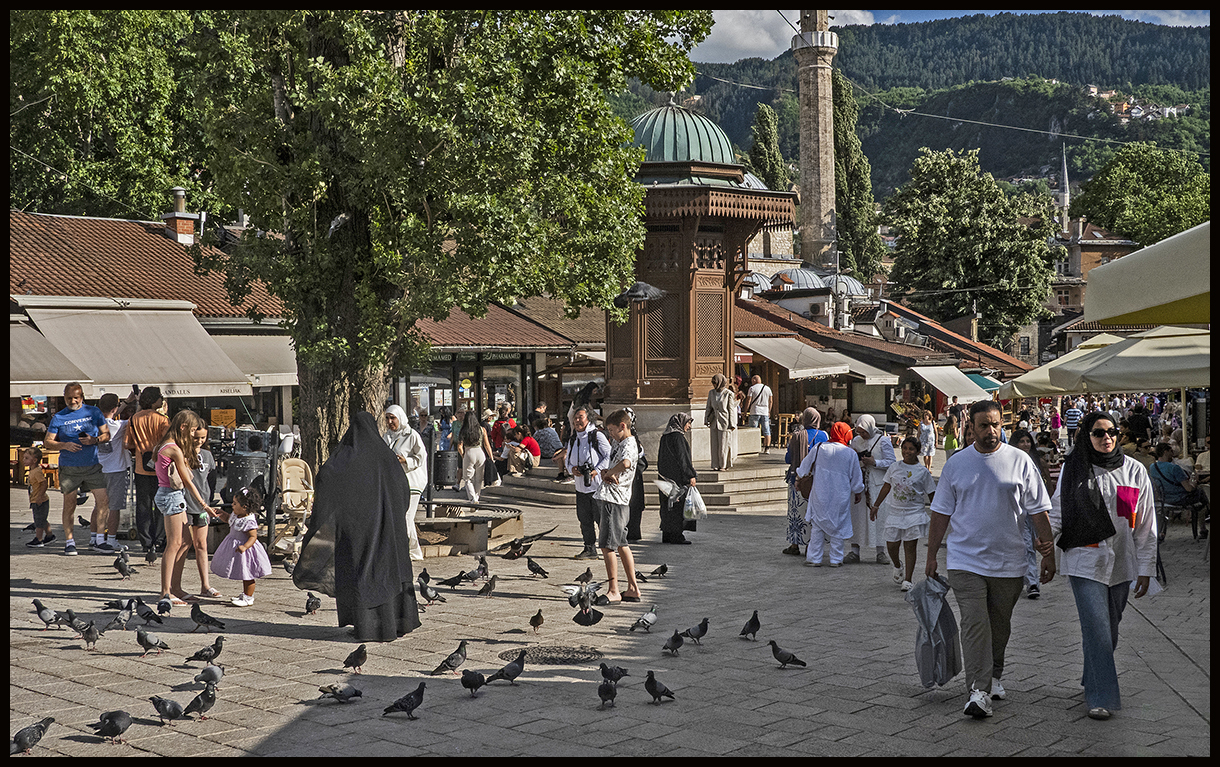
Famous fountain with the green roof in the background of main street Old Town
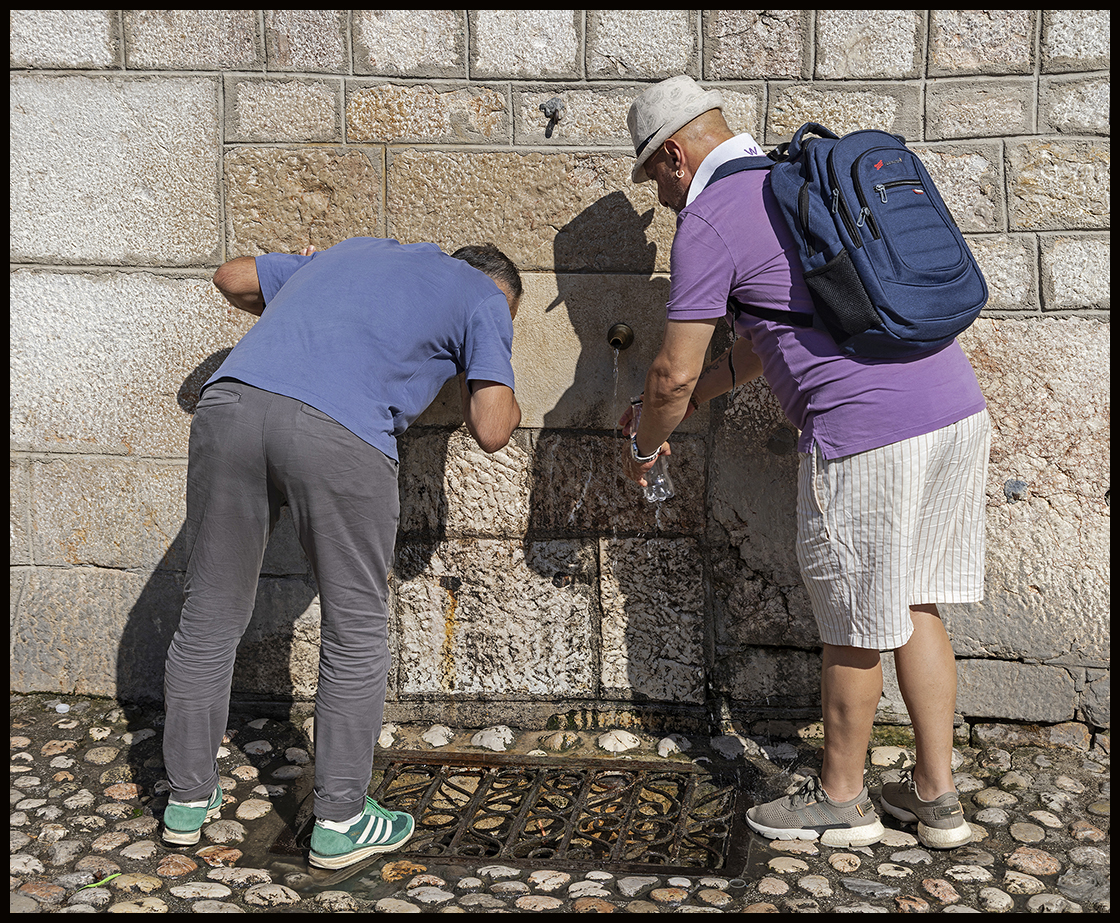
There are fountains all over the city with drinkable water.
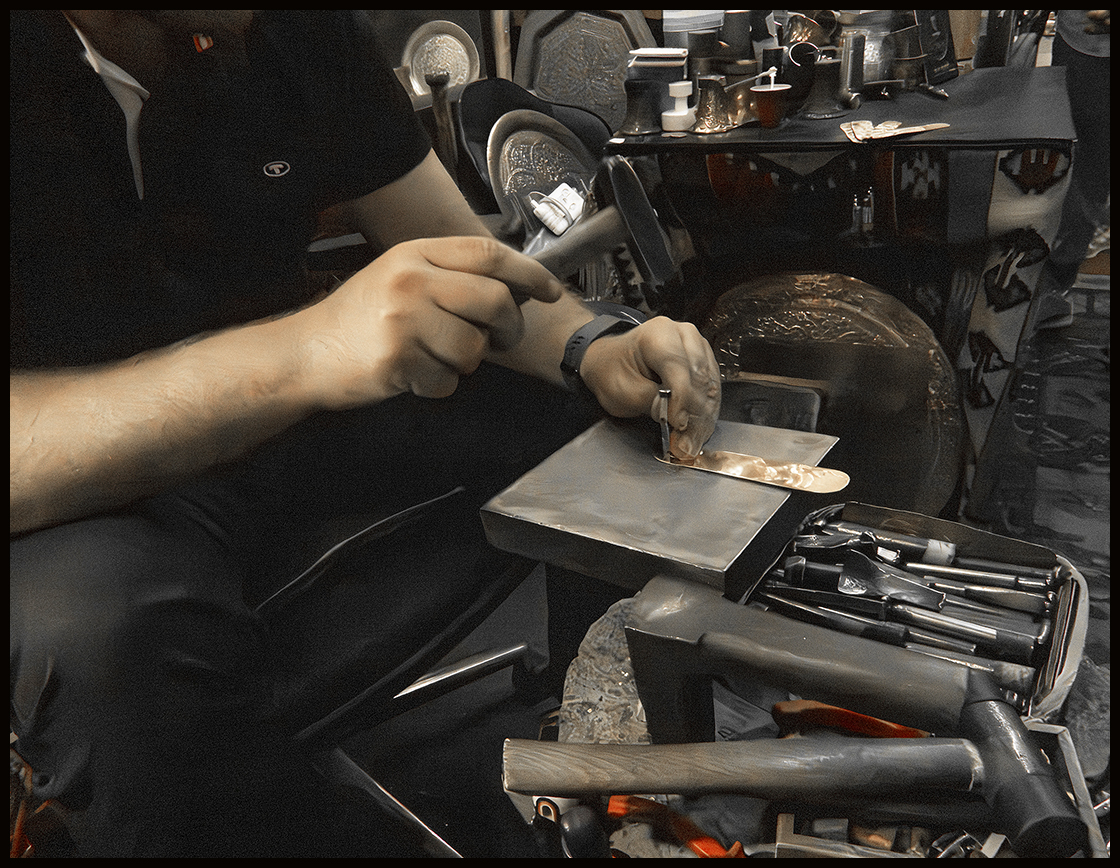
In town there are streets dedicated to various craftsmen. We visited a copper-smith’s shop.
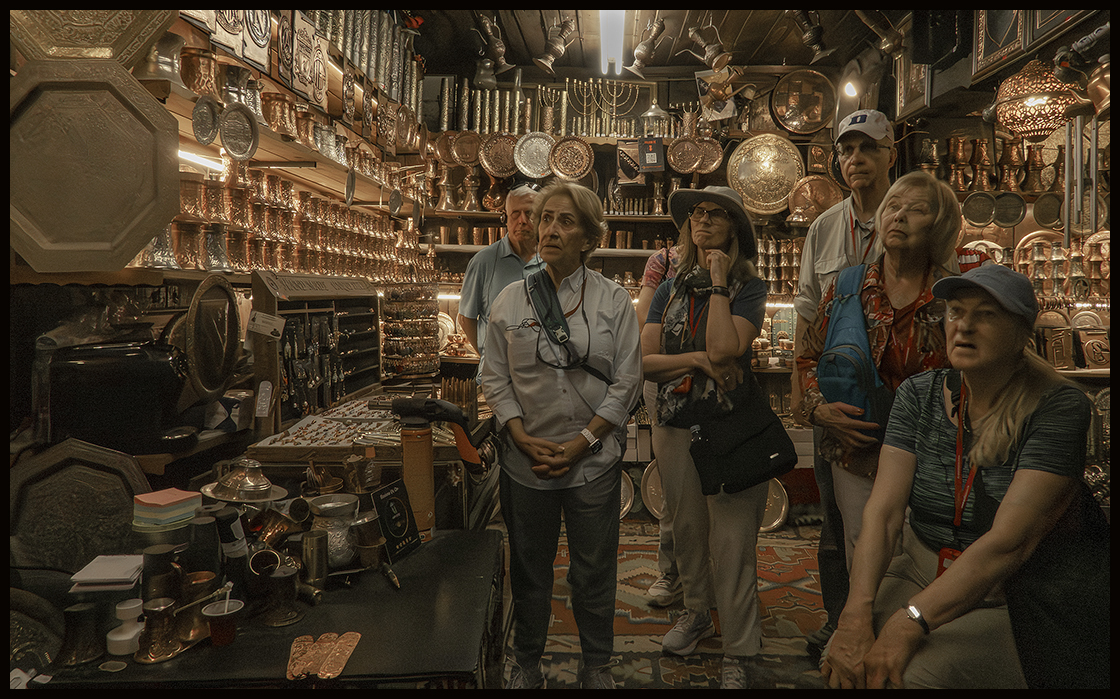
His shop is impressive, with items for all faiths.
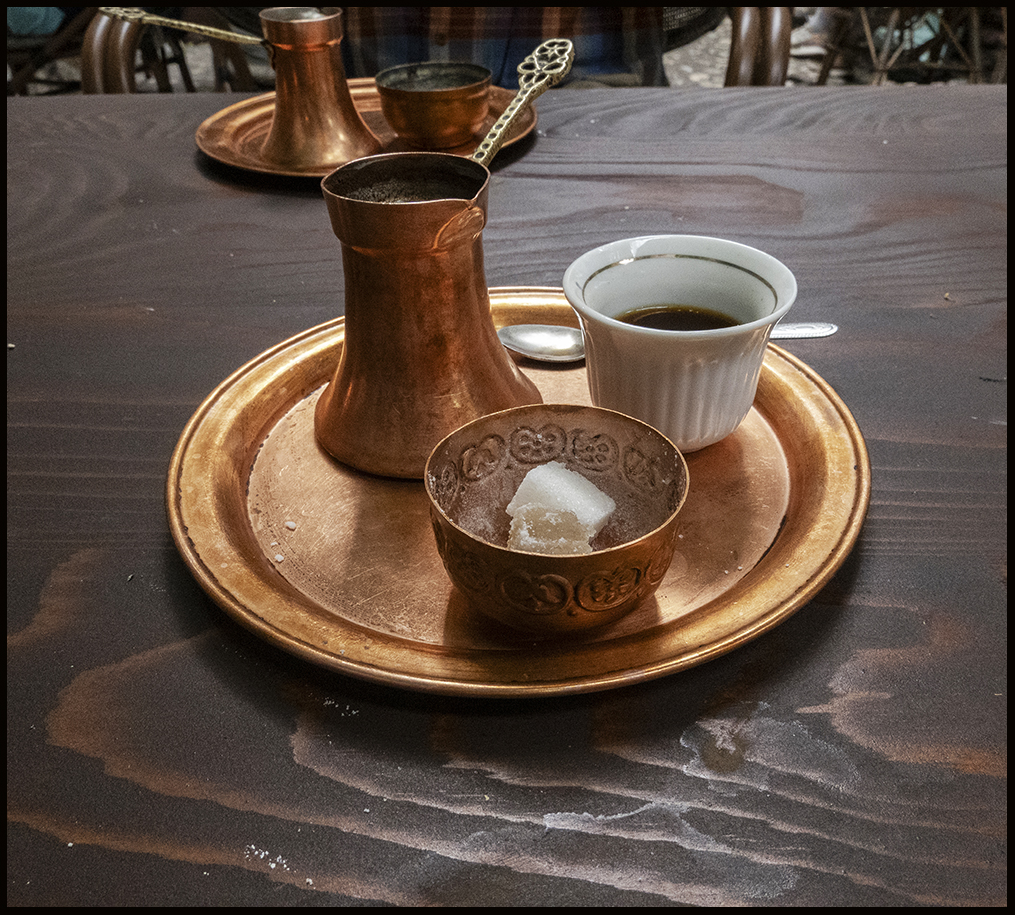
Taking time out for conversation and coffee is a must in daily life. This coffee service shows one use for copper.
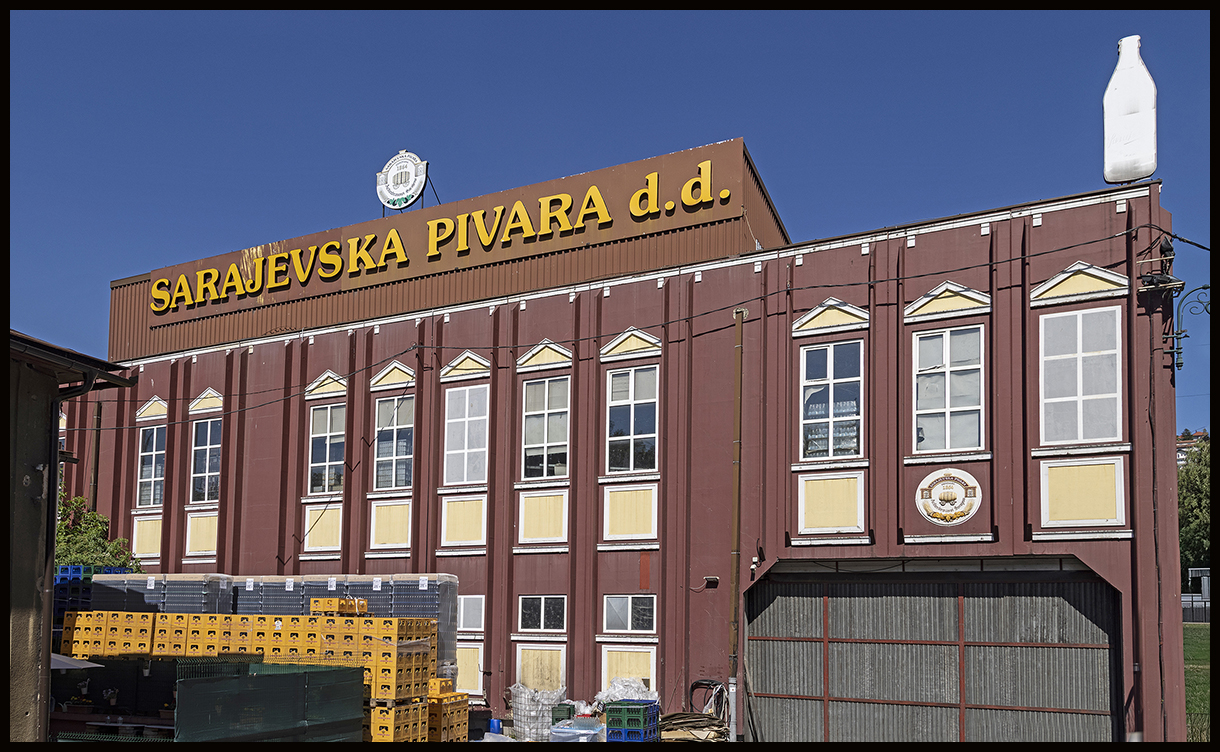
The Sarajevo Brewery opened in 1864 as one of the first local industries. It is still a major producer of beer…interesting in a majority Muslim town. During the siege it was one of the only sources for clean water for the beleaguered towns people.
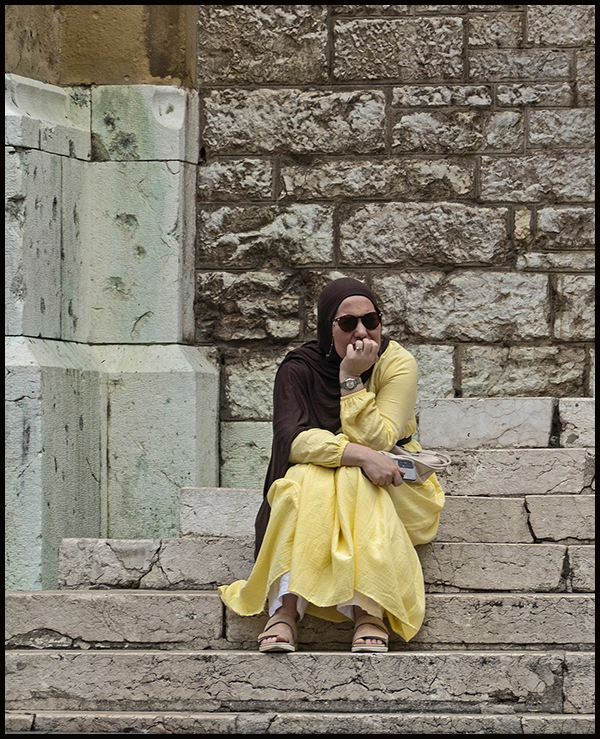
The Bosnian women do not wear burkas, only head scarves. Because Bosnia is democracy, and not a theocracy, women are encouraged to choose their own values about modesty.
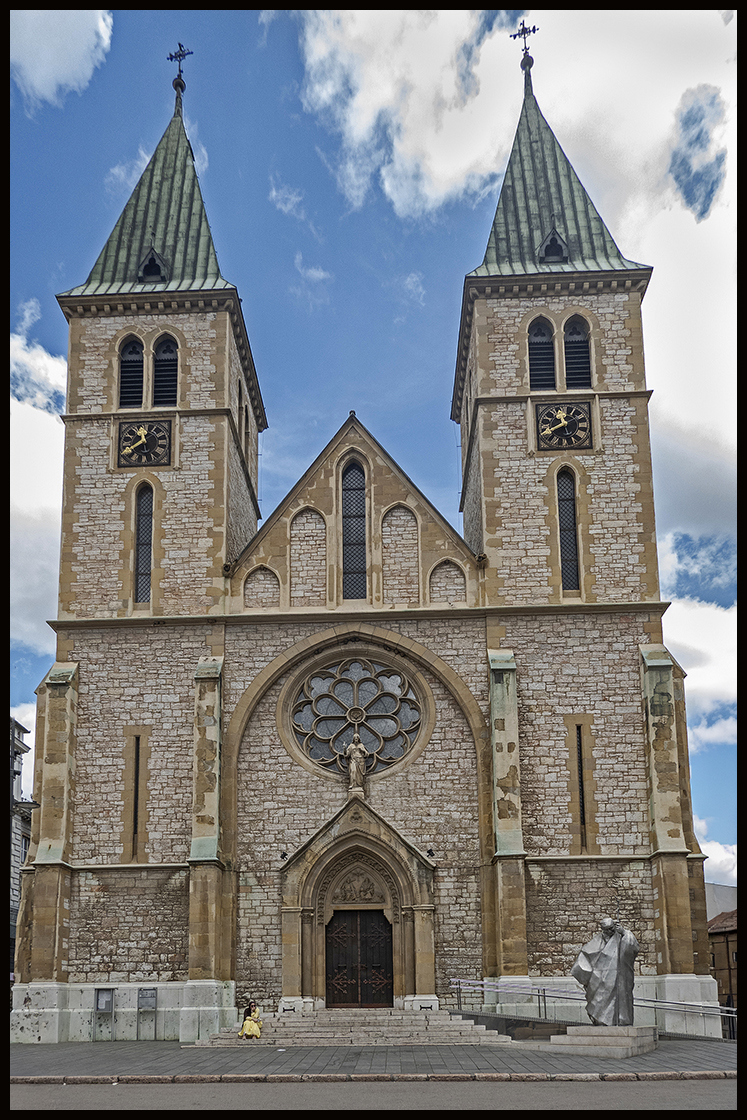
A Christian cathedral in Old Town. See the small lady on the steps? Pictured on the left.
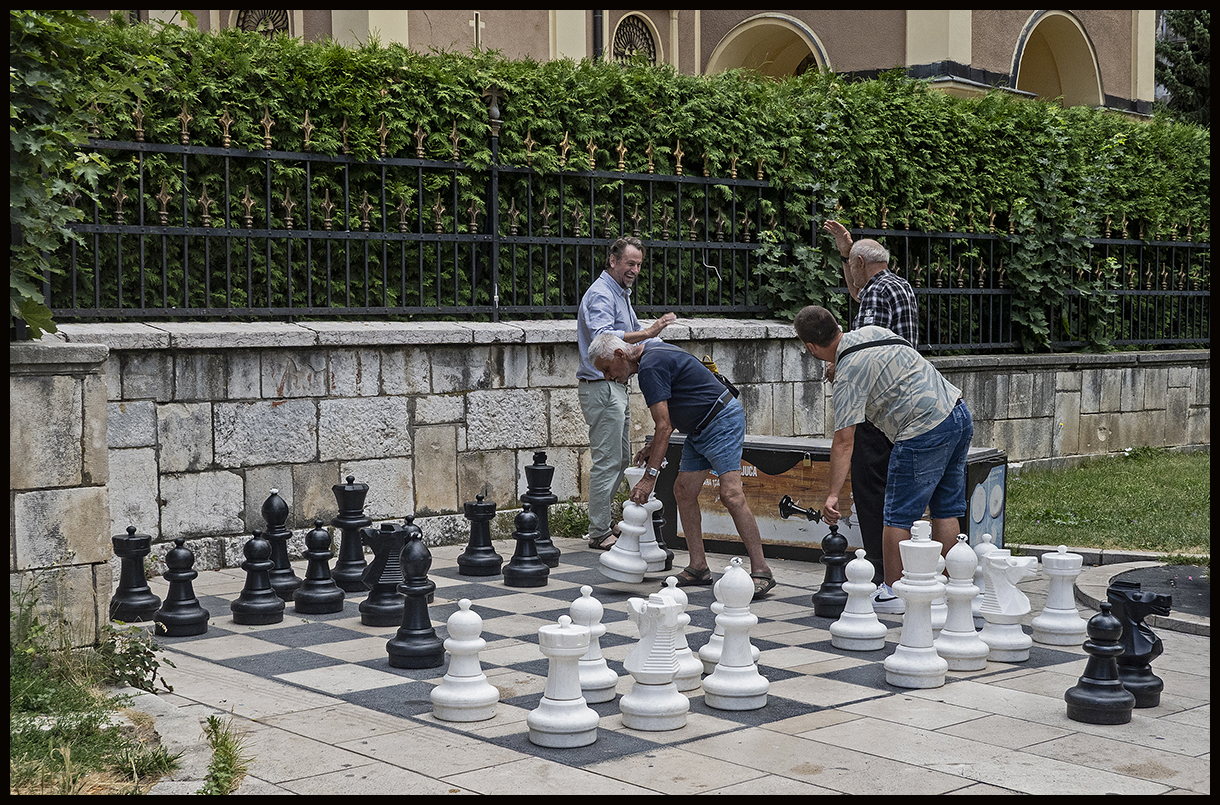
A game with giant chess pieces
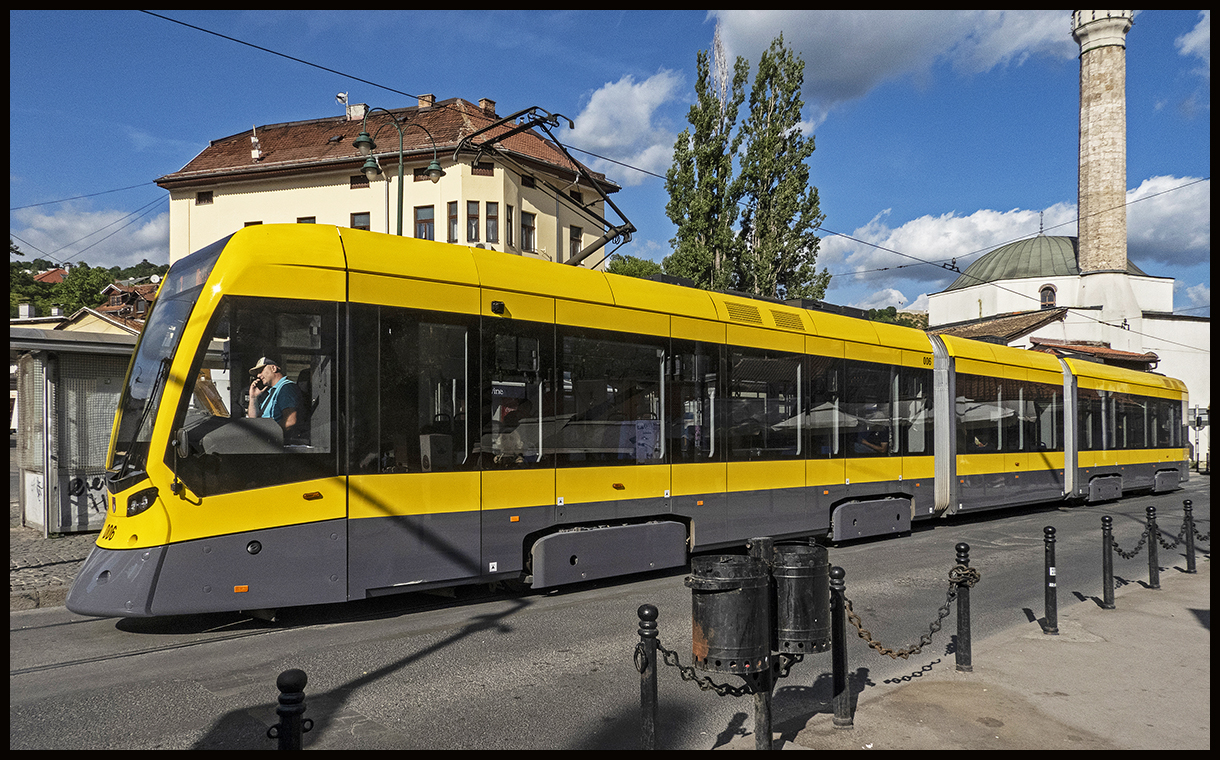
Sarajevo has a modern electric trolley system
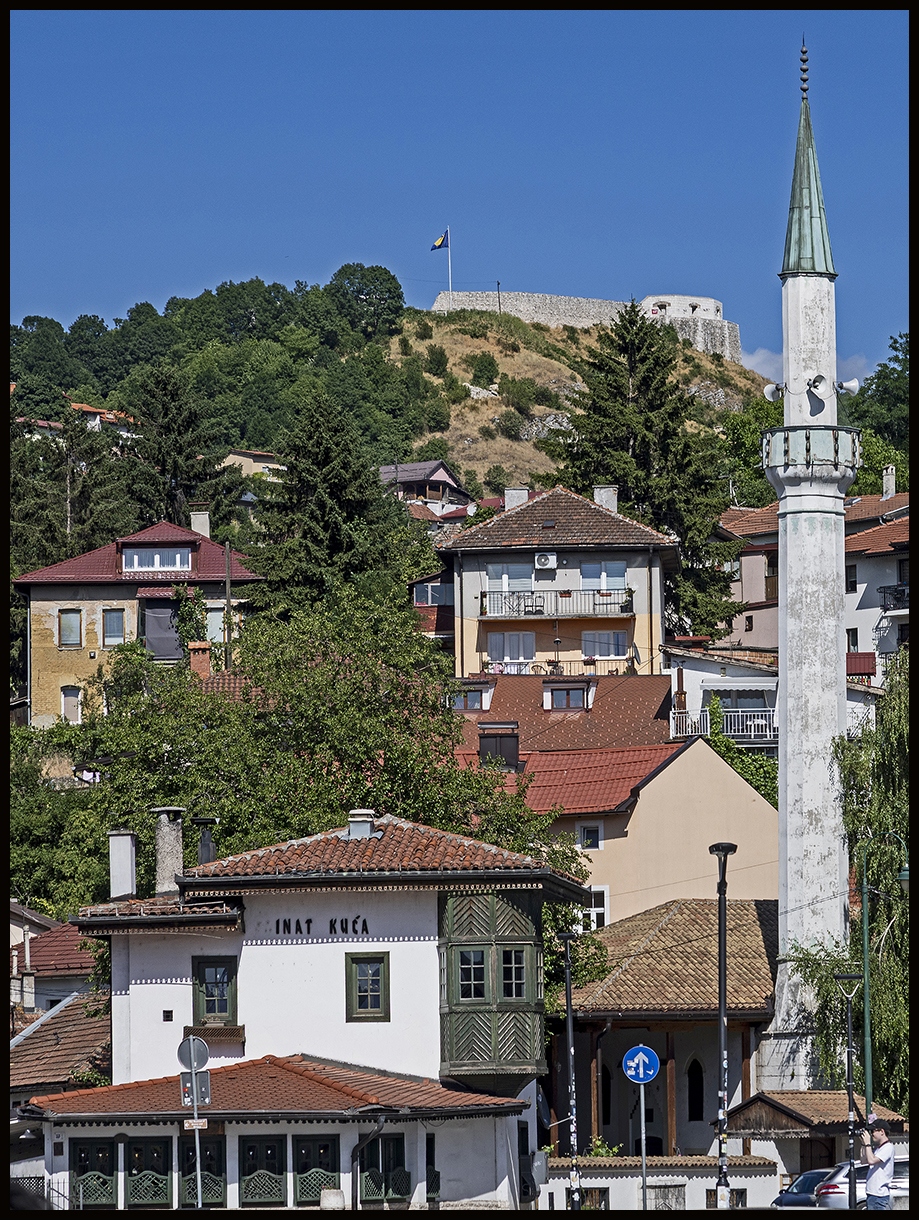
The White Inat Kuca restaurant has a strange past. The white fort can be seen up the hill.
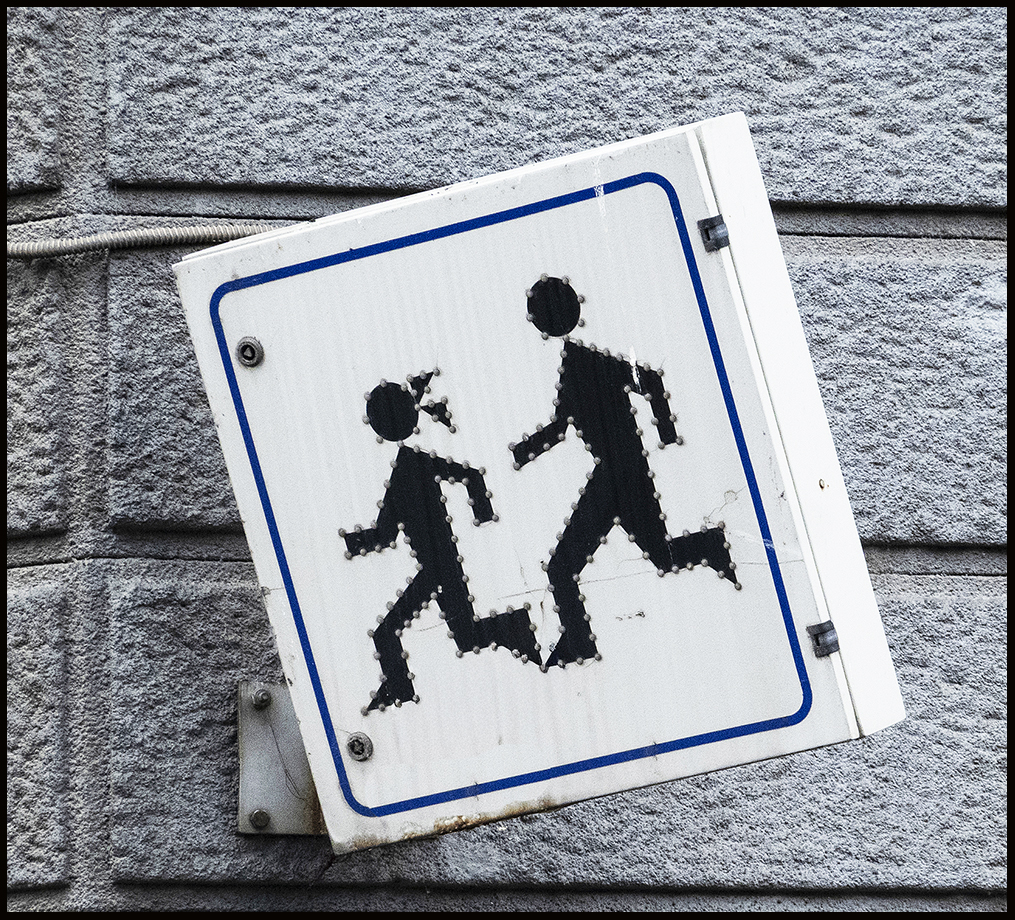
We’ll leave Sarajevo now, with another unusual sign. Apparently the children better not dawdle crossing the streets around here.
Inat Kuca – Originally the house was on the south side of the river. But someone wanted to build mosque in that spot. So, they moved the house to the north side, brick by brick. Later, when the town wanted to build a City Hall in the 1890s, they encountered the defiance of the owner of the house. He wouldn’t allow them to demolish his house. The name Inat Kuca means house of spite. After negotiations, the man forced the Austrian monarchy to move his house to the original location brick by brick. In 1997, Inat Kuca was opened as a traditional Bosnian restaurant.